|
|
Political chaos and daily scenes of devastation, three years after the October 7th attacks. Plus: |
|
Three years since Hamas’s Al-Aqsa Flood terrorist attacks, and the beginning of Israel’s brutal military assault on Gaza which followed, the Israeli Prime Minister Benjamin Netanyahu is still clinging to power. It is a position that was unthinkable in the immediate aftermath of October 7, 2023, David Remnick writes today, when it became clear that Netanyahu had presided over “the worst disaster in the history of the state.” The Prime Minister’s failures have continued to mount: he was judged by many as insufficiently committed to freeing the hostages taken by Hamas; and he has prevented a government-wide reckoning about the security lapses that failed to thwart the attacks. And recent reporting has suggested that he was more aware of the threat than previously known, which he has denied. Amid all this, Israel’s military campaigns across the Middle East have eroded support for the nation among governments and people around the world; in Gaza, more than seventy thousand people have died. |
|
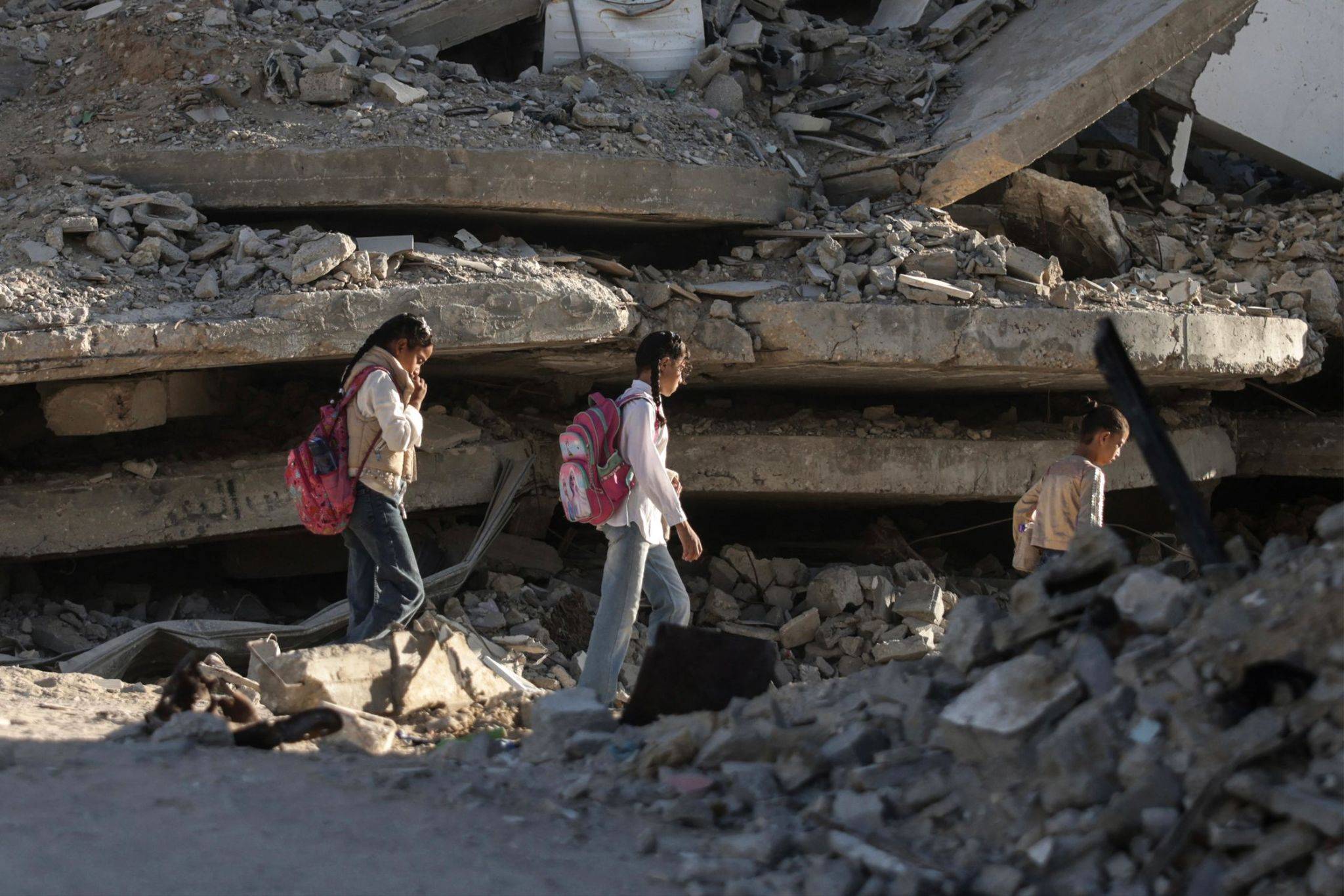
Photograph by Bashar Taleb / AFP / Getty |
This October, the early days of the school year in Gaza bear very little resemblance to the memories that Mosab Abu Toha recalls from his childhood. Abu Toha—who received a 2025 Pulitzer Prize for his essays in our pages about the Palestinian experience and who now lives with his family in Syracuse, New York—writes today about the grim routines and unthinkable horrors experienced by the children of his sisters who have stayed behind. Mornings begin before sunrise, waiting in line for water; walks to tents being used as makeshift schools are sometimes interrupted by Israeli gunfire; students attend lessons just three days a week; school supplies are expensive and scarce; his nephews study under a big tent “surrounded by bombed-out houses and mounds of rubble.” “This year is the fourth in a row in which Gaza’s children are being deprived of a fundamental human right,” Abu Toha writes. “I wonder how much children can learn in such devastating circumstances.” In Israel, meanwhile, the outcome of the coming elections on October 27th are far from certain—Netanyahu has recently used the foiled hijacking of a FlyDubai flight as a chance to rally nationalistic pride. “He will do and say anything to deflect attention from his failures,” Remnick writes. And as for the election, which many Israelis have judged the most consequential in their lifetimes, he notes, “damn near anything could happen.” |
Editor’s Pick |
How the Billions from the Opioid Settlement Are Spent |
|
Illustration by Carl Godfrey; Source photographs by Getty |
Beginning in 2022, companies involved in the manufacture and distribution of prescription opioids agreed to pay around fifty billion dollars to all fifty states and the District of Columbia. And while some of the money has gone to recovery programs, in states such as West Virginia, nearly half of the money allocated to local governments in 2024 and 2025 was being spent on general law-enforcement expenses like squad cars and shooting ranges. Meanwhile, organizers and directors of programs to support people in recovery, or in active addiction, are finding it difficult to secure funding, Oliver Whang reports. Read or listen to the story » |
More from The New Yorker |
A scene from “Fear Fokol.” |
|
Our Culture Picks |
|
|
Cartoon by Jon Adams |
“Buckley 2000, go to City Hall and protest this tax on the rich for me.” |
|
Puzzles & Games |
|
|
|
P.S. Read the poem “Obit,” by Mosab Abu Toha: “To the shadow I had left alone before I / crossed the border, my shadow that stayed / lonely and hid in the dark of the night, / freezing where it was, never needing a visa.” |
Austin Elias-de Jesus contributed to today’s edition. |
 |
Get more New Yorker in your inbox. |
Was this forwarded to you? Sign up to get The Daily. Or explore more newsletters on books, science, food, politics, and more. |
This e-mail was sent to you by The New Yorker. To insure delivery to your inbox (not bulk or junk folders), please add our e-mail address, newyorker@newsletter.newyorker.com, to your address book. The New Yorker may earn a commission for linking to retailers or from products that are purchased through our newsletters as part of our Affiliate Partnerships program. View our Privacy Policy | Unsubscr |