Saudi Arabia and the Houthis
 

Gulf Currents

Gulf Currents


By Angus McDowall, Middle East Lead Writer

Every week in the US-Iran war brings a flurry of contradictory rumours of possible diplomatic progress or terrifying new escalations — a whirl of speculation and uncertainty complicating life for everyone in the Gulf.

The drama that unfolded on a flydubai flight from the United Arab Emirates to Israel last week, as an Omani co-pilot stabbed his captain in a suspected attempt to down the plane, only added to the anxieties in a region buffeted by conflict.

Amid all that confusion, one hard new fact has entered the regional equation: Saudi Arabia’s full return to the battle in Yemen, where Iran’s Houthi allies have opened a new front in the wider Middle East conflict.

This week’s Gulf Currents looks at the thinking behind Saudi Arabia’s decision, the likelihood it can achieve real military success, and what it may all mean for Riyadh’s other priorities. 


Top headlines from the region

  • Houthis attack Aden airport as fighting intensifies in Yemen
  • Evacuated in an incubator, now back in Gaza getting to know mama
  • Vance says Iran must cut enrichment to end war
 

News briefing

  • Israel has marked exactly three years since the October 7, 2023, Hamas attack that triggered the devastating Gaza war and a cascade of other conflicts that have left the whole Middle East, including the Gulf, a very different place.
  • Gulf oil flows excluding Iran surged to over 81% of pre-war levels in September, data has shown, but Saudi Aramco CEO Amin Nasser said this week it could take up to two years for global stockpiles to recover even once the war ends.
  • The flydubai copilot behind last week's near disaster has told UAE interrogators he planned the attack before he was hired by the Dubai state-owned airline, two Israeli officials have said. For passengers aboard, the 16,000-foot-plunge would have felt like a "vertical roller coaster", a simulator owner who recreated the flight for Reuters said.


Saudi Arabia tries to end the Houthi threat

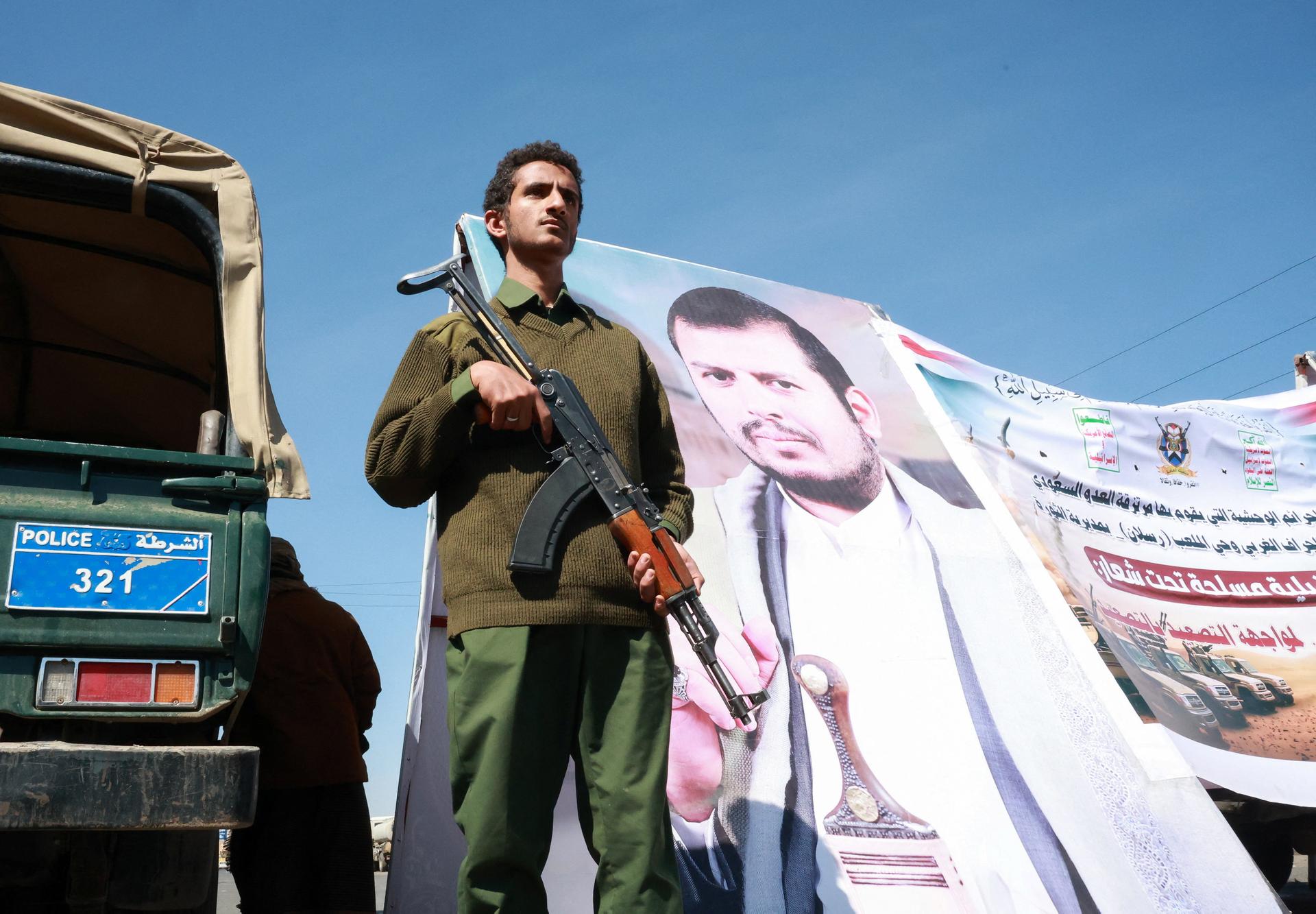
A member of Houthi security forces stands next to a poster of Houthi leader Abdul-Malik al-Houthi at the site of a gathering of Houthi supporters to show solidarity with the movement as fighting intensifies across several fronts, in Sanaa, Yemen October 7, 2026. REUTERS/Mohammed al-Mahdi

As if things weren’t difficult enough for Gulf states after months of Iranian strikes, the return to a full-blown war in Yemen has led to volleys of Houthi drone and missile fire at Saudi Arabia.

That hasn’t only threatened the kingdom’s airports and cities, but its export of oil through the Red Sea, the route by which it has bypassed Iran’s disruption of the Strait of Hormuz.

Saudi Arabia had to weigh whether to match Houthi advances in Yemen with an escalation of its own, caught between the danger of intensified strikes on its infrastructure and the possibility the group would make big gains.

With Houthi forces perched on the Bab el-Mandeb Strait and already firing sporadically at the kingdom, Saudi Arabia has returned to war, four years after the last phase of the Yemen conflict ended with a truce. 

Will it work this time? Quick gains by Yemeni government forces around Bab el-Mandeb under cover of intense Saudi air strikes (Reuters gave an early glimpse last week of what was planned), may only provide a partial picture.

The area where most territory has changed hands is on the Red Sea coast, where the flat terrain is ideal for mobile warfare.

Once the fight moves to the rugged hills of Yemen’s highland interior, as is already happening on other frontlines, it’s a lot harder to make big gains, even when backed by Saudi jets.

The Houthis are themselves more effective than in the past, using drones and aided by Revolutionary Guard commanders from Iran. They recently managed to encircle government forces in Taiz after fighting in the mountains.

Meanwhile the government’s own forces, while united in enmity with the Houthis, are riven by regional and ideological rivalries that bode poorly for a long campaign.

It all adds up to an uncertain struggle in Yemen, and the likelihood of more Houthi attacks on a kingdom that had hoped to spend this decade working on ambitious development plans.

One of those, a 2034 World Cup stadium to have been built at the futuristic NEOM in northwest Saudi Arabia, has been quietly shelved, Reuters reported this week — a reminder of the sort of challenges Saudi rulers may have preferred to stay focused on. 


Chart of the week


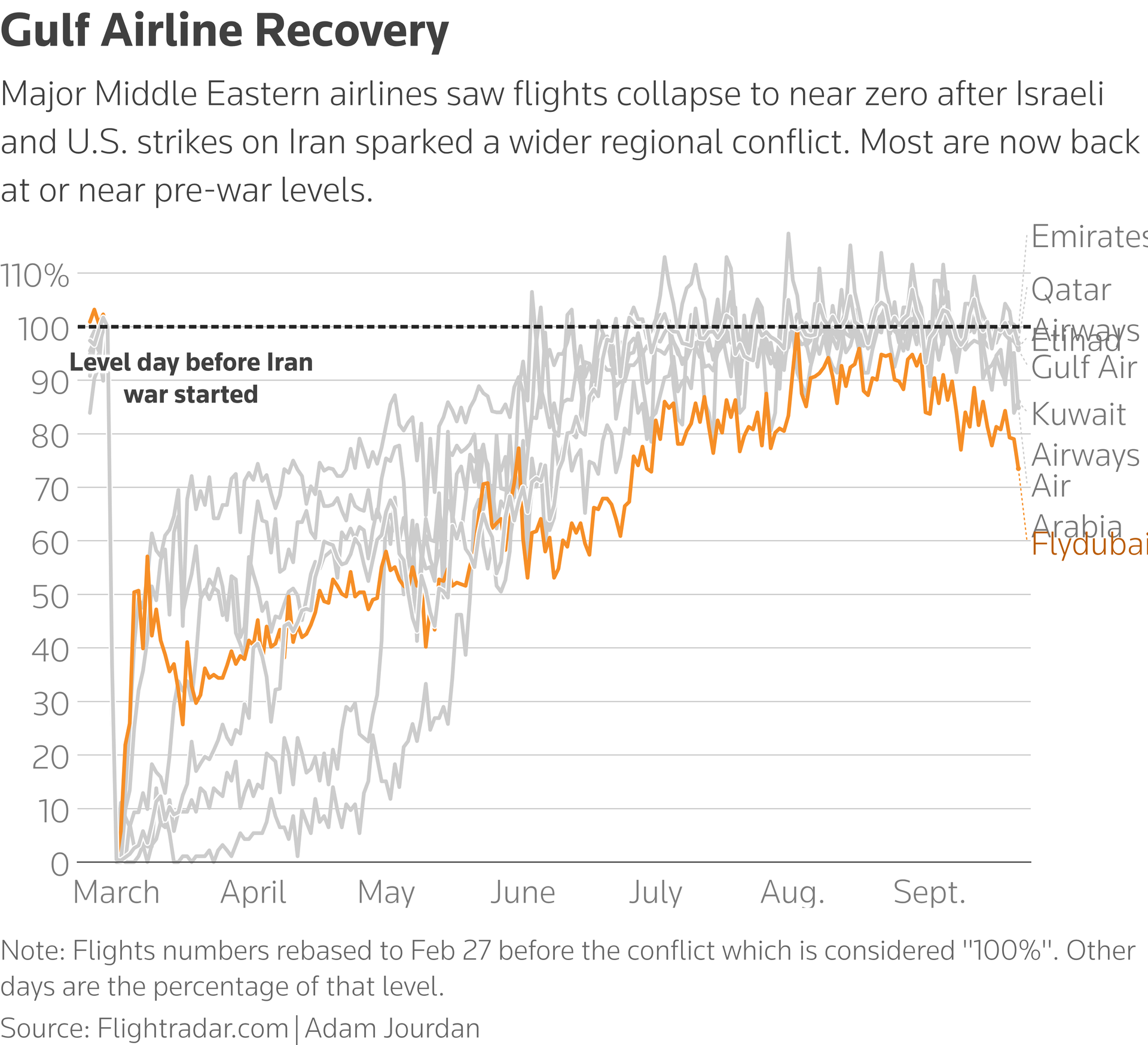
Middle East airlines had already been buffeted by regional instability since the October 7, 2023, attack and this year they were only just recovering from the US-Iran war when last week's flydubai incident caused another challenge.

This chart shows how Gulf airlines have clawed back flight levels since the sudden onset of the conflict grounded most planes around the region. 


The last wave

A sign for the Joy Awards is seen in Riyadh, Saudi Arabia, January 18, 2025. REUTERS/Hamad I Mohammed

Joy has been a commodity in short supply in the Gulf this year, and a combination of the Iran war and financial strains mean that will be true in one very specific sense next year too. 

Saudi Arabia is set to cancel its annual Joy Awards, its star-studded answer to the Oscars or the Grammys, two people with knowledge of the matter have told Reuters.

Those tuxedos — and gold-trimmed Gulf-style bisht cloaks — will have to be put back in the closet until better times return. 


This newsletter was edited by Aidan Lewis and produced by Rawan Yaghi.