|
|
|
|
|
|
|
|
|
The Home of the Week is a mini house with big personality. Glenn Brown/Glenn Brown
|
|
|
|
|
This week: The cities where tariffs are driving rents down faster and a bulk discount you’re not getting on condos. Plus, how to keep your home insurance as low as possible, and one property worth a look. |
|
|
|
|
|
|
|
|
|
|
The tariff-exposed cities where rents are falling fastest |
|
|
|
|
|
|
|
|
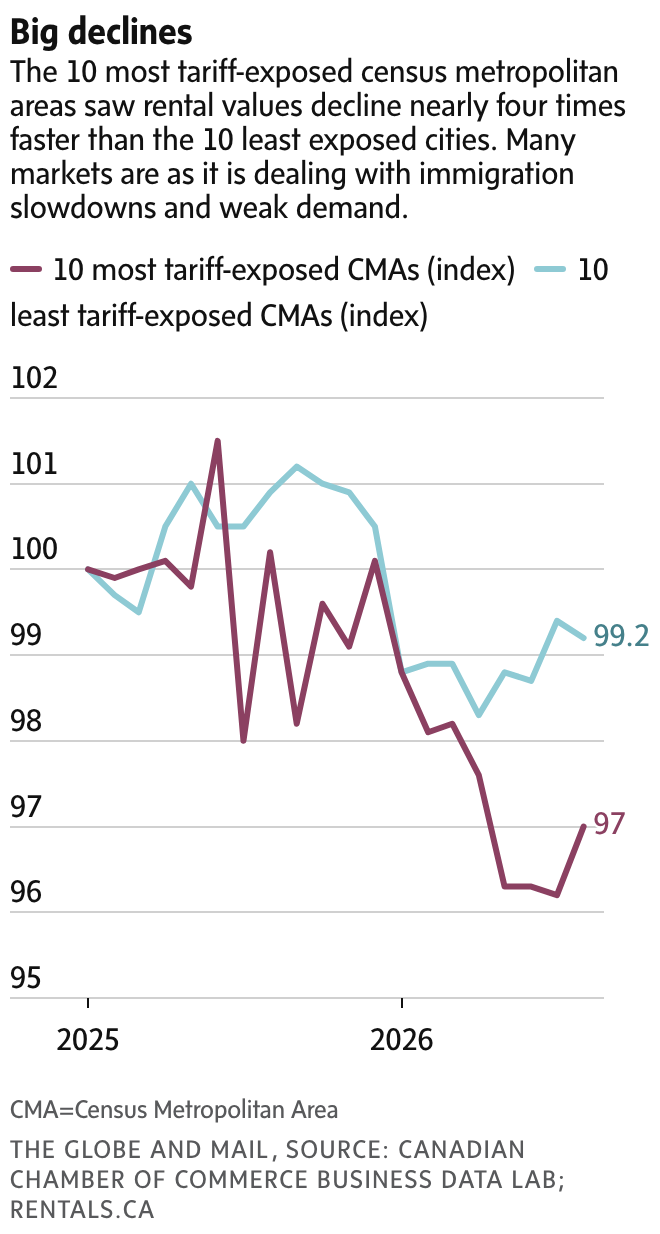
It’s not just the housing market taking a hit from the Canada-U.S. trade war. Average rents in the 10 cities most exposed to Trump’s tariffs have dropped
three per cent since January 2025, four times faster than in the 10 least vulnerable communities, according to new data from Rentals.ca and Urbanation. And as Salmaan Farooqui reports, rental markets probably haven’t bottomed out yet, as job losses and trade war uncertainty have renters cutting back or staying put. |
|
|
|
|
|
|
But not every part of Canada – or even Ontario – is feeling the strain equally. Saint John, New Brunswick, topped the list of tariff-exposed cities, as determined by the Canadian Chamber of Commerce,
and half of the top 10 are cities in Ontario, including the one that saw the biggest drop in rents of any city in Canada. They all share a similar heavy reliance on auto manufacturing, steel or industrial exports to the U.S., industries Trump is targeting with his tariffs. |
|
|
|
|
So how exposed is your city, and have rents fallen quickly there? Read Salmaan’s piece to see how the trade war is affecting the rental market near you. |
|
|
|
|
|
|
|
|
|
|
A bulk condo purchase reveals the steep discounts large investors are getting |
|
|
|
|
|
|
|
|
|
Large investors are snapping up unsold condos in bulk at much lower prices than regular buyers can get, including at the Line 5 complex in North Toronto. Fred Lum/The Globe and Mail
|
|
|
|
|
You need a Costco membership to get in the door, but in the beleaguered condo market, there’s a bulk discount that’s even more exclusive. Backed by the Ontario government’s Building Ontario Fund, investment firm High Art Capital has snagged 43 unsold condo units in midtown Toronto for just $22.3-million,
a sum well below the market rate. The plan is to turn the units in the Line 5 complex into rentals, with about a quarter rented for below-market rates and prioritized for health care workers who are members of the Service Employees International Union. |
|
|
|
|
We know many large investors have been taking advantage of the downturn to buy-up unsold units, and getting discounts regular house-hunters could only dream of. But this is one of the only such purchases to be revealed publicly, and as Rachelle Younglai reports,
that’s on purpose. “Developers generally do not want to bring attention to the fact that their building had or has unsold units, and bulk buyers don’t want other investors to know what kind of discount they’ve received because they’re competing for the lowest prices,” Rachelle told me. “Both parties likely do not want individual buyers to know that bulk buyers have received a discount.” |
|
|
|
|
|
|
|
|
|
|
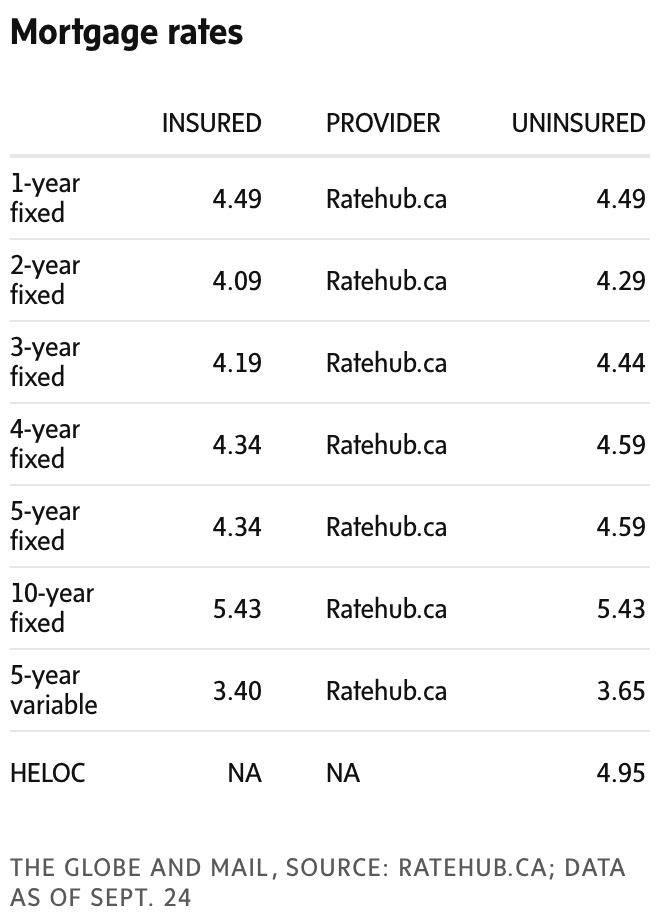
This week’s lowest fixed and variable mortgage rates in Canada |
|
|
|
|
|
|
Rates shown are the lowest available for each term/type and category (insured vs. uninsured) as of market close on Thursday, Sept. 24. |
|
|
|
|
|
|
|
|
|
|
The storm missed your house, but your home insurance is still going up |
|
|
|
|
|
|
|
|
|
Extreme weather and climate events, like a storm in Toronto earlier this month, are driving home insurance rates up, but there are still things you can do to limit the increase. Keito Newman/The Canadian Press
|
|
|
|
|
If you think your home insurance will stay relatively the same because you’ve never had a claim, think again. John Shmuel was shocked to see a 20-per-cent increase in the mail earlier this year, and he’s not alone. Rates have risen about 45 per cent between December, 2019, and the end of 2025, and as John writes,
rising extreme weather and climate disasters are driving the surge. |
|
|
|
|
You’re paying for the record damage inflicted by floods, wildfires and ice storms across Canada, even if your city was spared, because insurance pools premiums and doesn’t price your home in isolation. It relies on a quiet year in one region to offset a bad ones elsewhere, and lately, many parts of Canada have had multiple bad years straight. |
|
|
|
|
But there are still things you can do to minimize the increases, from bundling your home and auto-insurance to doing preventative upgrades on your home. Read his column for advice on how to get a discount and what to keep in mind when it comes time to renew. |
|
|
|
|
|
|
|
|
|
|
Can AI help you design a space? Yes – and no |
|
|
|
|
|
|
|
|
|
Ali Budd used AI to render this image, but she and other designers caution against relying on the technology completely. AI/Supplied
|