|
|
Newsletter
Our monthly update for everyone interested in health and social care
|
|
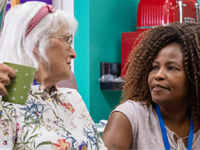
Help us develop new guidance on good dementia care
We are developing new guidance on what good dementia care should look like. Before we launch a planned formal consultation in early 2027, we would like your views to help shape the guidance before we start to write it.
This work aims to improve people’s experience of dementia care and their outcomes from care, including people who are living with dementia, their families and carers. Everyone should be able to expect to receive care that treats them as an individual person - recognising what matters most to them, and responding to their needs with dignity, compassion and understanding.
We want to hear a broad range of views from organisations and individual people who have knowledge, experience or an interest in this area.
The survey has 4 questions. Please submit your responses by 5pm on 30 October.
|
|
|
Share For Better Care: Hearing from local communities about their care
Our Share For Better Care campaign encourages people to tell us about their experiences of health and social care services. The campaign has a special focus on people who are more likely to face inequalities when accessing or using services and in their outcomes.
This month, we looked at how communities can help improve care. As part of this work, we joined the launch of the Public Engagement Network. The network brings together not-for-profit organisations that represent people who experience health inequalities so they can share insights with us. What we hear can then shape how we regulate services and encourage improvement.
The network is managed by National Voices on our behalf.
At the launch, we shared how local communities can support the campaign by encouraging people to tell us about their care through our Give feedback on care service. We also heard many issues that people face when using health and social care, and how we can provide more opportunities for people to engage with the network through respectful and meaningful conversations.
We want to hear from more community groups.
If you belong to a local community group - or know a charity or support network, particularly one representing underrepresented people - encourage them to join the network. Their insights can help us better understand people’s experiences of care.
|

Adult social care workforce survey 2026 – have your say
The Department of Health and Social Care (DHSC) wants to hear what it's like for people working in adult social care in 2026.
If you work in adult social care, the Adult Social Care Workforce Survey is your opportunity to share your experience and help shape the future of the sector.
The survey asks about the things that affect your working life, including pay, workload, wellbeing, workplace experiences, training and development, and what makes you stay in or think about leaving adult social care.
There are no right or wrong answers - it’s about sharing your experience honestly, whether it’s positive, challenging or somewhere in between.
Your responses will provide valuable evidence to inform government thinking, policy and workforce support. The more people who take part, the stronger the picture of adult social care will be.
The survey takes around 20 minutes to complete.
The survey is being conducted by Ipsos in partnership with Skills for Care and the University of Kent on behalf of DHSC.
Don’t assume someone else will tell your story. Have your say by completing the survey.
|
State of Care is coming
This year's State of Care, our annual assessment of health and social care in England, is coming soon.
As you receive our newsletter, we'll let you know as soon as the report has been published.
If you know someone who hasn't yet subscribed to our newsletter and would like us to send them an alert when State of Care is available, forward them these links:
Join us to watch a livestream of the State of Care launch event at 10am on 23 October.
|
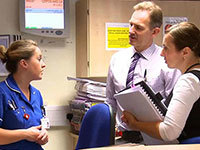
Join us! Work for CQC
CQC staff have a wide range of skills and work across many disciplines.
Benefits include generous leave entitlement, NHS or Nest pension schemes and a wide range of employee discounts.
Most roles offer flexible locations with the choice to be home-based. See the individual job listings for more information.
|
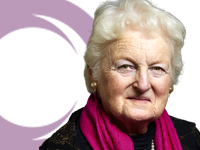
Welcoming Baroness Neuberger as our new Chair
Baroness Julia Neuberger DBE has been officially appointed as our new chair. She starts her new role on 1 October.
Following confirmation of her appointment, Baroness Neuberger said:
"Having chaired two NHS trusts and led reviews into some of the most challenging areas of care, from end-of-life care to mental health, I understand both the pressures facing the health and social care system and how essential it is to have a strong, effective regulator.
"I look forward to working with Emily Miles and colleagues across CQC to ensure the organisation plays its full role in driving improvement and helping people receive safe, high-quality care.
"My first priority will be to listen. I want to hear directly from CQC staff, people who draw on care and support, providers and the wider public. By listening carefully and acting on what we hear, we can continue the progress already being made and build confidence in the organisation."
The role of CQC Chair is appointed by the Secretary of State for Health and Social Care in accordance with the Cabinet Office's Code of Governance for Public Appointments.
Baroness Neuberger was confirmed as the government's preferred candidate in July 2026. The Secretary of State has taken the final decision following confirmation from the Health and Social Care Select Committee on 9 September 2026.
|
Do you work in health or social care?
Sign up to our other newsletters and follow us on LinkedIn to make sure you always get the latest information from us.
|
|
|