| | In this edition, the financial risks of AI are already here, and why higher bond yields could be jus͏ ͏ ͏ ͏ ͏ ͏ |
| |  | Business |  |
| |
|
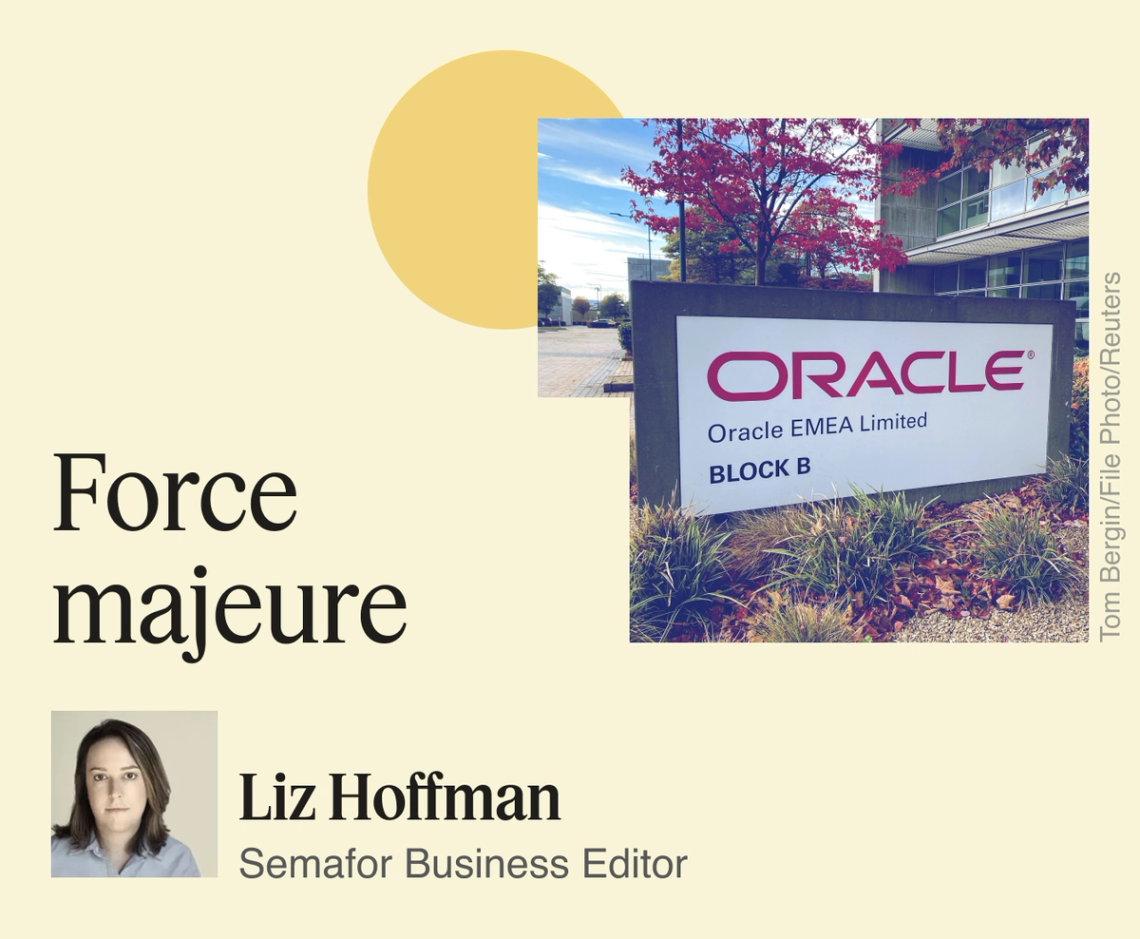 Experts are debating the existential risks of AI, but the financial risks are already here. Financial Jenga towers that hinge on construction schedules are now being scrambled by local opposition to data centers. The latest wobble, reported this morning by Bloomberg and confirmed by Semafor, comes from Oracle, which is seeking to delay lease payments on a New Mexico data center that is part of the massive Stargate AI buildout unveiled last year by President Donald Trump. State officials have repeatedly denied permits for the gas pipeline needed to power the project, delaying its progress by at least six months. Timing is everything in the infrastructure buildout that powers the AI race. In an exquisitely arranged patchwork of loans, insurance policies, and milestone-triggered payments, a single element falling out of place can expose financial backers and insurers to losses that are “going to be dramatically higher than anyone is currently thinking about,” Joe Peiser, CEO of risk capital at insurance broker Aon, told Semafor’s Tim McDonnell this week. Banks have lent $18 billion to build the New Mexico site. Below that sits $3 billion in equity from Blue Owl. It hinges on Oracle paying the rent, in full and ideally on time. And this project is just part of the $288 billion of lease obligations that Oracle carries, up sixfold from the beginning of 2025. The nuances are important here: Oracle can defer rent but must pay the project’s carry costs in the meantime, which are only slightly lower. Deferring the start of the lease extends its end date, too, guaranteeing longer cash flows for its financial backers. With Oracle having lost more than $20 billion in stock-market value today, this appears to be penny-wise and pound foolish. But it’s worth remembering that it was an insurer, AIG, and disputes about the timing of collateral posting that turned the 2008 crisis from a problem at a few overleveraged investment banks into a global catastrophe. And a heads-up: I’ll be in Chicago for our Business & Sports event this Saturday, Sept. 26, where I’ll be speaking with NCAA Senior VP Tim Buckley, Gotham FC COO Kari Fleischauer, and AFRICA RISE co-founder Hafsatu Kamara about the forces transforming the global sports industry. Request an invite here. |
|
Bond market storm worsens |
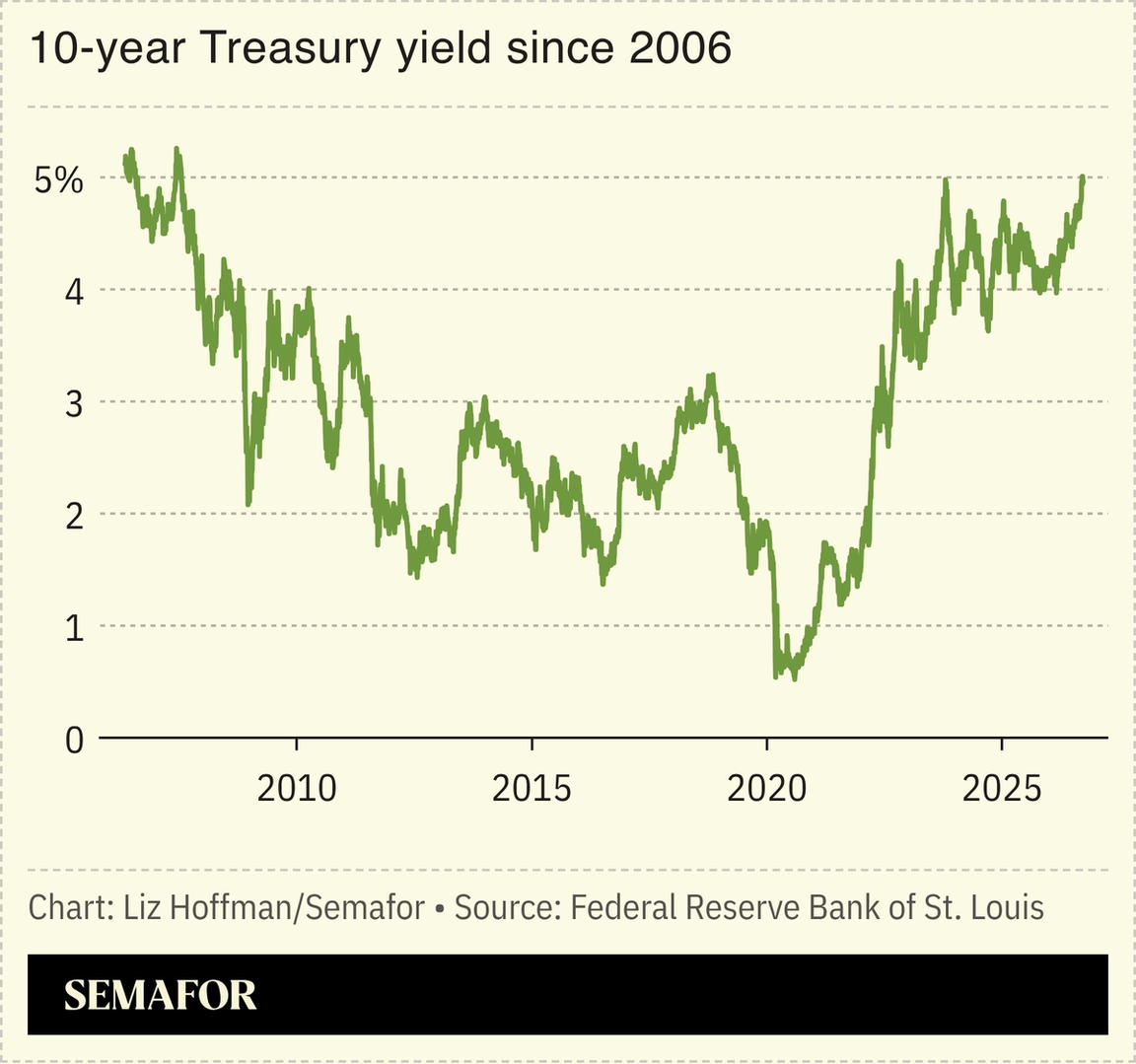 US Treasury yields hit their highest level since 2007, topping 5% on the 10-year, sending home mortgage rates to more than 7%. The rout stems from ballooning government deficits, worsening tensions between the US and Iran, skyrocketing oil prices, hawkish commentary out of the Federal Reserve and steepening inflation data — all of which culminated in weak demand for an auction of US five-year notes on Wednesday, surprising trading desks across Wall Street. “When interest rates go up, interest payments go up, and that suffocates the government’s ability to do anything, including to help people with the high cost of living,” said IMF head Kristalina Georgieva at Semafor’s The Next 3 Billion event this week. “So we should prepare for people being more unhappy, more, in many places, on the street.” The higher yields could become a boon to some private credit lenders like Apollo or Blackstone: Direct lenders tend to benefit from volatility in other markets, offering a steady helping hand when others retreat. There’s certainly no shortage of companies in need of cash. — Ellen DiMauro |
|
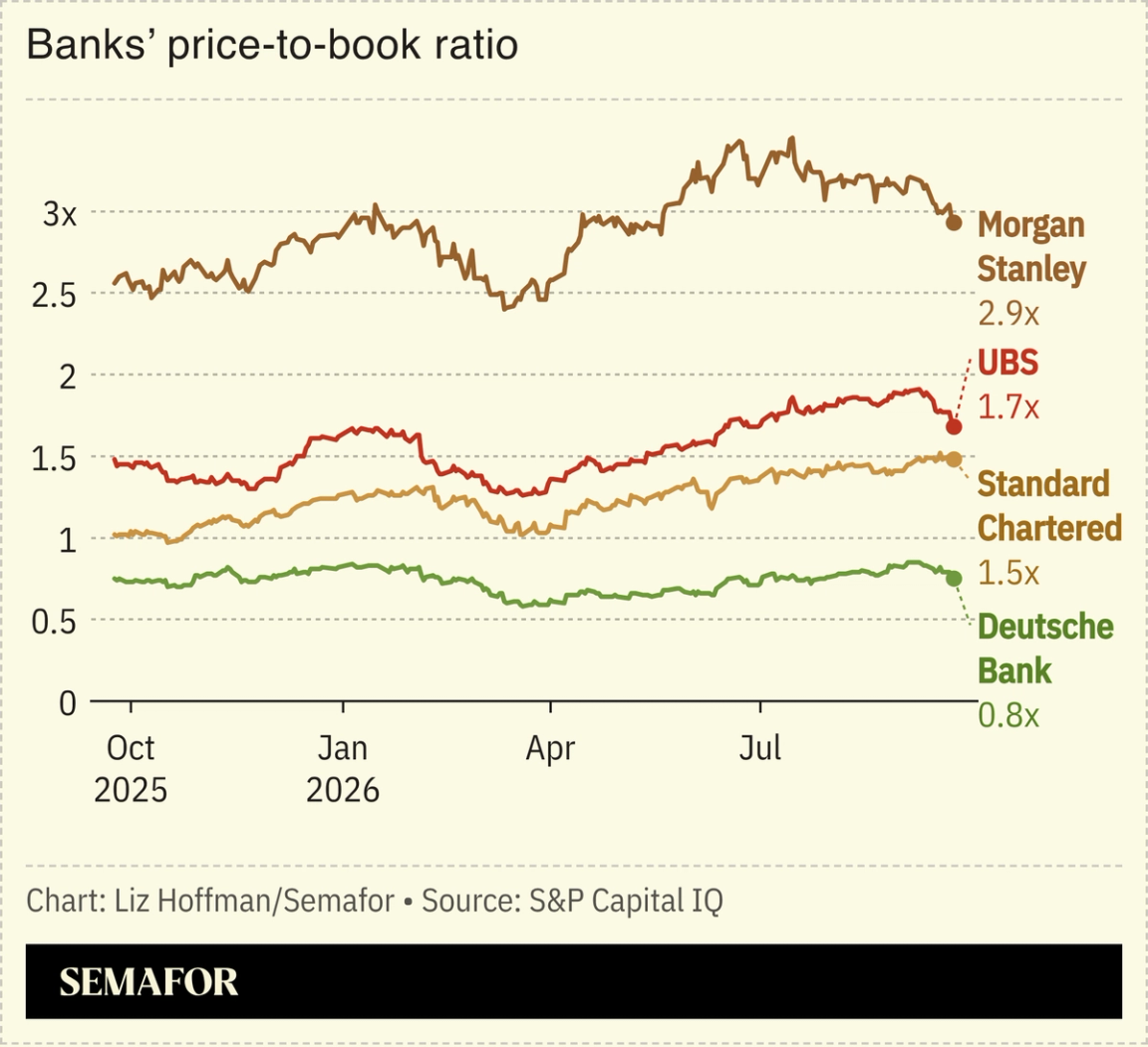 The senior leadership of UBS has revived discussions about ways to move the bank out from under Swiss regulators’ heavy hand, including through a combination with a foreign bank, after a setback this week, people familiar with the matter said. Switzerland’s parliament voted to advance a law requiring UBS to raise as much as $20 billion in fresh capital, which bank executives say would gut its ability to lend profitably. “We can live with a black eye, but two black eyes and a broken nose is too much,” CEO Sergio Ermotti said. UBS has been in a standoff for more than a year with the Swiss government, which is now demanding the bank shore up its foreign subsidiaries. An overseas combination — perhaps with Morgan Stanley, which has long wanted UBS and its $7 trillion in wealth-management accounts — would offer a dramatic, huffy exit (and reunite UBS Chairman Colm Kelleher with his old firm). Standard Chartered and Deutsche Bank would be cheaper ways out. UBS declined to comment. — Liz Hoffman |
|
Paramount looks to tap Musk |
 Evan Vucci/Reuters Evan Vucci/ReutersParamount wants Elon Musk to help fund its $110 billion takeover of Warner Bros. Discovery, Semafor’s Rohan Goswami scoops. An investment would relieve Oracle founder Larry Ellison’s financial burden since he has to personally guarantee more than $40 billion in equity Paramount has put up for the deal, while also contending with the combined company’s huge debt load. But the possibility of a Musk investment — and what that means about his proximity to CNN and CBS — sparked unease among Democratic politicians and opponents of the merger, who said that state attorneys general settled with Paramount for cosmetic concessions. “This is why it’s such a big issue for CNN, CBS, and TikTok to be all under one roof,” Rep. Becca Balint, D-Vt., wrote in response to the Semafor report. “This merger is already looking like a disaster.” |
|
Newsmax stirs up trouble for Fox |
 Annabelle Gordon/Reuters Annabelle Gordon/ReutersChris Ruddy is proving you don’t need Fox News’ scale to make trouble for Fox News. The Newsmax chief’s antitrust suit against his far larger rival — alleging Fox used exclusionary carriage deals to strangle Newsmax’s reach on streaming platforms — got tossed last year, but Ruddy refiled and keeps punching: Ruddy and allies in the White House have been pressing the Justice Department’s antitrust enforcers to block Fox’s $22 billion acquisition of Roku, according to people familiar with the matter and communications viewed by Semafor. The DOJ widened its investigation into the deal’s effects on streaming competition. Ruddy failed to foil the Nexstar-Tegna combination or to get a $250 million compensation fund included in an FTC settlement over an advertising-giants merger. But he has a line to Trump and has shown he can keep much bigger companies’ lawyers busy. Fox has called Ruddy’s antitrust case an effort by Newsmax to “sue their way out of their own competitive failures.” Ruddy declined to comment. DOJ did not respond to a request for comment. — Liz Hoffman |
|
 Flock Safety CEO Garrett Langley. Lexi Critchett/Semafor. Flock Safety CEO Garrett Langley. Lexi Critchett/Semafor.Flock Safety, which is facing scrutiny over the proliferation and alleged abuse of its cameras, is weighing a sale. The company has had conversations with outside advisers, according to people familiar with the matter, who described the discussions as preliminary. A Flock spokesperson declined to comment. Flock was valued at $8.3 billion in a fundraising last month led by Andreessen Horowitz and Tiger Global. Its technology and reach inside law-enforcement agencies could appeal to firms like Taser maker Axon, which also outfits police vehicles and officers with cameras, or to Motorola Solutions. — Rohan Goswami |
|
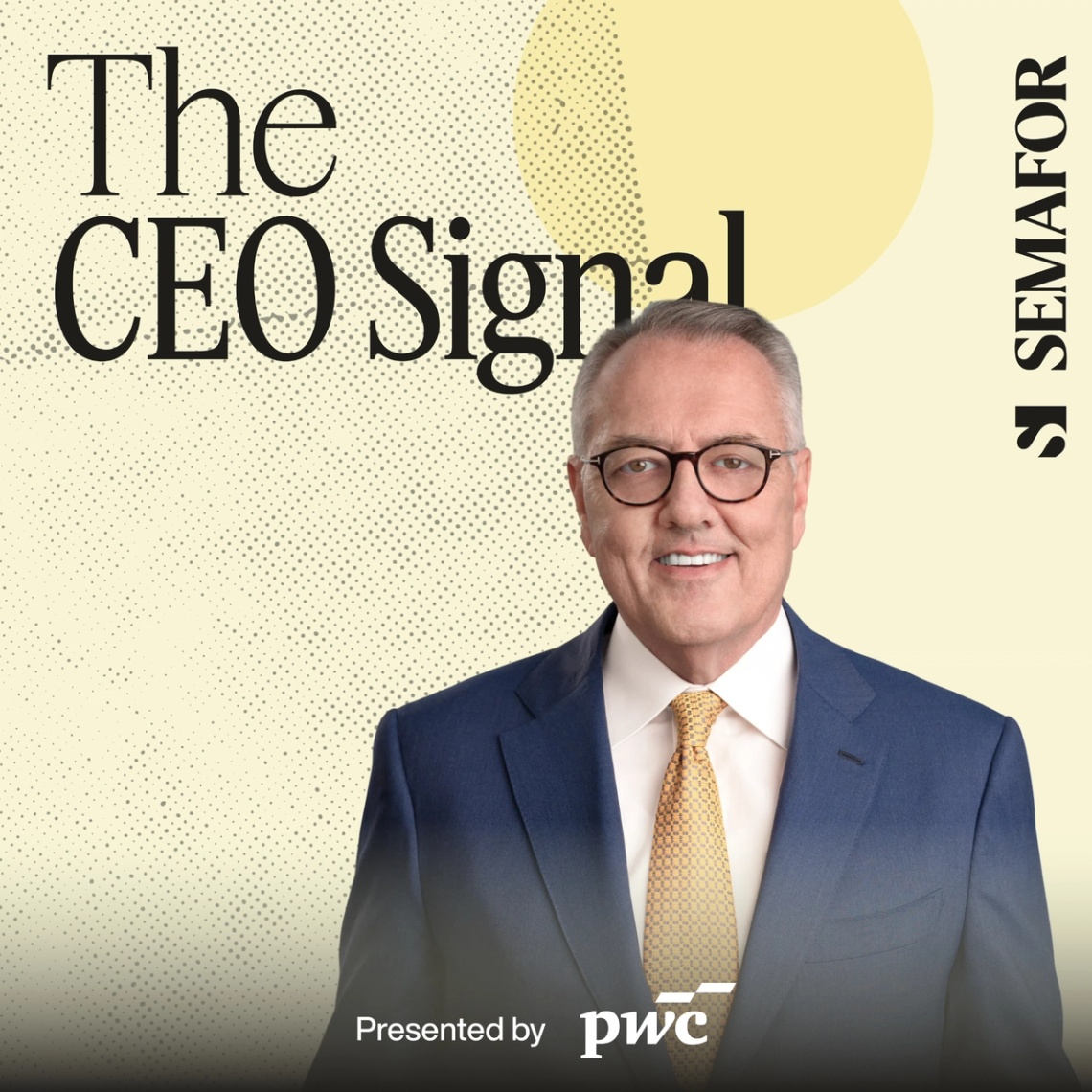 Will you feel “relief or regret”? That’s the question Motorola Solutions Chairman and CEO Greg Brown asks himself about every consequential decision. On this week’s episode of The CEO Signal, presented by PwC, Brown explains how nearly two decades of activist pressure, private-equity involvement, and asking “dumb questions” have shaped the way he leads the public safety technology company. Brown reveals the moments when he challenged his board to fire him if they disagreed with his conviction, and other times when he decided to “check [his] ego at the door.” In a candid profile of leadership under pressure, Brown tells Andrew and Penny when he nearly quit, how to put your best people on your biggest problems, and why he thinks his most challenging investors made him a better CEO. |
|
➚ BUY: SI. Trump’s rebranding of AI as “super intelligence” could fill the government coffers in Slovenia, whose country domain is .si. Anguilla made millions licensing its .ai internet addresses to startups. ➘ SELL: CC. Meta was slapped by a California judge for a “culture of privilege abuse” that involved copying lawyers on emails to shield them from discovery. An evidentiary flourish: Company swag embroidered with “a/c priv.” |
|
 Companies & Deals- This is financial advice: Bank of America warned Meta’s new AI model Muse creates an “evolutionary risk” for banks that will need to build their own tools or see external agents moving their clients’ money around.
- Pace car: In a nearly two-hour interview with Ezra Klein, Jensen Huang dismissed existential AI threats but said that labs that can’t contain their models — which is most of them so far — should be shut down.
Watchdogs- Narrative violation: The OECD raised its forecast for global economic growth thanks in large part to “robust AI-related activity.”
|
|
|





