| | The insurance industry is still struggling to design and price coverage for massive, super-expensiv͏ ͏ ͏ ͏ ͏ ͏ |
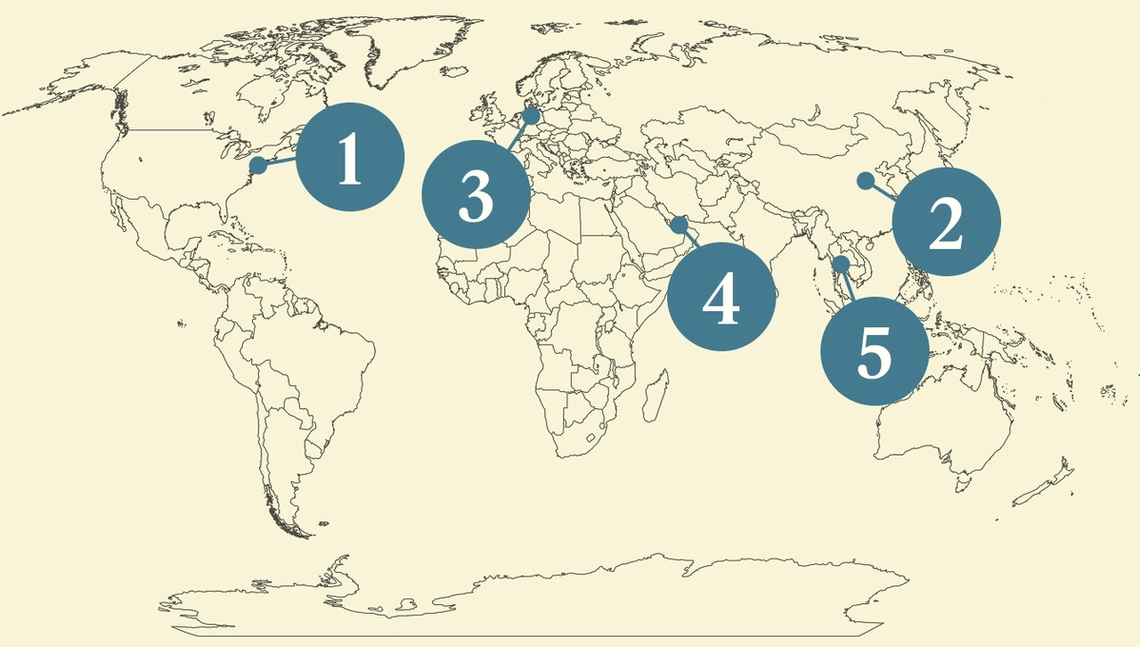
| |  New York City New York City | Abu Dhabi |  Bangkok Bangkok |
 | | | Climate Week Edition |
| |
|
 - Diesel ban uncertain
- Cleantech export benefits
- Europe EV sales boom
- UAE hunts energy deals
- SE Asia’s gas buildout
 Renewed US threats to ditch the IEA, and Geely unveils a five-minute EV battery charger. |
|
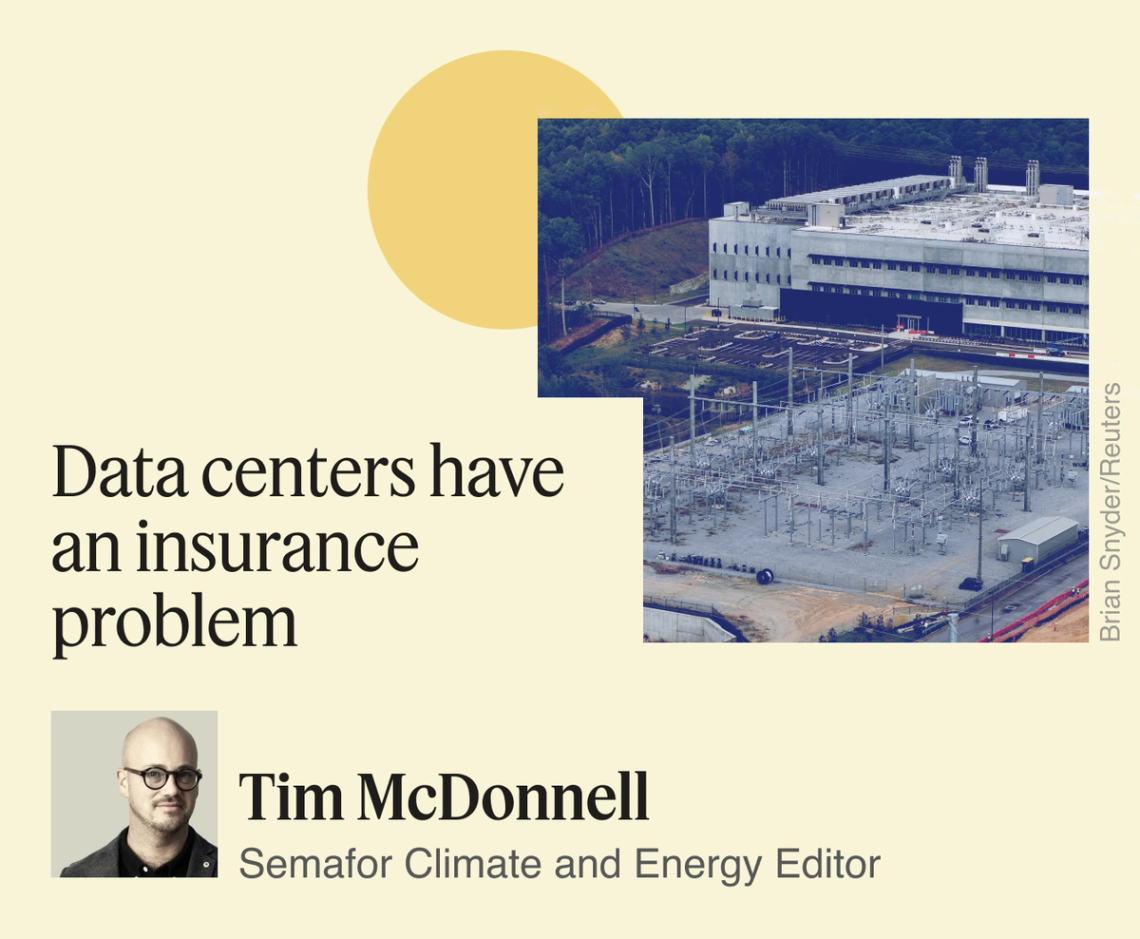 On top of power hardware shortages, angry neighbors, and permitting delays, data center developers have a new headache to deal with: skeptical insurers. Wall Street is more than happy to rain cash down on AI infrastructure. But the insurance industry is still struggling to design and price coverage for these massive, super-expensive buildings, Joe Peiser, CEO of risk capital at Aon, told me Wednesday: “Insurance really is a bottleneck.” Climate change impacts are one problem: Data centers consume huge volumes of water, leaving them exposed to drought, and many are being planned in places that are prone to floods, fires, tornadoes, or other disasters. Up to 80% of data center projects globally are exposed to such hazards, a recent study from the risk analytics firm First Street found. Investors and insurers are starting to ask developers more pointed questions about the buildings’ physical integrity and siting, Peiser said, and asking for better forecasts about future climate exposure. Data centers are also expensive, reaching into the tens of billions of dollars; insurers are starting to get sufficient capital in place to cover that volume of risk, but are struggling to keep up with the requirements of the biggest hyperscalers. The tightness of the power equipment supply chain is another major risk. If a gas turbine breaks, and the queue for replacement parts takes weeks or months, “that loss to insurers or their policyholder or both is going to be dramatically higher than anyone is currently thinking about,” Peiser said. Usually insurers have a simple way to deal with novel or unknown risks: Just charge more for coverage. In the case of energy infrastructure and oil tankers in the Middle East that were suddenly exposed to missiles and drones this year, for example, insurers adapted quickly rather than walking away. The same story will apply to data centers; they’re unlikely to become completely uninsurable, even with climate risk. But keeping them covered won’t be cheap. And some critical questions remain unanswered. If power problems, permitting delays, or extreme weather cause a data center to go offline or drag out its launch date, and a Big Tech company’s AI business suffers as a result, “how do you quantify that, and how do insurers respond?” Peiser said. “I foresee that being a significant mess.” |
|
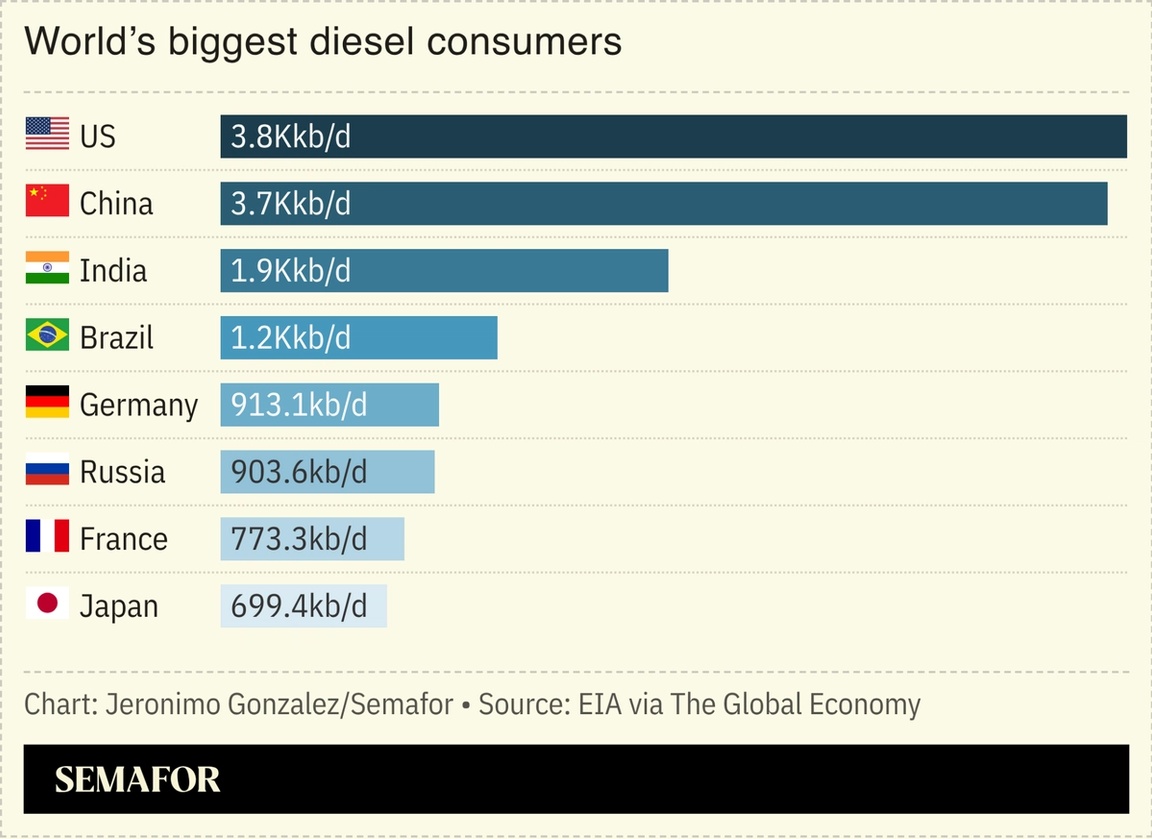 Oil prices rose above $100 a barrel on the US-Iran geopolitical deadlock. Iran’s president said Wednesday he was open to talks to end the war, but warned that Tehran wouldn’t surrender its nuclear program — a major sticking point in the negotiations — or “bow” to the US. Yet, more oil and gas is reported to be moving through the Strait of Hormuz. Qatar has ramped up LNG shipments to the highest levels in over two months and Saudi crude exports are on the rise. Meanwhile, US Energy Secretary Chris Wright poured cold water on reports that the White House is planning a full ban on US diesel exports to bring down record prices. Few think it’s a good idea: Industry has pushed back on the proposal, Goldman Sachs said it would shrink gasoline supplies and push up prices at the pump, while JP Morgan pointed out that even if the logistical challenge of redirecting exports from the Gulf Coast to the East Coast was overcome, a ban would hurt American refineries in the long term. |
|
Chinese exports curb emissions |
 Chinese exports of solar panels, wind turbines, batteries, and EVs prevented 374 million metric tons of carbon dioxide emissions last year, more than the annual emissions of the UK, new analysis found. The findings from the Centre for Research on Energy and Clean Air show how rapidly falling solar and battery prices are starting to transform energy systems around the world: Solar panel exports to South Asia alone were responsible for almost a third of the avoided emissions. China’s clean energy manufacturing boom is powering the global energy transition at a time when the US has pulled out of the “battlefield”, former US climate envoy John Kerry told Bloomberg. On Wednesday, as US President Donald Trump prepared to meet with Chinese leader Xi Jinping in Washington, the White House argued that an extension to the US-China trade truce, which paused tit-for-tat tariffs above 100% until January, would give the two sides more time to work on a bigger deal. |
|
EV sales jump 50% in Europe |
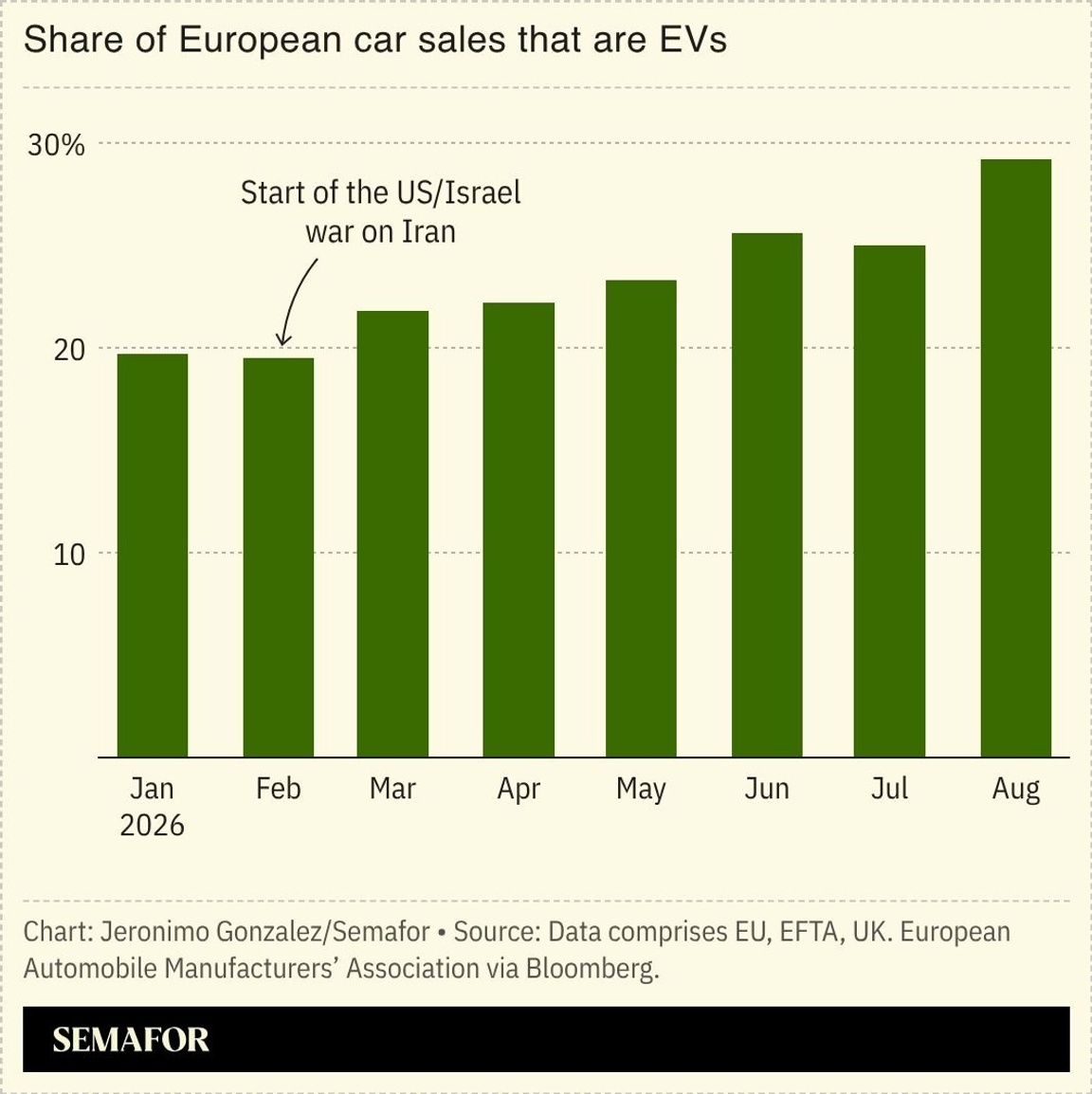 European EV sales surged more than 50% year-on-year last month, as buyers turned away from petrol cars because of soaring fuel prices. EVs now make up almost a third of sales on the continent, with even mega luxury brands joining the shift: Bentley announced its first electric car yesterday. A jump in fuel prices this year, driven by the wars in Ukraine and the Gulf, has already fostered EV adoption elsewhere, too, with the US expected to see sales jump despite the Trump administration axing tax incentives for the clean technology. The rapid transition has caught some off-guard, however: South Africa, the continent’s biggest car manufacturer, is racing to modify its production base away from internal combustion engines. |
|
Abu Dhabi’s energy shopping |
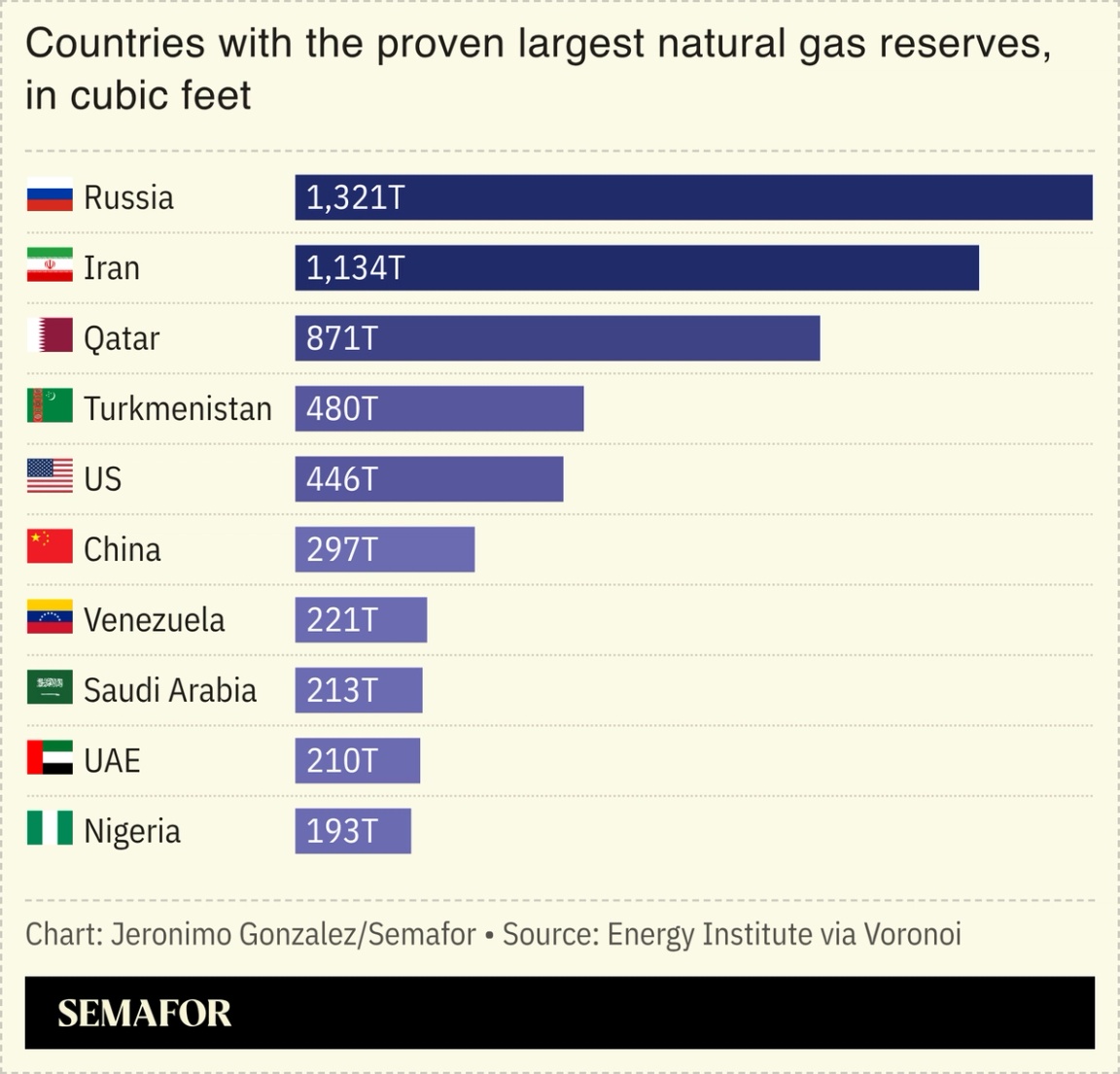 Abu Dhabi firms are hunting energy assets far beyond the Gulf. ADNOC’s investment arm, XRG, is in talks with PetroChina, which has been sounding out buyers for its 15% stake in a Shell-led LNG Canada export project, Bloomberg reported. Separately, Abu Dhabi-listed International Holding Company, chaired by national security adviser Sheikh Tahnoon bin Zayed, is reportedly leading a US government-backed consortium’s bid for Lukoil’s international assets, in which Qatar’s Al-Khayyat family will also have a stake, according to the Financial Times. The war has strengthened the case for an international expansion that was years in the making. With traffic through the Strait of Hormuz disrupted, external supplies help Gulf producers both meet their customer’s demand and benefit from higher prices. XRG recently bought a 32% stake in Argentine gas blocks feeding the country’s first LNG export terminal, as well as stakes in Rio Grande LNG in Texas and Mozambique’s Rovuma project. |
|
SE Asia’s 100 GW gas buildout |
 Puspa Perwitasari/Reuters Puspa Perwitasari/ReutersSoutheast Asian countries are continuing a $160 billion gas buildout, even as the Middle East conflict exposed the import-dependent region’s vulnerability to supply shocks and high prices. Analysis by Global Energy Monitor shows more than 100 gigawatts of gas power and 70 million tonnes per year of LNG import capacity are still being planned across the region. Domestic gas fields could help cushion future shocks, but new supplies take years to develop and won’t remove the region’s growing exposure to LNG imports, the report found. Developments in Thailand and Vietnam show early signs of a rethink, however. Thailand plans to reduce its reliance on imported LNG in favor of renewable and nuclear power, while in Vietnam, private conglomerate Vingroup proposed replacing a planned 4.8 GW LNG power plant with renewable generation, citing the risk of high LNG prices. At the same, Wood Mackenzie found the boom in data centers is driving structural demand for LNG in the region, which the new import infrastructure could help meet. |
|
 - Companies and Department of Energy officials discuss how to meet surging electricity demand at the ‘Grids in Transition – US’ conference.
- Investors, the World Bank, and Indonesian officials spotlight solar opportunities at the Indonesian Solar Investment Forum.
- The head of the UN Framework Convention on Climate Change and economics professor Jeffrey Sachs debate how COP can accelerate climate action at Columbia University.
|
|
 Will you feel “relief or regret?” That’s the question Motorola Solutions CEO Greg Brown asks himself about every consequential decision. On this week’s episode of The CEO Signal, presented by PwC, Brown explains how nearly two decades of activist pressure, private equity involvement, and asking “dumb questions” have shaped the way he leads the public safety technology company. Brown reveals the moments when he challenged his board to fire him if they disagreed with his conviction, and other times when he decided to “check [my] ego at the door.” In a candid profile of leadership under pressure, Brown tells Andrew and Penny when he nearly quit, how to put your best people on your biggest problems, and why he thinks his most challenging investors made him a better CEO. Listen to the latest episode of The CEO Signal now. |
|
 New Energy |
|
|


