| | In today’s edition: Iran’s truce offer, Microsoft’s $10 billion resilience bet, and the Gulf’s incom͏ ͏ ͏ ͏ ͏ ͏ |
| |  Tehran Tehran |  Redmond, Wash. Redmond, Wash. | Fujairah |
 | Gulf |  |
| |
|
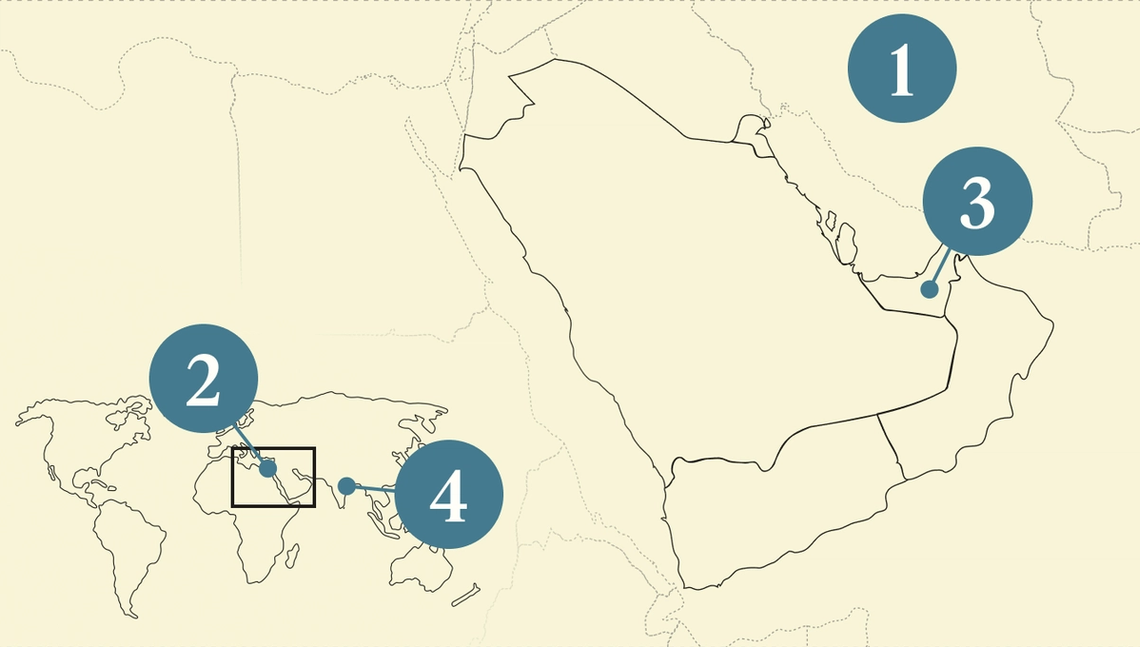 - Gulf must bear the ‘pain’
- Microsoft buys resilience
- AD Ports moves inland
- Indian pay app in Gulf
 A Saudi billionaire’s NIMBYism in the English countryside. |
|
Iran offers another truce |
 Reuters ReutersIran has presented the US with a roadmap to end the war that echoes the two countries’ June agreement — a 60-day ceasefire, the reopening of the Strait of Hormuz, and groundwork for further talks — The National reported. The initiative follows US-Iran talks that President Donald Trump said had momentum, with Qatar, Pakistan, and, increasingly, Egypt mediating. It also comes at a time of military posturing, heated rhetoric, and signs that other actors are muddying the waters. China has sent Iran around 1,300 shipments containing “dual-use” components for drones and missile guidance systems, The Wall Street Journal reported. Gulf states want de-escalation, but are seeking their own talks with Tehran rather than relying solely on the US-Iran framework. Economic interdependence with Iran could anchor regional security, Qatar’s Foreign Ministry spokesman Majed Al Ansari argued at the Concordia Annual Summit in New York. Expectations aren’t high: Former Qatari Prime Minister Sheikh Hamad bin Jassim warned that temporary solutions favor Tehran’s strategy of patience. To counter that, Gulf countries “must bear some of the pain too, and insist on reaching a legal, permanent, and clear solution for the issue of the Strait of Hormuz.” — Mohammed Sergie |
|
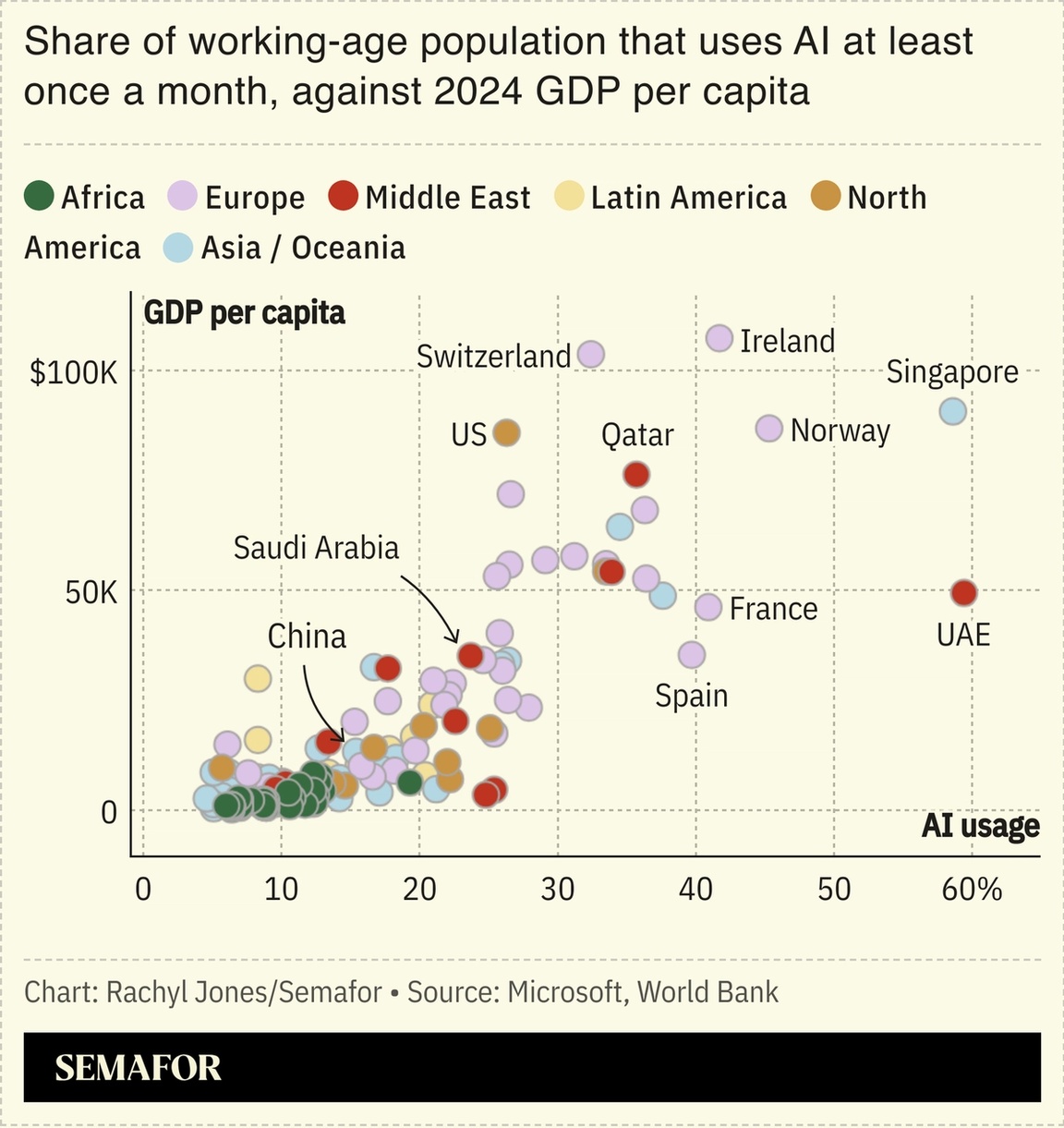 Microsoft is accelerating investment in the Gulf, planning to spend at least $10 billion by 2030 to shore up the region’s digital resilience. While a drop in the bucket compared with global AI spending, the move to expand data centers and lay more subsea and overland cables for backup connectivity is a vote of confidence in a region whose tech ambitions were called into question by the Iran war. Amazon Web Services said this month it won’t restore one of its three UAE availability zones or its Bahrain network after damage from Iranian strikes. Microsoft said it will invest in Kuwait, Qatar, Saudi Arabia, and the UAE, and deepen partnerships with national AI companies including Abu Dhabi’s G42 — in which it is an investor — and Saudi Arabia’s HUMAIN. Raising investment above prewar levels signals “confidence in the region’s future as it pursues one of the world’s most ambitious AI transformations,” Vice Chair and President Brad Smith wrote in a blog post. — Kelsey Warner |
|
Gulf freight network grows |
 Bing Guan/Reuters Bing Guan/ReutersThe UAE has launched a new freight rail service connecting Fujairah, its main maritime gateway outside the Strait of Hormuz, with Abu Dhabi’s industrial city, adding another route for goods to bypass the disrupted waterway. Three times a week, Etihad Rail will move containers about 200 kilometers (124 miles) from the port on the UAE’s Gulf of Oman coast to Abu Dhabi, where they can clear customs. Fujairah has become a crucial entry point since Iran began attacking ships in the strait early in its conflict with the US. Saudi Arabia is also adding rolling stock. Its state railway has ordered 780 railcars from US manufacturer Greenbrier, including tank cars for phosphoric acid and molten sulfur. The freight push dovetails with Gulf governments’ longer-running ambition to link the peninsula’s cities by passenger rail, a plan the war has made more urgent. — Ed Clowes |
|
India’s biggest payments app enters UAE |
 Nasir Kachroo/Reuters Nasir Kachroo/ReutersThe Emirates’ largest expat group will soon pay bills the way they did back home. PhonePe, India’s biggest payments app, won approval from the UAE Central Bank to launch in the country, the Walmart-backed company’s first move abroad. It will offer payments, remittances, and money management to the UAE’s 4.3 million Indian residents. The UAE fintech industry is projected to nearly double by 2029, after drawing in a third of all startup funding in the country in 2024. The central bank has been licensing digital wallets at a clip, including Careem Pay, e& money, Botim, and buy-now-pay-later firm Tabby. With expatriates making up nearly 90% of the UAE’s population, remittances are a prize worth billions. UAE residents sent India more than $21 billion last year, nearly a fifth of India’s total remittances and second only to the US. — Manal Albarakati
|
|
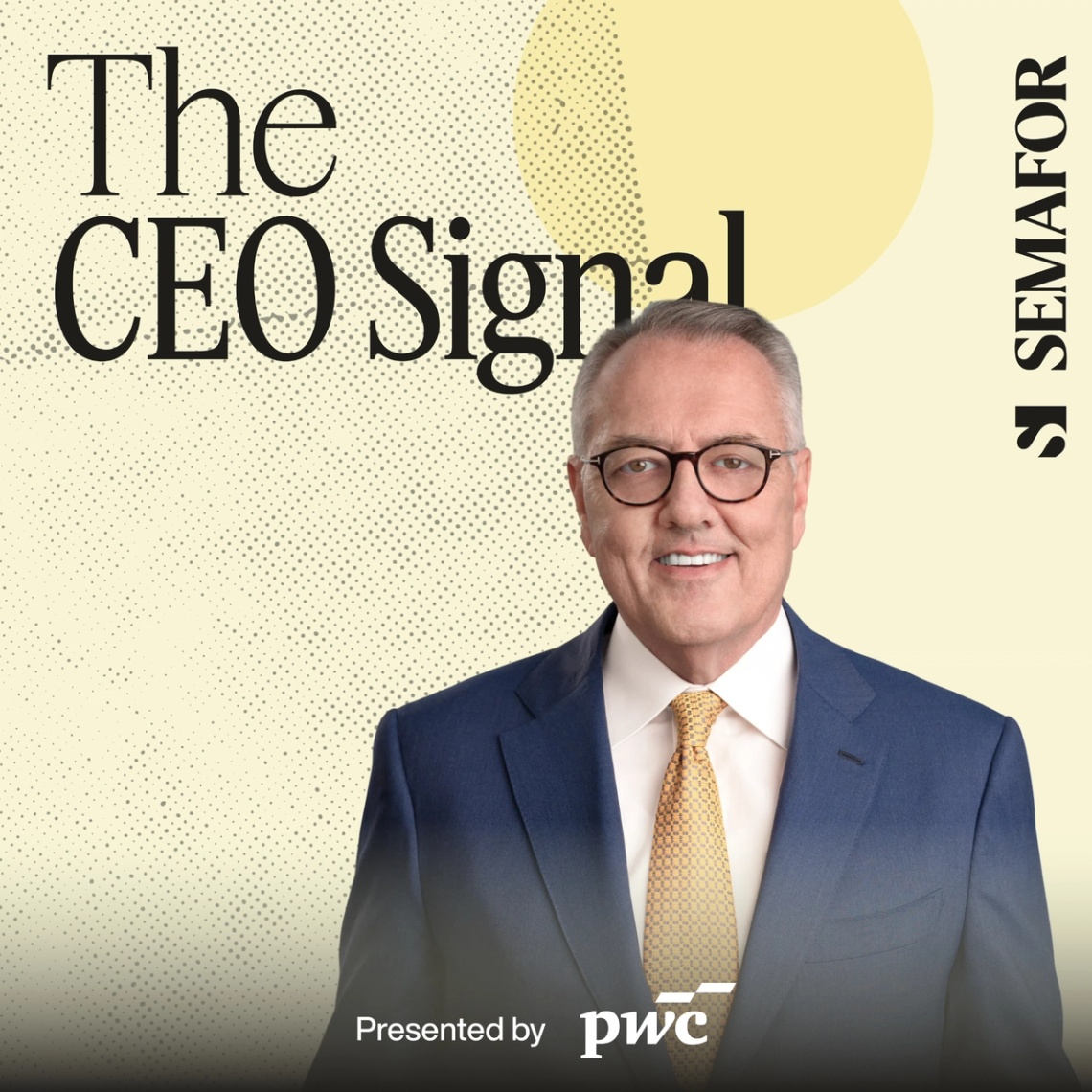 Will you feel “relief or regret”? That’s the question Motorola Solutions CEO Greg Brown asks himself about every consequential decision. On this week’s episode of The CEO Signal, presented by PwC, Brown explains how nearly two decades of activist pressure, private-equity involvement, and asking “dumb questions” have shaped the way he leads the public safety technology company. Brown reveals the moments when he challenged his board to fire him if they disagreed with his conviction, and other times when he decided to “check [his] ego at the door.” In a candid profile of leadership under pressure, Brown tells Andrew and Penny when he nearly quit, how to put your best people on your biggest problems, and why he thinks his most challenging investors made him a better CEO. |
|
 Courts- New filings at the Abu Dhabi International Arbitration Centre rose 67% in the first half of 2026 compared to a year earlier, reaching 20 cases worth a combined 985 million dirhams ($268 million). The center, known as arbitrateAD, opened in 2024. — AGBI
Finance- Mubadala co-led a $35 million pre-Series C round in Egypt-based payments company Paymob, alongside the European Bank for Reconstruction and Development. The Gulf now accounts for nearly half of Paymob’s revenue. — Wamda
Food- Swiss chocolatier Lindt shelved plans for a flagship store in Dubai, citing “the current geopolitical situation in the Middle East.” The company spent two years negotiating the project with Dubai’s government and had targeted a 2028 opening. — Bloomberg
Diplomacy |
|
 Hannah McKay/Reuters Hannah McKay/ReutersThe man who helped broker one of Britain’s biggest-ever defense deals is now locked in a fight to keep giant logistics warehouses from besmirching the English countryside. Wafic Said, a Syrian-born billionaire with Saudi citizenship, has joined local villagers at a public inquiry into 13 warehouses planned in Stoke Lyne, Oxfordshire. The 86-year-old, whose Palladian mansion at Tusmore Park sits nearby, accused the local council of having “capitulated to developers” after it declined to defend its own refusal on appeal. The brouhaha was described by one English tabloid as “a David-and-Goliath battle.” Said called the surrounding fields “quintessential Oxfordshire countryside.” The villagers, left to fund the fight themselves, have raised £50,000 ($66,125). — Ed Clowes |
|
| |  | | | You’re receiving this email because you signed up for briefings from Semafor. |
|


