Lumina Foundation is working to increase the share of adults in the U.S. labor force with college degrees or other credentials of value leading to economic prosperity.
In 2023, the U.S. Supreme Court ruled in Students for Fair Admissions, Inc. v. President and Fellows of Harvard College that race-conscious admissions policies violate the Equal Protection Clause of the Fourteenth Amendment and Title VI of the Civil Rights Act of 1964. The decision had an immediate and profound effect on how colleges and universities determine who gets into their institutions.
On the latest episode of "Today's Students, Tomorrow's Talent," researchers and leaders focused on college admissions examine the impact of the 2023 ruling today, the varying interpretations by state governments, and what the future of higher education access looks like.
Artificial intelligence is changing jobs, the skills employers need, and even what the beginning of a career looks like. That has led some people to question whether a degree is still worth pursuing. Lydia Logan of IBM thinks that's the wrong question.
The value of a degree has never come from access to information alone, Logan says. College teaches students how to evaluate evidence, wrestle with difficult questions, change a thesis when the facts demand it, and apply what one knows with sound judgment. AI can provide people with more information faster than ever, but it can't replace the work of becoming an effective thinker. What does need to change is how we prepare students to use AI well.
The Trump administration sued D.C. and three states last week in an attempt to invalidate their policies allowing in-state tuition for undocumented college students. It was a lamentable milestone: Since President Donald Trump returned to office last year, his administration has now sued every jurisdiction that offered such assistance.
Access and equity advocates say the moves are part of a broader campaign against “dreamers,” the young immigrants who came to the United States illegally as children. Many remember no other country as home. College degrees are particularly important for this cohort: They can lead to jobs at businesses willing to sponsor the necessary paperwork for them to come out of the shadows.
Daniel Diermeier has become one of the most visible college leaders. The chancellor of Vanderbilt University joined a panel recently in Washington, D.C., to make his case for rebuilding public trust—by taking politics out of research and the classroom and restraining institutions from issuing statements on matters not directly related to their mission or operations.
But being visible also means facing criticism. In this interview, Diermeier discusses politicization in higher education, attempts to limit academic freedom, and why he is publicly advocating for reforms to higher education while also quietly working with federal officials.
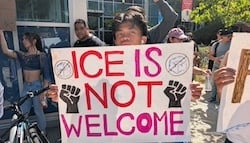
Two weeks ago, U.S. Immigration and Customs Enforcement agents arrested Renatho Casseus on his way to San Diego City College. Casseus faced his first bond hearing last week at the Otay Mesa Detention Center, where the judge denied him bail. The City College community has rallied in support of Casseus, but many students, faculty, and others are left feeling anxious about immigration enforcement so close to campus.
The chancellor of the San Diego Community College District, Gregory Smith, weighs in on what administrators are doing in response to the ongoing presence of ICE on college campuses.
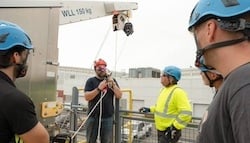
After earning a safety certification from the National Offshore Wind Training Center—a collaboration between Long Island’s Suffolk County Community College, the Long Island Federation of Labor, and multinational wind farm developer Orsted—William “Billy” Bishop worked on a wind farm near Rhode Island. Now he’s doing structural inspections and maintenance on Sunrise Wind, which is under construction off the coast of Long Island.
But the Trump administration’s efforts to crush offshore wind projects, part of its broader assault on clean energy, have created profound uncertainty for training programs like NOWTC and workers like Bishop.

.jpg?width=500&upscale=true&name=istockphoto-1159565448-612x612%20(1).jpg)

-1.jpg?width=500&upscale=true&name=istockphoto-2198899523-612x612%20(2)-1.jpg)