Plus: The history of the SAT test |

US Edition - Today's top story: How the pro-nicotine 'wellness' movement rebranded an addictive drug

September 22, 2026

US Edition

The Conversation
 

Top headlines

Will you support us?

These are important – and urgent – times. As political polarization deepens across the U.S., Europe and beyond, public conversations are increasingly hijacked by disinformation, trolls and emotional hot takes. When complex societal challenges are reduced to ammunition for cultural and political warfare, no one can hear each other, and democracy itself suffers.

The Conversation U.S. is trying to change all this. Every day, we publish essential, analytical articles that are always free to read.

Our mighty team works tirelessly to bridge the gap between academic research and the general public to deliver uncompromised, nonpartisan articles on the issues shaping our world.

Independent media, free of paywalls, relies on readers like you to support our mission.

Your generosity will go toward guaranteeing editorially independent journalism, grounded in peer-reviewed science and factual integrity. It makes it free for those who cannot afford to contribute.

Will you partner with us to build a better-informed community? Thank you in advance for your generosity (and a special thanks to those who have already supported us this year).


 

Beth Daley

Executive Editor and General Manager

 
The movement is focused on the idea of ‘clean’ nicotine use, such as pouches, which don’t contain tobacco. MoleQL/iStock via Getty Images Plus

How the pro-nicotine ‘wellness’ movement rebranded an addictive drug

Hasmeena Kathuria, University of Wisconsin-Madison

Nicotine products like pouches and patches are being promoted for cognitive enhancement, stress reduction, improved athletic performance and much more – with little scientific evidence.

International

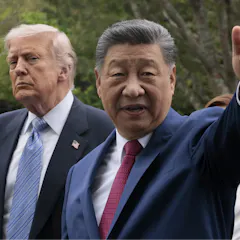
Three Ts will dominate Trump-Xi summit – but expect little movement on trade, less on Taiwan and who knows on tech

Rana Mitter, Harvard Kennedy School

Chinese and American leaders meet amid growing urgency over the issue of AI regulation.

Politics + Society

No cheery time for election pollsters in run-up to US midterms

W. Joseph Campbell, American University School of Communication

There are no guarantees that pollsters’ troubles in recent elections and popular skepticism about their dependability will be alleviated anytime soon.

Other presidents have let white-collar criminals dodge financial penalties – but not like Trump

Caren Morrison, Georgia State University

No other U.S. president has come close to wiping away the amount in fines and restitution owed to victims that Trump has.

When presidents ban journalists from the White House, the First Amendment is not the only constitutional right at stake

Wayne Unger, Quinnipiac University

When President Trump barred three news organizations from the White House, a lawsuit followed. In it, the news outlets invoked their Fifth and First amendments rights.

Environment + Energy

EPA says repealing power plant emissions rules will save billions – but its estimate leaves out health and climate costs

Akshaya Jha, Carnegie Mellon University

Keeping aging coal plants open, building new gas plants and choices about pollution controls affect electricity bills. Pollution adds health costs and climate damage that may not appear on those bills.

Game delays for lightning may be annoying, but they save lives – a sports meteorologist explains the risk

Chris Vagasky, University of Wisconsin-Madison

Players have been injured by lightning during games, and a strike to the stands could hurt a lot of fans.

Economy + Business

It’s OK if managers step in to help their sales staff – but not too much

Daniel E. Chavez, University of Tennessee

It’s fairly common for managers to intervene to help sales staff, but they have to balance competing duties.

Education

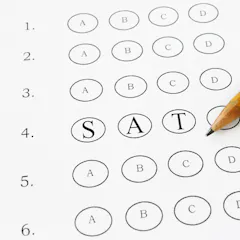
The SAT has changed since it debuted 100 years ago – but questions remain about its relevance

Beth Kania-Gosche, Missouri University of Science and Technology

Wealthier students tend to score higher on the SAT than other groups of students, raising questions about how accurate of a barometer the test actually is.

Health + Medicine

When your child asks if they’ll be harmed like the people on the news, what do you say? Psychologists provide tips on how to talk about identity

Anahi Collado, University of Colorado Boulder; Colleen Cummings, Georgetown University

Many children are seeing aspects of their identity portrayed as problematic. Having regular conversations about identity can armor them against future harm.

Trending on site

Today's video

Bright yellow taxis packed closely together, appearing to be stuck in traffic.
Watch on YouTube
 

About The Conversation

We're a nonprofit news organization dedicated to bringing you facts and trustworthy analysis to help you make sense of our complex world. We can give away our articles thanks to the generosity of readers like you. Learn more about us

Support our work

More from The Conversation

Follow The Conversation

You can find us on all your favorite platforms:

YouTubeBlueskyFacebookTikTok

LinkedInInstagramMastodon

• Or get occasional texts from us


<