| | In this edition, why the NBA is the best corporate regulator in America, and Nvidia’s takeover of Hu͏ ͏ ͏ ͏ ͏ ͏ |
| |  | Business |  |
| |
|
 - Nvidia bets on open models
- The dark web of ‘ghost creators’
- Google avoids a breakup
- What worries Jon Gray
- The ‘trade down’ economy
 Wachtell’s report on the Los Angeles Clippers is a true page-turner … Influencer’s clout-chasing stunts aren’t tax-deductible |
|
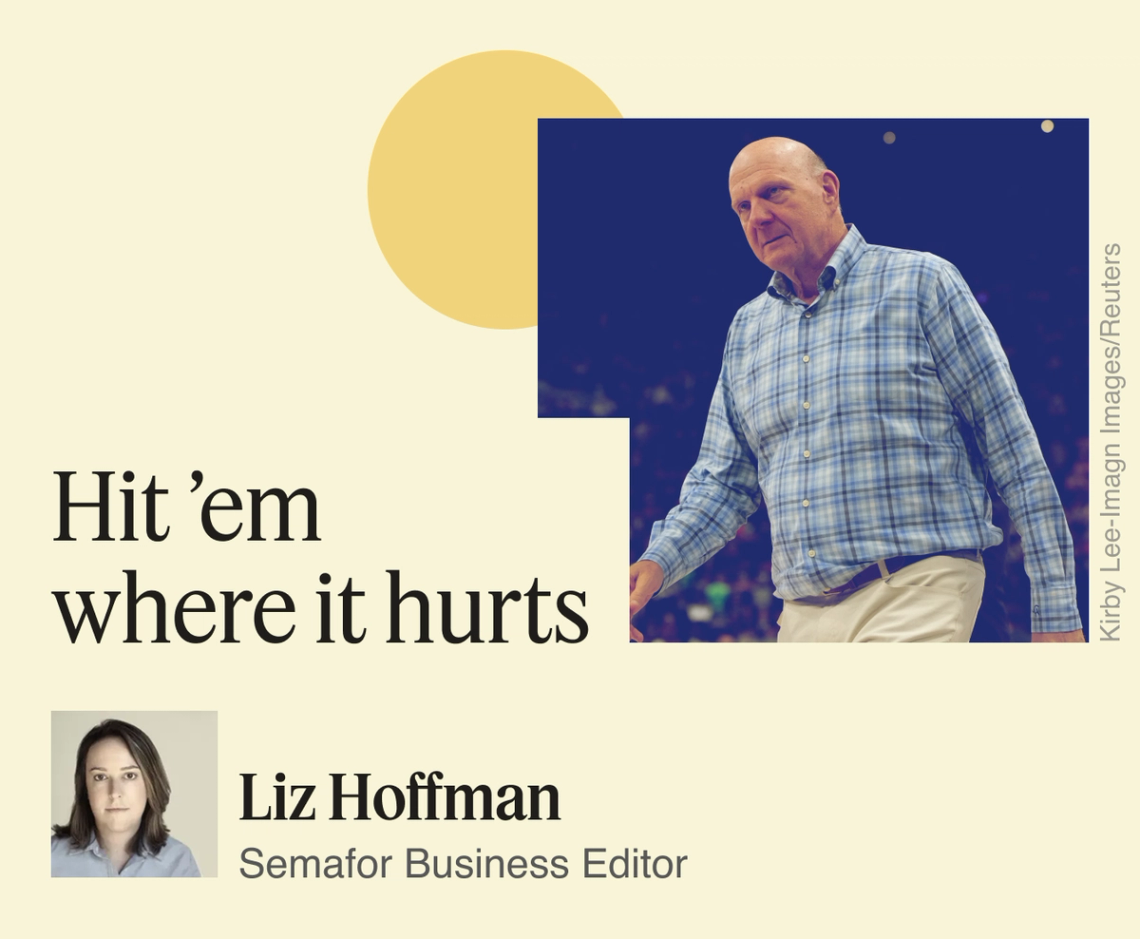 The NBA just showed corporate wrist-slappers how it’s done. The SEC, CFTC, OSHA, EPA, etc. should take some notes. The penalty handed to the Los Angeles Clippers is the best I’ve seen as a reporter covering companies that sometimes behave badly. The Clippers will forfeit their next five first-round draft picks as penance for giving Kawhi Leonard “no-show” jobs, steered his way by team owner Steve Ballmer, to skirt the league’s salary cap. The $30 million fine that comes along is nothing — it’s 10 days’ worth of the dividends Ballmer clips from his Microsoft stake — but the draft picks will likely exile the team to irrelevance for years. It’s a penalty box worthy of an architecture award. It’s justice enough to win the approval of Jesse Eisinger, the ProPublica journalist who wrote the book on regulatory spinelessness. “A very successful punishment,” he tells me, because it “gets to the core of why these billionaires buy sports teams. They’ve been losers since high school so they want to be cool, to be literal winners and have trophies.” The Clippers being terrible will make Ballmer less cool and guarantee a chorus of boos from the $2 billion stadium the team just opened, which is going to be a lot emptier for a while. Corporate watchdogs should do more of this. What if, instead of paying $250 million after mishandling big stock trades, Morgan Stanley simply wasn’t allowed to do those trades for a while? They’d be reminded of their screw-up every time Goldman Sachs printed a winner. A big tech company in trouble can’t recruit from Stanford or MIT for a few years. The Labor Department bans private-equity firms caught misbehaving from raising money from federal pension funds. Telecoms that overcharge are excluded from spectrum auctions. Media executives are banned from Sun Valley. The two standout pieces of corporate punishment over the past decade hit companies where it hurt. An asset cap forced Wells Fargo to turn away business after its fake-accounts scandal and it fell behind Citigroup in size. The Federal Aviation Administration limited Boeing’s production of 737s after repeated safety failures, and the Airbus A320 became the best-selling jet in aviation history. We’re living in an age of creative enforcement from Washington. More of it should actually sting. Bring back dunce caps. |
|
Nvidia bets on open-weight AI |
 Courtesy of Nvidia Courtesy of NvidiaNvidia’s $13 billion takeover of Hugging Face is a big bet on open-weight models and another sign that Jensen Huang has ambitions well beyond just making chips. In acquiring Hugging Face, Nvidia gets the distribution network for more than 3 million AI models and access to 18 million developers. It also inherits something of an IOU from OpenAI, whose models broke out of their testing environment and hacked Hugging Face in a breach that has set off alarm bells across the tech world, and aligns itself with the Trump administration, which has thrown its weight behind open-source models. Hugging Face is part GitHub, the code repository that Microsoft bought in 2018, and part App Store, and is growing quickly as mistrust in black-box models like OpenAI’s and Anthropic’s send developers looking for alternatives. The leading open models are Chinese, but US firms are barging in. Nvidia struck a $6 billion deal with Poolside, an open-weight model builder, last month in a deal that Poolside’s founders said would ensure that AI is not “a closed technology controlled by few but one built by many out in the open.” Payments company Stripe agreed to acquire open-weight model aggregator OpenRouter for $7.5 billion. — Jake Angelo |
|
Video creators cash in on political discord |
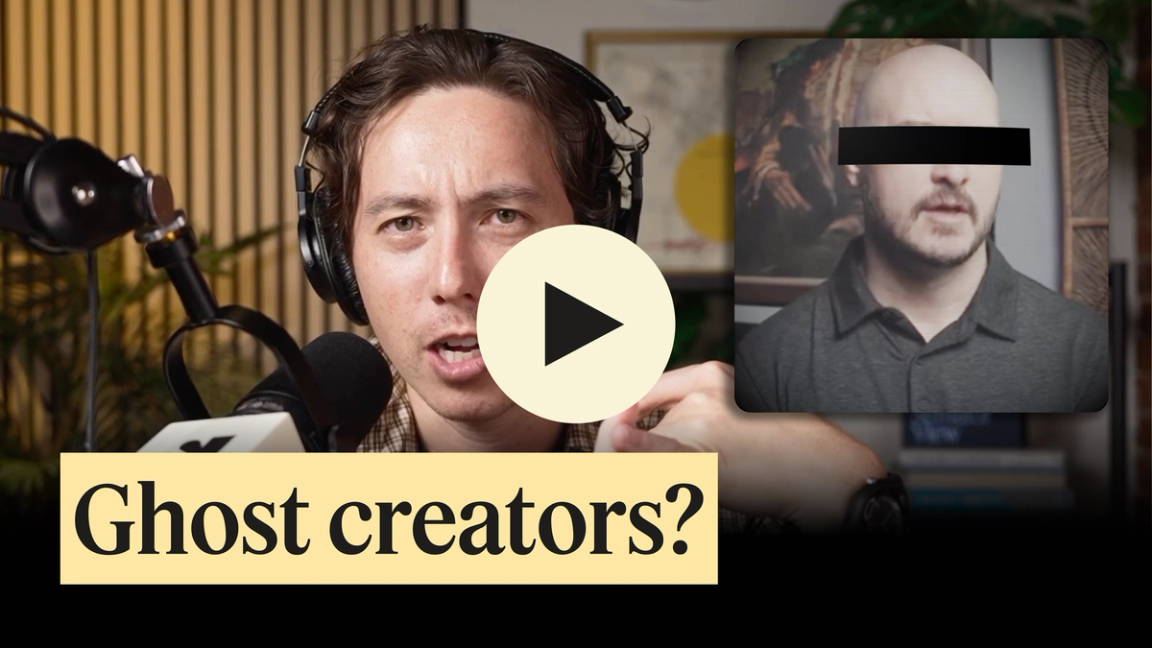 A network of AI-powered “news” channels targeting left-wing politicians garnered millions of impressions, frustrating elected officials and making big money for the little-known operator behind them, Semafor’s Max Tani reports. Motivated less by politics and more by profit, the network of YouTube and social channels generated more engagement than newsrooms, such as the Washington Post or the Associated Press. Influencer brand deals have evolved in recent years beyond makeup hauls and free clothing: Now even political campaigns are spending millions of dollars on endorsements from social media stars. This network of channels, however, relied on real (and paid) human actors reading off identical scripts that bore the hallmarks of AI-generated text, Max found. The network, the brainchild of a University of Chicago growth hacker, denied that it was producing the content on behalf of any political clients. |
|
How Google avoided another breakup |
 Bhawika Chhabra/Reuters Bhawika Chhabra/ReutersGoogle has once again avoided being broken up, despite a formal finding that it has operated an illegal monopoly. A federal judge agreed with prosecutors that Google had rigged the way its customers buy online ads but stopped short of forcing the company to sell the business. It followed a similar finding last year in Google’s giant search business. It is the third time in the last year that a judge has decided against breaking up a big tech company (Meta also avoided a divestiture of Instagram and WhatsApp). The pattern has frustrated liberal antitrust thinkers. “Why do judges bother to find companies guilty of running a monopoly if they’re unwilling to break them up?” The American Prospect’s David Dayen wrote. But it’s been a boon for corporate America, which has skirted meaningful remedial antitrust action for years, even under Democratic presidencies. The FTC and DOJ have had more success blocking mergers, but judges don’t seem inclined to unwind businesses. — Rohan Goswami |
|
 Prediction markets have rapidly evolved from a niche novelty into a mainstream consumer product, with billions in daily volume across sports, elections, Fed decisions, and corporate earnings. Their growth is prompting new questions about how these markets should operate, be regulated, and fit into the broader financial landscape. On Tuesday, September 15, Semafor’s Hedges and Bets: The Future of Prediction Markets will convene Rep. Dusty Johnson, R-S.D., Chairman, House Agriculture Subcommittee on Commodity Markets, Digital Assets, Rural Development; Rep. Joe Morelle, D-N.Y., Ranking Member, Committee on House Administration; and additional key leaders to unpack what’s next for this rapidly evolving industry. Washington, DC | September 15 | Request Invite |
|
Blackstone’s Jon Gray on AI’s disruption |
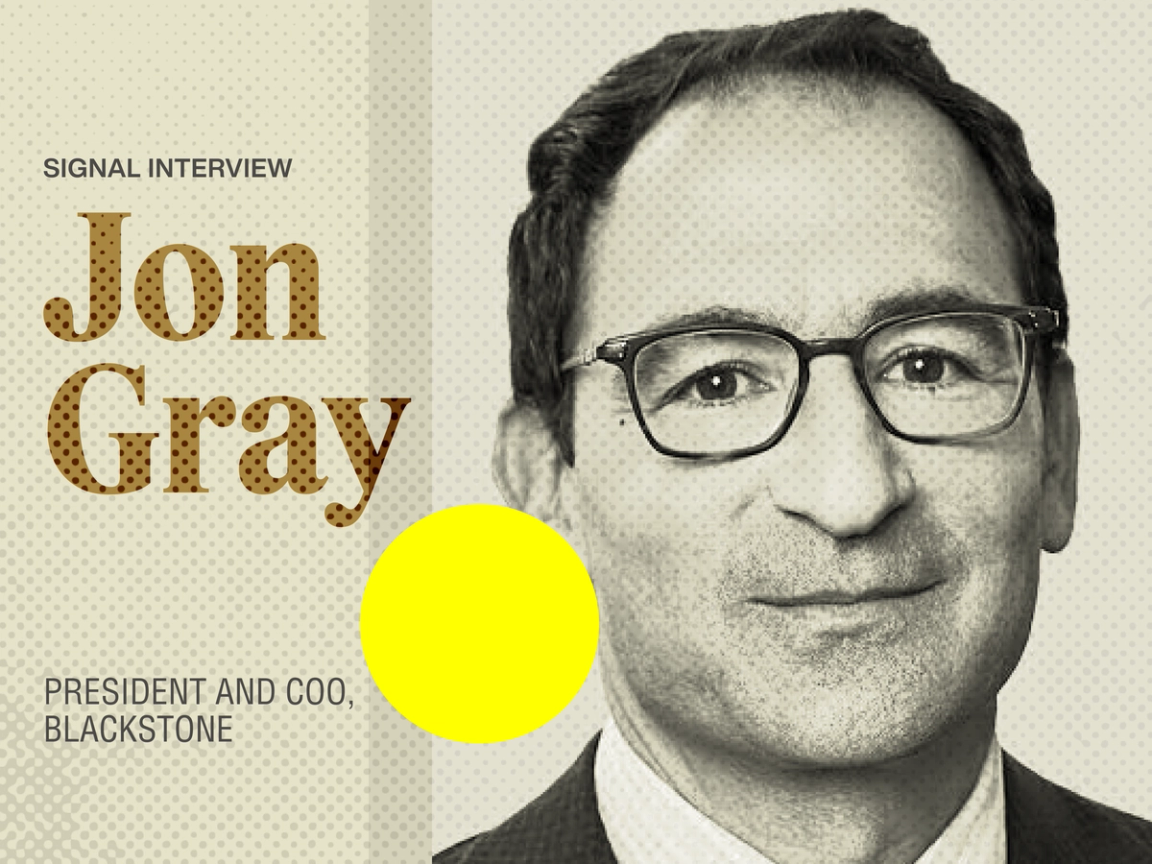 AI disruption is making Blackstone’s investment committee discussions much tougher, President Jon Gray told Semafor’s Andrew Edgecliffe-Johnson on the latest episode of The CEO Signal. “Today, the hardest part of investing is to know what a professional service is going to be worth. What is a billable hour? What’s going to happen in information services? What’s going to happen in the media business? What’s going to happen in the software business?” Some companies will thrive, he says, “but others will get knocked out.” Blackstone has bet big on AI, first as a landlord — a business it knows well through its real-estate arm — and more recently through chip and services joint ventures with Google and Anthropic. Private-equity firms are in the business of putting a price today on profits in the future, and the amount of debt they use in their takeovers means that even small deviations can mushroom into big whiffs. “We still run [Blackstone] like a small business in a lot of ways,” Gray said, “because if the pizza doesn’t taste good — and the pizza, for us, [is] the net returns we produce for the customers — nothing else matters.” |
|
Companies confront ‘trade down’ economy |
 Jessica Padula. Stephen Yang/Semafor. Jessica Padula. Stephen Yang/Semafor.US economic data may still be humming along, but consumer companies like Nespresso say they’ve had to try harder to convince shoppers to pony up hundreds of dollars for coffee makers. “We really know about our consumers that they’re facing pressure and impact on their wallets as gas prices rise,” said Nespresso’s US marketing chief Jessica Padula at the Semafor Business on Luxury event this week. “If we’re in a trade-down economy, which we all recognize we are in,” she said, then you could see a consumer trading down from Nespresso to drip coffee and “we’re somewhat irrationally asking you to pay double.” But if you refashion that frame of reference as trading down from your $8 or $9 coffee shop latte “to make faster, easier and exactly what I want then it’s actually a whole lot less expensive.” Likewise, Lisa Sequino, president of makeup brands at Estée Lauder, said shoppers’ expectations are rising: It’s no longer enough to make a lipstick that looks nice, so it’s increasingly investing to make its lipsticks both smell and taste good, too. When I asked why I need my lipstick to taste good, Sequino said it’s all about making your purchase feel like a luxurious experience and called up Leonard Lauder’s famous lipstick index. “When the economy is down, lipstick sales go up” because people want that tiny slice of luxury, she said. — Shelly Banjo |
|
➚ BUY: VC. The AI boom is turning NBA players into investing stars. And Saudi Arabia’s government is launching a giant venture fund, Semafor’s Matthew Martin scoops. ➘ SELL: VW. Volkswagen’s CEO is considering a move to bypass his union- and state-controlled board to press layoff plans he thinks are needed to fight Chinese competition. The German automaker also reshuffled its US leadership after sales declines. |
|
 Companies & Deals- Breaking a sweat: Luxury gym chain Equinox is in talks with Silver Lake and property developer Related to refinance a debt loan that is charging interest rates as high as 16%.
- Econ 101: A tool that helps broker college mergers is expanding as higher education stares down an enrollment crisis. One in five university presidents has held serious merger talks, a recent survey found.
- Secret sauce: You might think the humble mac-and-cheese would be immune from disruption, but you would be wrong. Italy’s Barilla is buying startup Goodles.
Watchdogs |
|
|


