Dear Educator, In two weeks, the country will mark the 25th anniversary of the September 11 attacks.
Teaching about that day, and about terrorism more broadly, is a hard task. CFR Education has nonpartisan classroom resources to help you navigate not just what happened on September 11, 2001, but how it reshaped the world your students are growing up in. The events of September 11, 2001, set in motion sweeping changes to U.S. intelligence and counterterrorism practices, launched major military operations, and altered Americans’ daily routines.
Nearly 3,000 people died that day. For those who were alive during 9/11, the image and the emotion of the attacks were a defining moment, but for those born after, the events can feel like a paragraph in a history book. In fact, 9/11 is as distant for those in school today as the Vietnam War was for those who were students in 2001. That's why CFR Education created a new teaching resource that can help humanize a history that can otherwise feel distant.
Continue reading to explore all of what CFR Education has to offer, including new lesson plans, readings, expert testimony, and a simulation.
Thank you for doing this important work.
Caroline Netchvolodoff
Vice President, Education
Council on Foreign Relations |
|
|
|
Reflecting on the Human Experience of 9/11 |
Every student learning about 9/11 today has no living memory of the event, and for some educators, the same is true. Like all historical events receding from living memory, understanding requires firsthand accounts from those who were there. This creates a meaningful opportunity to center individual stories and open genuine conversation.
Using the Question Formulation Technique, this new activity helps students investigate how individuals learned of the 9/11 attacks, focusing on the historical moment when President George W. Bush was informed of the initial attacks. |
|
|
|
Teaching about the Topic of Terrorism |
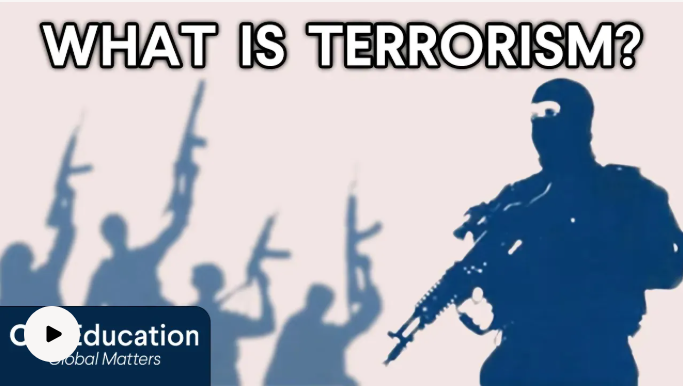
Terrorism is not a modern invention. From the dagger-bearing Sicarii, who employed terrorism against ancient Roman rulers, to the terrorists who assassinated an Austrian archduke and lit the spark for World War I, political violence carried out to advance an agenda has existed across cultures and centuries.
Use this short video to help students understand what terrorism is and why people turn to it. |
|
|
|
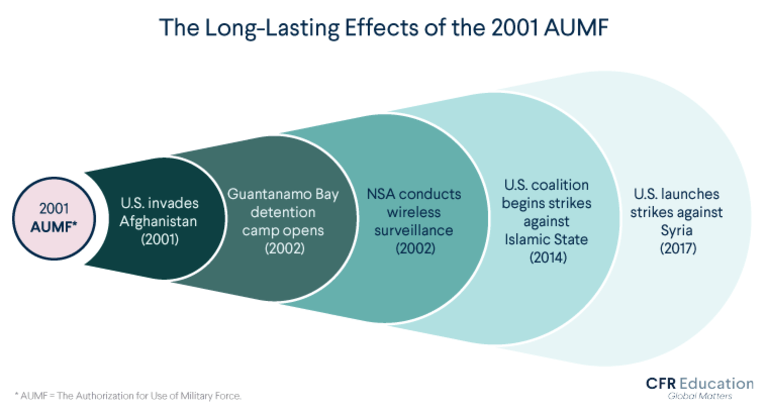
The attacks on September 11th didn't just shock the world — they reoriented how the United States understood its place in it. The policies that followed, enacted in the name of national security, reach into your students' lives today: shaping the data they share online, the way they travel, and the conflicts their tax dollars fund. The policies born of that day also defined the course of counterterrorism policy for over two decades. These two resources can help your students trace the impacts:
|
CFR Education also created two new lesson plans to help you integrate these concepts into your class: |
|
|
|
Response to 9/11 Simulation |
Put your students in the shoes of the National Security Council on the evening of September 11, 2001, as they consider the policy options available in the aftermath of the deadliest terrorist attack on America.
Through this simulation, students will understand that the 9/11 attacks represented a new brand of terrorism that could require a new brand of counterterrorism policy in response. |
|
| |
|
Testimony From CFR Fellow on Reviewing the 9/11 Commission & Intelligence Reform Impacts |
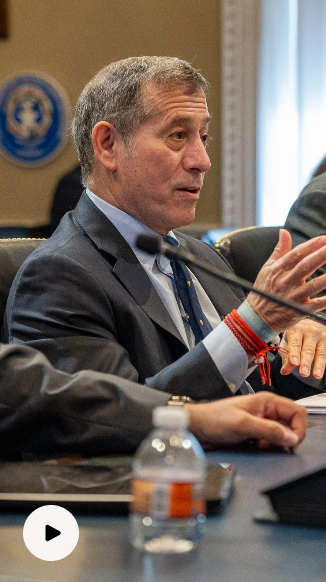
Watch as Bruce Hoffman, senior fellow for counterterrorism and homeland security at the Council on Foreign Relations, testifies to the U.S. House Permanent Select Committee on the importance of sustaining the intelligence community’s capacity to fight the threat of terrorism 25 years after the attacks on 9/11. |
|
| |
|
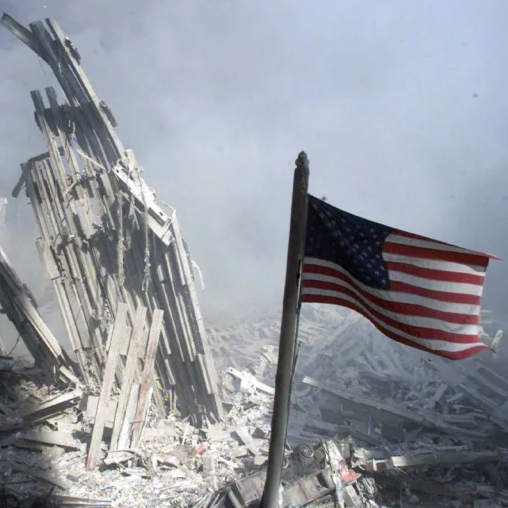
An American flag flies near the base of the destroyed World Trade Center in New York City on September 11, 2001. (Peter Morgan/Reuters) |
|
|
|
58 East 68th Street, New York, NY 10065 |
1777 F Street, NW, Washington, DC 20006 |
|
|
|
|