| | Trump wants to wait for Iran to fold, Egypt joins a regional mutual defense pact, and the aftermath ͏ ͏ ͏ ͏ ͏ ͏ |
| |  | Flagship |  |
| |
|
The World Today | 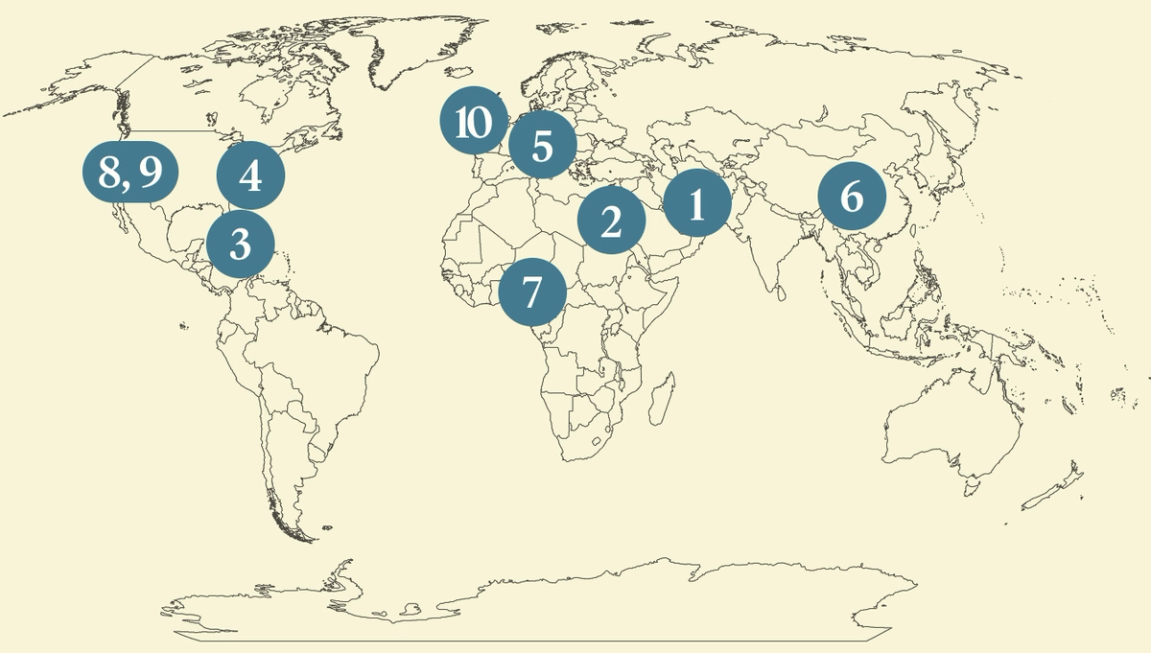 - Trump’s ‘low-key’ Iran plan
- Egypt joins defense pact
- CIA steps up Cuba presence
- Private credit under strain
- Europe’s record hot summer
- Typhoon hits Shanghai
- Africa’s IPO, merger boom
- AI sets bug-hunt records…
- …and solves math problems
- Cambridge’s plagiarism row
 The London Review of Substacks, and a two-for-one astronomical event. |
|
Trump ‘low-keying it’ on Iran |
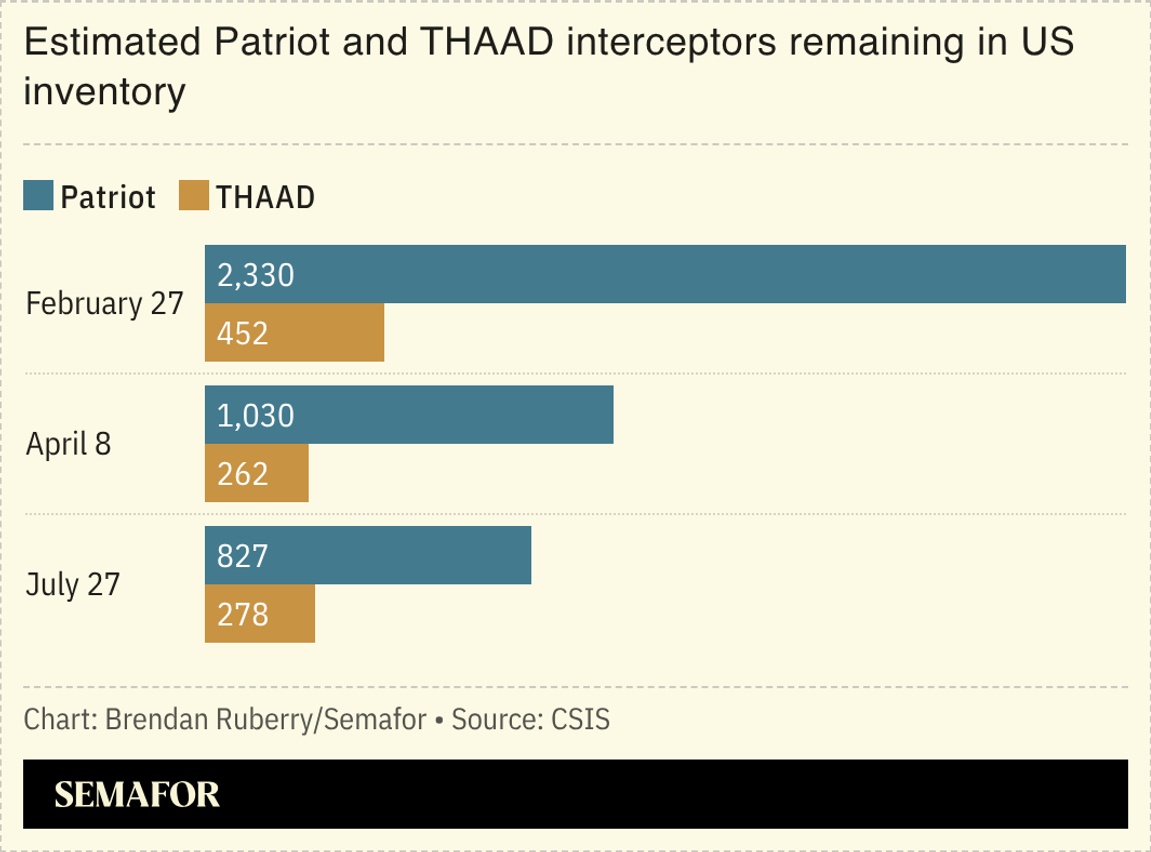 US President Donald Trump said he is waiting for Iran to buckle under economic pressure from the war rather than pressing for a deal, despite his own inflation concerns back home. “We are low-keying it,” Trump said in an interview with Axios. “We are just watching Iran with its huge inflation and the fact they have no money.” Iran has been waging its own economic campaign by dictating terms for reopening the Strait of Hormuz to oil shipments, its best leverage as Trump heads into the midterm elections seeking an end to the war and lower gas prices. “The US is running out of munitions, it’s running out of options, and fundamentally, it’s running out of patience,” a security analyst told CNN. |
|
Mecca defense pact may grow |
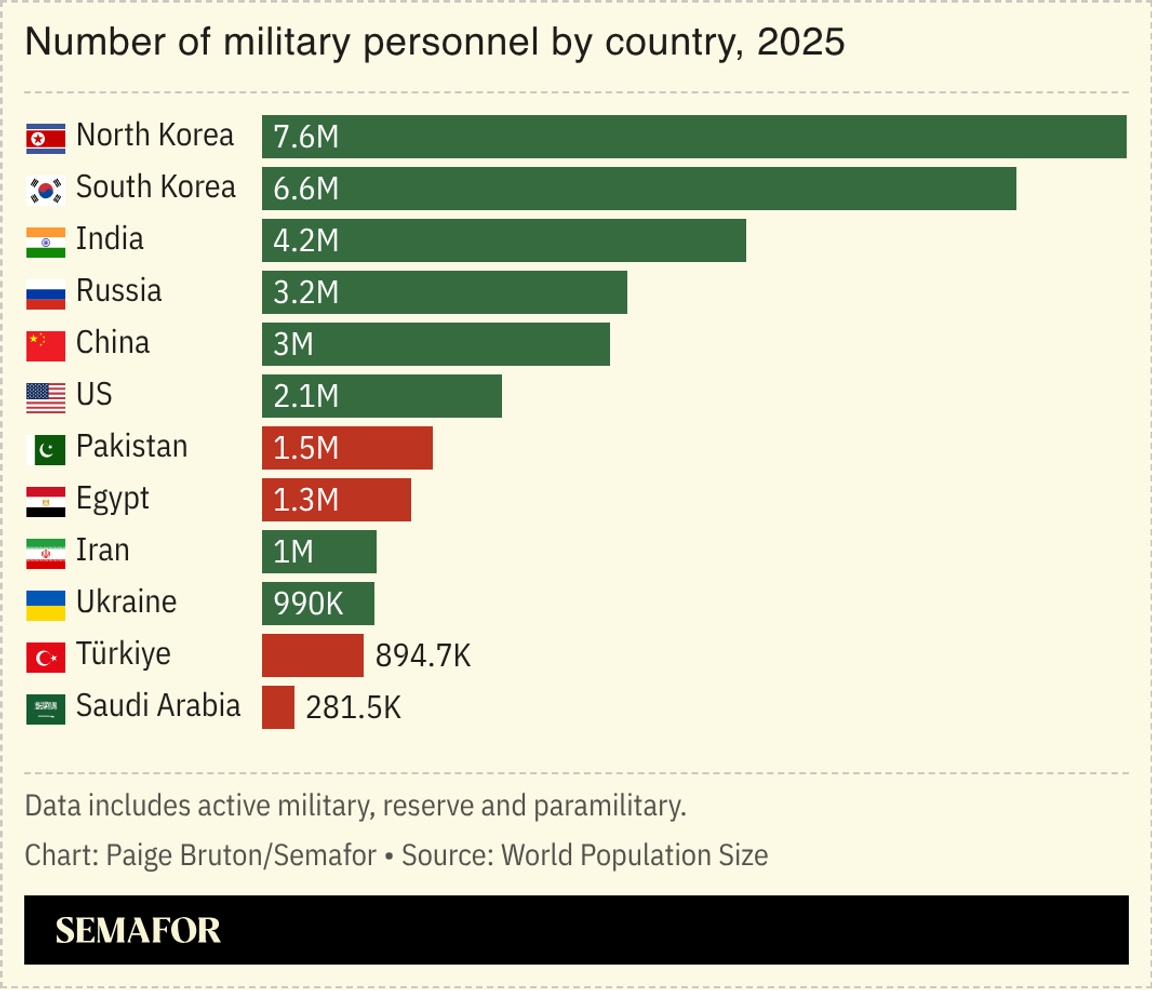 Türkiye said a mutual defense pact with Saudi Arabia and Pakistan could be expanded to include Egypt. Several countries want to join the trilateral agreement signed in Mecca on Friday, Turkish Foreign Minister Hakan Fidan told the state-run Anadolu Agency, saying only technical matters stood in the way of them signing up. The so-called Mecca pact, which was formed against the backdrop of the war in Iran, commits members to jointly retaliate against attacks on any of them in the style of NATO’s Article 5. Egypt would bring one of the region’s largest militaries. Pakistan’s involvement also signals ambitions beyond the Middle East: Islamabad’s foreign minister said the accord is open to any regional state willing to uphold its principles. |
|
US intelligence targets Cuba |
 Norlys Perez/Reuters Norlys Perez/ReutersThe US is increasing its intelligence presence in Cuba, in an apparent bid to force regime change on the island. The CIA has designated Havana a “priority 1” target alongside China, Iran, and Russia, and Secretary of State Marco Rubio called Cuba “an influence and espionage superpower.” Washington has stepped up pressure on the island this year: An oil embargo has pushed Cuba’s energy system to the brink of collapse, and basic goods are in short supply. The White House is looking to boost its information flow as it considers an operation comparable to the capture of Venezuelan President Nicolás Maduro, El Paìs reported, although US military resources are already under considerable strain because of the war in Iran. |
|
Record private-sector loan defaults |
 Andrew Kelly/Reuters Andrew Kelly/ReutersDefaults on private-credit loans hit their highest level in at least five years, a major stress test for the growing industry. Direct lending from private funds has become one of Wall Street’s favorite moves, and the high-interest loans offer hefty returns; the private market is worth about $2 trillion, up hugely from a decade ago. But a Wall Street Journal analysis found that investor returns and loan health are down. Most defaults are in healthcare, but there are concerns this could spread to software, which makes up 20% of lending. Some worry a downturn in the US economy could pile pressure on the highly leveraged sector; “losses could jump sharply if growth abates,” the Journal warned. |
|
Hottest summer on record in Europe |
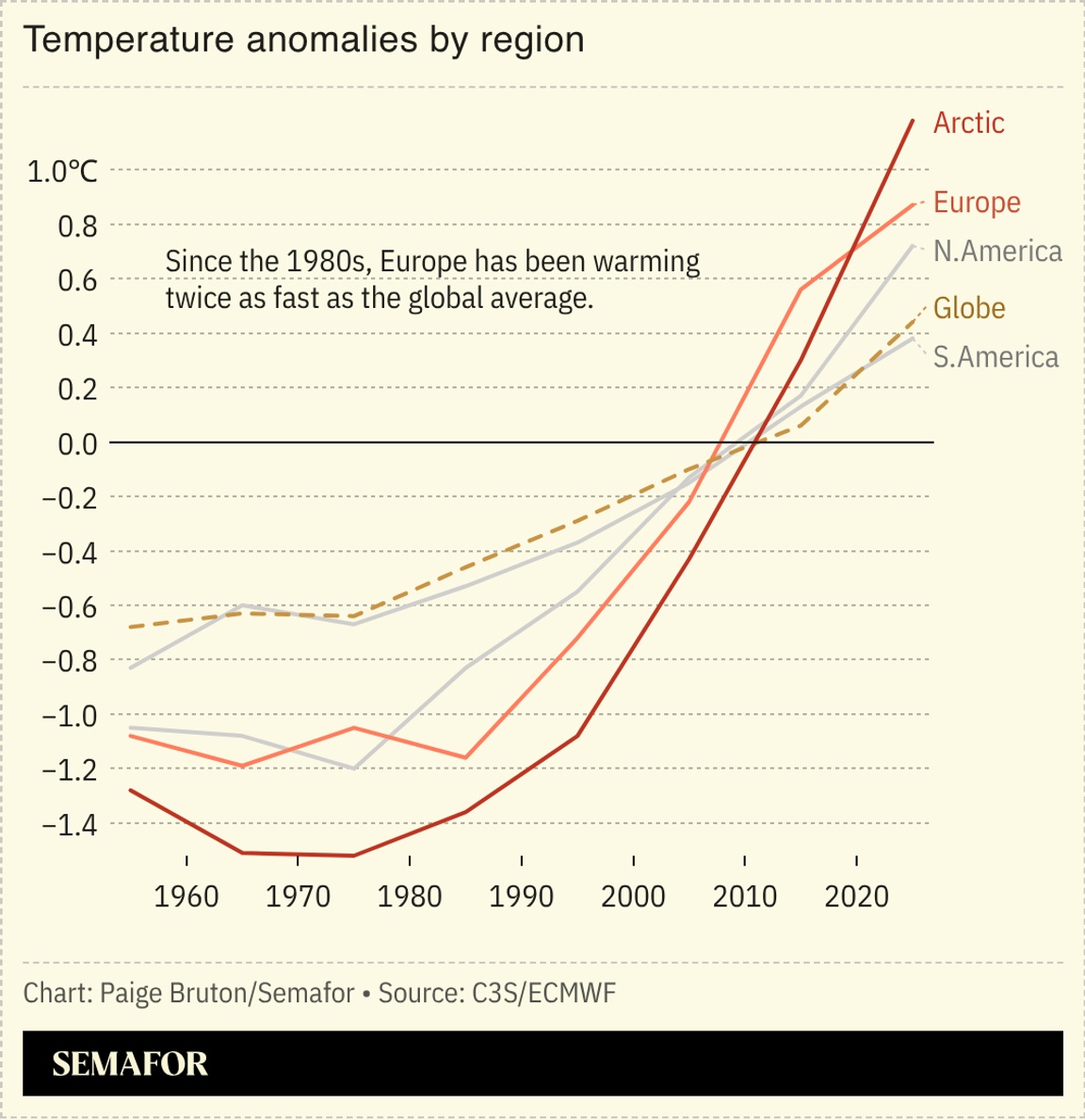 This year’s summer in Western Europe has so far been the hottest on record, with repeated heatwaves and near-constant drought. A climate monitor said the average temperature was 21.62°C (71°F) across the region, beating 2022’s record. Low river levels have hit transportation, irrigation, and energy production in several countries. Britain has seen more days above 30°C (86°F) than in any previous year, with most of August still to come. The dry, hot conditions have caused thousands of deaths, while wildfires have turned dangerous relics into present dangers: “Europe is full of buried explosives” left over from World Wars I and II, The Conversation noted, and prolonged fires have started to set some off. |
|
Typhoon Dolphin hits China |
|
 Sodiq Adelakun/File Photo/Reuters Sodiq Adelakun/File Photo/ReutersAfrica is seeing a new wave of IPOs and mergers, beginning with the listing of Aliko Dangote’s oil refinery. The Dangote debut, expected to raise $5 billion, “has got everyone very excited,” an analyst told Semafor, saying it showed the continent’s growing ability to finance large industrial businesses after years of sluggish activity. If demand is strong, it could broaden the capital pool for other African companies: Other potential IPOs are emerging across the continent’s tech and telecom industries. The M&A market has also picked up, including Diageo’s $2.3 billion sale of its East African beer business to Japan’s Asahi, and South Africa lender Nedbank’s $855 million offer for a controlling stake in Kenya’s NCBA Group. |
|
AI finds record software flaws |
 Toby Melville/Reuters Toby Melville/ReutersAI tools are exposing record numbers of flaws in widely used software. Oracle patched 1,449 problems in July, against 309 last July; Google went from 11 to 433; Microsoft’s rose nearly fivefold. A US database logged 45,207 flaws this year, close to 2025’s total, itself a record. Linus Torvalds, the creator of Linux, said none of the bugs found in the open-source operating system’s latest release look “particularly scary” by themselves, but the scale is unprecedented. This is “the new normal,” he wrote. Despite concerns that AI would find spurious problems to win bug-hunting bounties, the flaws are mainly being found by in-house teams. Tech giants can absorb these numbers; smaller organizations may not be able to. |
|
AI cracks math quandaries |
 Dado Ruvic/Illustration/Reuters Dado Ruvic/Illustration/ReutersOpenAI announced its latest model family, Astra, by revealing that it had solved 10 major problems that have foxed mathematicians for at least a decade. The results, laid out in a 249-page manuscript, include a formula for how tightly you can pack spheres in high-dimensional spaces, and a counterexample to the conjecture that any countable group can be approximated by shuffling a finite set, like playing cards. Astra used tokens worth about $2,000 to come up with all 10 solutions, making it cheaper than human mathematicians; the new model also formalized its results so they can be checked automatically too, obviating the need for humans to trust the system’s reasoning. |
|
Cambridge scandal rocks academia |
 University of Cambridge/Handout via Reuters University of Cambridge/Handout via ReutersThe handling of a recent plagiarism scandal handed ammuni |
|
|


