A fresh take on culture, fashion, cities and the way we live – from the desks of Monocle’s editors and bureaux chiefs.
|
Saturday 8/8/26
|

|
|
London
Paris
Zürich
Milan
Bangkok
Tokyo
Toronto
|
|
|
|

feeling the heat
This week’s dispatch finds Monocle’s editors and correspondents on the scent of
the summer’s best fragrances. Then: your chance to dance in
disco’s most famous outfit, why
your local sauna is the best place for a hot date and we take some summer style tips from
designer Jayden Ali. Flipping the script – or rather, the plate – on inauthentic hotels is Monocle’s editor in chief, Andrew Tuck.
|
|
Hotels have a lot on their plate – but the least they can do is deliver a sense of place
By Andrew Tuck
|

|
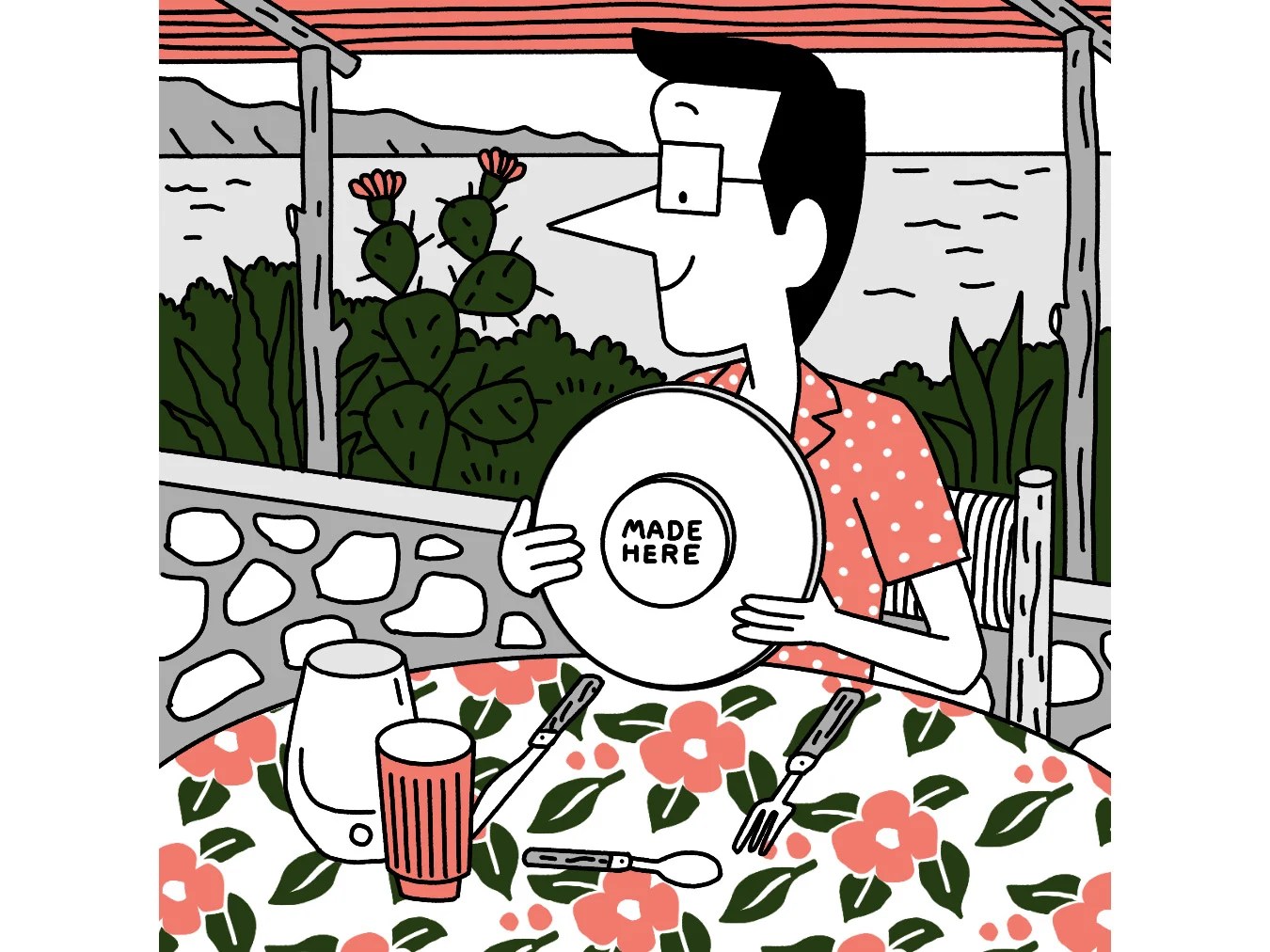
Are you a plate flipper? I can’t stop myself. Same with glasses. The labels on the towels. Where is this stuff made, I wonder? Often the answer is a delight but too often a disappointment.
Hotel groups have – like lots of brands – locked on to the fact that people are seeking authenticity. And when that comes to travel it means delivering that cliché, “a sense of place”. Guests don’t want to arrive in a room stripped of connections to the spot where it sits and where, as you awake, it’s hard to recall if you are in Milan or Minnesota without opening the curtains.
The only trouble is, if you are a hotel group, it’s very hard to stop your central buying team from dispatching the same plates, towels and even art, to every property in your portfolio. It’s quicker and cheaper.
I’m in Mallorca on holiday and have been doing a lot of crockery flipping. Last night we ate at a hotel where they emphasise the efforts they have gone to provide a made in Spain – and in particular Mallorca – experience. There’s lots to admire. Yet a quick flip of the plate reveals the mark of an Italian crockery company, the glasses are etched “made in Slovakia”, the pepper grinder is German.
|
Just down the road from our home in Palma is an example of what happens when a hotel is created by people who want you to flip the plates – and read the wine label, ask where the food is grown, even who made the sofas.
The Terreno Barrio Hotel, which opened this year (we have reported on the project), is owned by hotelier Lydia Piñero and was developed through a series of creative conversations with friends and designers. She was figuring out how to build a hotel that was truly of place and which could be of benefit to its neighbours (this would lead to adding co-working places, an outdoor gym now used by locals). And she signed Ohlab architects, an ambitious practice run by Jaime Oliver and Paloma Hernaiz, to deliver the scheme.
Instead of going to fast-turnaround contract furniture companies, Ohlab commissioned island makers to create as much as possible in Mallorca. It wasn’t easy, took time and required businesses to rescale. But as I sat at the rooftop bar the other night – drinking local wine, eating Mallorcan olives – I realised that there is a subtle manifesto about the future of hotel design in every fibre of this building.
There’s another take on this idea down the road in the new
Mandarin Oriental resort at Punta Negra, which also featured in the supplement of our just out
Med, Mountains & More newspaper.
This Hong Kong-anchored hospitality player could have docked with a property that gave just a few nods to local talent to appease guests – but it hasn’t. And one of the best things they did was to hire the art advisor and curator Paloma Fernández-Iriondo, who filled the resort with specially commissioned artworks by artists based or born in Spain and whose stories reflect Mallorca’s history as a cultural crossroads. She installed works – such as Fran Aniorte’s tiled
Balearic Constellation – that are riven with meaning but also fit with a Mediterranean hotel vibe. Fernández-Iriondo focused on finding artists without representation and located many of them by driving around the island, knocking on studio doors. It’s commendable – it took time and required them to ignore the easy path.
I don’t want to put Italian crockery makers out of business. But as hotel brands offer up increasingly elaborate stories of provenance, it’s important that they are true, that their stories withstand scrutiny. We need brands to do the hard work, to be genuine. Otherwise, the plate flippers will catch them out.
Want to read more of Andrew’s columns? Click here.
|
|
buy this:
The season’s best perfumes
Scents of summer: Five fresh fragrances
Settling on a scent for the summer is a delicate pursuit (writes Grace Charlton). The warmer months call for bright, clean perfumes to wear on coastal holidays and weekend escapes. From a chilli-and-lime-infused fragrance by Australian perfumer Flâner to a heady combination of fig and cedarwood from Italian luxury house Bottega Veneta, we have selected a few for your seasonal rotation.
Five of our favourites can be found here and the full 10 feature in
Med, Mountains & More, our seasonal summer newspaper. If you’re not a subscriber,
pick up a copy of the paper here. Subscribers can enjoy the printed copy delivered to their door and read the digital version here. For now, take a whiff of this scent from Loewe.
|
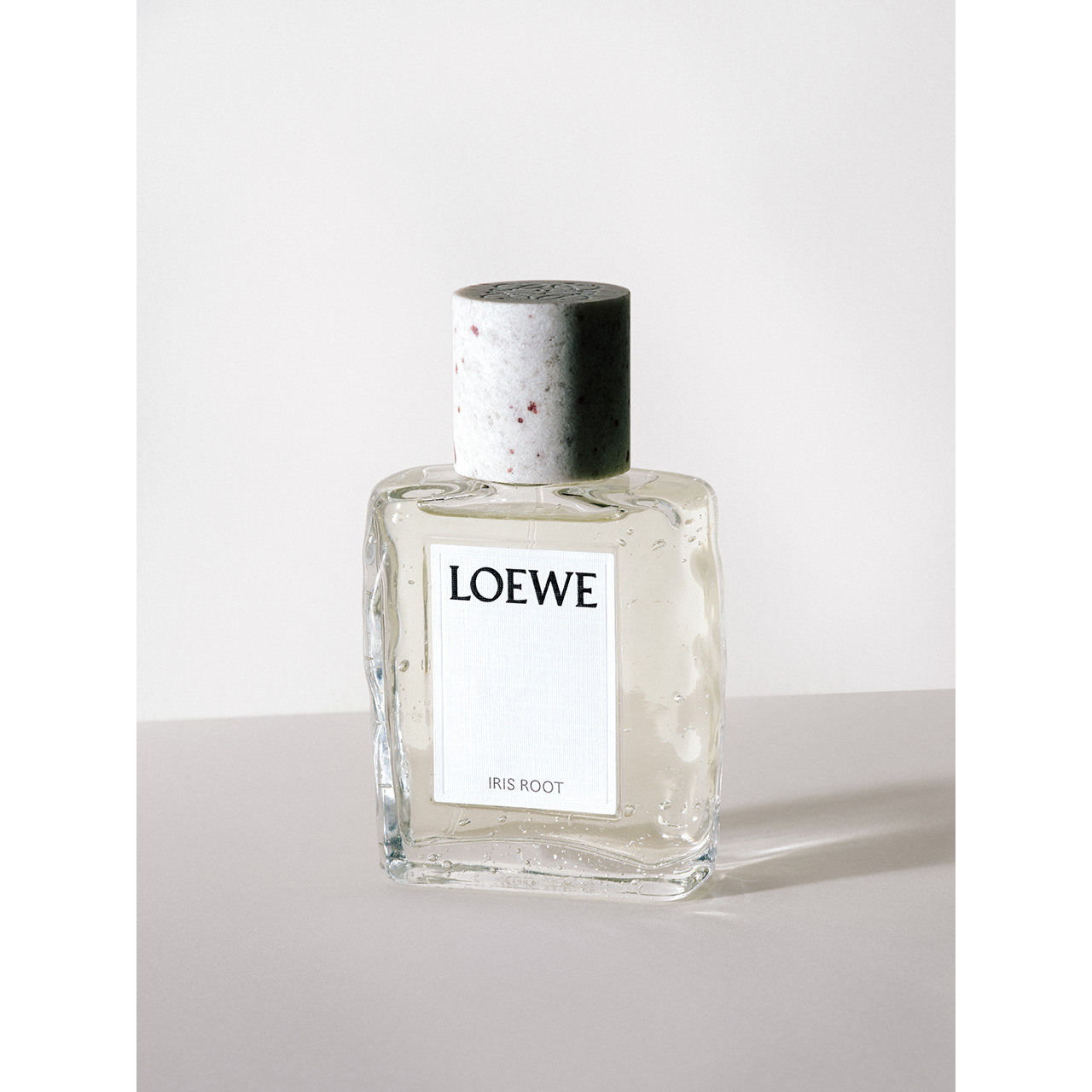
Iris Root by Loewe
“I love the contrast between the powdery elegance of iris and the fresh, pomelo facets of timut pepper,” says Loewe perfumer Núria Cruelles. “It gives the fragrance a luminous, effortless quality that feels perfect for warmer days.” Part of the Spanish luxury house’s Crafted Collection, Iris Root comes in a glass flask that features a granite cap and trapped bubbles in its surface – inspired by the
bullicante technique used in traditional glassblowing.
perfumesloewe.com
|
|
FROM MONOCLE.COM:
Denmark
To celebrate what’s special about Nordic design, Copenhagen Fashion Week needs to return to its roots
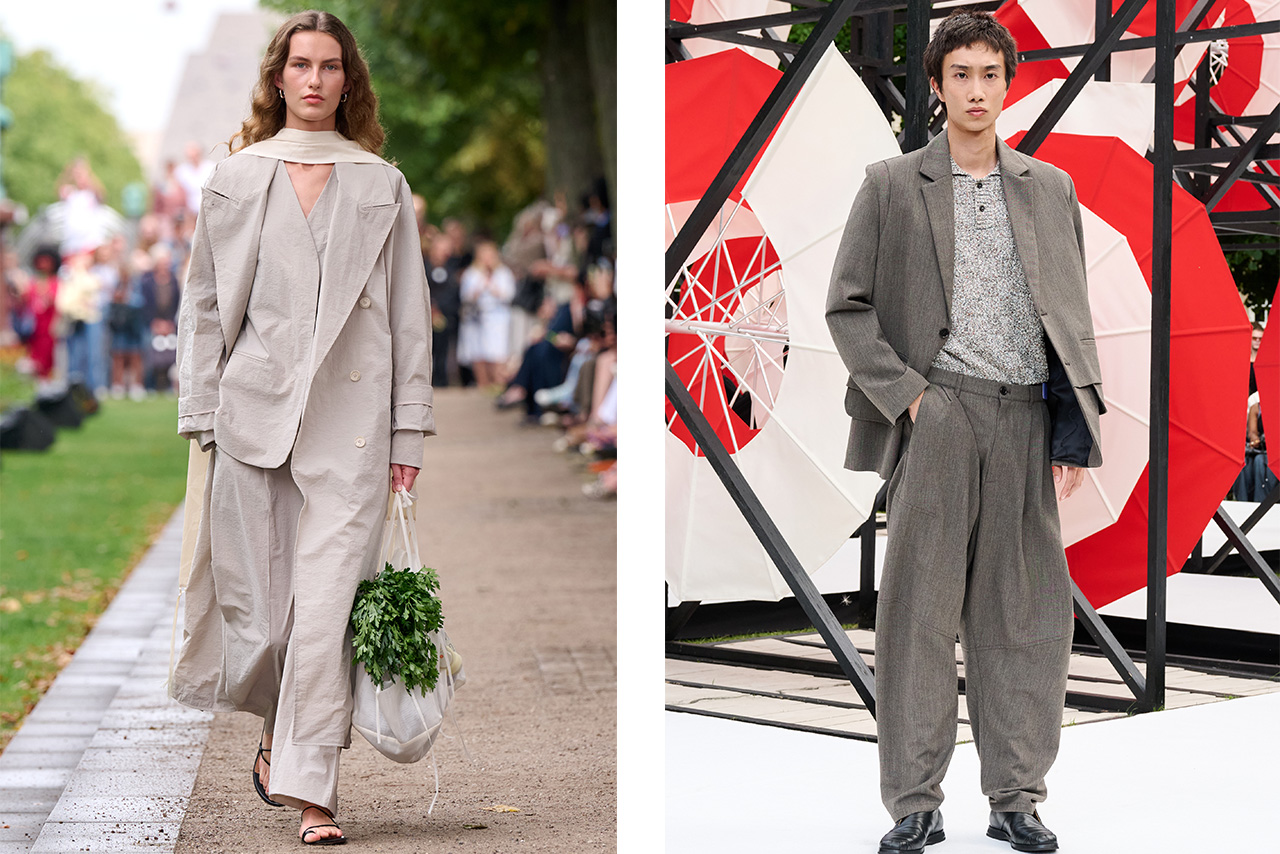
Copenhagen Fashion Week has been celebrating its 20th anniversary edition in the past week, drawing international buyers and editors to the Danish capital as it continues to carve out a distinct identity in an increasingly crowded fashion calendar (writes Gabriele Dellisanti). But whether it’s the brands being showcased or the mission underpinning the week, that effort to be distinctive hasn’t always gone according to plan.
On the mission front, a key element of Copenhagen’s positioning in the past few years has been a framework for sustainability, which was introduced in 2020 to establish the city as a benchmark for responsible fashion. Among its provisions was a requirement that at least 60 per cent of each participating brand’s collection be made using recycled or deadstock materials. But that requirement was suspended for the spring/summer 2027 season, while the criteria is apparently undergoing revision.
|
Still, the event’s appeal has always extended beyond its sustainability ambitions. This season once again brought together many of the designers and brands who exemplify Copenhagen’s collaborative and close-knit creative community, including MKDT Studio and Henrik Vibskov (pictured). Showcases favour intimacy over spectacle, opting for pared-back settings – from the garden of a museum to the backyard of a family home – rather than the grandeur associated with some of the industry’s larger fashion capitals. “Copenhagen Fashion Week has always been about something broader than the runway,” says Isabella Rose Davey, chief operating officer of Copenhagen Fashion Week. “I’ve seen inspiring creativity across every aspect of what goes into making each edition better than the last and it’s those elements that continue to set Copenhagen Fashion Week apart.”
To read the full piece and more about Copenhagen Fashion Week, click here.
|
|
how we live:
speed dating
Hot dates can be hard to find – have you tried looking in a sauna?
When I asked him about where he grew up, and whether he had any siblings, my date started sweating (writes Chiara Rimella). The cause for his perspiration, fortunately, wasn’t my aggressive line of questioning but, instead, the environment we found ourselves in: our first encounter was taking place in the balmy surroundings of a sauna as part of a speed dating event, to be precise.
Combining these activities in one evening might seem like a gimmicky way to exploit trends (the dating equivalent of matcha-Labubu-Dubai chocolate) but it felt to me like quite an efficient way to hit two birds with one sauna stone: one of the great disappointments of unsuccessful first dates is that they can feel like a wasted evening if all you’ve done is had two to three drinks with a moderately boring stranger. This way, I thought, even in the worst-case scenario, I would get some time in the sauna – one of my favourite pastimes. Plus, surely the novelty would make for quite a good ice-breaker?

|
When I told my friends that I’d signed up for this event (aptly named “A Hot Date”) at my local sauna, they seemed less than convinced. Some giggled at the lecherous connotations, others just shuddered at the thought. “It sounds like an anxiety dream,” said one of them. “Surely, first dates are nerve-wracking enough without you having to get through them more or less naked, in 60-degree heat?” His comments were still ringing in my ears when I sat down with the first man that I had been paired with, a lanky lad from Brno whose Czech accent was hard to discern amid the deafening chatter: sound really does echo inside a wooden box with 20 other people. Leaning closer to him, beads of sweat rolling down my forehead while trying to understand what his profession was – had he said that he worked in a kitchen, or in construction? – I realised that I’d had quite enough bodily proximity for now. It turns out that squeezing into a small tub of Arctic-cold water, too, is quite an intimate thing to do with someone you’ve only known for eight minutes.
By the end of the two-hour slot, though, my main gripe with the event was the “speed” side of it rather than the “sauna” bit: it’s hard to relax into things if you’ve only got time for one quick, freezing shower before being shoved onto your next potential partner. Were we trying too hard to add structure onto an experience that, fundamentally, was born as a fairly natural way to encourage socialising, anyway? Sauna is at its best when the heat progressively loosens both limbs and inhibitions: from Finland and Norway to Iceland, hot water and steam have always been allies of frank chats and spontaneous connection. There’s a reason why so many new saunas like to call themselves “communities” or “social spaces” in cities that can feel a little isolating or lonely at times: a tentative “So… do you come here often?” directed at your neighbour on the top bench can never go wrong as a warm-up.
If it felt like things were just starting to heat up, why not read Rimella’s full report here.
|
|
words with:
jayden ali
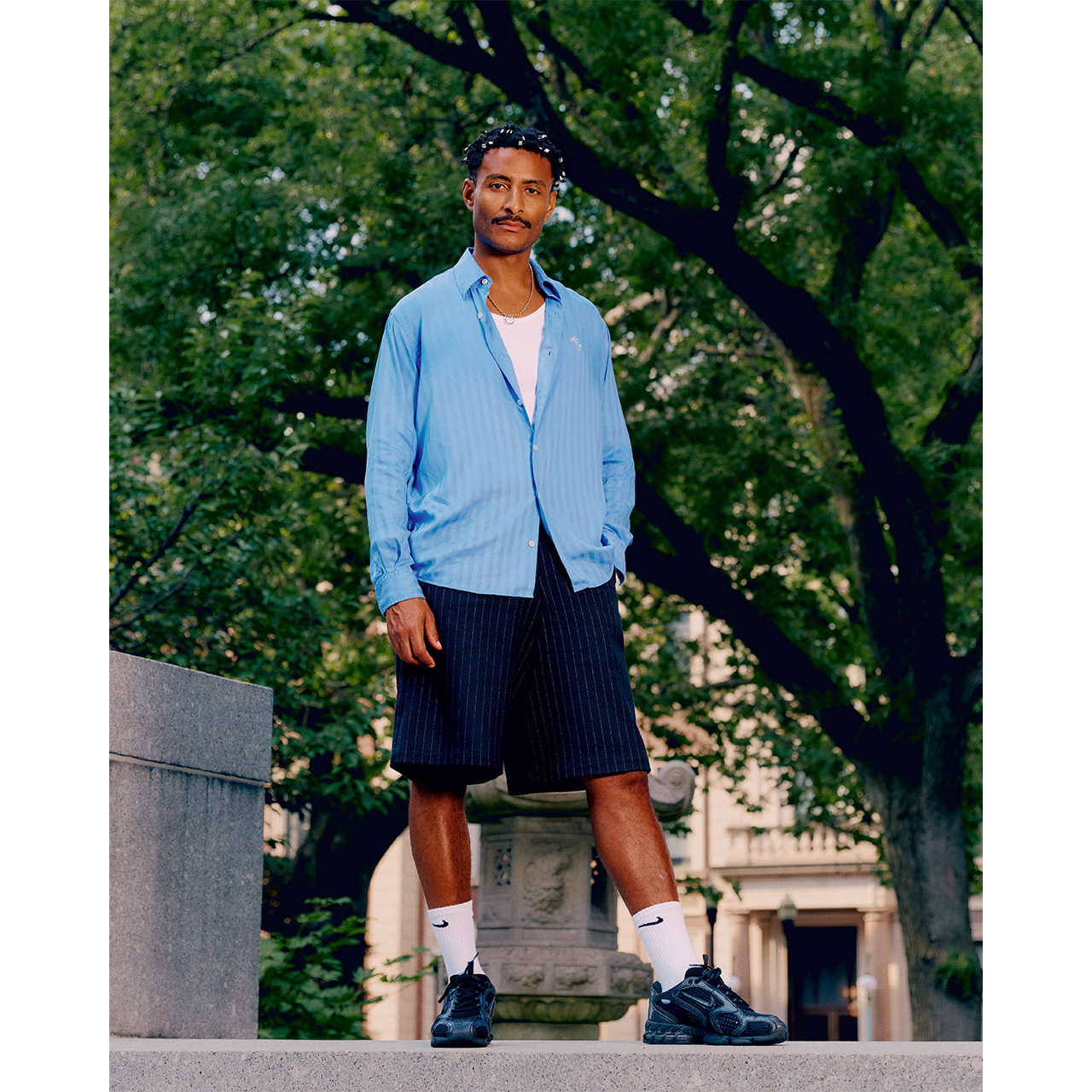
Stars and pinstripes: Designer Jayden Ali’s style tips for summer in New York
For our new summer newspaper,
Med, Mountains & More, we meet four designers who pair comfort and formality with a keen eye for cool. Here, architect and artist Jayden Ali, who splits his time between New York and London, shares how to stay fresh when the mercury rises.
| | | | |