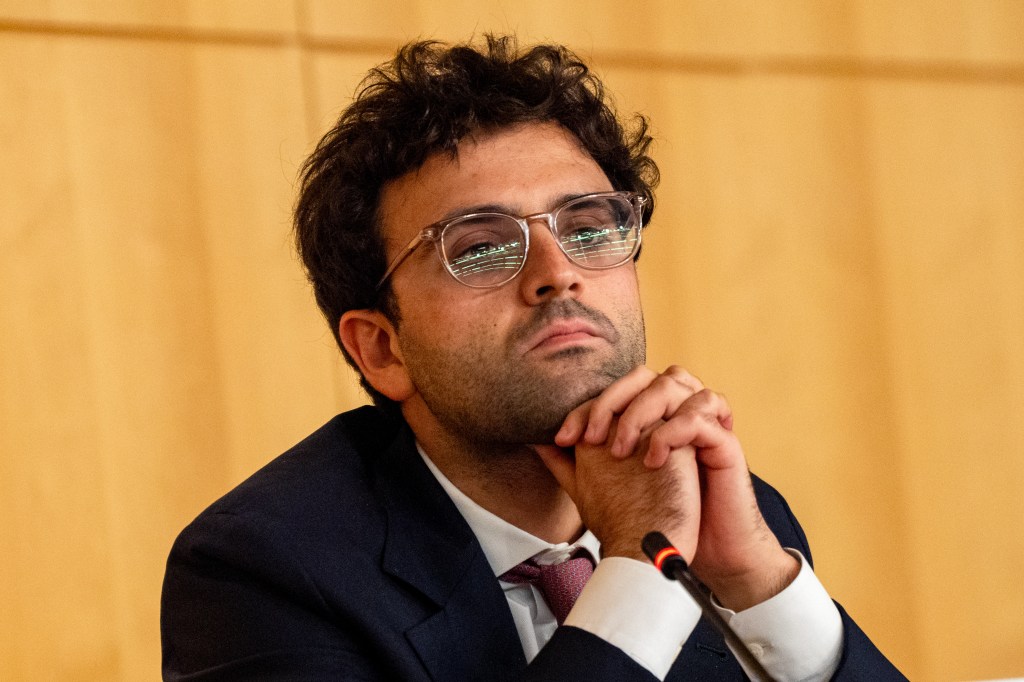
 Tarek Mansour, co-founder of Kalshi, in Washington, D.C. on Sept. 29, 2025. Kent Nishimura/Bloomberg/Getty Images
There’s nothing like a mass sporting event to show us just how those prediction market companies are really doing.
Kalshi and Polymarket reportedly took in $5.69 billion in wagers on the FIFA World Cup final between Spain and Argentina on Sunday. (Spain won 1-0.)
Add to that the other 103 matches in this year’s tournament—plus awards like the Golden Ball, Boot, and Glove—and that makes this year’s match “the largest gambling event in history,”
analysts told the New York Times.
Good news for the Silicon Valley investors who back either company, among them Andreessen Horowitz, ARK Invest, CapitalG, Founders Fund, General Catalyst, IVP, Paradigm, and Sequoia Capital.
And: No wonder Mark Zuckerberg wants Meta to take a piece of the action via its rival app, still in development, called Arena.
He’s not the only one. DraftKings and FanDuel, the gambling tech unicorns of the 2010s, offer similar services. So does the Winklevoss-backed crypto exchange Gemini, not to be confused with the Google AI of the same name.
The path forward remains fraught. More than a dozen states with sports betting bans on the books have sued Kalshi and Polymarket for allegedly circumventing state laws by running unlicensed, unregulated gambling platforms. The companies argue they’re not illegal gambling operations but derivatives exchanges—futures markets—regulated by the Commodity Futures Trading Commission, a federal agency.
—AN