FIFA, NATO and Iran
 

Politics U.S.

Politics U.S.


By Jacob Bogage, White House Correspondent 

Hello from Washington, I’m Jacob Bogage, with Reuters’ White House team. The U.S. may have been bounced from the World Cup, but President Donald Trump’s presence loomed over the tournament nonetheless, much as it did a NATO summit in Turkey. For the record, your correspondent’s pick to win the trophy is still Spain. (Tips or feedback? Email me: jacob.bogage@tr.com) 


Latest U.S. politics headlines

  • Trump invokes communism 81 times in two weeks as aides test midterms message 
  • Trump wants to leave the Iran war behind. That won't happen soon 
  • Fatal ICE shooting in Houston sparks mass protest, demands for transparency 
  • Trump cut to food security survey could make measuring US hunger harder 
  • The Iran War threatened a food crisis. The next Gulf conflict could do the same.
 

Trump inserts himself into the action, from the World Cup to Iran 

Trump has spent a tumultuous week on the international stage, stirring outrage among soccer fans with his intervention in the World Cup, castigating allies at the NATO summit and resuming air strikes on Iran. 

The president told reporters he thought the ceasefire with the Islamic Republic was “over,” threatened to seize Iran’s main oil export facility and said, “I’m not sure I want to make a deal with them.” 

The week’s events had a common theme: Trump’s willingness to challenge established institutions, whether international organizations or longtime alliances, and decisions he disagrees with. 

After a referee sent off U.S. striker Folarin Balogun during a World Cup knockout stage match, Trump called FIFA President Gianni Infantino to attempt to reverse the one-game suspension. Trump was successful but the U.S. lost to Belgium anyway.

Trump said he’d looked into the background of the referee who made the controversial call and said without evidence that “he was a little bit suspect if you check his past.” I asked the White House what Trump meant by that, but his spokespeople did not provide any additional information.  

Then it was on to Turkey aboard his new Qatar-donated Air Force One, where he threatened to cut off trade with Spain, renewed calls for the U.S. to take over Greenland and criticized NATO allies’ defense spending.

But before leaving, he praised the “unity” of the NATO alliance. The U.S. even reaffirmed NATO’s Article 5 principle, that an attack on one member nation is an attack on all. Trump has previously cast doubt on that provision.  

The turnabout was conspicuous and gave Trump an opening to take credit for structural changes within NATO. Member nations have plans to significantly increase their annual defense spending, something for which Trump has long advocated.  

Trump's often-contentious relationship with NATO allies has at times given him leverage to push for changes that other U.S. presidents struggled to secure.  

NATO Secretary General Mark Rutte told reporters to “acknowledge when praise is due,” and that “I think we should praise Donald Trump for the fact that NATO is so much stronger.” My colleagues Humeyra Pamuk and Gram Slattery were on the ground in Ankara covering the summit.  

The week illustrates what many of Trump’s supporters admire about the president and his MAGA movement. Since launching his 2016 campaign for his first White House run, Trump has tapped into a deep dissatisfaction among some voters with the global standing of the U.S. and some of the norms that have underpinned its system of government and diplomacy. 

Whether challenging FIFA over a red card, criticizing longtime allies or resuming hostilities with Iran, Trump again demonstrated this week an enduring ability to put himself at the center of events.


The view from Moscow

Russian President Vladimir Putin is rejecting calls to negotiate peace with Kyiv, three sources close to the Kremlin told Reuters, with Ukraine's recent drone strikes on Russia's oil refineries and ports strengthening his resolve to keep fighting for now. Two of the sources, speaking on condition of anonymity, said that Putin was instead likely to escalate the conflict, now well into its fifth year. 


Photo of the week


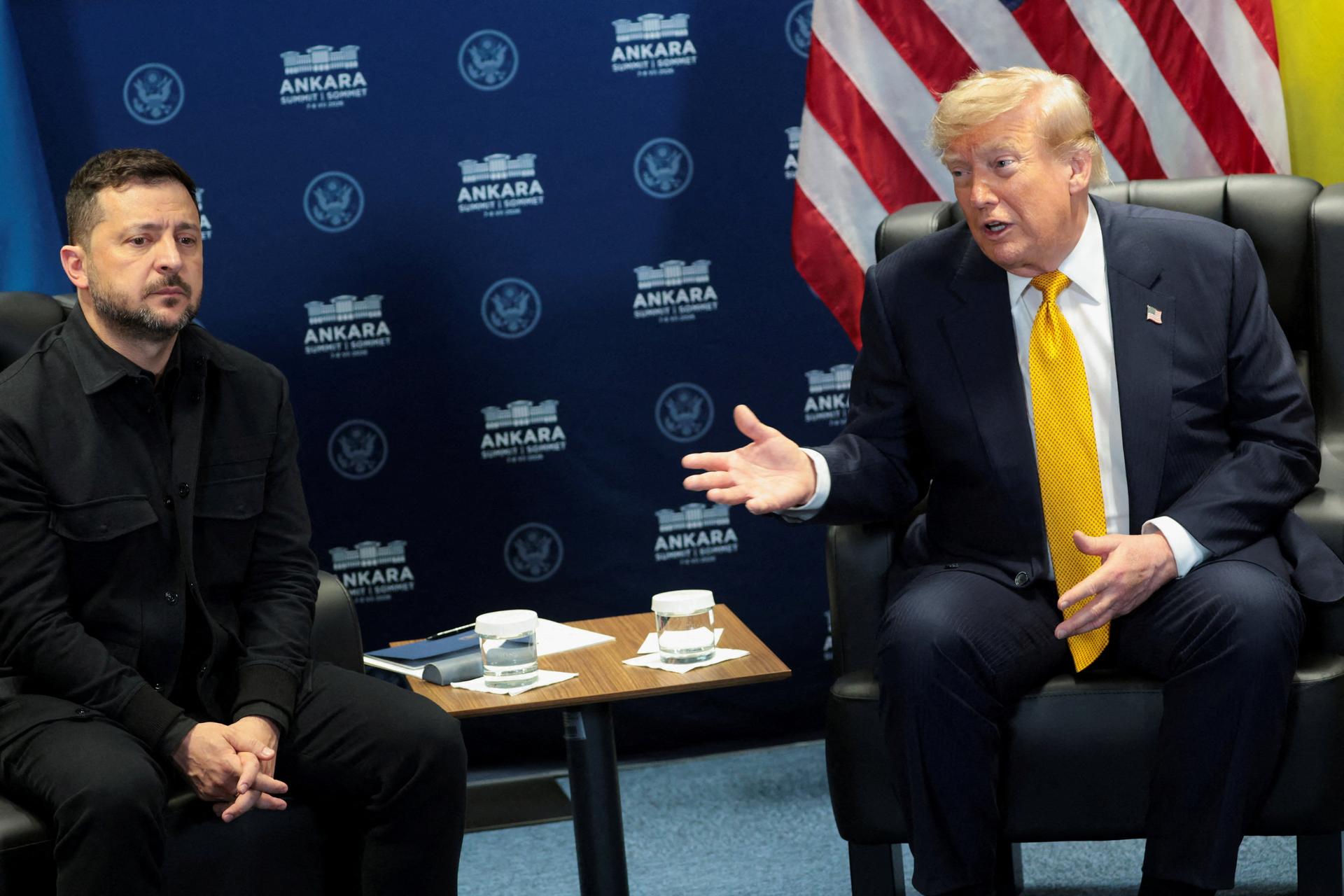
U.S. President Donald Trump holds a bilateral meeting with Ukrainian President Volodymyr Zelenskiy alongside the NATO leaders summit at the Bestepe Presidential Compound in Ankara, Turkey, July 8, 2026. REUTERS/Jonathan Ernst


What to watch for

  • July 15: Confirmation hearing for Erica Schwartz, Trump’s pick to lead the Centers for Disease Control and Prevention 
  • July 19: FIFA World Cup final 
  • July 21: Arizona primary elections 
  • July 27: Deadline for Maine Democrats to choose Senate candidate 
 

The who, what and when

  • Here are the Democrats taking early steps in potential 2028 White House bids 
  • Who could replace Maine US Senate candidate Graham Platner? 
  • How Iran's 'golden weapon' of Hormuz became a bigger priority than its long-disputed nuclear programme 

This newsletter was edited by Ross Colvin and Alistair Bell and produced by Rawan Yaghi.