|
|
|
|
Good morning. As Canada Day arrives, there’s another big day approaching. July 1 is the official review date for the USMCA, the free-trade pact between Canada, the U.S. and Mexico, and a 16-year extension is looking increasingly unlikely. But first: |
|
|
|
|
|
|
|
|
|
|
|
|
|
|
|
|
|
|
|
|
|
|
|
|
|
|
|
|
|
|
|
|
|
|
|
|
|
|
|
|
|
|
|
|
|
July 1 marks the formal review date for the United States-Mexico-Canada Agreement. Rebecca Cook/Reuters
|
|
|
|
|
|
|
|
|
|
|
This Canada Day is a key date for USMCA talks |
|
|
|
|
I’m Matt Lundy, The Globe’s economics editor. |
|
|
|
|
|
|
|
|
There are five days left before the official review date for the United States-Mexico-Canada Agreement on July 1. If the trade pact isn’t extended by then – and it probably won’t be – commerce between the countries will move into a new and unpredictable phase. Here’s what to know before the day arrives. |
|
|
|
|
What’s happening on July 1? |
|
|
|
|
When the USMCA took effect on July 1, 2020, it was designed to have a review date six years later. Next Wednesday, the countries can agree to extend the agreement by 16 years. But that seems highly unlikely. Canada and Mexico have said they favour an extension, but the U.S. has obviously taken a protectionist turn under President Donald Trump. On July 1, the non-renewal option is likely to become official. |
|
|
|
|
What happens if the USMCA isn’t extended by then? |
|
|
|
|
People can rest easy and enjoy Canada Day. We’re not heading for economic calamity (at least not yet). |
|
|
|
|
The trade deal will remain in place for 10 years. There will be annual reviews, although the countries can agree to extend the agreement at any point. Any party can withdraw from the USMCA with six months’ notice – many analysts think Trump will threaten this, perhaps as a negotiating tactic – although the vibes out of the U.S. have been fairly positive of late.
The U.S. also has a third round of formal negotiations with Mexico set for late July. |
|
|
|
|
In the least convoluted way possible, what’s the status quo on tariffs? |
|
|
|
|
The vast majority of Canadian exports (roughly 90 per cent) continue to enter the U.S. tariff-free, because they meet North American content standards under the trade deal. |
|
|
|
|
But key industries – autos, steel, aluminum and others – face hefty tariffs. That’s where Canada is feeling the strain, and where negotiators will be looking for relief in the months ahead. |
|
|
|
|
U.S.-Canada trade talks have felt stuck for a while. What’s going on? What are the sticking points? |
|
|
|
|
The Canadian side is talking to its American counterparts, even if these aren’t formal negotiations. And Canada is certainly trying to curry favour with the White House by making various concessions. For example, Ottawa is effectively killing a regulator’s decision that would have required U.S. streaming giants to allocate 15 per cent of their Canadian revenues to domestic content. |
|
|
|
|
It’s widely assumed that the U.S. will pursue bilateral deals with Mexico and Canada, on top of the trilateral deal. And the White House has plenty to discuss with Mexico, perhaps making that country a bigger priority than Canada. Still, the Trump administration has several grievances with Canada – among them, the supply management system for dairy. |
|
|
|
|
If we end up in limbo for weeks or months, what does that mean for Canada’s economy? Is this sustainable? |
|
|
|
|
It really depends where you’re looking. For sectors facing high tariffs, these are terrible times. They’ll want relief, and soon. |
|
|
|
|
The Canadian economy has been crummy over the past year and hardly budged. The uncertainty around USMCA has been awful for investment and hiring decisions; basically, companies have chosen to wait around for more clarity. |
|
|
|
|
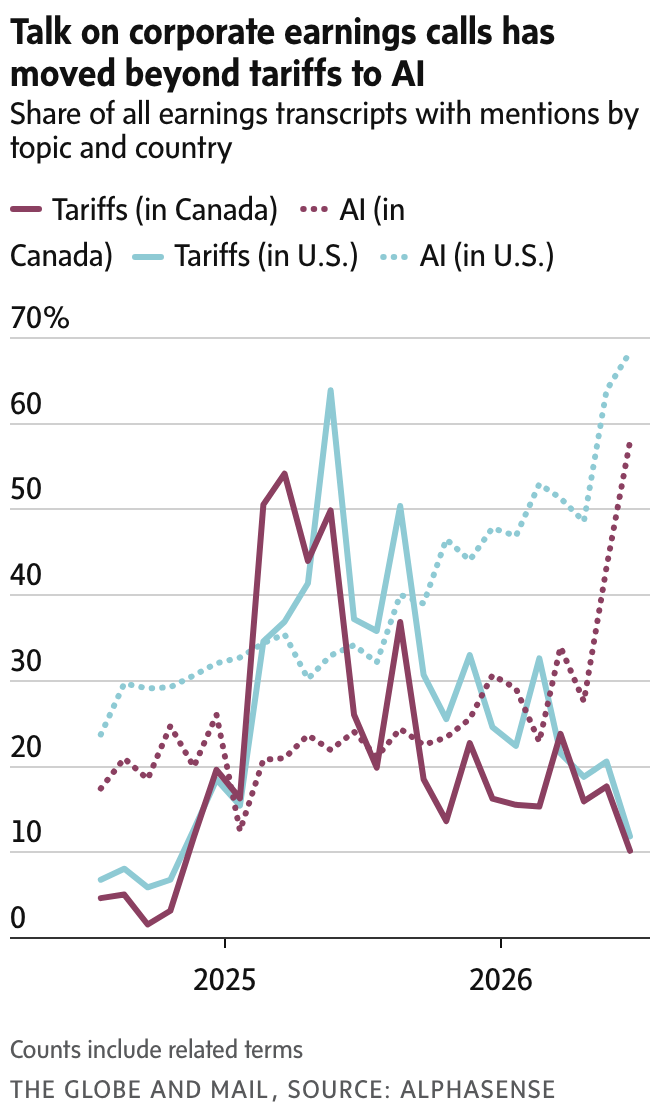
Yet even without a deal, there are tentative signs of a return to growth. Companies are talking about tariffs way less on earnings calls. Surveys show an uptick in business sentiment. And there are indications that companies are sick of waiting for trade clarity and are looking to invest again. More investment would help get the economy back on track. |
|
|
|
|
|
|
|
|
|
|
|
|
|
|
|
|
Companies have stopped panicking about tariffs |
|
|
|
|
|
|
The share of corporate earnings calls in which tariffs were mentioned has fallen to the lowest level since President Donald Trump returned to power, according to an AlphaSense analysis. They’re spending more time dwelling on AI instead. |
|
|
|
|
|
|