Paris Fashion Week Men’s brings the heat, stripy babouches by Liwan and why Tokyo is a big city that excels in the small details.
|
Friday 26/6/26
|

|
|
London
Paris
Zürich
Milan
Bangkok
Tokyo
Toronto
|
|
|
|

Good morning. Monocle has returned to St Moritz for the summer season. Join us at Hotel Steffani in the heart of the Engadine for a selection of seasonal essentials and our edit of Monocle products, from the new July/August issue and travel accessories to books, fragrances and limited-edition collaborations. And if you missed it yesterday, take a look at the Quality of Life Survey 2026 – our list of the 20 best cities to call home. For now, here’s what’s coming up in today’s Minute:
THE OPINION: Tokyo is a big city that excels in the small details
FASHION: Paris Fashion Week Men’s brings the heat
DAILY TREAT: Slip on some stripy babouches by Liwan
CULTURE: Frank Gehry-designed arts venue set for Saadiyat Island
THE LIST: Big ideas: Quality of Life essays to read
|
|
Despite its enormous scale, Tokyo remains a city where good manners thrive
By Fiona Wilson
|

|
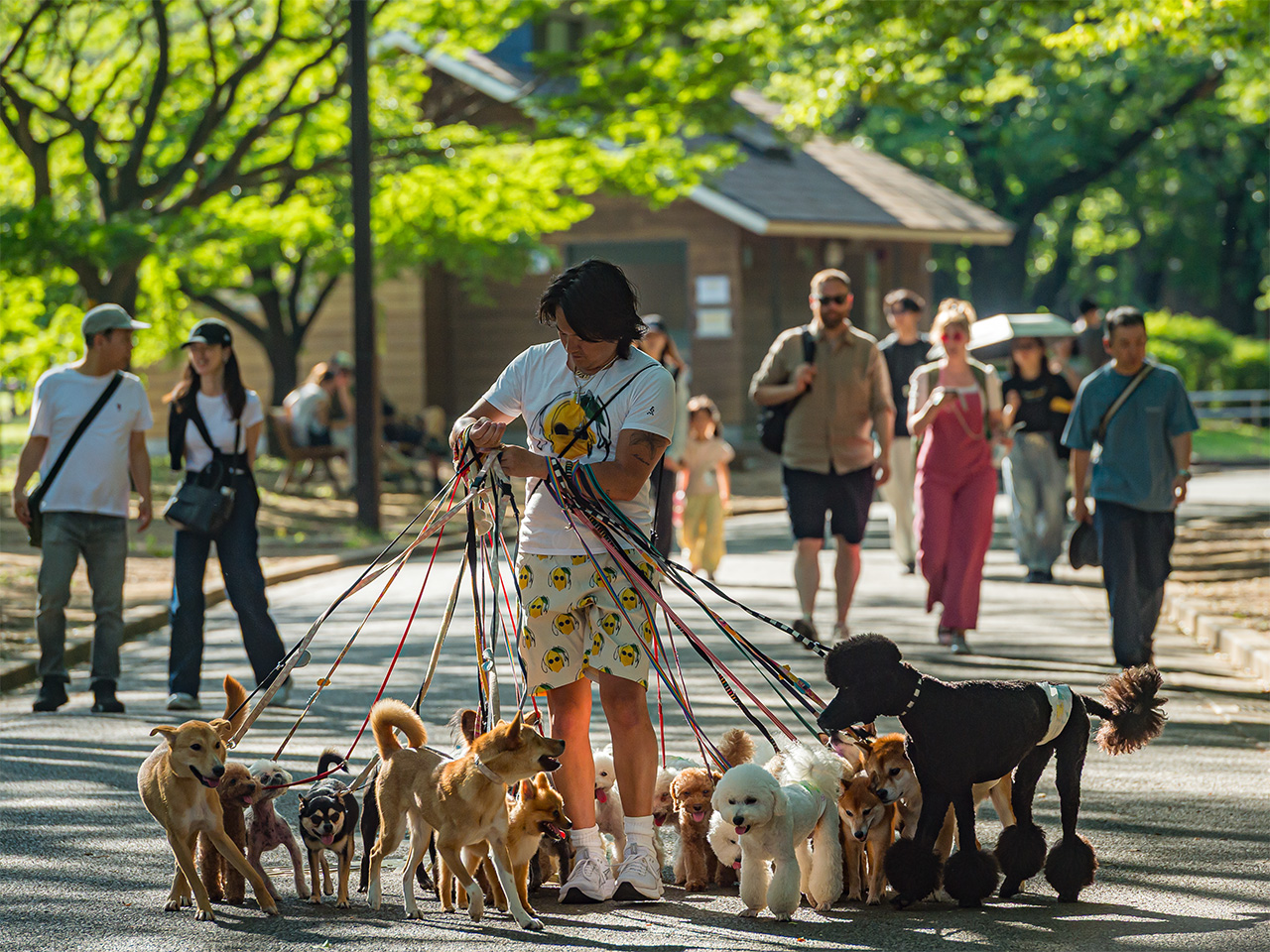
Depending on how you count it, Tokyo is a city of nine million (the central 23 wards), 14 million (Tokyo Metropolis) or 37 million (the Greater Tokyo Area). A densely populated urban area of this scale could be forgiven for the occasional erosion of social niceties but the Japanese capital is a place of unusually good manners. Dog walkers clear up after their pets with “etiquette bottles”, spraying water on the ground to ensure that no mess is left behind. House guests wouldn’t consider passing the threshold without removing their shoes first. Patrons at the best sushi restaurants are reminded not to come doused in overpowering fragrances – not that they would anyway – because strong scents would ruin everyone else’s enjoyment of the subtle cuisine. Being thoughtful is built into the fabric of daily life.
The Tokyo Metro, which carries seven million people a day, is a prime example of this. People patiently queue on platforms, signs on the ground point to exactly where the train doors will open and passengers step on board in an orderly fashion. Once inside,
they make room for others without needing to be asked; they rarely have annoying music leaking from their earphones and don’t talk loudly. The carriages are clean, air-conditioned and graffiti-free. While many cities grapple with crime, fare evasion and violence on their transport systems, the Tokyo Metro has posters encouraging commuters to be even more considerate than they already are. The current campaign, timed for the rainy season, asks, “Please hold umbrellas carefully,” while announcing “another day of good manners”.
|
|
|
Taking the lead: Tokyo tops The Monocle Quality of Life Survey 2026
|
|
We have all seen footage of Japanese World Cup fans cleaning up the venue after a game. In Tokyo, people find the glowing coverage of this somewhat baffling. It’s standard practice in this country. When patrons exit cinemas here, they bring their cups and popcorn boxes with them and hand them to waiting staff. Nobody makes a point of it: this is just everyday behaviour. Women are expected to put a gauze bag over their head when they try on clothes in a shop to avoid leaving their make-up on garments that they don’t buy. Again, no one in Tokyo would bat an eyelid at this request. Enter a crowded lift and you’ll notice that, without a word being said, the person closest to the buttons becomes the de facto lift operator, holding doors open on each floor and closing them when everyone’s in. These small efforts keep things running efficiently.
People who appreciate Tokyo don’t want it to change but this is an ambitious city that’s in constant flux. Huge developments and infrastructure projects are ubiquitous. Shibuya, one of the world’s busiest stations, has been undergoing complex construction work for years, with its tangle of railway lines being reconfigured – but the city’s transport system has never stopped moving. Building is a feature of smaller neighbourhoods too. Workers are expected to keep sites tidy and the noise down. Prominently displayed decibel counters ensure that the racket doesn’t exceed a certain limit. It’s no surprise that Japan is now leading the way in low-noise construction machinery and scaffolding that is lightweight and quieter to assemble and take down.
Tokyo’s liveability (and lovability) is in these everyday details that just make things better. The city is a network of neighbourhoods. Young children walk to school unaccompanied and local festivals bring everyone together, particularly in the hottest summer months. City life, which can be so coarse elsewhere, feels softer in Tokyo. You rarely even hear a car horn blaring. The curious thing about this good behaviour is that it isn’t about petty rules or legislation. None of this is mandated by law. There’s just an unspoken agreement that everyone does their bit to keep the city working and not to infringe on other people. Its residents take this behaviour for granted but Tokyo should be proud of itself, a city that is creative and exciting but well mannered too.
|
|
FASHION: FRANCE
Heatwave be damned! Paris Fashion Week Men’s brings leather and layers to the runways
The men’s spring/summer 2027 edition of Paris Fashion Week is taking place amid a record-breaking heatwave, leaving many fretting about maintaining a semblance of chic (writes Grace Charlton). At shows, the front rows are packed with flustered attendees furiously fanning themselves. In the city’s showrooms and at industry events, almost every interaction begins with a sigh and a mention of the heat.
It’s boring to talk about the weather. But not acknowledging Paris’s furnace-like conditions would be to overlook an existential issue that underpins the week’s proceedings. The French capital is woefully ill-equipped to deal with temperatures of this kind: parts of its Metro are unventilated and air conditioning is often looked down upon as the cause of sore throats or an unnecessary luxury. The question of AC has become a pressure point in French politics in recent weeks, with far-right politician Marine Le Pen arguing that it has now become a matter of public safety. Those with leftist and green sensibilities retort that the units’ enormous electricity consumption and reliance on potent greenhouse gases would only exacerbate the issue of rising temperatures.
|
|
|
Heat wave: Louis Vuitton turns up the temperature in Paris
|
|
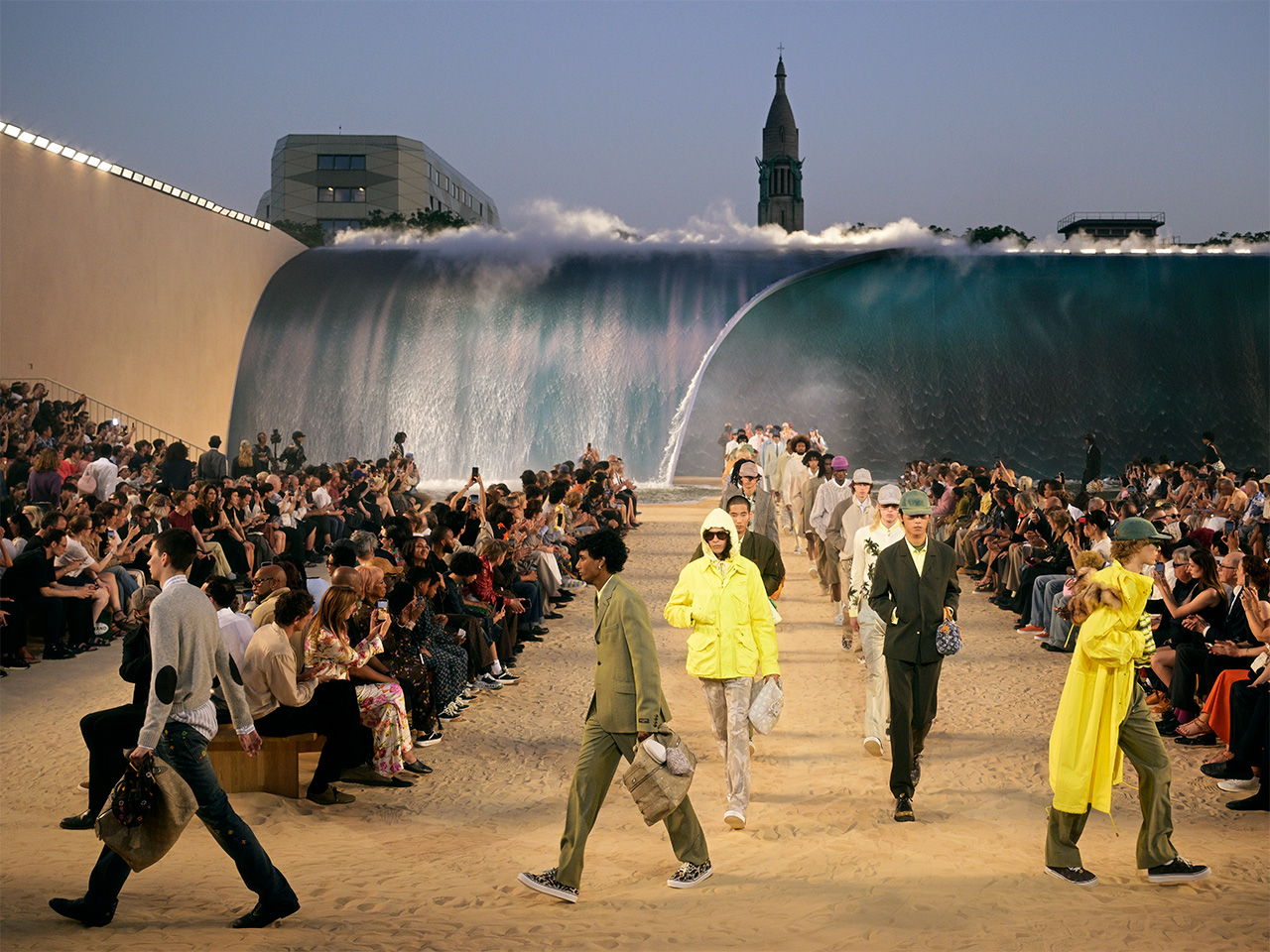
At Paris Fashion Week, some brands, including Dior, are responding by moving show times. Most make sure to greet guests with iced cans of Evian water on silver platters. Issey Miyake went a step further by handing out cold packs. A thought, however, should really be spared for the models who power down the runway under bright lights in outfits incongruous with the weather. Indeed, despite this being the spring/summer edition of menswear, there seems to be an unusual amount of leather and layers in Paris this week. At Louis Vuitton, the house’s creative director, Pharrell Williams, created a tidal wave from which models emerge, bearing surfboards in longline coats and suits. There were even some fur trimmings on parkas amid the neoprene diving suits. Leather jackets and shorts also featured at Auralee, the Tokyo-based label by Ryota Iwai that is cementing its place on the Paris circuit with its mastery of colours and eminently wearable pieces. At Dior, the brand’s Northern Irish creative director, Jonathan Anderson, showed a collection that featured scarves strewn casually around necks.
All of this is in stark contrast to what we saw at the menswear events that took place in Italy over the past few weeks, with
Pitti Immagine Uomo kicking off the season in Florence, followed by the fashion week in Milan. Perhaps Mediterraneans possess an innate understanding of the value of a linen suit – or are more prepared to show some calf in shorts. Then again, maybe the luxury fashion houses in Paris are not seeking the European consumer who is stubbornly resistant to AC. They’re courting markets that have already succumbed to the siren’s call of icy indoor temperatures in the height of summer: namely the US, Middle East and Asia. Though it might look jarring at first, doing away with seasonality and including leather and knitwear pieces in spring/summer collections is a commercially savvy move. Whether or not the French will follow suit might depend on the political leanings of their next government.
Wondering how to spend the day in Paris when it’s hot?
–
Verneuil la douce, a charming château-turned-inn just outside Paris
–
How to spend the perfect day in Paris – an illustrated guide
–
The art deco charm of Paris’s Piscine Pontoise
|
|
• • • • • DAILY TREAT • • • • •
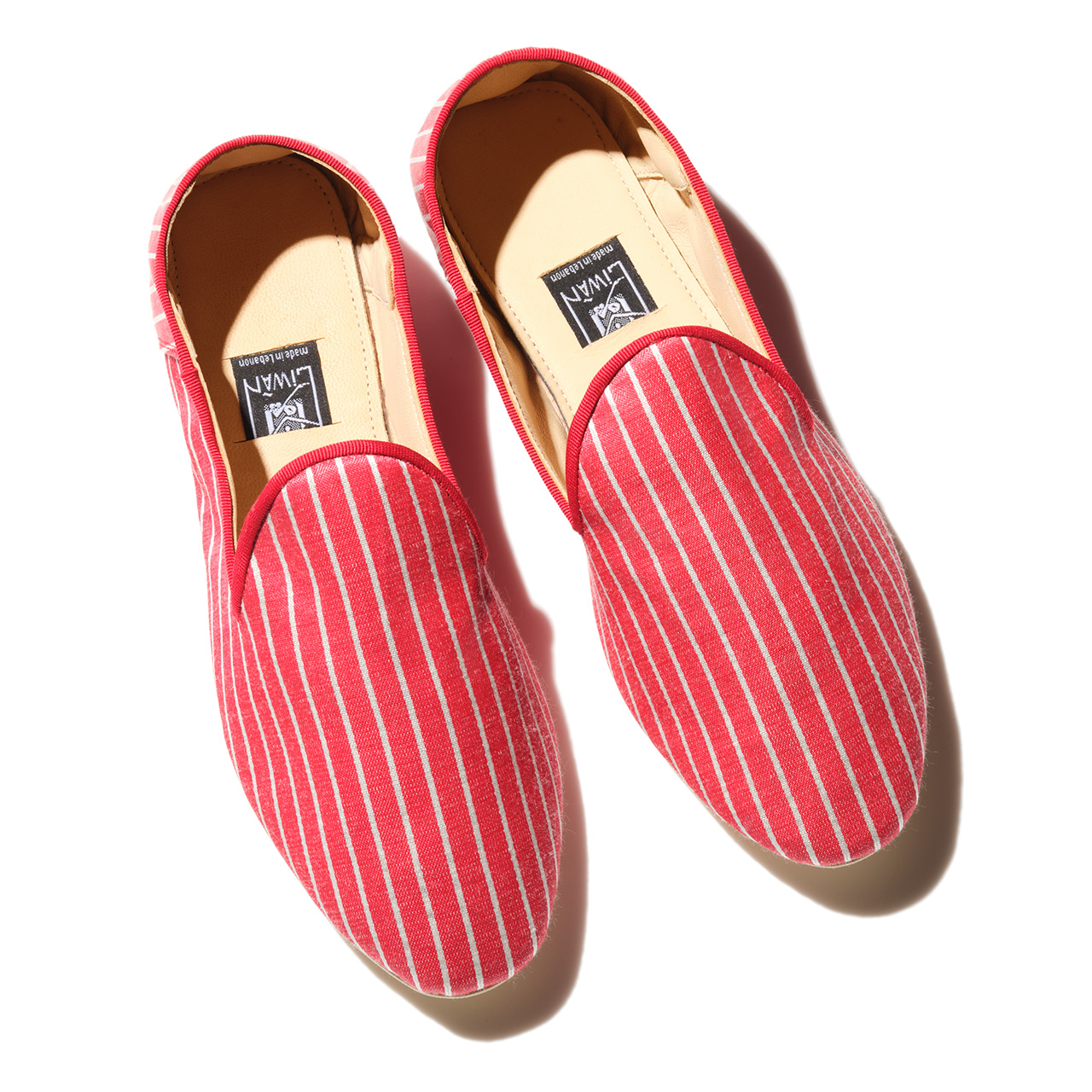
Slip on some stripy babouches by Liwan
A sartorial mainstay in the Middle East and North Africa, the babouche was born in Persia. Suited to arid climates, the shoes are also easy to remove for
salah (prayer). In countries from Morocco to Tunisia via Lebanon, variations on the style include rounded or pointed toes, suede or leather options and soft or hard soles.
Today the babouche embodies a bohemian sensibility and is seen everywhere, whether on the streets of Paris or the Mediterranean seaside. We particularly like these striped versions by Beirut brand Liwan, which makes handmade babouches using satin, silk or brocade fabrics – a modern revival of a classic.
liwanlifestyle.com
|
|
CULTURE:
UAE
Abu Dhabi invests big in the arts with a new Frank Gehry-designed venue on Saadiyat Island
Performing-arts venue Dar al Funoon Abu Dhabi is set to become one of the last completed works by Canadian-American architect Frank Gehry, who died in December. It will be a worthy addition to Saadiyat Island’s ever-evolving skyline of cultural hubs. Under an elegant | | | | |