
|
 |
Welcome to this week’s edition of Receipts. Since the early days of the second Trump administration, I’ve been tracking efforts to delete the existence of non-MAGA-conforming demographics from government records and, at times, real life. This week’s newsletter focuses on one of those groups: people with disabilities.
The disability rights community fought for decades to have access to the services and supports that enable them to lead independent, productive lives and not be shut away against their will in a nursing home or other institutional setting. One disability-rights advocate I interviewed told me about the “burrito test”: “Would I be able to leave at 2 a.m. to get a burrito without needing to ask somebody’s permission?” In Trump’s America, the answer for more people is likely to be no.
Are there other under-the-radar changes to safety-net that I should be paying attention to? Drop me a note in the comments. And if you’re not already a member of Bulwark+, I hope you’ll consider joining. Your support helps us cover the ways Trump is changing our political and social landscape, in ways big and small.
–Catherine
The Americans Trump Would Rather Not See
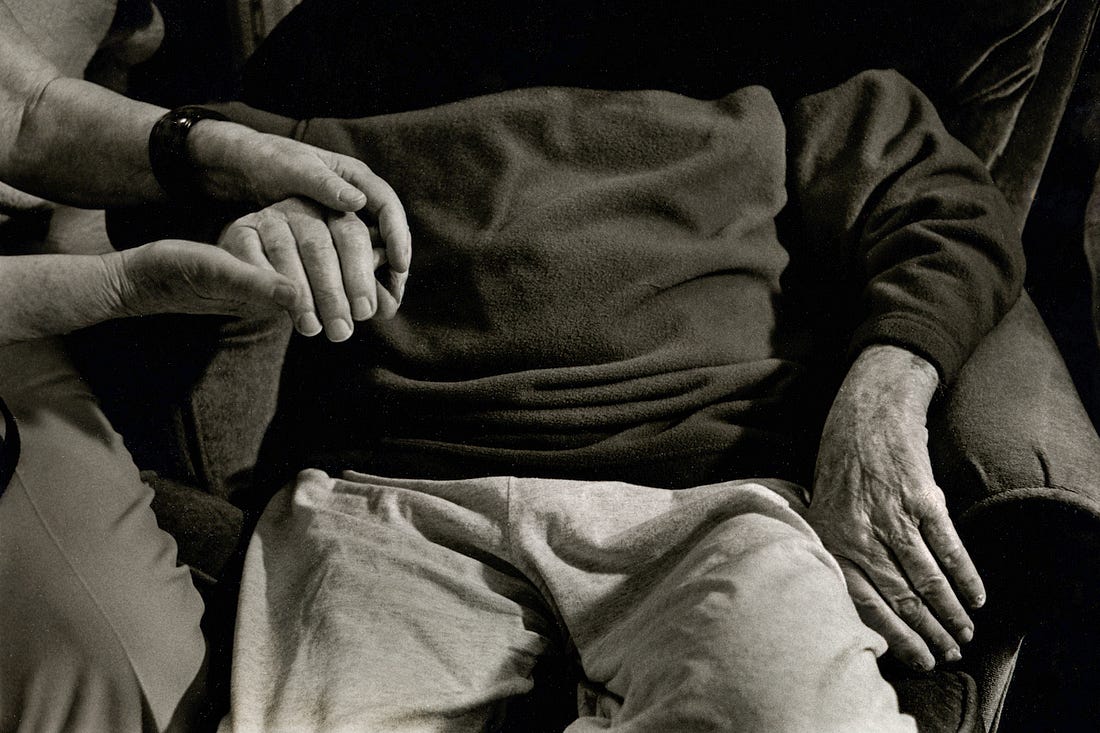
There are some uncomfortably eugenicist vibes in Trump’s latest disability policy, which authorizes states to institutionalize more Americans.
|

| ||||||||||||


 |
THE TRUMP ADMINISTRATION HAS MADE clear that it wishes to purge America of some of its undesirables. That includes, for instance, deporting 100 million people (a third of the population). But for those he can’t expel, he hopes to simply hide away.
Last week the Department of Justice published a memo authorizing states to institutionalize more people with disabilities. This basically means plucking more people out of society and shutting them into nursing homes, psychiatric hospitals, segregated schools, and sheltered workshops, rather than funding community- or home-based care where they have more autonomy.
“This is at its core about the belonging and inclusion of people with disabilities in our communities,” says Alison Barkoff, a health law professor at George Washington University who worked on disability policy under Presidents Barack Obama and Joe Biden. “This is about moving forward from a very shameful part of our history when we locked people with disabilities away from society.”
The DOJ policy would turn back the clock on decades of law and Supreme Court precedent. Since Olmstead v. L.C.,¹ in 1999, states have been required to support disabled people in the most integrated setting possible that is appropriate to their needs. Institutionalization is supposed to be the last resort.
The consequences of this change could be enormous. Community- and home-based care services involve having a home health aide visit a person for, say, a few hours a week at home, rather than sealing them off in a closed facility. They help disabled people achieve both personal and financial independence. This kind of support empowers people to care for themselves, maintain relationships with friends and family, and hold jobs. And there has generally been bipartisan political backing for policies that, for example, enable children with disabilities to live with their parents whenever possible.
The actual legal enforceability of this memo is still unclear. Perhaps because it may not have originated with actual lawyers. Stephen Miller was reportedly behind it, Bloomberg reported, though the White House has officially denied his involvement.²
Even before this memo, states have been slashing disability services for some time as a result of the Medicaid cuts in Trump’s One Big Beautiful Bill. The law’s advocates professed that the cuts would safeguard safety-net programs for the “most vulnerable Americans,” but so far children and people with disabilities are among the biggest victims. More than half of states have already cut home- and community-based services that support elderly people with disabilities living in their homes.
The irony is that, in the long run, these changes may be more costly, since institutionalization tends to be much more expensive than letting people stay in their homes with supportive care.
“The states are a little bit playing Russian roulette,” says Barkoff. “They’re saying: ‘Is this a person who is going to find some way to navigate these cuts, and find family or friends to fill in? Or is it someone who’s going to end up costing me three times as much because they end up in a nursing home or in the emergency room?’”
The DOJ memo is part of a sweeping series of changes from this administration that affect how disabled people learn, live, work, and otherwise interact with society.
The administration also announced last week that it was reassigning the Education Department’s responsibilities for special education and civil rights to the Department of Health and Human Services, raising concerns about whether children will continue to have access to free, appropriate public education.
HHS, after all, is run by Secretary Robert F. Kennedy Jr., who has spoken in degrading and even vaguely eliminationist terms about people with intellectual disabiliti