It’s worth spending some time on the Reflecting Pool this week as a microcosm of Donald Trump’s two presidencies.
On July 21, 2016, Trump addressed a Republican National Convention that remained uneasy about his candidacy. He stood at the lectern in Cleveland and delivered what became one of the defining lines of his political career: “Nobody knows the system better than me, which is why I alone can fix it.”
And when Trump swept into the White House, we quickly learned what he meant.
He elevated problems – often of his own creation – only to swoop in with a dramatic rescue, or pillory those who stood in his way.
After his administration separated immigrant families at the U.S.-Mexico border, Trump bragged of new efforts to keep those families together. When his tariffs triggered foreign retaliation against American agriculture producers, he created a bailout fund to offset the damage. Trump, without evidence, sowed doubt about U.S. elections, then cast himself as the champion of “voter integrity.”
This uniquely Trumpian playbook has been overwhelmingly present in recent months – including at the Reflecting Pool.
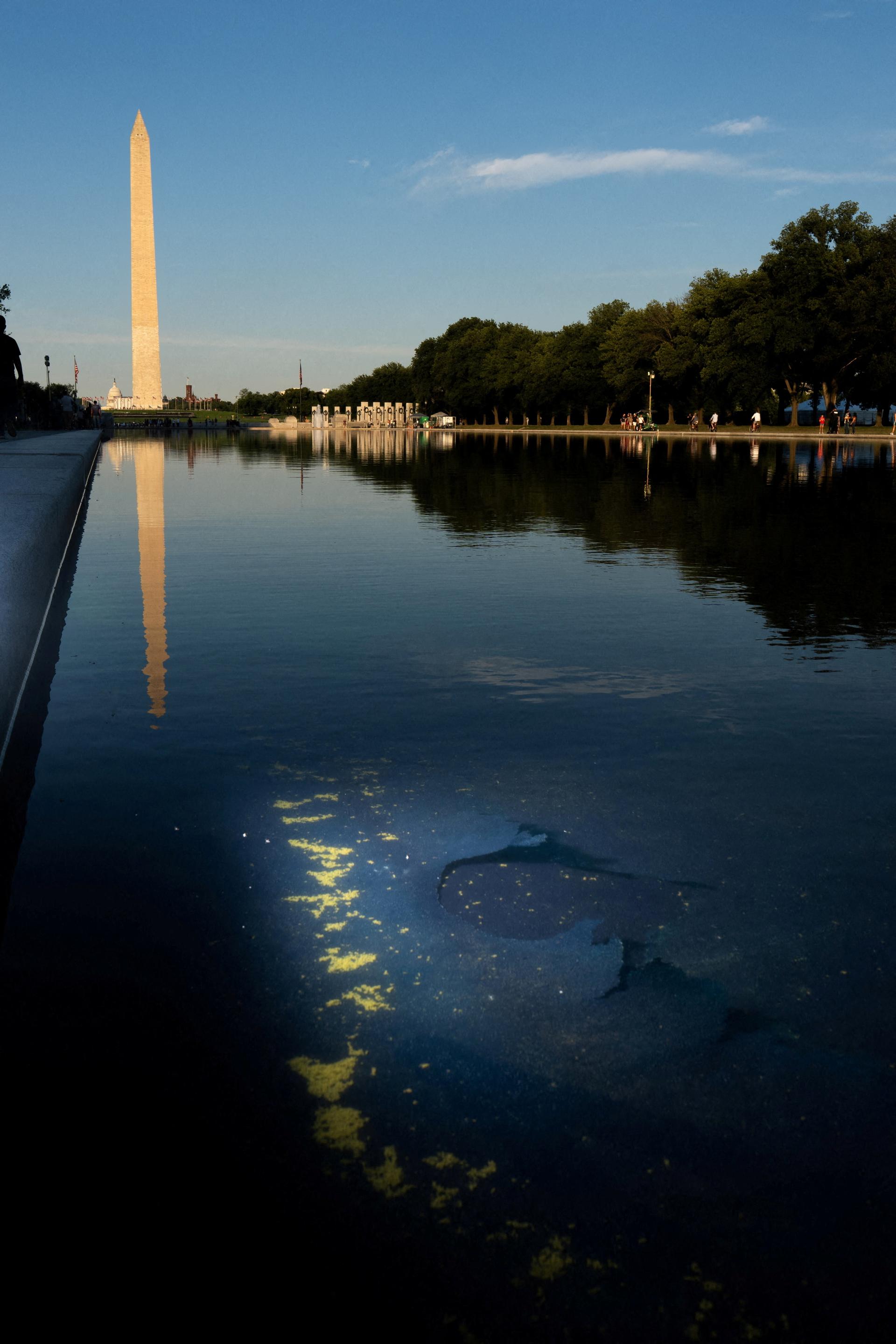
The president ordered a renovation of the monument that turned out to be, well, problematic. The pool’s “American flag blue” paint is peeling. A massive algae bloom has suffocated the water. Dead ducklings are floating around.
Trump has, without citing evidence, claimed vandals snuck into the highly patrolled property in the middle of the nation’s capital and sliced 350 feet of the pool’s sealant with a knife or razor blade. The pool must now be drained, Trump said, and patches applied.
“I spent approximately 16 Million Dollars, and it came out great, except for the Vandalism, which we are now fixing,” he posted on social media.
Trump is once again positioning himself as the solution after creating the problem.
Reporting suggests that the issues stem from problems with the renovation itself, not from vandalism.
Either way, Trump now gets to play the fixer.
It illustrates a central feature of Trump's politics. Success is often measured less by whether a problem was prevented than by whether he can be seen responding forcefully once it exists – no matter the instigator.