Britain’s North Sea course

Follow energy market shifts and the forces driving the transition to clean power. Subscribe to Reuters.com for $1/week.


Power Up

Power Up

A Reuters Open Interest newsletter

By Ron Bousso, ROI Energy Columnist


Data refreshes every time you open this email. For more energy news, click here. Please send any feedback to powerup@thomsonreuters.com.

Hello Power Up readers.

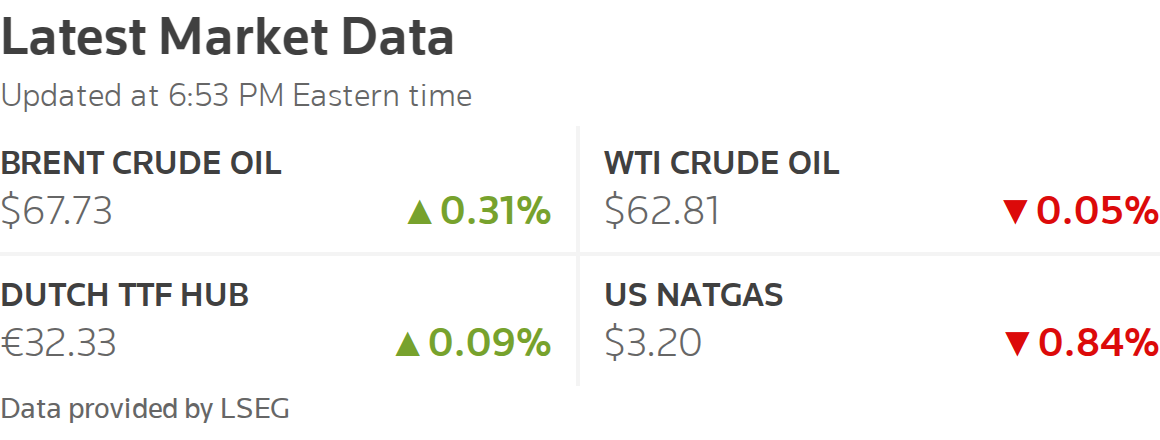
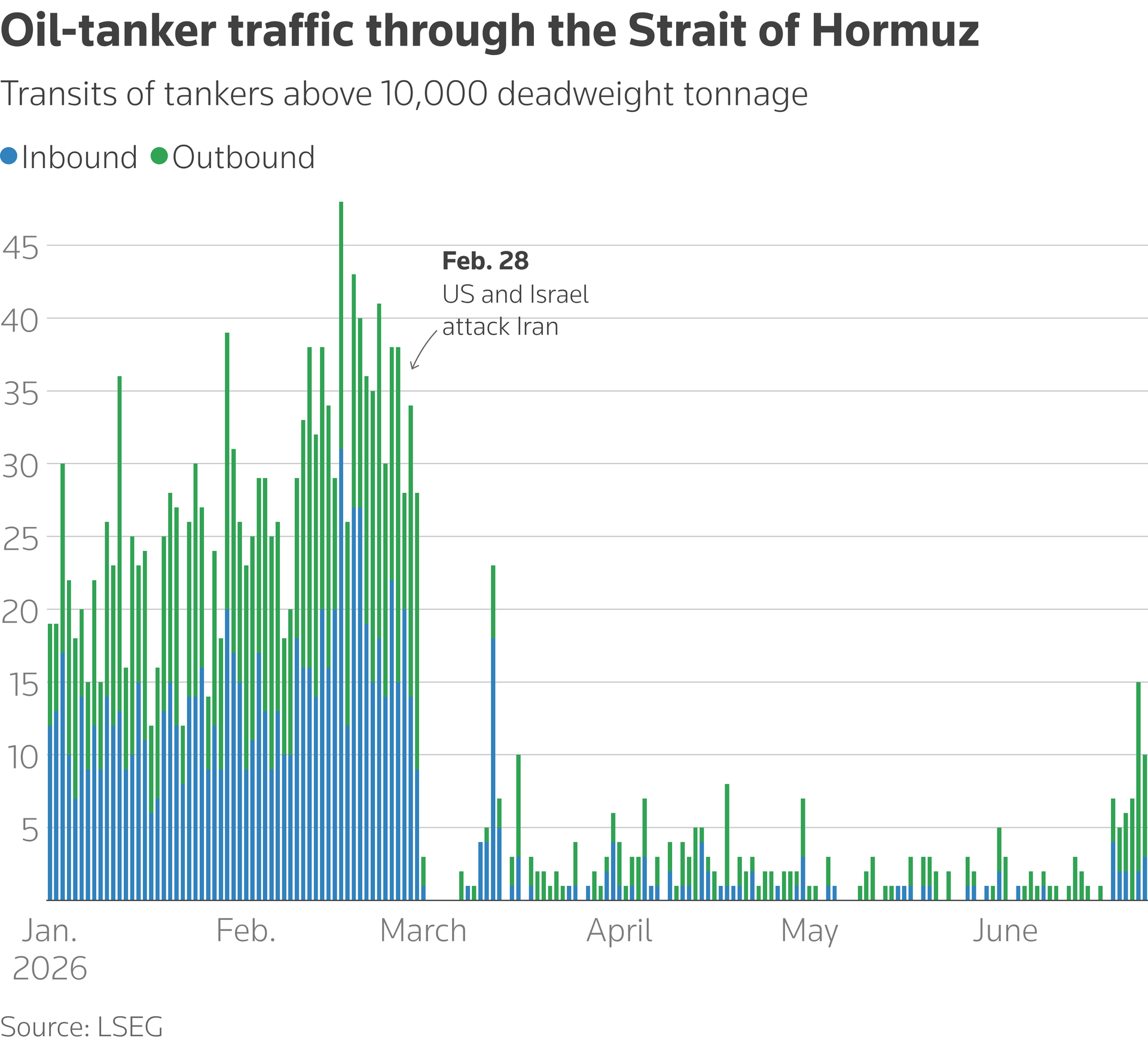
Oil prices continued their relentless fall in recent days, dropping back to pre-Iran war levels below $73 a barrel as a bearish mood seized the market. Tankers previously cooped up in the Middle East Gulf are now crossing the Strait of Hormuz every day, and the pace is accelerating as ship owners and traders rush to the exit following the interim 60-day U.S.-Iran deal signed earlier this month.

U.S. Secretary of States Chris Wright told the Reuters Global Energy Forum in New York that 20 million barrels of crude oil had exited the strait in the previous 24 hours. That amounts to around a fifth of world consumption and is roughly equivalent to pre-war levels. Shipping data suggests far lower outbound flows, though some tankers may be turning off satellite navigation systems, making them harder to track.

Regardless of the exact number, the surge of supplies out of the Gulf means that after months of extreme scarcity, the global oil market today faces a “mini glut”.

Yet the Middle East oil industry is far from returning to normal. The central section of Hormuz, where traffic used to flow before the war, remains closed due to fears of mines. Ships are instead using alternative routes running close to the coasts of Oman and Iran, which limits the volume of transit. And oilfields that were shut down during the war can’t fully restart until the flow of vessels sailing in and out of the Gulf normalizes, which could take several weeks.

At the same time, global refiners are continuing to tap oil reserves, with the U.S. total crude stocks hitting their lowest level since 1984 last week.

In short, we’re entering a chaotic period that could create a new set of headaches for the energy industry and policymakers.

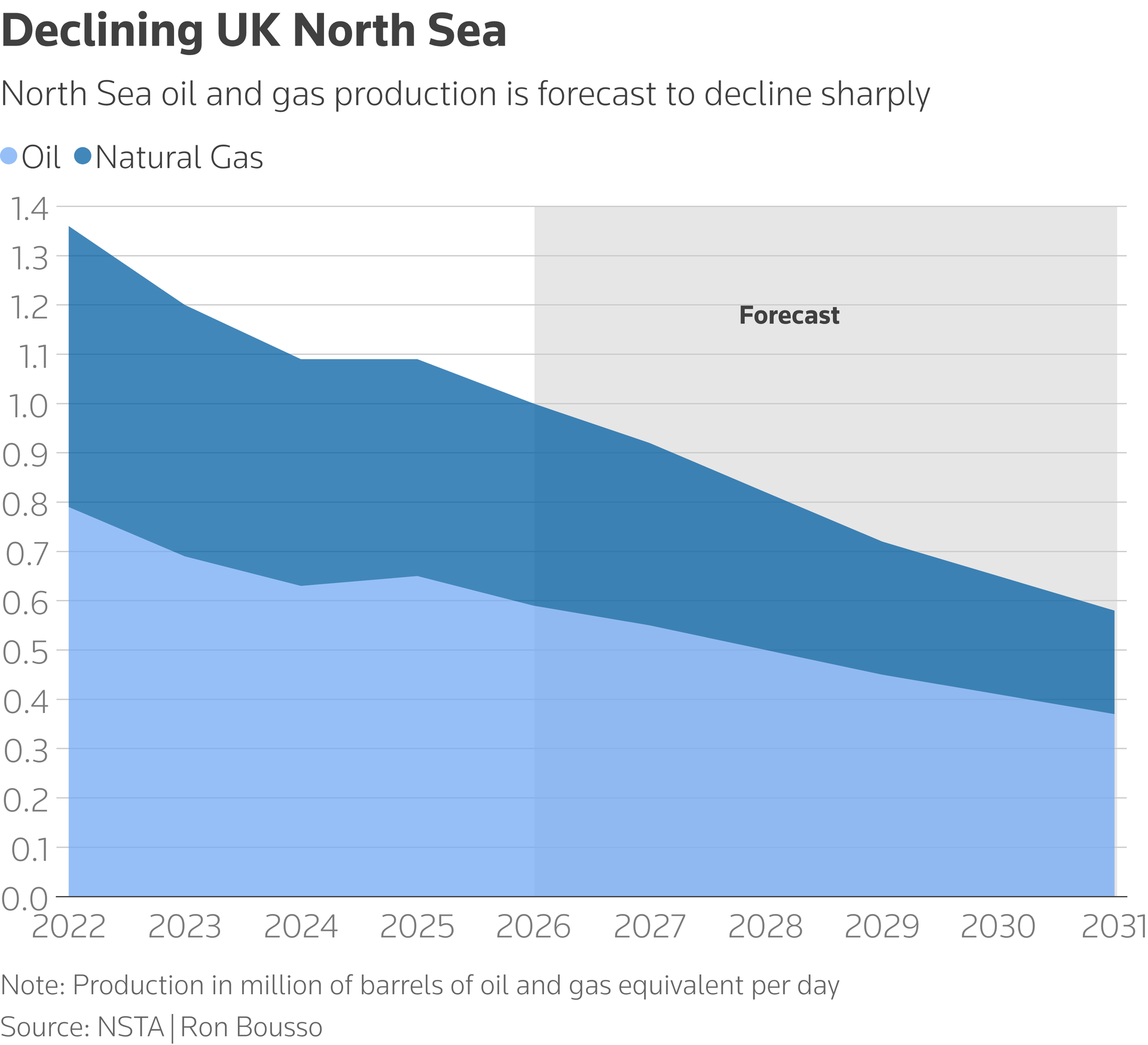
What is clear is that the Iran crisis has led many oil and gas-importing nations to rethink their energy strategies.  A prime example is the UK, and the political turmoil in the country – it will soon see its seventh prime minister in 10 years – should offer the new government the opportunity to review its restrictive North Sea oil and gas. More on this below.

Here are a few more headlines:

  • Asia's imports of seaborne thermal coal are rebounding as China boosts purchases to compensate for soft domestic output and Japan and South Korea seek energy security amid the fallout from the U.S.-Israeli war on Iran, ROI Asia Commodities Columnist Clyde Russell wrote.
  • Iraq will consider all available options if its OPEC quota is not significantly increased and has ‌weighed leaving the producer group, sources with knowledge of Iraqi oil policy told Reuters.

As always, don’t hesitate to contact me at ron.bousso@thomsonreuters.com or follow me on LinkedIn with any questions or thoughts.


Top energy headlines

  • Iraq warns it might leave OPEC if oil quota not raised, sources say
  • Oil prices at pre-war levels on rising Middle East supply
  • China targeting half of power from non-fossil sources by 2030
  • Equinor drops power-from-shore plan for Wisting oilfield project
  • Strikes, soaring costs and M&A await BHP's new CEO Craig


Correcting North Sea course

The latest bout of political turmoil in Britain comes as energy security has moved front and centre following the Iran war, offering the next prime minister a chance to rethink the country’s North Sea oil and gas strategy.

Andy Burnham, who is poised to succeed Prime Minister Keir Starmer following his resignation earlier this week, has provided few details of his economic vision, beyond describing it as “business-friendly socialism”.

One of his central challenges will be balancing the country’s long-term climate ambitions with the more urgent need to tackle high energy bills that have burdened households ‌and businesses in recent years.

In that context, the future of the ageing North Sea oil and gas industry has become a key domestic battleground, amplified by U.S. President Donald Trump’s repeated criticism of Starmer’s energy policies.

Read the full column
 

Sponsors are not involved in the creation of newsletters or other Reuters news content.