Hi there,
What’s Katy Perry got to do with South Korea’s stock market? Absolutely nothing, but I was at her concert in Dublin last night — parental chaperoning duties — and as she was belting out “Hot N Cold”, the lyrics “You’re up, then you’re down” made me think about the KOSPI. I need to get out more, I know.
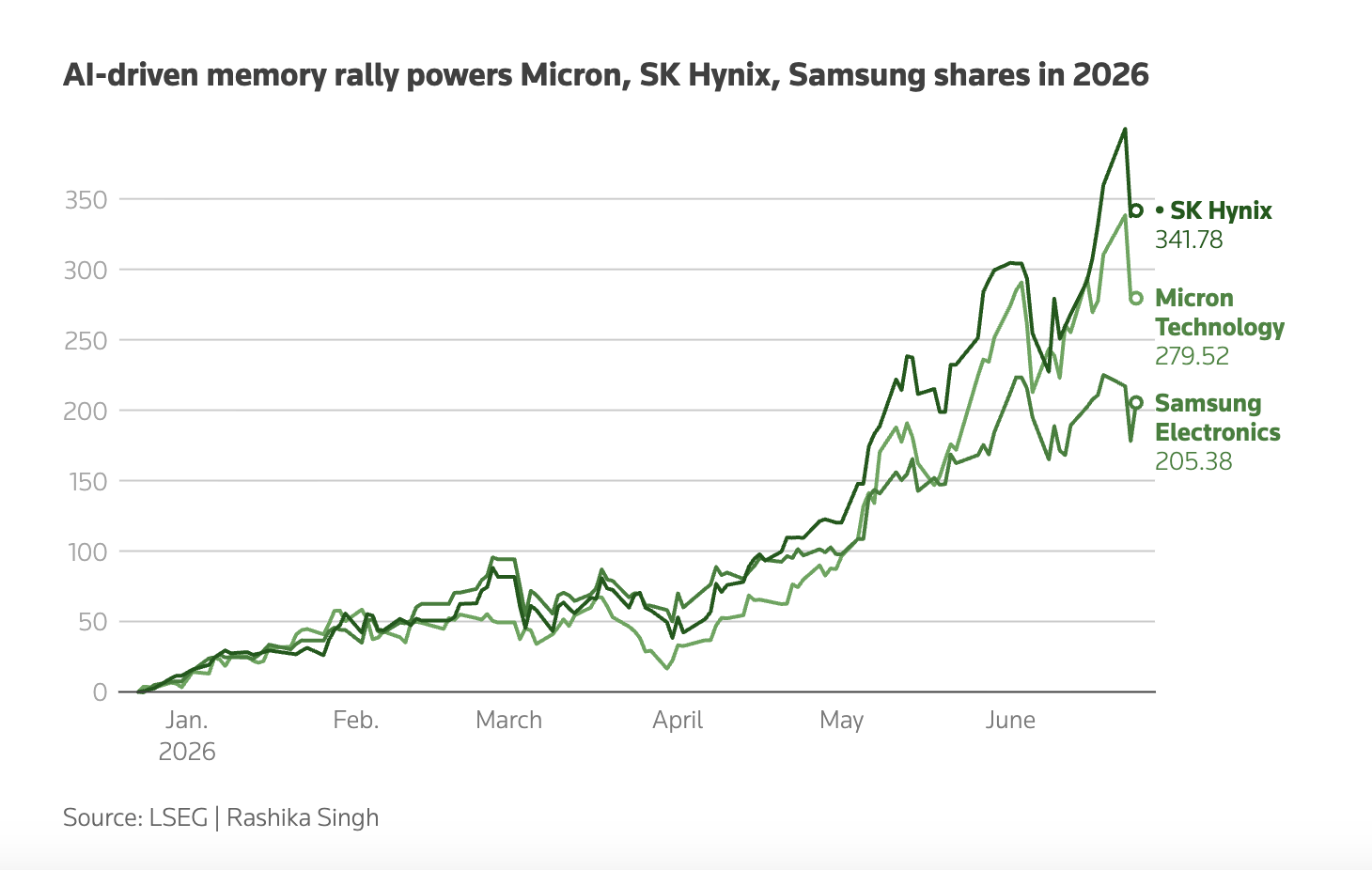
South Korea’s stock market is the hottest in the world right now, but the volatility is off the charts. Literally: the KOSPI volatility index, South Korea’s version of Wall Street’s “fear gauge”, is at record highs. Big interest from retail investors is driving wild swings in both directions.
The KOSPI has more than doubled this year on the back of the AI boom. Two of the world’s biggest chipmakers, SK Hynix and Samsung Electronics, account for over half the benchmark’s total market capitalization. Indeed, as AI demand surges, SK Hynix is targeting a $29 billion U.S. listing, which would make it one of the biggest stock sales globally.
On Tuesday, the KOSPI dropped nearly 10% as part of a global tech rout but it’s since recovered all those losses. What does that tell us about the AI trade? Well, South Korea does exaggerate shifts in investor mood. Its stock market is highly concentrated on two companies and retail investors play a much bigger role in trading compared to other markets in the United States and Europe. Leverage also magnifies the moves once sentiment shifts. Margin debt or borrowing to buy stocks rose to a record high in June and the country’s top markets regulator expressed regret this week over allowing leveraged funds tied to Samsung and SK Hynix.
So, KOSPI moves don’t predict what’s going to happen in New York or London, but they are a good early signal for cracks appearing in sentiment. Keep an eye out.
Sticking with the AI trade, as SK Hynix heads to Wall Street in the wake of SpaceX’s historic market debut, startups in China are looking for a piece of the action closer to home. There’s a scramble among Chinese companies focusing on space, quantum technology and other so-called “future industries” to raise funds from local venture capitalists. While the rush to raise funds is creating potentially lucrative opportunities for Chinese venture capital firms — struggling to recover from a years-long downturn — the fever is also inflating startup valuations and stirring fears of a forming bubble.
New Federal Reserve Chair Kevin Warsh hasn’t yet addressed the question of what he would do about dealing with market bubbles. But it is assumed that, like former Fed Chair Alan Greenspan, who died this week, he would be reluctant to prick them in advance.
Warsh’s remarks, so far, have focused more on extolling the virtues of allowing tech investment booms to run their course, rather than reining them in. And he is keeping schtum on lots of other things. “We have a task force for that” appeared to be the catchphrase from his first news conference since taking charge.
Warsh wants Fed policymakers, in general, to talk less and leave it to the market to decide where interest rates are likely to be going. But is silence risky? I talk to two veteran central bank watchers at Reuters – Fed correspondent Howard Schneider and European Central Bank chief correspondent Balazs Koranyi – all about central bank comms on this week’s Econ World podcast. Watch it here.
If you have any feedback for me drop me a link on LinkedIn.