Hello!
It’s yet another severely hot day in Britain’s capital, halfway through London Climate Action Week. Watching the delegates race around and pack into venues as temperatures soar, I’m reminded of the famous Simpsons exchange where Bart laments, “This is the worst day of my life,” and Homer responds, “The worst day of your life so far.”
The scene has been adopted by the climate community who have turned it into a meme by replacing “worst day” with “hottest summer” — a stark reminder of a warming world. Before you find out more about the extreme heat event that was cancelled, here are some top stories on my radar: |
|
|
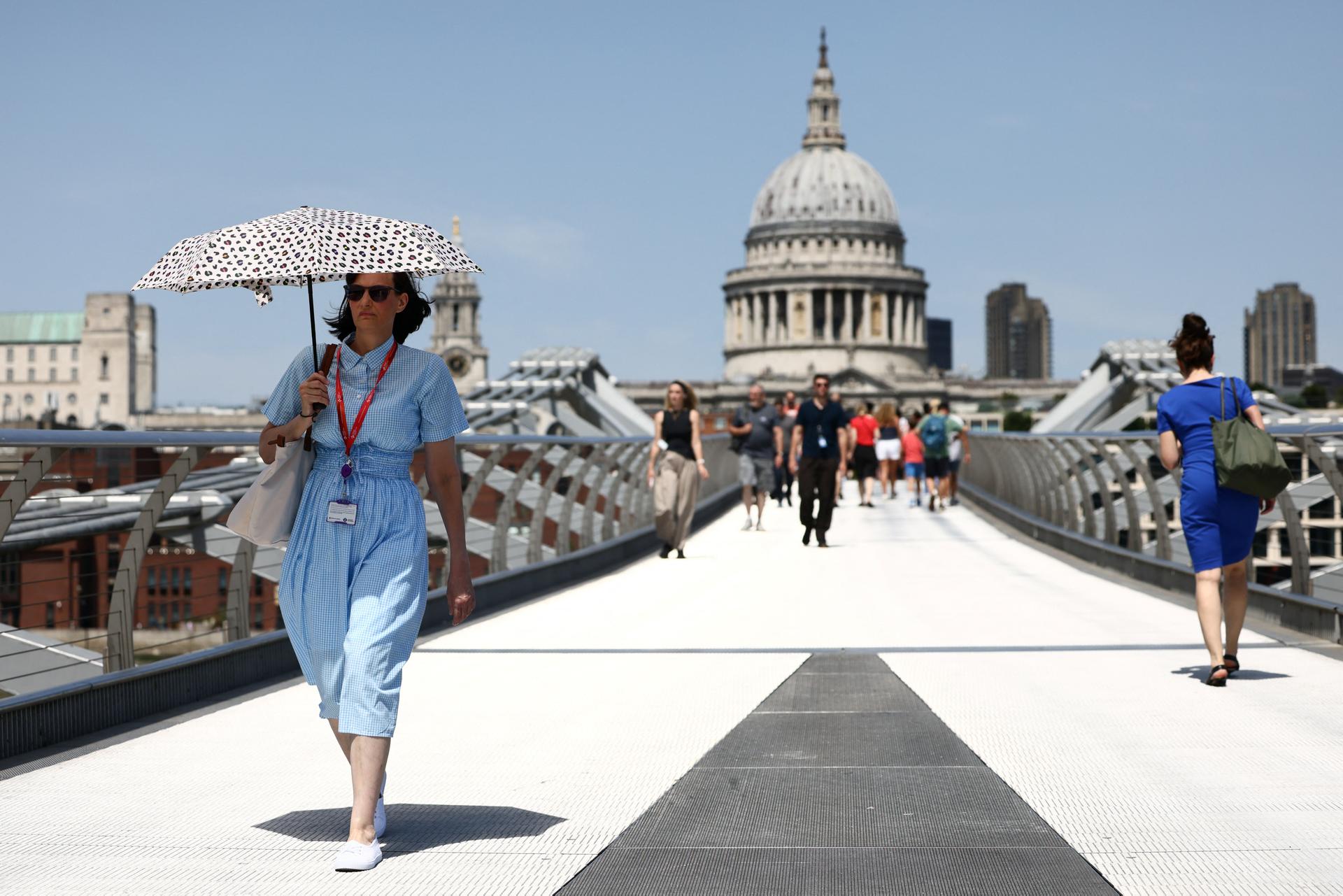
A woman walks with an umbrella along the Millennium Bridge as Britain experiences record heat, disrupting schools and transport networks in London, Britain. REUTERS/Jack Taylor |
Climate event cancelled due to heat |
This year’s LCAW has felt different and it’s not just because of the heatwave.
Sure, there was an event dedicated to discussing the impacts of extreme heat which was cancelled because the venue at the London School of Economics was too hot. Click here for the full story.
The event was due to have been held in a near 100-year-old building that, like many in Britain, relies on natural ventilation and fans to cool visitors rather than air conditioning. The organizers said they called it off due to a risk to public health. But beyond that, there has been a definite buzz building around this year’s events.
I asked Richard Folland, head of policy at the independent financial think tank Carbon Tracker, why the 2026 summit felt different. “The decline of New York Climate Week is a contributing factor since there’s more things going on here than ever before,” Folland said. |
|
|
|
Are there more things going on? |
More than 75,000 attendees from governments, companies, finance and civil society are taking part in 1,300 events discussing ways to accelerate climate action, organizers said. In the midst of events, Britain recorded its highest ever June temperature on Wednesday - 35.8 degrees Celsius (96.26 degrees Fahrenheit) in southern England, the Met Office said.
As I write, our Reuters Climate Monitor says it is 32 C in London, which is 12.3 C above the normal high for June from 1961-1990.
Folland said the London event was building on the momentum from the Santa Marta conference in Colombia in April, where 57 countries gathered for the first global summit dedicated to charting a transition away from fossil fuels.
Governments came together “saying we support a managed phase out of fossil fuels through an orderly transition which has to be at pace in line with the science, and that built political momentum and speed which hopefully will carry on through till COP31,” Folland said. It’s not just Britain that has been enduring severe weather.
Record heat across Europe has disrupted transport and forced schools and tourist sites to close, with temperatures rising as much as 18 C above seasonal norms, according to the Reuters Climate Monitor.
Authorities have not said how long the heatwave will last. Meteorologists linked it to an Omega block, a weather pattern that traps hot air and lets temperatures build over several days. Keep scrolling for more on the heatwave’s health implications. |
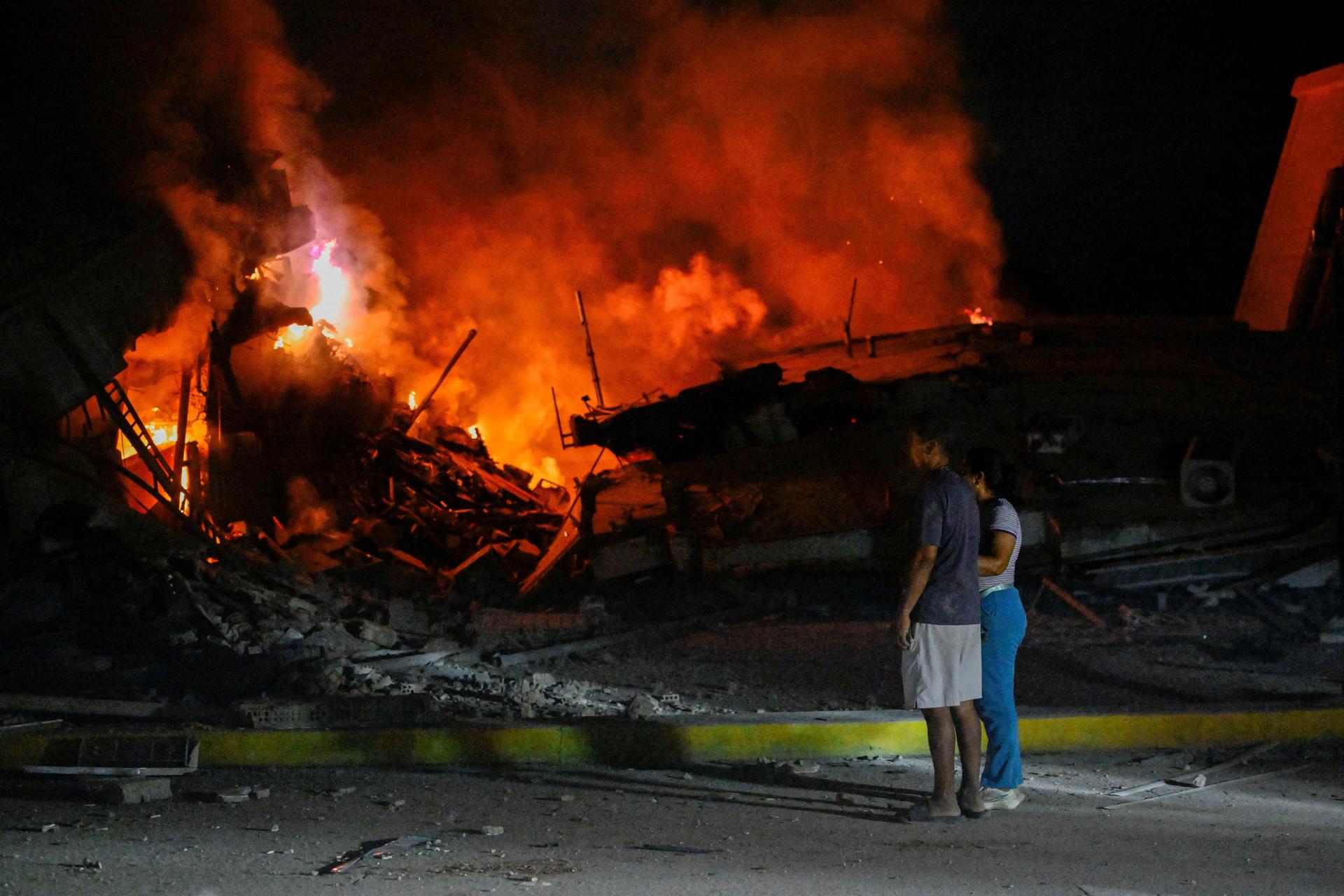
People stand near destroyed buildings after an earthquake, in La Guaira, Venezuela. REUTERS/Maxwell Briceno |
-
Venezuela earthquake: Two powerful earthquakes struck Venezuela on Wednesday, killing at least 32 people and injuring 700 after dozens of buildings collapsed into piles of shattered concrete and steel in and around the capital Caracas. The U.S. Geological Survey, using predictive modeling to estimate the death toll, said it would most likely run into the thousands, with a substantial probability of exceeding 10,000.
-
Heat’s health effects: The world is baking under extreme heat, with Europe, Asia and parts of the U.S. all dealing with scorching temperatures. Heat exhaustion, which can include dizziness, headaches, shaking and thirst, can affect anyone. It is usually not serious, provided the person cools down within 30 minutes. Click here to learn more about other symptoms. Stay safe and hydrated!
-
Climate-hit nations: The world’s most climate-vulnerable nations and a set of major development banks launched a new initiative aimed at unlocking cheaper and more predictable funding for countries increasingly facing climate shocks and rising debt costs. The fund brings together 74 economies and more than a dozen multilateral lenders from the World Bank to the Vienna-based OPEC Fund.
-
Vietnam aircon ration: Vietnam's state utility EVN called on firms and households to conserve energy on Thursday to ease the strains on the power grid, with intense heat driving electricity consumption to record highs. Temperatures are forecast to exceed 40 C in several parts of Vietnam on Thursday. Click here for a piece on Asia’s air conditioning manufacturers.
-
Trump cuts hit vulnerable: More than 4.7 million Americans have lost their Supplemental Nutrition Assistance Program benefits, also known as food stamps, since President Donald Trump’s signature tax and spending law took effect last July, according to data through March from the U.S. Department of Agriculture – about 11% of participants.
|
|
|
|
Helen Clarkson, CEO of international non-profit Climate Group, shares her thoughts on what the heatwave means for everyday life: "Extreme heat is impacting all areas of our lives, because European cities weren't built for this.
“Kids are out of school, people are asked not to come into work, there's a challenge to keep hospitals and nursing homes open, train tracks are melting, and people, often the most vulnerable, are dying. “Science has come to life, and reality is clearly showing there is more of this to come. Governments must act to electrify our systems, reduce burning fossil fuels, and keep our cities liveable. This heatwave is yet another wake-up call — and it's a stark one."
|
If you’re like me and wondering how to keep cool in a place that was built to conserve the heat, then maybe you can try your local air-conditioned cinema for some sweet relief.
“The hotter it gets, the more the cinema becomes a place of refuge,” said Laurent Dutoit, manager of three cinemas offering seniors free daytime screenings in Geneva as temperatures soar outside. Click here for the full story and video. |
|
|
|
|