| | In today’s edition: The US and Iran are on a diplomatic push across the Gulf, and Gulf billionaires ͏ ͏ ͏ ͏ ͏ ͏ |
| |  Tehran Tehran | Manama | Porto Rotondo |
 | Gulf |  |
| |
|
 - Rubio tours Gulf allies
- $125B in trapped cargo
- Bahrain sectarianism rises
- Burjeel thaws debt
- Buyers for Euro mansions
 Mojtaba’s millions and other weekend reads. |
|
US and Iran launch Gulf charm offensives |
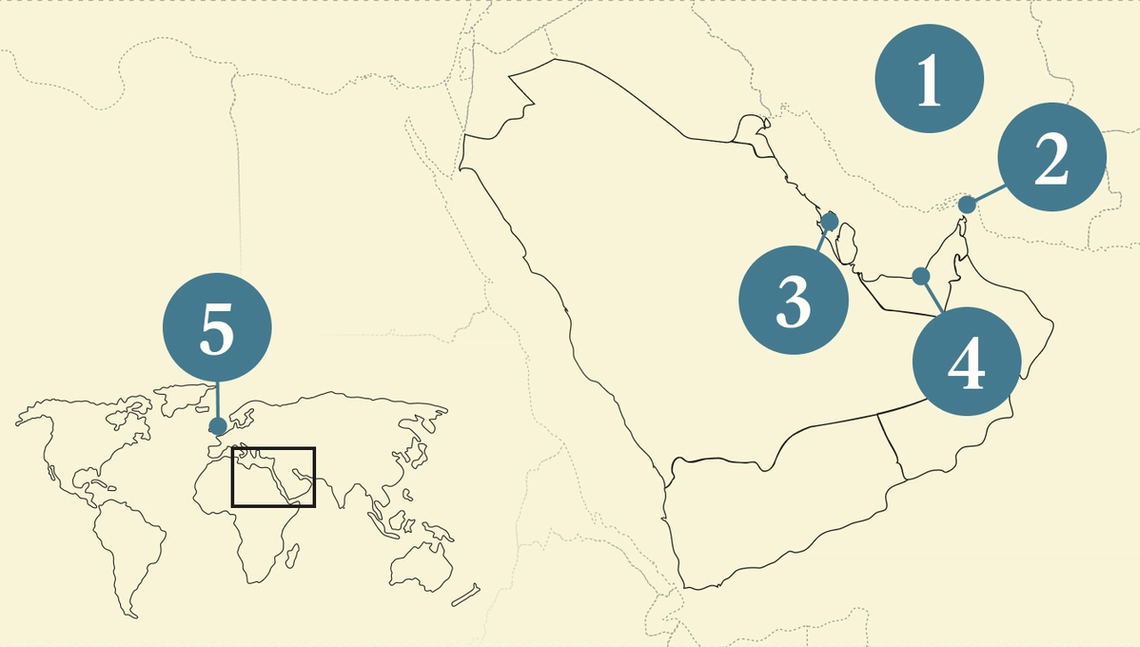
 Abdulla Al Neyadi/UAE Presidential Court/Handout via Reuters Abdulla Al Neyadi/UAE Presidential Court/Handout via ReutersThe US and Iran are engaged in a diplomatic push across the Gulf, while sparring over just what they agreed to in last week’s interim deal. US Secretary of State Marco Rubio is in the Gulf to reassure allies about Washington’s support, calling into the UAE, Kuwait, and Bahrain — all of which were hit hard by Iranian drones and missiles — and meeting UAE President Sheikh Mohamed bin Zayed at the Abu Dhabi outpost of Zuma. “We’re not going to do anything that undermines the security of our allies,” he said. Tehran is meanwhile trying to rebuild relations with its neighbors. Iran’s foreign minister spoke to his Saudi counterpart yesterday and Riyadh is reportedly considering hosting reconciliation talks, with separate negotiations over the Strait of Hormuz that could be led by Qatar. Some remain deeply skeptical: A diplomatic adviser to the UAE president warned that imposing “new geopolitical facts” on the region merely “sows new seeds of discord and conflict for the future.” Iran and the US are themselves at odds over inspections of nuclear sites, and the use of unfrozen funds. Tehran has accused Washington of drawing inferences from the deal that are “entirely at odds” with its text. Rubio said: “We expect them to live up to the commitments they made.” |
|
Hormuz transits are still at risk |
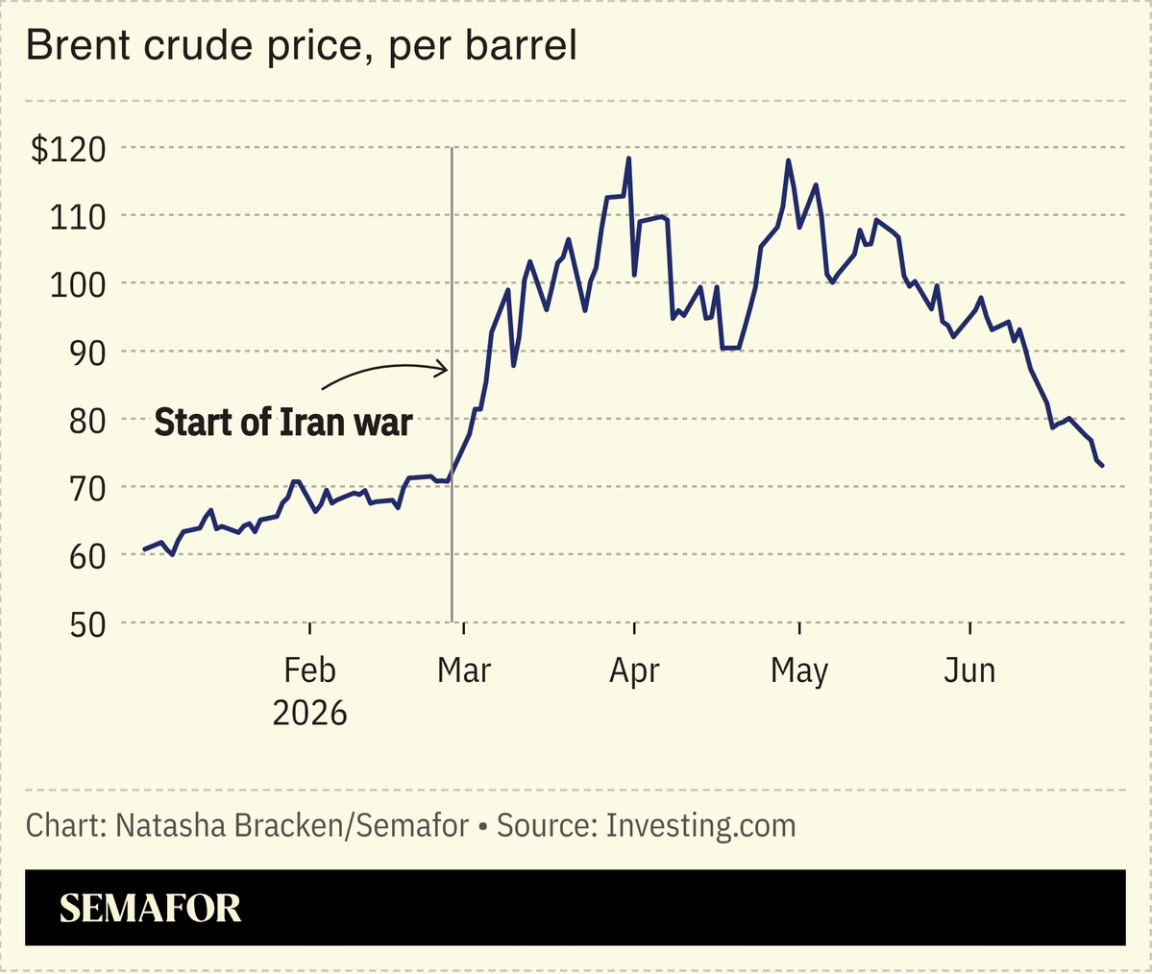 Traffic through the Strait of Hormuz may be slowly picking up, helping to send oil prices back down to their prewar level, but the value of ships and cargo still trapped in the Gulf stands at around $125 billion, according to insurance giant Allianz. It estimates that more than 1,150 cargo ships are in the Gulf waiting to sail out, with many thousands of seafarers on board. If and when traffic returns to the pre-war levels that could be cleared quickly, but shipping companies remain understandably wary of Iranian mines and missiles — even if more of them now feel confident enough to sail with their transponders on. Oman and the International Maritime Organization have set out two temporary routes through the strait, but Tehran warned vessels to stick to routes it had approved, saying the alternatives were “unacceptable and extremely dangerous.” Allianz said the world was moving toward a “new maritime order,” defined by escalating security risks on established routes and higher risk premiums. |
|
Bahrain cracks down on Shiite majority |
 Shi’ite Muslims attend Tasoua in Istanbul. Murad Sezer/Reuters. Shi’ite Muslims attend Tasoua in Istanbul. Murad Sezer/Reuters.Bahrain imposed sweeping restrictions on its Shiite community ahead of a major holiday commemoration, the latest in a string of curbs across the Gulf since the US-Iran war. The crackdown for the Ashura festival emphasizes a point made recently by Semafor’s Mohammed Sergie: The conflict’s most enduring legacy in the region may be renewed tensions between the Sunni-led regimes and their Shiite citizens — who form a minority in most Gulf countries, but a majority in Bahrain — because of perceived links to Shiite-majority Iran. Any dissent now risks being recast as treason. Manama recently stripped 69 Shiites and their relatives of citizenship, attempted to deport most to Iran, and banned public mourning for Tehran’s late supreme leader. Authorities in Kuwait, Qatar, and the UAE have also cracked down on alleged Iran-linked militants and sympathizers. — Edward Clowes |
|
Burjeel’s sukuk sign of market thaw |
 Abu Dhabi-listed Burjeel Holdings issued a $500 million Islamic bond, the opening tranche of a $1.5 billion borrowing plan it had shelved when the Iran war began in February. The group said demand was three times larger than supply, with orders coming mostly from international investors, in a sign that Gulf debt markets are thawing after the conflict stalled new issues. Proceeds of the sukuk will go toward refinancing existing debt and enabling investments in research and clinical trials, CEO Shamsheer Vayalil told Semafor. Vayalil had earlier said any move toward tapping debt markets would hinge on possible government support, which turned out not to be needed, with the deal instead “completed entirely on commercial terms,” he said. The Gulf’s healthcare sector, clouded by the 2020 collapse of NMC Health, has nonetheless attracted massive investment as the region seeks to diversify, with hundreds of millions of dollars spent on the shift from a state-run system to a privatized model. — Kelsey Warner |
|
European mansions still a Gulf darling |
 Italian Prime Minister Berlusconi speaks with Egyptian President Hosni Mubarak at Villa Certosa in 2008. Livio Anticoli/Pool/Reuters. Italian Prime Minister Berlusconi speaks with Egyptian President Hosni Mubarak at Villa Certosa in 2008. Livio Anticoli/Pool/Reuters.Gulf billionaires are still snapping up some of Europe’s most expensive properties: A hospitality group owned by a Qatari royal family member is buying a Sardinian compound once known for its infamous “bunga bunga” parties. Villa Certosa was sold by the heirs of former Italian Prime Minister Silvio Berlusconi, who hosted a parade of world leaders there in the early 2000s. Sheikh Jassim bin Hamad al Thani’s Constellation Hotels, which has a growing portfolio of resorts mostly in Africa, paid some €350 million ($395 million) for the sprawling estate, Reuters reported. In another sign of real estate ebullience, the scion of Emirati property tycoon Hussain Sajwani is finalizing the purchase of one of London’s most expensive homes, the Financial Times reported. Nicknamed “mini Buckingham Palace,” Abbas Sajwani may land the 40-bedroom property for about £190 million ($250 million). |
|
 The insider guide to the energy transition’s new order. Penned by Climate and Energy Editor Tim McDonnell, Semafor Energy delivers sharp reporting and analysis on the policies, people, and power struggles driving the energy transition. As the world reshapes how it produces, distributes, and consumes energy, each edition helps readers understand how the energy transformation is defining the new world economy. |
|
 Energy- BP CEO Meg O’Neill made the UAE her first stop in the region since taking over in April, meeting ADNOC’s Sultan Al Jaber and UAE Energy Minister Suhail Al Mazrouei. The visit coincided with a new ADNOC-led deal — in which BP has a 10% stake — to develop the Bab Gas Cap, a major Abu Dhabi onshore field, as the UAE looks to cover all its own gas needs by 2030.
Aviation- L3Harris modified the Boeing 747 jet gifted by Qatar to the US into a presidential plane in just 10 months, with 400 employees working around the clock to complete a job that would normally take years. The result garnered praise from US President Donald Trump, and the new Air Force One will fly over the Independence Day festivities in Washington on July 4. — Breaking Defense
Deals- German building materials firm Knauf made an offer to buy out Saudi Arabia’s United Mining Industries for about $80 million. The German company already owns 63% of the Saudi firm, and the acquisition is a rare foreign takeover of a Saudi-listed business.
Media- MBC Group, one of the largest media companies in the Middle East, has appointed an executive from the Saudi sovereign wealth fund to its board. Mishari bin Naji bin Saleh Al Ibrahim, head of entertainment and hospitality at the Public Investment Fund, joined the media company’s board after the fund acquired a controlling stake in the firm last year.
|
|
 - Iran’s strongest card, the Strait of Hormuz, is of diminishing value. Tehran can’t both use the waterway as leverage and monetize it because “by accelerating the world’s effort to find alternative routes” it would “lower the costs Iran’s adversaries face in launching a future war,” Nate Swanson, a former US National Security Council official who oversaw the Iran file, writes in Foreign Affairs.
- The US Department of Justice is probing how Iran’s Supreme Leader Mojtaba Khamenei built a global investment portfolio with exposure to Wall Street firms, including JPMorgan Chase and Citigroup, according to an investigation by Bloomberg’s Ben Bartenstein and Sridhar Natarajan.
- The US-Israeli war on Iran failed to meet many stated objectives and, more than anyone else, the Iranian people are paying the price. After urging Iranians to rise up, Washington is now negotiating with an intact Islamic Republic that is still rounding up political prisoners, executing them, and dumping bodies into mass graves, Laura Secor writes in The Atlantic.
|
|
|


