OpenAI-Broadcom AI chips, Qualcomm-Modular deal, SK Hynix listing.
 ͏  ͏  ͏  ͏  ͏  ͏  ͏  ͏  ͏  ͏  ͏  ͏  ͏  ͏  ͏  ͏  ͏  ͏  ͏  ͏  ͏  ͏  ͏  ͏  ͏  ͏  ͏  ͏  ͏  ͏  ͏  ͏  ͏  ͏  ͏  ͏  ͏  ͏  ͏  ͏  ͏  ͏  ͏  ͏  ͏  ͏  ͏  ͏  ͏  ͏  ͏  ͏  ͏  ͏  ͏  ͏  ͏  ͏  ͏  ͏  ͏  ͏  ͏  ͏  ͏  ͏  ͏  ͏  ͏  ͏  ͏  ͏  ͏  ͏  ͏  ͏  ͏  ͏  ͏  ͏  ͏  ͏  ͏  ͏  ͏  ͏  ͏  ͏  ͏  ͏  ͏  ͏  ͏  ͏  ͏  ͏  ͏  ͏  ͏  ͏  ͏  ͏  ͏  ͏  ͏  ͏  ͏  ͏  ͏  ͏  ͏  ͏  ͏  ͏  ͏  ͏  ͏  ͏  ͏  ͏  ͏  ͏  ͏  ͏  ͏  ͏  ͏  ͏  ͏  ͏  ͏  ͏  ͏  ͏  ͏  ͏  ͏  ͏ ­ ­ ­ ­ ­ ­ ­ ­ ­ ­ ­ ­ ­ ­ ­ ­ ­ ­ ­ ­ ­ ­ ­ ­ ­ ­ ­ ­ ­ ­ ­ ­ ­ ­ ­ ­ ­ ­ ­ ­ ­ ­ ­ ­ ­ ­ ­ ­ ­ ­ ­ ­ ­ ­ ­ ­ ­ ­ ­ ­ ­ ­ ­ ­ ­ ­ ­ ­ ­ ­ ­ ­ ­ ­ ­ ­ ­ ­ ­ ­ ­ ­ ­ ­ ­ ­ ­ ­ ­ ­ ­ ­ ­ ­ ­ ­ ­ ­ ­ ­ ­ ­ ­ ­ ­ ­ ­ ­ ­ ­ ­ ­ ­ ­ ­ ­ ­ ­ ­ ­ ­ ­ ­ ­ ­ ­ ­ ­ ­ ­ ­ ­ ­ ­ ­ ­ ­ ­  
Thursday, June 25, 2026
OpenAI and Broadcom’s AI chip has a name: Jalapeño

Good morning. Today’s word of the day is “adversarial distillation,” which Anthropic accuses Alibaba of doing to its AI models in a new letter to U.S. lawmakers.

Alibaba allegedly accessed Anthropic’s Claude for three months to illicitly extract its capabilities in a presumed bid to train Alibaba’s rival AI chabot, Qwen, at a fraction of the cost.

We’re not talking about a handful of times here: Anthropic said Alibaba made 28.8 million exchanges with Claude via almost 25,000 accounts in a pattern that mimicked prior scraping attempts by other Chinese developers. Alibaba shares dropped 3% on the news.

As it so happens, Alibaba sued the Pentagon this week for its inclusion on a U.S. military list of “Chinese military companies.” One can’t help but wonder how the Hangzhou company will support its claims of reputational damage given this latest news. 

More tech news below. —Andrew Nusca

Want to send thoughts or suggestions to Fortune Tech? Drop a line here.
OpenAI and Broadcom’s AI chip has a name: Jalapeño
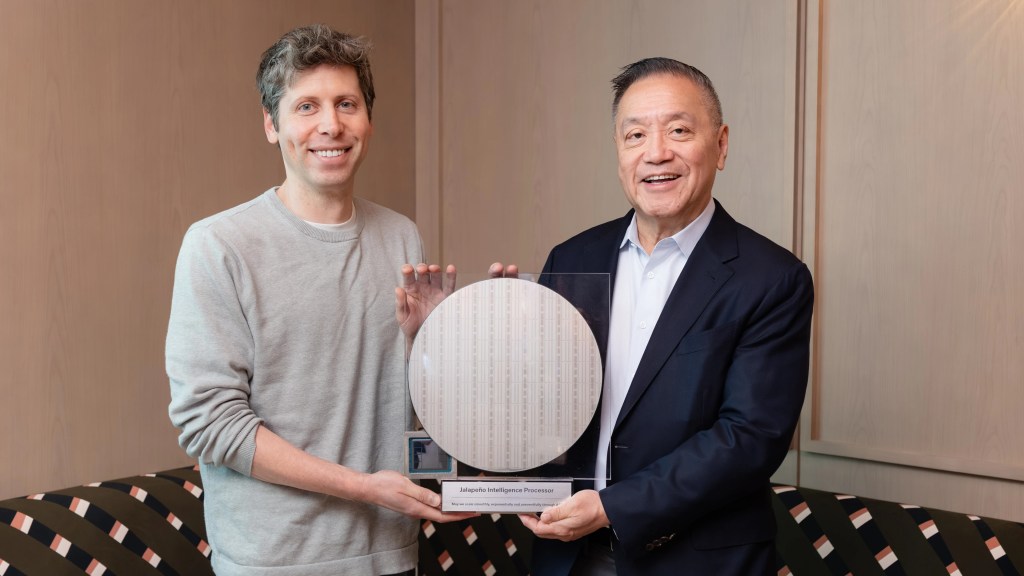
OpenAI CEO Sam Altman (left) and Broadcom CEO Hock Tan holding their new AI chip, “Jalapeño.” (Photo courtesy OpenAI)OpenAI CEO Sam Altman (left) and Broadcom CEO Hock Tan holding their new AI chip, “Jalapeño.” OpenAI

It’s finally here. OpenAI and Broadcom on Wednesday took the wraps off their long-gestating custom AI chip. 

Dubbed “Jalapeño,” the silicon is designed for inference (as opposed to training) and is, according to Broadcom chief Hock Tan, as good as Nvidia’s Blackwell chips or Google’s TPUs in terms of speed and efficiency when working with large-language models.

The first chip is planned for deployment by the end of this year in custom servers made by Canada’s Celestica. Like its peers, this first Jalapeño chip marks what will be a multigenerational family of silicon. (Poblano? Serrano? The mind reels.)

“We optimized the architecture around the kernels, memory movement, networking, and serving patterns that matter most for frontier AI models,” said Richard Ho, who leads OpenAI’s hardware program, in a statement. “Based on early testing, Jalapeño will efficiently execute our most important workloads close to the hardware’s theoretical limits.”

OpenAI has not made it a secret that it believes the winner of the AI arms race will be the company that moves first to secure as much AI infrastructure as possible. The new Broadcom chip, designed in the span of nine months and manufactured by Taiwan’s TSMC, is part of that multifaceted effort.

It comes as no surprise that rival Anthropic is also reportedly exploring making its own AI chip in a bid to catch up with OpenAI—not to mention Amazon (Trainium), Google (TPU), Meta (MTIA), and Microsoft (Maia). All of them are working with seasoned partners like Broadcom and Marvell to help design the chips, after which they’re made by foundries such as TSMC, Samsung, and Intel. —AN
Qualcomm will acquire Modular for almost $4 billion
Speaking of AI infrastructure: Qualcomm said Wednesday that it would buy the Los Altos, Calif., startup Modular in an all-stock deal worth about $3.9 billion.

Founded in 2022 by former Google engineering leads Chris Lattner and Tim Davis, Modular makes software that runs AI models (for inference) on various kinds of processors without the need to write chip-specific code.

The chief rival to Modular’s vendor-agnostic approach is Nvidia’s CUDA, which famously does the opposite, locking developers into Nvidia’s dominant chips and ecosystem.

Buying Modular therefore pits San Diego’s Qualcomm more squarely against its Santa Clara frenemy to the north, a step it had already taken when it first staked a claim on the AI data center market late last year as part of a broader strategic move to diversify beyond its traditional stronghold of mobile phones.

“We believe ⁠the future belongs to developer-friendly, horizontal platforms that can run across diverse compute environments and give customers real choice in how and ​where they deploy AI,” Qualcomm CEO Cristiano Amon said in a statement.

The deal is expected to close later this year. Don’t expect it to be the last: Qualcomm is also reportedly in talks to buy the AI chip designer Tenstorrent for upwards of $10 billion. —AN
SK Hynix hopes to raise more than $29 billion in U.S. listing
The South Korean semiconductor giant SK Hynix said Wednesday that it hopes to raise up to 45.45 trillion won, or slightly more than $29 billion, by issuing American depositary receipts.

The company, which days ago became its home country’s most valuable, is working to diversify its investor base as well as fund production capacity for memory chips used for AI. 

SK Hynix is the world’s second-largest memory maker (in terms of production) behind Samsung.

SK Hynix did give some sense of how the funds would specifically be put to use. On tap: The construction of a chip factory in Yongin, 40 minutes’ drive from Seoul, as well as an advanced packaging fab in Cheongju, 90 minutes’ drive from Seoul.

The company also hopes to help fund its planned purchase of advanced chipmaking equipment, including ASML’s extreme ultraviolet (EUV) lithography scanner, a hundreds-of-millions-of-dollars machine that allows it to make high-bandwidth memory products at scale for Nvidia and other clients. (In March, SK Hynix said it hoped to buy $8 billion’s worth.)

For the financially inclined, SK Hynix said 10 ADRs would be the equivalent of one common share. If the Korean chipmaker succeeds at reaching its price target, it would be the largest ADR offering ever made, besting China’s Alibaba in 2014. —AN
More tech
No one’s sadder about losing Anthropic Mythos 5 access than the NSA.

Microsoft's 2025 quantum breakthrough claims were based on “basic Python errors” and data cherry-picking, a new peer-reviewed paper alleges.

Kalshi is reportedly fundraising at a $40 billion valuation.

Binance says it will renew its efforts to secure permission to operate in the EU.

Two key Google Gemini researchers will reportedly jump ship to Anthropic.

Rockstar Games’ Grand Theft Auto VI goes on sale tomorrow for $80.

Agility Robotics will go public in a $2.5 billion SPAC deal.