| | Micron reports robust earnings on memory chip demand, President Donald Trump has a contentious lunch͏ ͏ ͏ ͏ ͏ ͏ |
| |  | Flagship |  |
| |
|
The World Today | 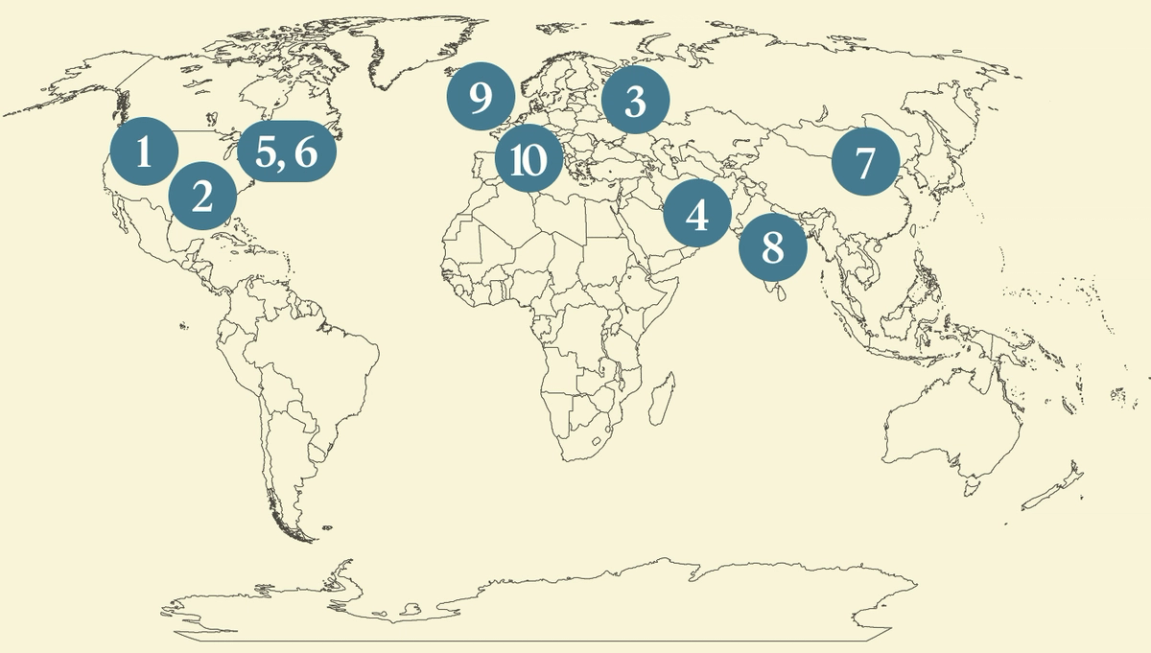 - Micron’s strong earnings
- Trump blames Big Oil
- Russia faces fuel crisis
- Gulf’s Iran deal fears
- Trump vs. Republicans
- Landmark US housing bill
- Chinese AI stocks rally
- China’s carmakers expand
- Millionaires are migrating
- AI for good and AI for bad
 A sweeping history of Cuba that pleases nobody. |
|
Micron posts blowout earnings |
 Brendan McDermid/Reuters Brendan McDermid/ReutersUS chipmaker Micron reported strong results Wednesday to top off a multi-day tech stock whipsaw. The company’s third quarter revenue beat expectations by more than 15%, as AI infrastructure demand remains insatiable. A “somewhat obscure” company last June, Reuters noted, Micron is now “a Wall Street darling,” CNBC wrote, thanks to the AI-fueled demand for memory chips that has lifted its valuation past $1 trillion; the company recently signed a supply deal with Anthropic. Micron said it expects demand for memory chips to outpace supply through at least 2027. The firm’s stock price shot up in after-hours trading, but not enough to erase recent losses in a global tech rout driven by investors’ AI jitters. |
|
Trump blames ‘Big Oil’ for gas prices |
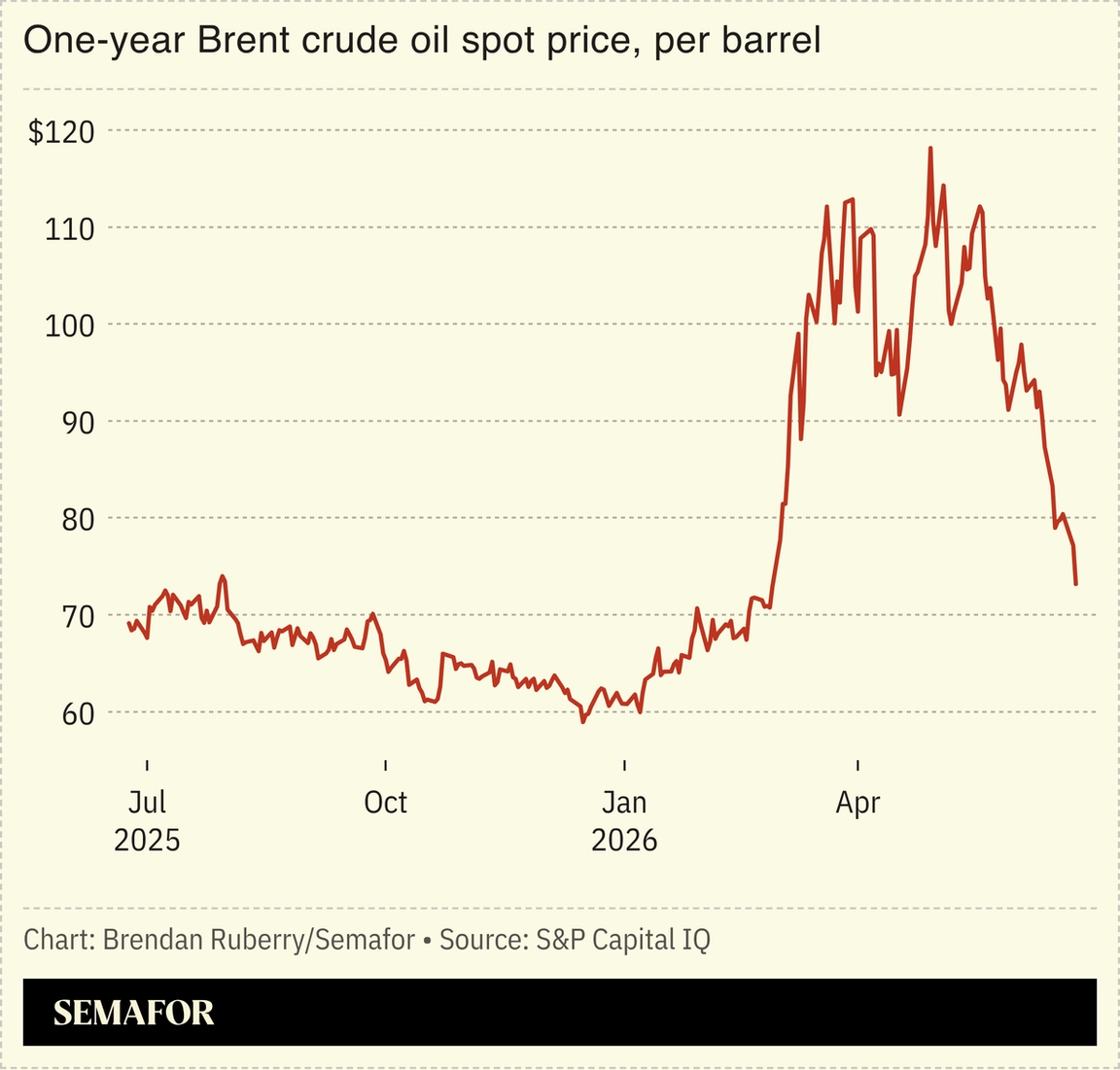 Oil prices have landed back to near pre-war prices as the US and Iran projected progress in peace talks, and more tankers passed through the Strait of Hormuz than at any time since the conflict began. But US retail gas prices have stayed north of $3.90, prompting President Donald Trump on Wednesday to accuse “Big Oil” of price gouging. His complaint echoed former President Joe Biden’s, who blamed oil and gas companies for soaring prices after Russia invaded Ukraine in 2022. Although “Big Oil” doesn’t set retail gas prices, CNN noted, presidents find it easier “to point the finger when gas prices become a political problem.” Trump has ordered his Justice Department to investigate oil companies. |
|
Russia’s energy crisis worsens |
 Stringer/Reuters Stringer/ReutersFuel prices at Russia’s airports have spiked 17% in June, as the country’s energy crisis deepens due to intensified Ukrainian strikes on Russian refineries. Gasoline production this month is 25% lower than a year ago, and several regions have announced fuel rationing. Moscow’s biggest refinery, damaged in Ukraine’s largest-ever attack on the capital, will not resume service until 2027, Reuters reported. Despite Kyiv’s success in disrupting energy supplies under new drone tactics, Russia’s economy is “treading water, rather than contracting,” The Economist argued, thanks in part to heavy stimulus. Boosting energy ties with Southeast Asia has helped, too: ASEAN leaders’ recent visit to Russia, Foreign Policy wrote, illustrated how the Iran shock has “strengthened” the Kremlin’s diplomacy in a “fuel-hungry region.” |
|
Gulf states skeptical of Iran deal |
 Eric Lee/Reuters Eric Lee/ReutersThe Gulf appears skeptical about the US-Iran deal despite Washington’s assurances that it will restrain Tehran and preserve regional security. The UAE, Kuwait, and Bahrain reportedly fear the agreement leaves Iran’s military capabilities intact and unlocks funds to strengthen its armed forces. The US secretary of state is hoping to convince Gulf allies of Washington’s security commitments, but what matters more is whether the deal puts them in a better or worse position than they were before the war, CNN wrote. Gulf states have backed the ceasefire, because “a bad deal is still preferable to war,” an analyst said. But their unease reflects a deeper frustration with Donald Trump’s decision-making, The Washington Post reported: “We got played,” a Dubai businessman said. |
|
Trump and Republican senators clash |
 Evelyn Hockstein/Reuters Evelyn Hockstein/ReutersA closed-door meeting on Wednesday between US President Donald Trump and Republican senators erupted into a shouting match, as the president’s relationship with Congress plummeted to a new low. Furious at a Senate-passed rebuke of the Iran war, Trump spiked a housing bill that offered Republicans a rare legislative win, a move that has “aggravated party fissures and shown the limits of his power,” Reuters wrote. When asked about the meeting, one senator gave an eye roll to Semafor, while another said “there wasn’t a lot of opportunity for dialogue.” The contentious lunch showcased the “internecine fighting that continues to engulf” the Republican Party, Semafor’s DC team wrote, portending a rough midterm election in November. |
|
Trump cancels housing bill signing |
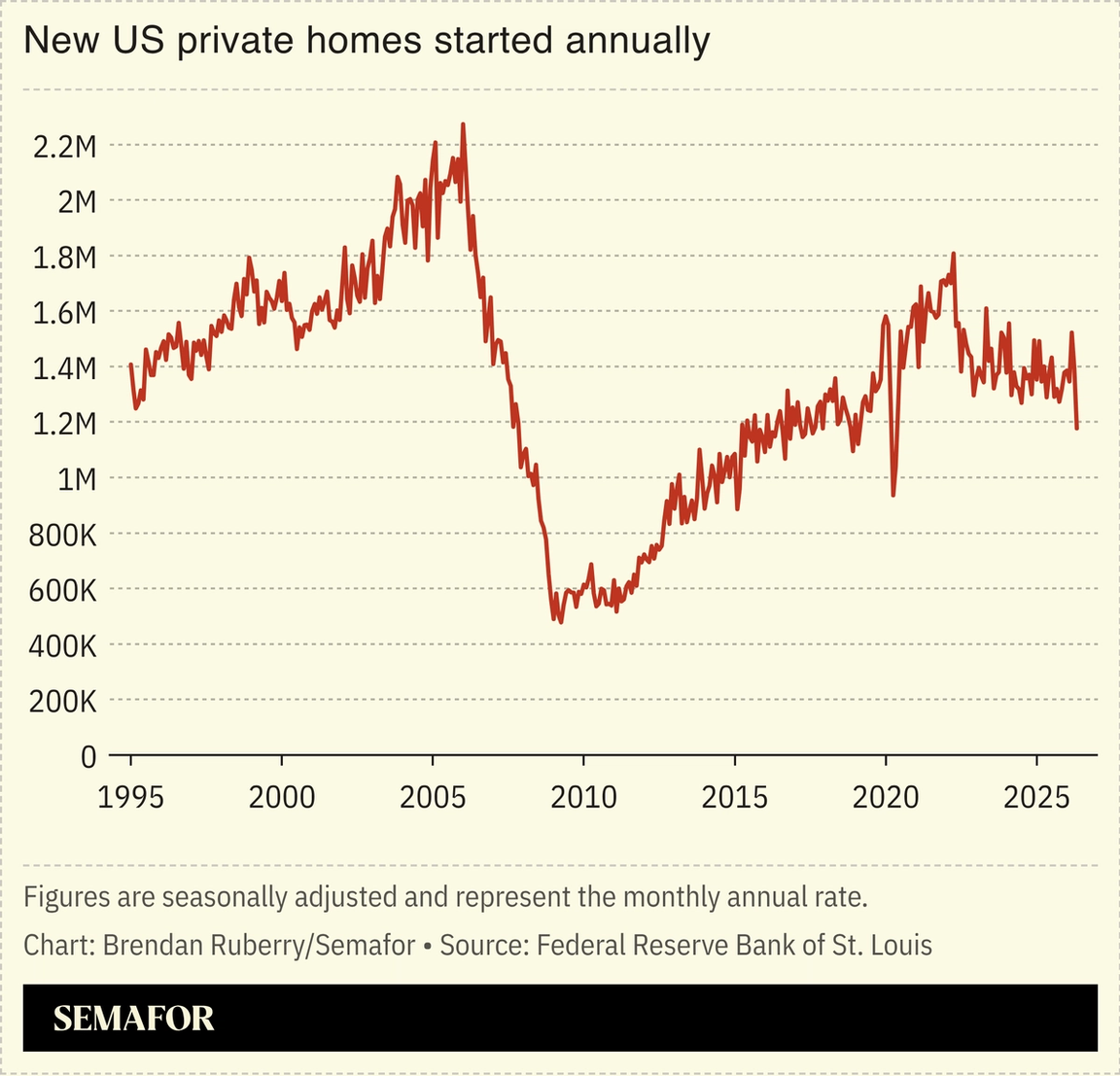 US President Donald Trump on Wednesday canceled the signing of the country’s first national housing bill in decades. The landmark legislation was largely welcomed by campaigners but revealed the limits of the federal government’s power to improve housing affordability. Washington wants to loosen zoning restrictions, but has no authority to do so, so the bill mainly offers incentives — in the form of grants or prioritized funding — to encourage local governments, and reduces environmental and building-code restrictions. The bill represents a rare bipartisan consensus: Both parties agree housing is too expensive and supply is the main bottleneck. Some reformers argued, however, that a provision restricting big investors buying homes could hit build-to-rent development and reduce, rather than encourage, construction. |
|
Chinese AI boom accelerates |
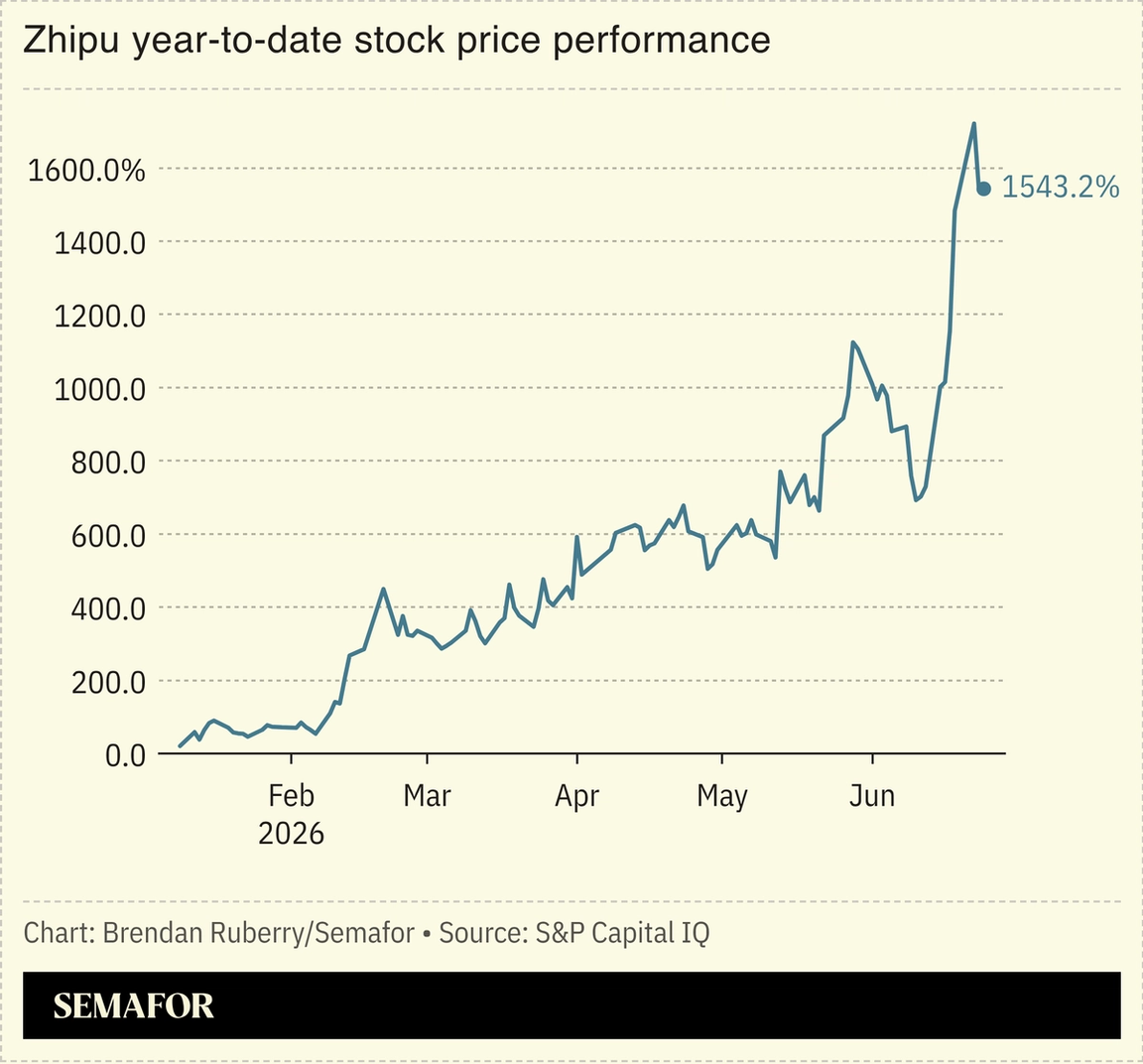 Chinese AI startup Zhipu is weighing a multi-billion dollar share sale after it skyrocketed around 2,000% since its January IPO, Bloomberg reported, underscoring the enduring optimism around the country’s AI stocks. Beijing’s measures to expand AI adoption across consumer markets and plans to ease listing requirements for AI companies have fueled the rally in Chinese AI shares. Zhipu’s latest model’s capabilities “shocked” one US tech executive and further boosted sentiment, spurring debates on how quickly China can catch up to the US in the tech race. Zhipu’s founder predicted the development of a Chinese model as powerful as Anthropic’s Fable 5 within the year. Such comparisons “don’t stand up to scrutiny,” Bloomberg analysts argued, given Anthropic’s “unmatched financial firepower.” |
|
 This is the email briefing that’s trusted among boardrooms, policymakers, and Wall Street. Delivered to your inbox twice weekly, Semafor Business is the essential read for understanding the deals, decisions, and power shaping the global economy. Penned by Semafor Business Editor Liz Hoffman & Semafor Business Reporter Rohan Goswami, each issue delivers the scoops, insights, and analysis you need to stay ahead in a rapidly shifting financial landscape. |
|
Chinese carmakers test foreign restrictions |
 Tingshu Wang/Reuters Tingshu Wang/ReutersChinese automakers are making inroads into markets they have been officially shut out of. ECARX, an automotive technology firm with roots in China, has partnered with a Michigan-based autonomous vehicle company, and is seeking the Trump administration’s approval to sell products in the US despite Biden-era restrictions aimed at prohibiting Chinese software and hardware in cars on American roads. India’s Tata Motors plans to use Chery’s carmaking platform to manufacture EVs, showing that despite India’s efforts to block Chinese companies, their EV tech continues to seep into the world’s third-largest auto market. Facing slowing sales and overcapacity at home, China’s carmakers are testing the limits of foreign restrictions, a consultant told The Wire China, “moving from caution to audacity.” |
|
Record millionaire migration |
 Shannon Stapleton/Reuters Shannon Stapleton/ReutersA record 140,000 millionaires migrated last year, research suggested, as the wealthy flee taxes or instability. For the first time last year, France, Germany, and Spain lost more wealthy residents than they gained, as fears of wealth taxes grow; high-income Britons have been leaving for years. Many Americans are also increasingly looking to leave, in part because of the country’s political direction, a consultant told The Economist. Another driver may be that even the wealthy are feeling economic anxiety. Only 40% of self-described upper-middle or upper class US citizens say they are financially secure, The Wall Street Journal reported, with many worried they haven’t saved enough to retire comfortably, and others reported being squeezed by high gas prices. |
|
|


