| | In this edition, DeepMind’s Demis Hassabis on how he views the future of creativity in the age of AI͏ ͏ ͏ ͏ ͏ ͏ |
| |  | Technology |  |
| |
|
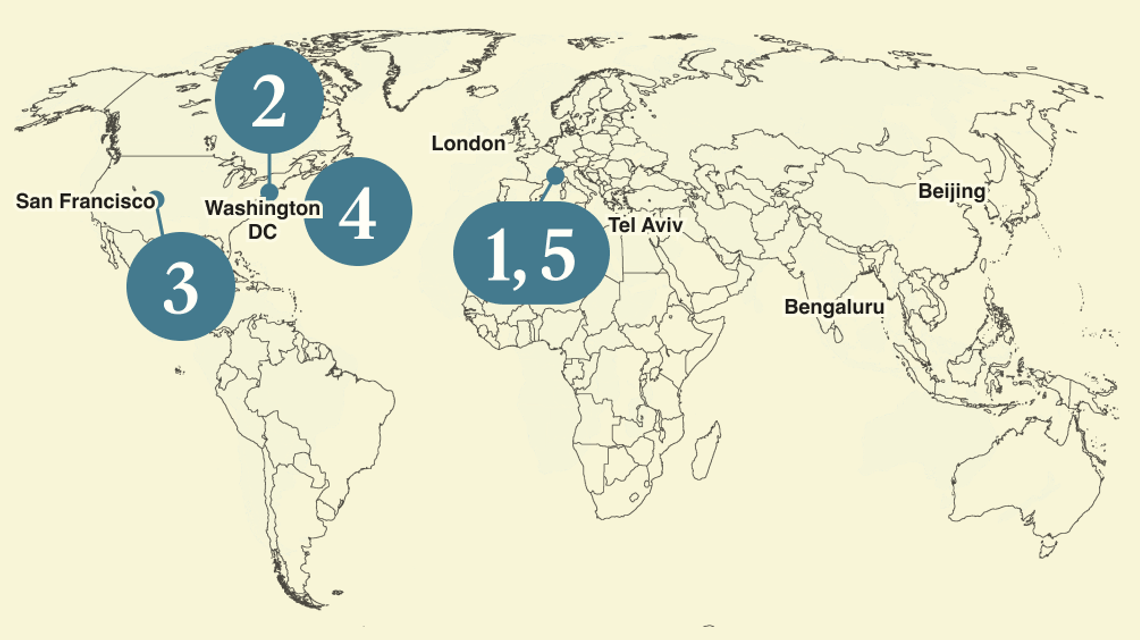 - AI talent wars
- Hands-free work is here
- Staying smart with AI
- WH orders quantum computer
- OpenAI’s big ad bet
 How Demis Hassabis views the future of creativity, and AI (attempts) to take on medical imaging. |
|
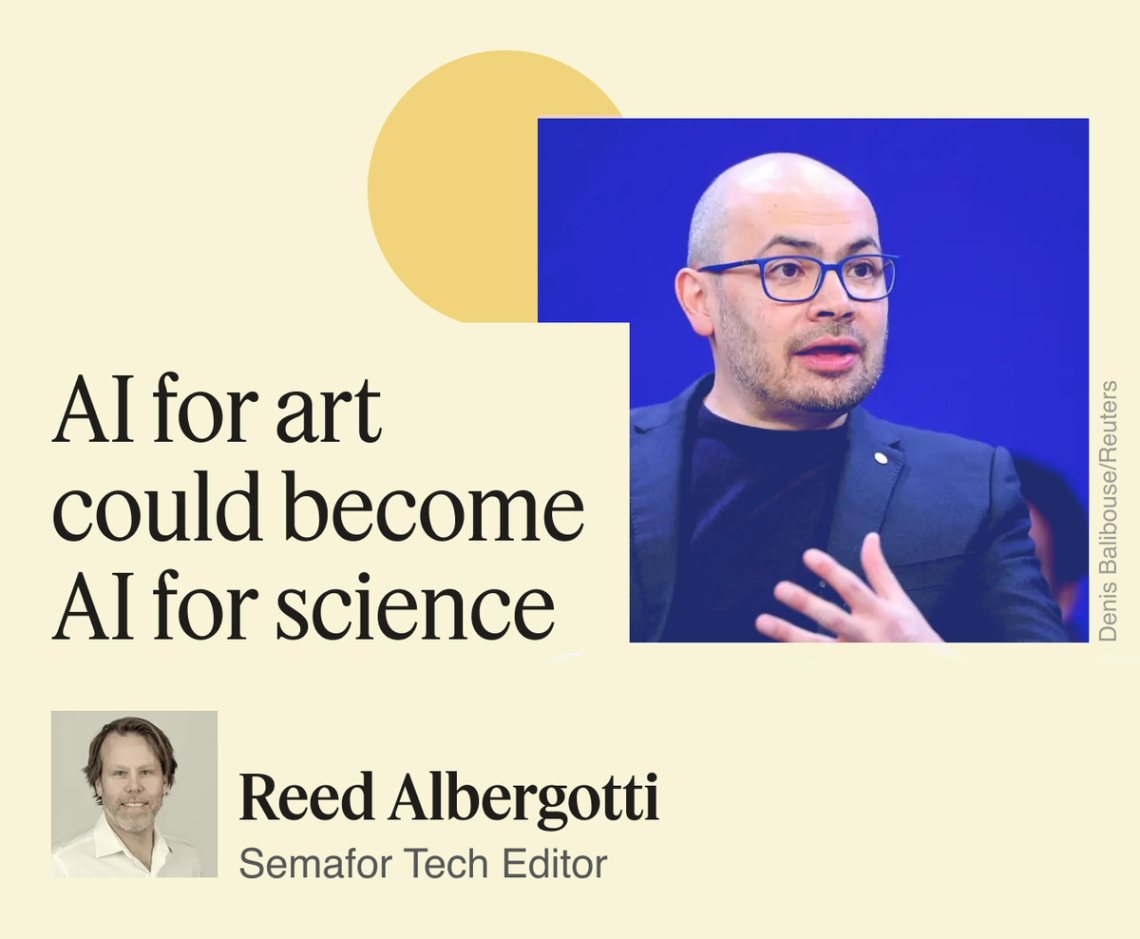 I made my first trip to Cannes Lions, the “festival of creativity,” this year. Naturally, Google DeepMind CEO Demis Hassabis wanted to talk about creativity. But that topic is a landmine. Where AI and the creative industries intersect, there are lawsuits and high emotion. A Google employee told me AI played the role of villain at Cannes last year; this year people were more open, but still wary. Most skeptics draw a bright moral line: AI that cures cancer or discovers climate-friendly materials is good; AI that makes music, films, or art is not. Creativity, one person told me, is supposed to be hard. And after talking with Hassabis, who won a Nobel Prize for the “good” kind of AI, I came away thinking that technology doesn’t really draw a distinction. For AI to truly revolutionize science, it needs a form of creativity it currently doesn’t possess. Right now, AI can generate an image no one has seen before, but Hassabis describes true creativity as a system that can formulate a genuinely new concept that doesn’t just extrapolate from what humans already know. He calls it the Einstein test: Given only the evidence available to Einstein, could today’s AI models rediscover relativity? Probably not. To discover that missing algorithmic piece, it may require an AI that has an understanding of the physical world in a way text-based systems don’t. And that means training models on human-made visual and auditory creations. Just like Einstein, who ventured beyond textbooks to imagine riding trains that travel near the speed of light, AI needs to understand “the world of atoms, not just the world of bits, or the world of logic.” That idea connects Hassabis’ work in AI to his earlier career in neuroscience. In a 2007 paper that studied patients with hippocampal damage, he found that memory and imagination appeared to share a constructive mechanism: one rebuilds the past; the other recombines its pieces into something new. Hassabis said he designed games the same way. Before writing the code, he would picture a child using the interface, anticipate where they might struggle and imagine what would make the game fun. He was, in effect, running a simulation in his head. At Cannes, he put it plainly: “Imagination is a type of simulation.” Simulations let an intelligence test many possibilities before choosing a path. DeepMind’s early work on games was a research ladder toward systems capable of tackling protein folding and drug discovery. Video models may follow the same path. The capabilities that help someone generate an advertisement could also help AI understand the physical world, train a robot, or analyze images of cells and molecules. “Some of these things are inseparable,” Hassabis said. Technological progress rarely arrives in cleanly separable pieces. Who benefits and who pays for AI progress is a legitimate debate. What we may not be able to do is embrace the machinery of scientific imagination while rejecting that same machinery in art. |
|
Hassabis on why Google’s still winning |
 Demis Hassabis onstage with Reed Albergotti in Cannes. Josh Billinson/Semafor. Demis Hassabis onstage with Reed Albergotti in Cannes. Josh Billinson/Semafor.DeepMind co-founder and CEO Demis Hassabis pushed back on the market’s reaction to Google’s AI talent fleeing. “There’s a lot of talent movement between all the leading labs,” Hassabis said in an interview in Cannes this week. “But … we have by far the biggest and broadest research bench of any of the labs out there.” It’s the first time anyone from Google has publicly addressed the recent departures of John Jumper, who shared the Nobel Prize with Hassabis for his work on AlphaFold, or Noam Shazeer, who helped pioneer the transformer architecture that underpins the current AI boom. A Google spokesperson said the small number of departures won’t impact the company’s overall trajectory. Whether Hassabis is right or wrong, the big names are not the most important people in the AI talent wars. Their departures are often bigger PR headaches than operational ones. It’s the top PhD candidates and computer scientists, who are being courted by the highest ranks at tech companies and who’ll likely be responsible for the next AI breakthroughs. |
|
 Smart glasses. Steve Marcus/Reuters Smart glasses. Steve Marcus/ReutersCan your whole laptop fit on your face? A world is coming into view where employees dump their laptops and navigate the workday with nothing but a pair of smart glasses, according to Darko Mesaros, who works at AWS as an advocate for outside developers. Mesaros’ smart glasses by Even Realities keep tabs on the coding agents running on his laptop. The project status appears on the lenses, and he directs actions using a ring on his finger and his voice. “It’s just a different screen,” he said. Maybe, but it’s a step towards the kind of voice-controlled, hands-free work life that companies have dangled to consumers for years. OpenAI, Anthropic, and Amazon have added new ways to control agents on phones as well. Some Anthropic and OpenAI users are already coding by talking into wireless earbuds — something Amazon doesn’t yet offer. Amazon said it isn’t planning to offer coding integrations with smart glasses at this time. OpenAI declined to share its plans, and Anthropic didn’t respond to a request for comment. Mesaros detailed his experience with his smart glasses at AWS’ New York summit last week, where the company unveiled the coding phone app, upgrades to its AI assistant, and a product that detects and fixes code vulnerabilities. Developers weren’t wowed by the announcements — many of them have already experimented with similar capabilities from Amazon’s competitors and view Amazon as a laggard in the AI race. In an interview with Semafor, AWS’ Chief AI and Technology Officer Matt Wood pushed back on the idea that Amazon is behind, noting that the company’s “long time horizon” isn’t always “visible and recognized.” “We’re three steps into a marathon,” he said. “It’s super early to be picking winners.” — Rachyl Jones |
|
Jack Clark: AI itself can stem cognitive decline |
 Anthropic co-founder Jack Clark (L). Courtesy of Aspen Institute and Anthropic. Anthropic co-founder Jack Clark (L). Courtesy of Aspen Institute and Anthropic.The concern that humanity’s reliance on AI systems will stunt people’s ability to think and reason for themselves is one that AI companies should address, Anthropic co-founder Jack Clark said at a recent Aspen Institute event. One example: Anthropic’s Claude chatbot has started asking users clarifying questions about their prompts, which Clark described as “forcing a person to engage their brain more and claim some agency back.” Future iterations of chatbots may even withhold responses until users contribute their own original ideas, he said, adding that this isn’t yet in Anthropic’s product plans. Pushing people to think through problems can help stimulate critical thinking, but it’s unlikely users want more friction injected into the user experience. — Rachyl Jones |
|
Quantum EOs leave much to be desired |
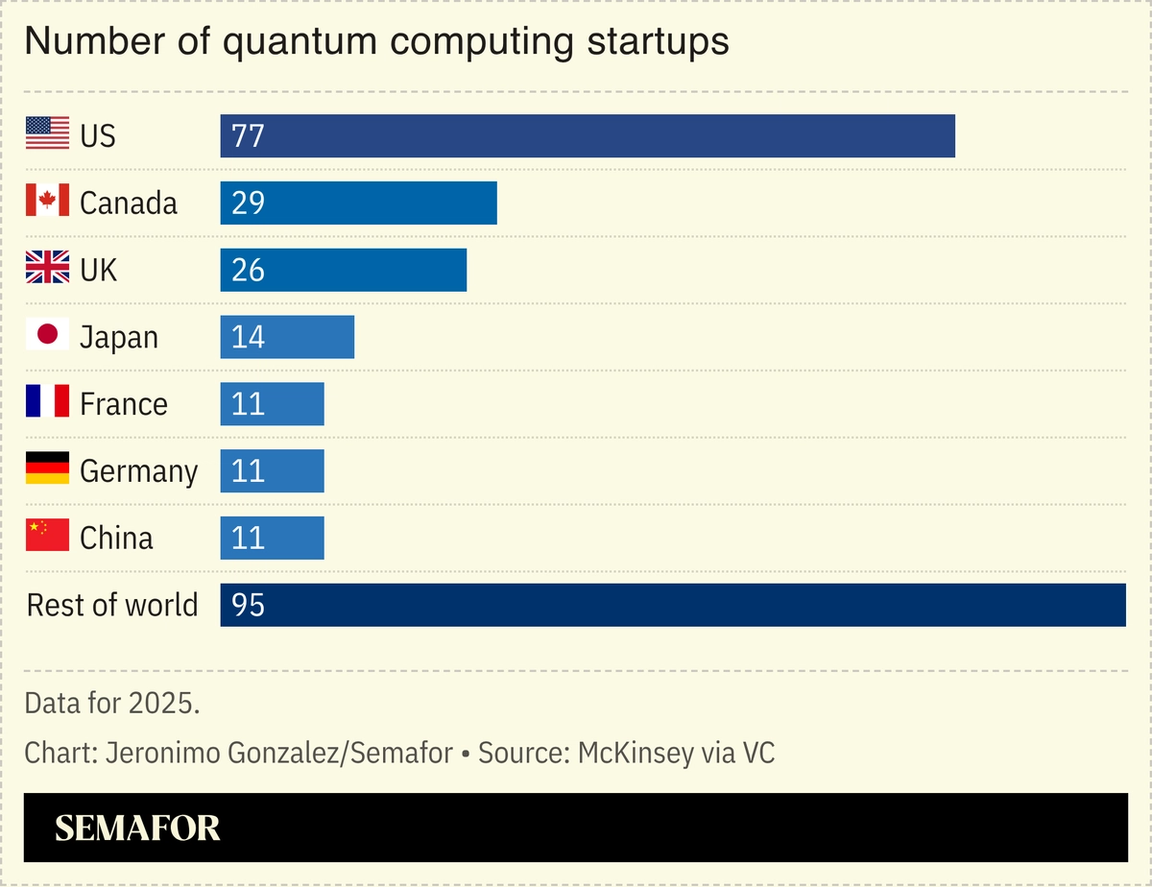 The White House published long-anticipated executive orders on quantum computing, emphasizing coordination rather than sweeping investments or policy changes. President Donald Trump called to strengthen the domestic supply chain, bolster security systems, and deliver a quantum computer to the Department of Energy in 2028 to shepherd in scientific discoveries. It’s “really good language,” Elizabeth Goldschmidt, associate director of the University of Illinois’ quantum center, told Semafor. But will it amount to more funding for universities and basic research? Quantum companies are already competing to deliver a quantum computer and say the executive order hasn’t materially changed how they’re operating. Similar to the government’s recent $2 billion investments in quantum firms, such as IBM and PsiQuantum, the executive orders will add credibility to the technology — which still hasn’t proved reliable at scale. — Rachyl Jones |
|
OpenAI shows off ads in Cannes |
 Courtesy of OpenAI Courtesy of OpenAIOpenAI went to Cannes’ annual festival of ad and marketing creativity this week to showcase its advertising ambitions: Its tools can invent a campaign in hours, and it plans to generate $100 billion from its advertising business by the end of the decade. The advancements make ad-industry creatives anxious — the technology can cut out middlemen like visual artists and graphic designers. But the tools are not going away, and as David Droga, founder of the agency Droga5, told Semafor’s Mixed Signals show: The end result will simply mean the end of a market for human mediocrity in creative fields. OpenAI, which swore off advertising for years, projects it will reach about half of Meta’s current ad revenue by 2030. Users will see ads targeted to them based on what, when, and how they are researching, said OpenAI advertising chief David Dugan at Cannes. The company said current users weren’t alienated by new AI ads in test markets. Dugan said the frequency of users seeing an ad and clicking away was “far lower” than when the company began testing. |
|
|


