| | In today’s edition: A Qatari conglomerate bets on Syria reconstruction, the UAE bans teens from soci͏ ͏ ͏ ͏ ͏ ͏ |
| |  | Gulf |  |
| |
|
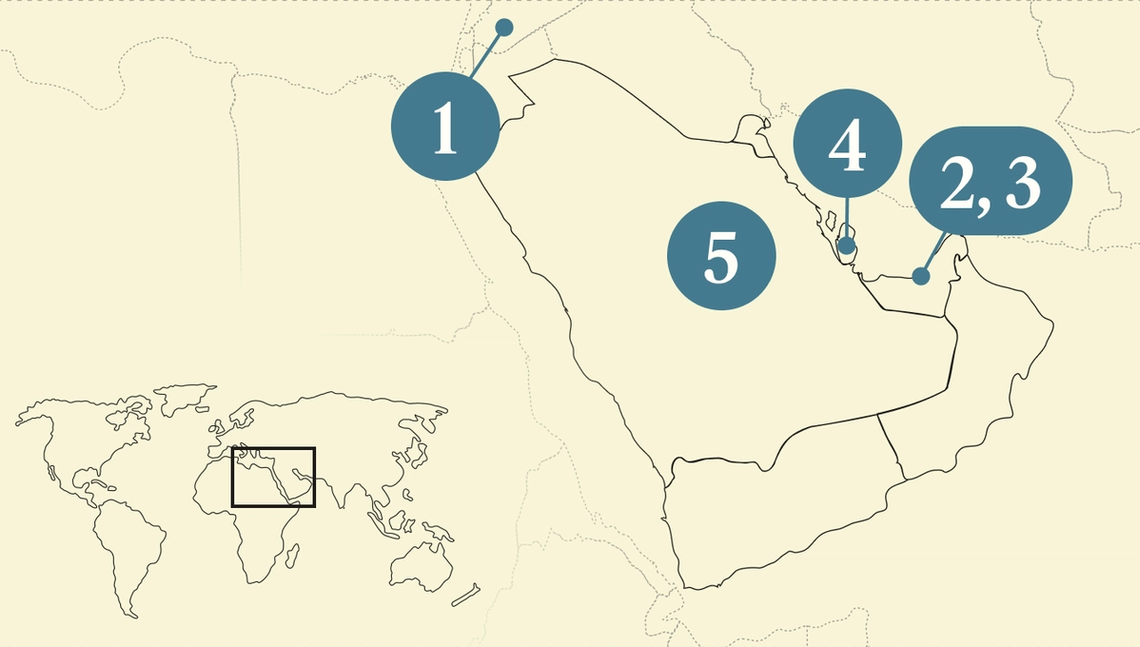 - Qatari conglomerate’s pivot
- UAE gets teens off phones
- Abu Dhabi-Fujairah by train
- Qatar boosts startups
- Saudi retailer overhaul
 A less controversial reflecting pool. |
|
Qatari company betting big on Syria |
 Khalil Ashawi/Reuters Khalil Ashawi/ReutersMany Qatari companies faced a dilemma when the surge in infrastructure spending for the 2022 men’s soccer World Cup ended: downsize or find new markets. Power International Holding, controlled by the Syrian-Qatari Al-Khayyat family, made a pivot, expanding into industries from energy to healthcare and real estate, in countries from Algeria to Kazakhstan. One of its biggest bets is Syria, where it has won agriculture, aviation, energy, and tourism projects. Its work on a new terminal at Damascus airport is underway, with the exterior largely complete. What distinguishes PIH’s approach is the other tools it brings in addition to construction expertise. The company is using its access to capital and other networks to ensure there are planes to use the new terminal, providing $250 million in financing for Syrian Airlines to acquire up to 10 Airbus A320 aircraft, according to Chairman and Group CEO Ramez Al-Khayyat. It also helps that Syria’s political transition provided an opening for which Qatar was primed and that has the backing of US President Donald Trump. PIH’s growth intertwines commercial and political interests, and its role is expected to grow. |
|
UAE bans social media for under-15s |
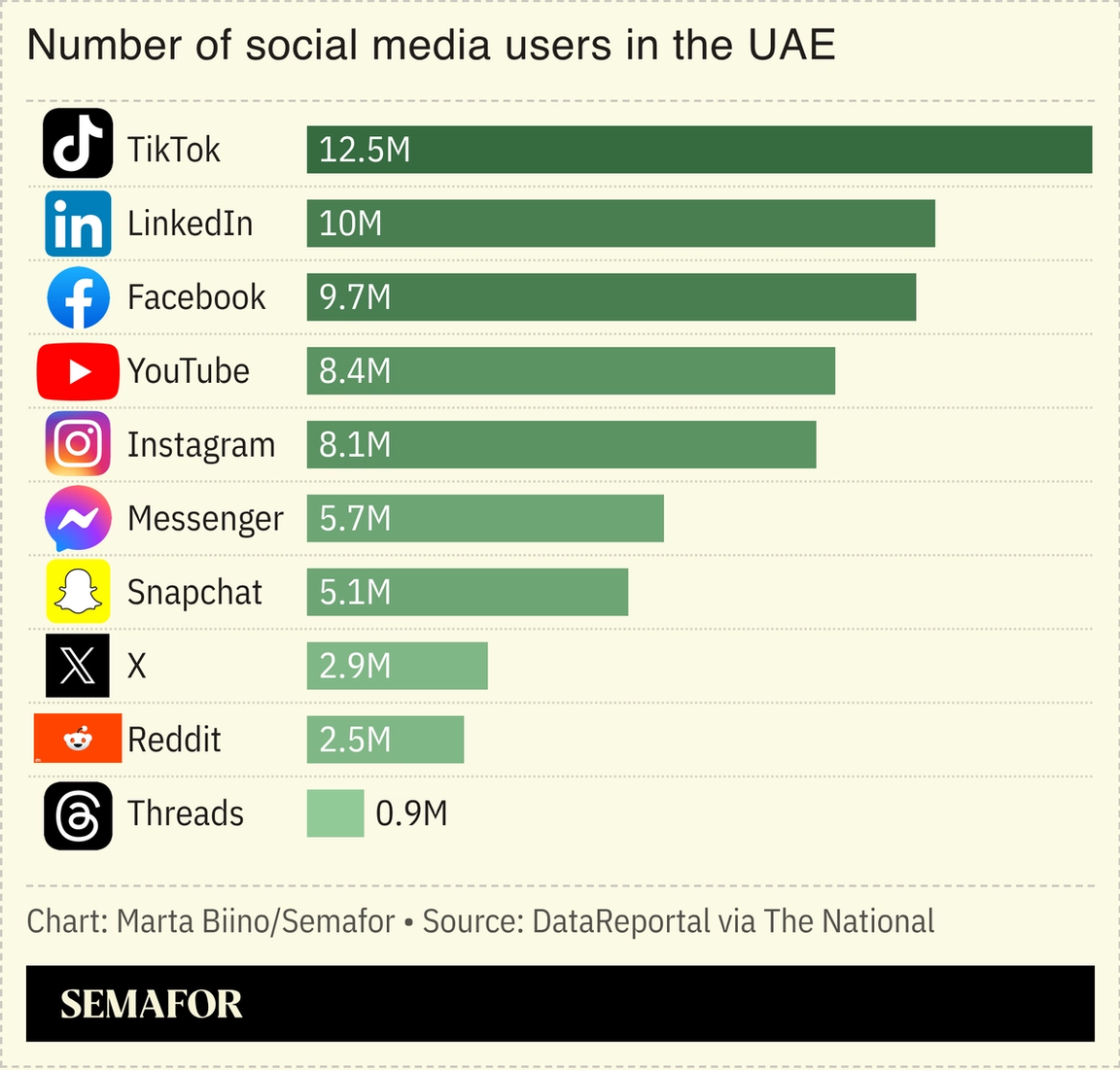 The UAE — where TikTok accounts outnumber people — is joining a rising tide of countries worldwide banning social media for teens, and the first to take the leap in the Middle East. Under new proposals, children 14 years old or younger will be banned from having accounts on the likes of Instagram and Snapchat, and 15- and 16-year-olds will only have access with parental controls. So-called surveillance advertising, which places ads based on individual online behavior, will also be banned from targeting children. The policy will take effect within a year. Australia, Brazil, Indonesia, and Malaysia have already restricted under-16 social media use. At least two dozen other countries are considering similar steps. The UAE, which has a small and majority foreign population, may struggle to bring the big tech platforms to heel, but the global shift to address cyberbullying and screen addiction could help. — Kelsey Warner |
|
Trains at last in the UAE |
 Courtesy of Abu Dhabi Media Office Courtesy of Abu Dhabi Media OfficePassenger train services will launch in the UAE next week, a milestone in a years-long push to connect the emirates and part of a wider regional ambition to link the Gulf countries by rail. Driverless cars and flying taxis may still be on the agenda, but the new 55 dirham ($15) route from Abu Dhabi to Fujairah — cutting about 40 minutes of drive time — has long been anticipated by road-weary residents. The route adds to the stalled GCC Railway, a 2,200-kilometer network due to be completed by 2030. Gulf leaders are betting on rail to move tourists and business travelers between hubs: A high-speed Abu Dhabi-Dubai line is projected to add almost $40 billion to the economy over 50 years, according to government figures, while a Doha-Riyadh airport connection (announced before the Iran war) aims to ferry 10 million passengers annually, starting in 2031. — Kelsey Warner |
|
Qatar boosts efforts to attract startups |
 Courtesy of Web Summit Qatar Courtesy of Web Summit QatarQatar’s investment promotion agency has partnered with the country’s sovereign wealth fund to link startups with investors, as part of its efforts to help diversify the economy by encouraging entrepreneurship. Invest Qatar and Qatar Investment Authority launched the venture capital funding program to give startup founders access to potential investors, including many which are themselves backed by the state’s sovereign fund; the QIA previously allocated $3 billion to a program that invests in funds establishing operations in Doha and backing local startups. Qatar is trying to position itself as a tech hub, offering funding and incentives like 10-year residency visas to founders who establish firms in the country. |
|
Management overhaul at Saudi retailer |
 A Cenomi mall in Jeddah. Courtesy of Cenomi. A Cenomi mall in Jeddah. Courtesy of Cenomi.UAE conglomerate Al-Futtaim has overhauled the management of one of Saudi Arabia’s largest retailers, where 17 former executives have been accused of corruption. The UAE firm, which bought a nearly 50% stake in AFG International last year, said it was appointing Sameer Jain as CEO of the business. It follows the announcement by the Saudi market regulator last month that it had referred 17 unnamed people, including current and former AFG board members and a CEO, to the public prosecutor for suspected crimes including “creating a false and misleading impression” of the company’s value. Al-Futtaim said in a statement to Semafor that the alleged crimes predate its investment and it is supporting the investigation. AFG was previously known as Cenomi Retail and, along with sister company Cenomi Centers, was established by Saudi billionaire Fawaz Al Hokair — one of many senior figures held in the Ritz Carlton hotel in Riyadh during a 2017 corruption crackdown. |
|
 This is the email briefing that’s trusted among boardrooms, policymakers, and Wall Street. Delivered to your inbox twice weekly, Semafor Business is the essential read for understanding the deals, decisions, and power shaping the global economy. Penned by Semafor Business Editor Liz Hoffman & Semafor Business Reporter Rohan Goswami, each issue delivers the scoops, insights, and analysis you need to stay ahead in a rapidly shifting financial landscape. |
|
 Automotive- Almost 1,200 sedans built by the Saudi government-owned Lucid have been recalled due to a defect with their driveshaft bolts. It comes as the EV maker is cutting its workforce and axing the role of chief operations officer, amid weak demand for its vehicles. — Bloomberg
Energy- Qatar’s prime minister said his country will resume normal LNG production “within a few weeks,” helped by the hotline set up between the US and Iran which will be essential to ensure smooth travel for its tankers through the Strait of Hormuz. — Financial Times
Real Estate- The Dubai Land Department introduced an initiative to allow tenants to pay rent monthly, rather than in quarterly or annual lump sums, in an effort to improve affordability. A dozen real estate companies have signed up, with more expected to follow. — The National
- The Royal Commission for Riyadh City set out design guidelines for property developments in the capital’s commercial center, regulating the colors, materials and architectural elements that can be used. — Arab News
|
|
International tourism may still be subdued in the Gulf, but for those who venture to Saudi Arabia, spots like the infinity pool at Dar Tantora The House Hotel in AlUla offer a soothing view across the oasis.  Courtesy of Dar Tantora The House Hotel Courtesy of Dar Tantora The House Hotel |
|
| |  | | | You’re receiving this email because you signed up for briefings from Semafor. |
|


