| | In this edition: Iran war hits Gulf remittances, Senegal open to debt restructuring, and Revolut pre͏ ͏ ͏ ͏ ͏ ͏ |
| |  | Africa |  |
| |
|
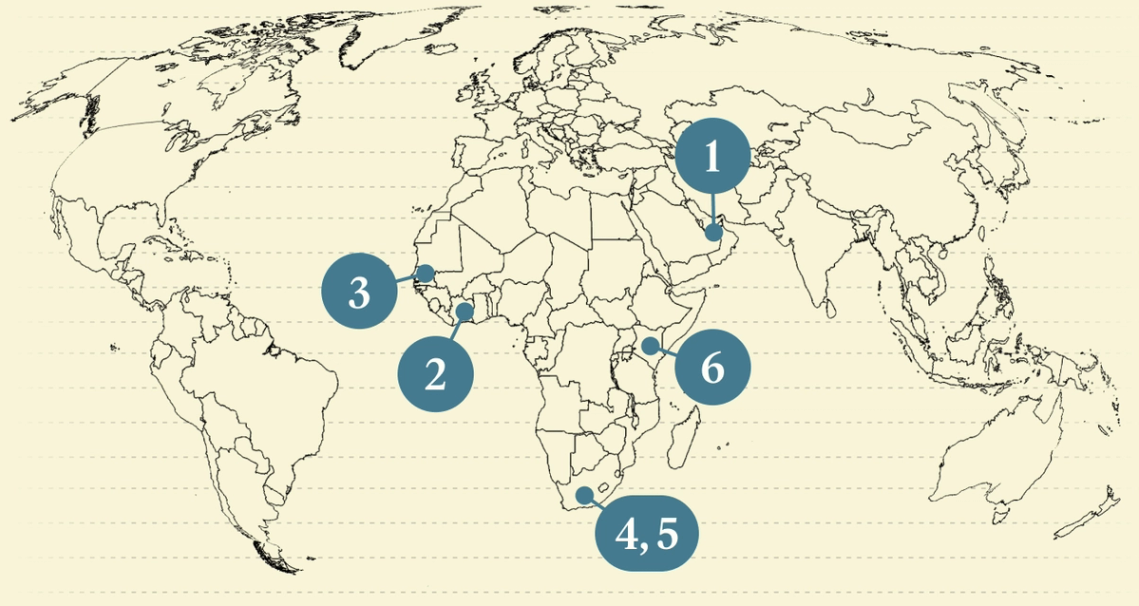 - War hits remittances
- El Niño fears grow
- Senegal’s IMF talks
- PEPFAR funding scramble
- Revolut eyes S. Africa
- Kenya airport expansion
 A Nigerian-born artist reflects on her new portrait of the Obamas. |
|
War hits Gulf-Africa remittances |
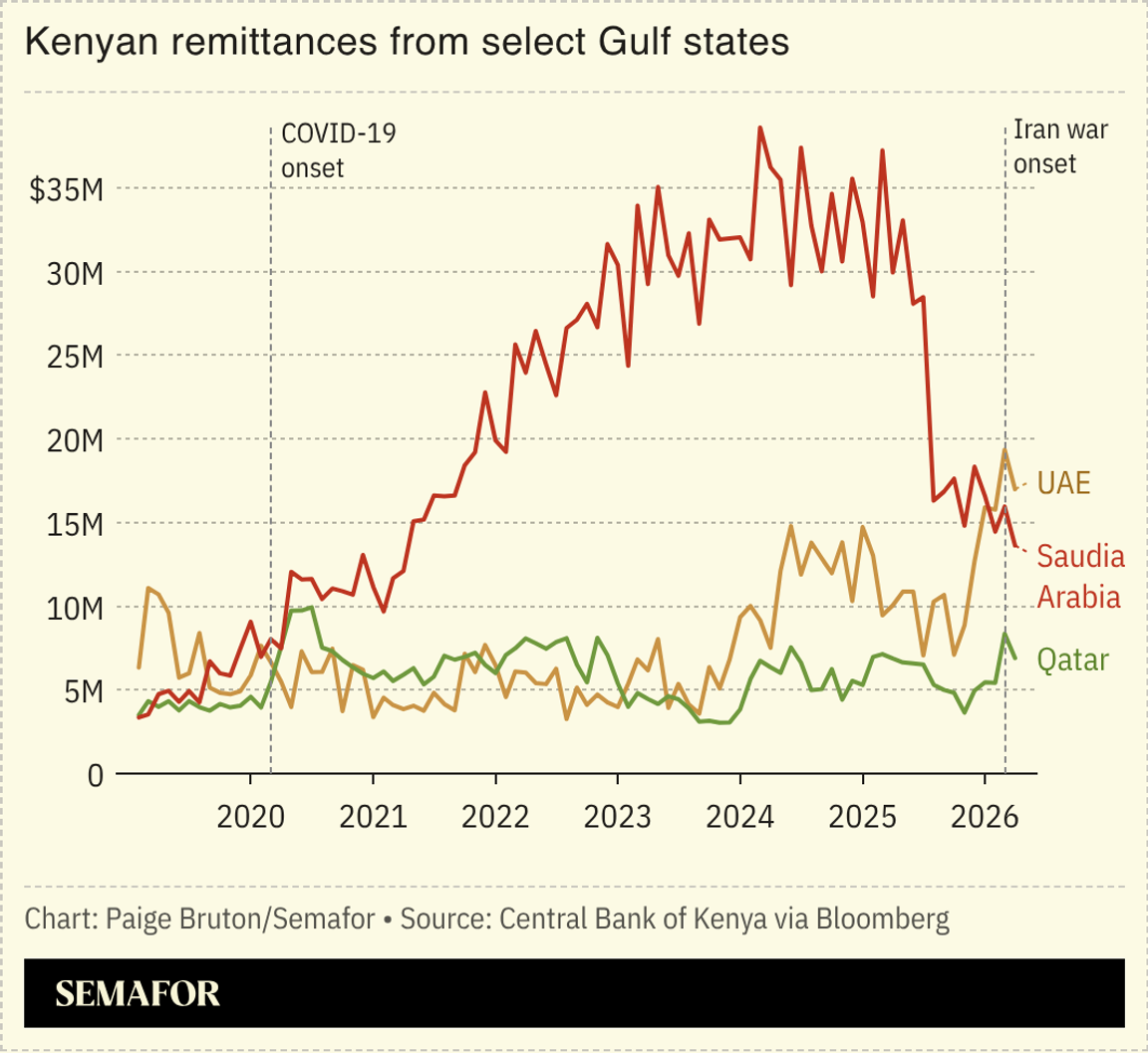 The Iran war has put billions of dollars in remittances from the Gulf at risk, potentially dealing a major blow to African nations as they grapple with the economic consequences of the conflict. The roughly 30 million foreign nationals working in the Gulf — most from Africa and South Asia — sent home an estimated $124 billion in remittances in 2024. However, those have slumped since the war began: Kenya’s central bank said cash transfers from the Gulf had dropped by 18% in April compared to the previous month, while the average transfer value on Onafriq, one of Africa’s largest digital payments platforms, fell significantly. “There are clear signs of financial strain,” Onafriq’s CEO told Bloomberg. Egypt, Ethiopia, Rwanda, Somalia, and Sudan are among the largest recipients of remittances from citizens in Gulf states. In 2024, inbound remittances to Africa were roughly equivalent to foreign direct investment. But unlike FDI and overseas aid, remittances go directly to households, which means they have clear impacts on food security, healthcare, housing, and education. Recipients typically spend funds locally, stimulating trade and services. A version of this item first appeared in our Gulf briefing, subscribe today. → |
|
|
El Niño threatens food security |
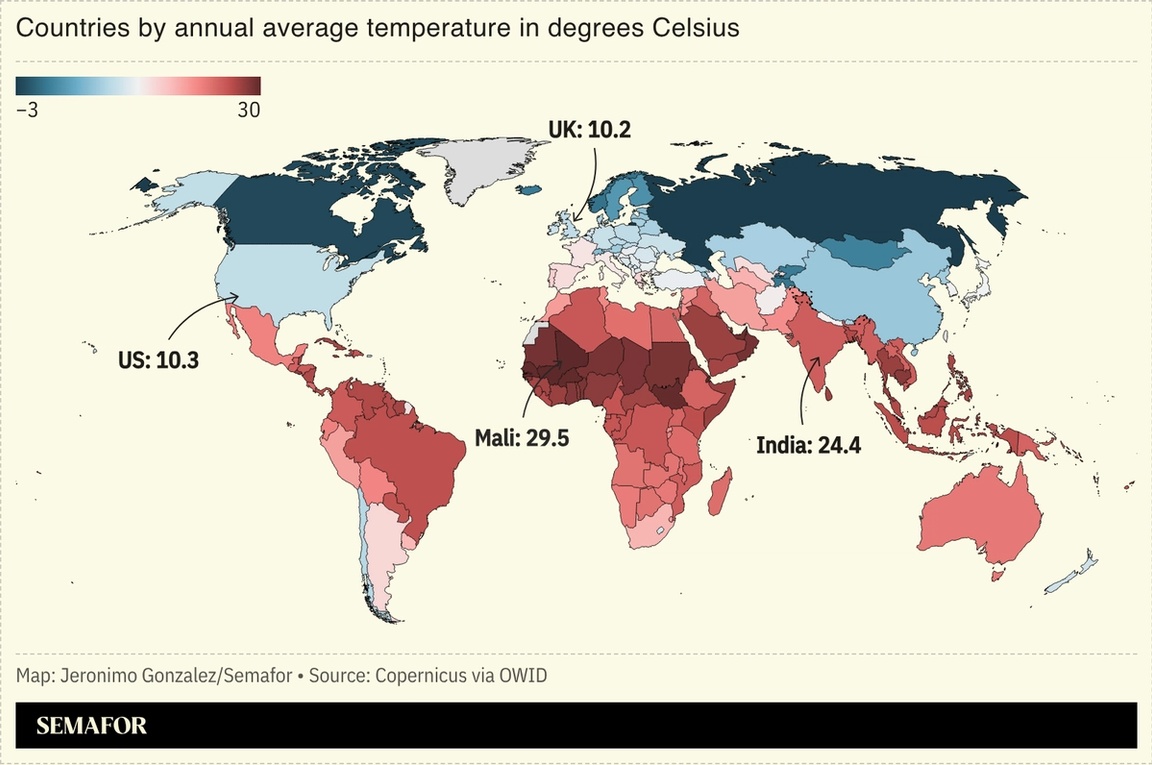 Cocoa and coffee crops in Africa are likely to be hit by extreme weather caused by El Niño, further squeezing an agricultural sector that is already under pressure from the fallout of the Iran war. Scientists have warned this year’s El Niño cycle — a naturally occurring weather pattern that pushes up global temperatures — could be particularly potent, with far-reaching impacts for farmers and soft commodities markets. Cocoa farmers in Ghana and Côte d’Ivoire, which provide more than half the world’s cocoa, are likely to see drought conditions dent outputs and drive global prices. El Niño-induced droughts in 2023-24 triggered global shortages that drove cocoa prices to record highs that many Ivorian farmers did not benefit from because the government fixes prices at the beginning of the season. The IMF’s Africa chief this week said the lender would step up support for African nations hit by conflict-induced shocks, which could last for months. — Jenny Vaughan |
|
Senegal open to debt restructuring |
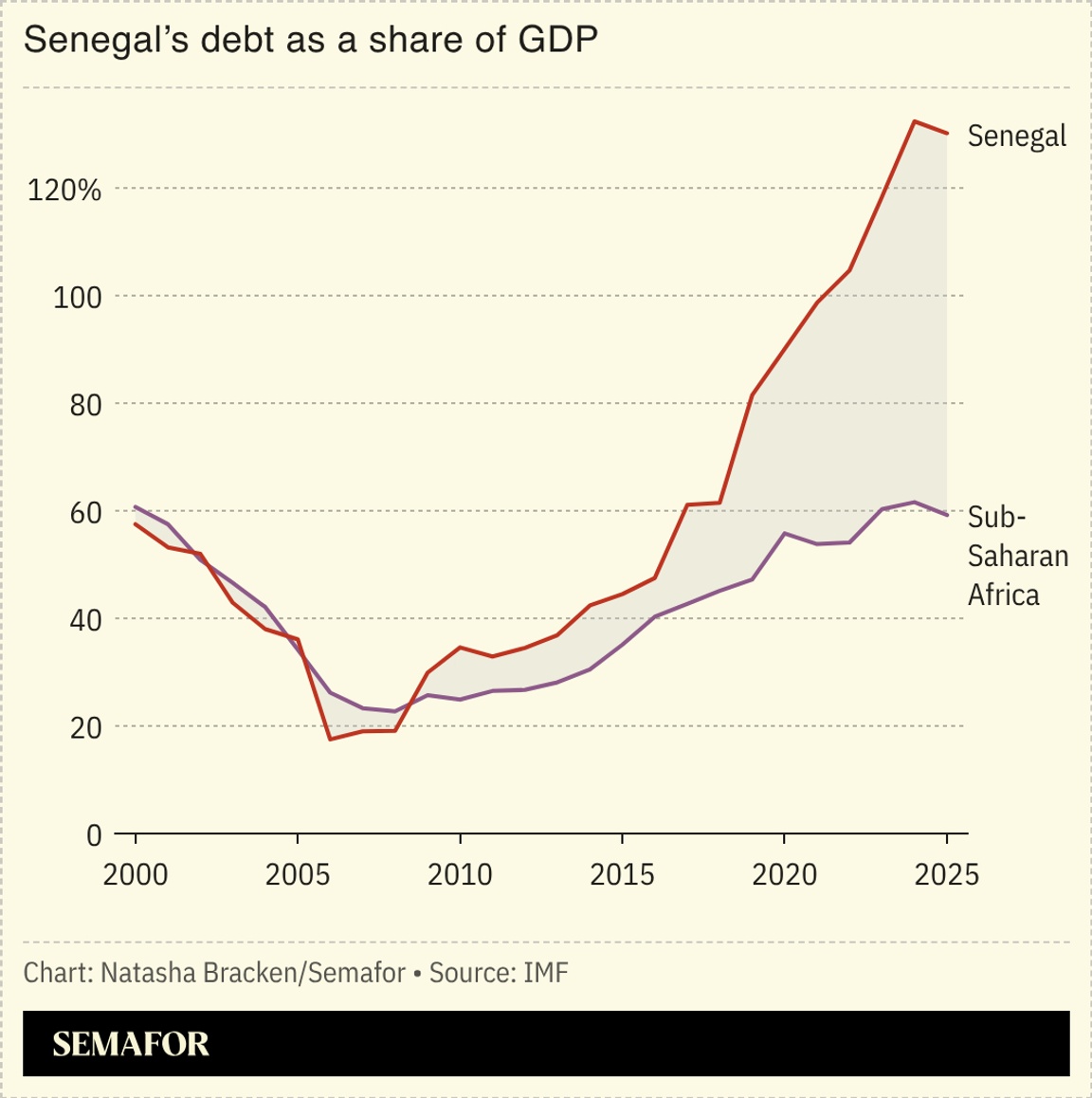 Senegal’s government is ready to restructure its debt if necessary, its trade minister said after IMF officials completed a five-day visit to the country. Dakar risked defaulting after the government uncovered billions of dollars in undisclosed debt by the previous leadership. The discovery caused Senegal’s debt bill to soar to more than 130% of its GDP. Disagreements over how to resolve the debt problem were at the heart of an ongoing political crisis: President Bassirou Diomaye Faye suggested he was open to restructuring, which his previous Prime Minister Ousmane Sonko opposed. The schism prompted Faye to fire Sonko and dissolve his government before appointing new ministers. Sonko — now the influential speaker of parliament — has softened his anti-restructuring stance. The trade minister’s remarks offer the clearest picture yet of how Dakar could resolve the debt crisis after months of political infighting. The IMF praised Dakar’s progress for narrowing its deficit, but warned the Iran war posed “elevated risks” in the near term. — Jenny Vaughan |
|
S. Africa scrambles after PEPFAR cut |
 Philimon Bulawayo/Reuters. Philimon Bulawayo/Reuters.South Africa is targeting self-reliance to fund its healthcare sector, its health minister told a UN meeting, saying Washington’s cancellation of a multibillion-dollar HIV/AIDS program was a “wake-up call.” Aaron Motsoaledi’s comments in New York came days after Semafor first reported that the Trump administration was withdrawing PEPFAR funding to the country, which poured $8 billion into treating the world’s largest HIV/AIDS caseload over two decades. The US decision is the latest diplomatic scuffle between Pretoria and Washington, which has made repeated false accusations of Afrikaner genocide in Africa’s biggest economy and demanded that South Africa undo its post-apartheid domestic redress laws. The PEPFAR termination is a fiscal headache for South Africa: Pretoria has set aside a 750 million rand ($45 million) stopgap allocation to keep clinics open, protect HIV/AIDS treatment, and revive clinical research trials — less than 10% of what Washington used to inject into the system annually. — Tiisetso Motsoeneng |
|
Revolut plans South Africa launch |
 Corey Rudy/Reuters Corey Rudy/ReutersBritish digital bank Revolut will open for business in South Africa in 2028, its first expansion on the continent, a company executive told Bloomberg. Europe’s most valuable fintech company announced its intention to expand into South Africa in September, describing the country as “a key growth market” whose appeal lay in its diversified economy and rising digital adoption. Revolut, which offers a range of free and paid account plans, has since racked up nearly 100,000 applications but is awaiting regulatory approval from South Africa’s central bank for a license. Africa’s digital banking scene features mostly homegrown startups that provide smartphone apps offering faster money transfers, quick loans, and interest on savings — all with the promise of less paperwork compared to traditional banks. TymeBank, Discovery, and Bank Zero offer fully digital retail banks in South Africa, for example. |
|
Chinese firm in Kenya airport deal |
 Jomo Kenyatta International Airport. Monicah Mwangi/Reuters. Jomo Kenyatta International Airport. Monicah Mwangi/Reuters.Kenya signed an agreement with China Road and Bridge Corporation to upgrade and expand its main airport in the face of competition from Ethiopia and Rwanda, which are trying to overtake the country as East Africa’s travel hub. The deal to triple Jomo Kenyatta International Airport’s passenger capacity cements Beijing’s grip on major infrastructure projects in East Africa’s largest economy, where its companies have built railroads, stadiums, and toll roads. Nairobi contracted Africa’s Trade and Development Bank and Africa Finance Corporation to arrange $1.2 billion in financing for the project. The airport renovation has been mired in controversy since India’s Adani Group in 2024 pulled out of a 30-year concession to run the project, after its billionaire founder was indicted in the US. Labor unions, civil rights groups, and politicians have also expressed concerns over transparency and job security. Tourism is Kenya’s second-largest foreign exchange earner and its aviation connectivity has made it a business travel hub. But its neighbors are challenging its dominance as the region’s main thoroughfare: Ethiopia operates Africa’s biggest airline, while Rwanda is building a new airport in partnership with Qatar Airways. |
|
 The world around us is changing, and technology is at the heart of the story. As artificial intelligence transforms how businesses operate and compete, Semafor Technology unpacks the ideas, innovations, and power shifts driving the AI revolution. Penned by Tech Editor Reed Albergotti, each edition delivers clarity on the forces reshaping industries, markets, and society. Subscribe for free. |
|
 Business & Macro |
|
|


