| | Global tech stocks tumble on AI concerns, Venezuela faces a record debt restructuring, and the US mi͏ ͏ ͏ ͏ ͏ ͏ |
| |  | Flagship |  |
| |
|
The World Today | 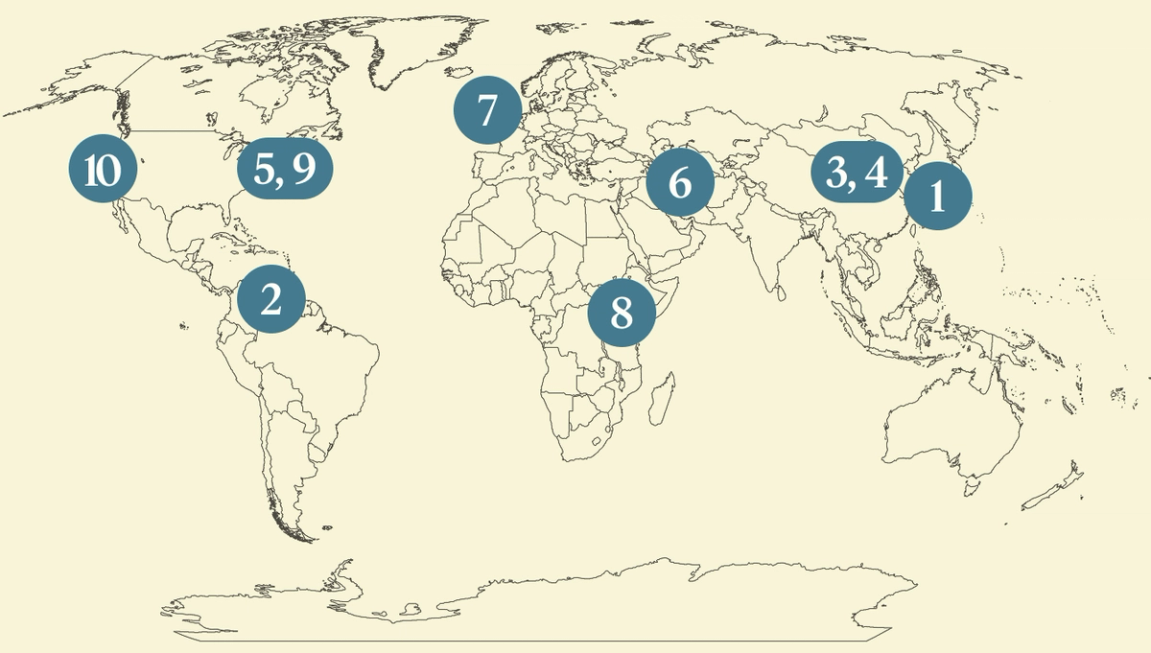 - Global tech stocks fall
- Venezuela’s massive debts
- The yuan’s growing clout
- China’s top supercomputer
- Rebels rock US politics
- US, Iran narratives clash
- Europe’s deadly heatwaves
- Boost for Africa EVs
- US ready for space warfare
- AI body imaging
 A ‘cinematic’ book about the Nord Stream sabotage. |
|
Global tech stocks tumble |
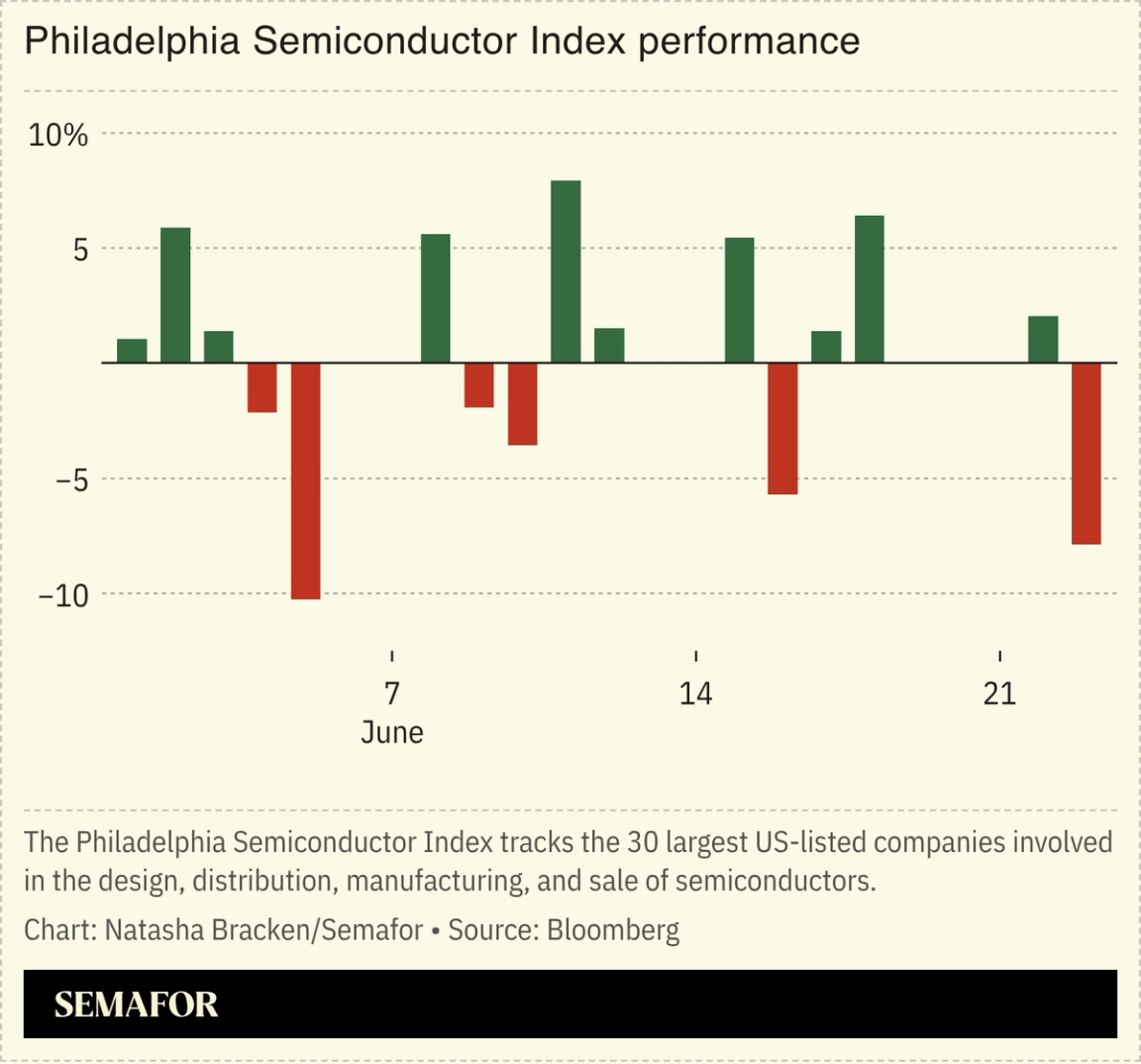 Turbulence in Asian tech stocks spread to Wall Street, with investors worried about rate hikes, massive spending, and overvaluation. Sandisk and Micron, memory-makers which had seen huge gains in recent months, both tumbled around 13% as part of a broader Nasdaq fall of 2.2%. Surges are often followed by rapid reversals, The Wall Street Journal reported, noting that the memory firms’ shares are still up 727% and 269%, respectively, this year. Investors are jittery, leaving markets unstable: South Korea’s KOSPI index in particular went on a rollercoaster ride, falling 10% on Tuesday before clawing a good chunk back. The index’s volatility is at a record high, the Financial Times reported. |
|
Venezuela’s record debt restructuring |
 Leonardo Fernandez Viloria/Reuters Leonardo Fernandez Viloria/ReutersVenezuela is in far greater debt than previously believed, but the US-imposed regime change may provide the opportunity to restructure. The socialist-led country’s GDP has collapsed from $370 billion in 2012 to around $100 billion today. Caracas is expected to reveal a debt pile of $240 billion in the coming weeks, the Financial Times reported, compared to previous estimates of $150-$200 billion. It will offer creditors partial repayment in the largest-ever debt restructuring, eclipsing Greece’s $200 billion 2012 default, made more complex because Venezuela has so many creditors and the IMF will not be involved. Such an agreement was impossible before President Nicolás Maduro’s removal in January and the subsequent lifting of sanctions on Venezuelan dollar transactions. |
|
Yuan blunts Washington’s clout |
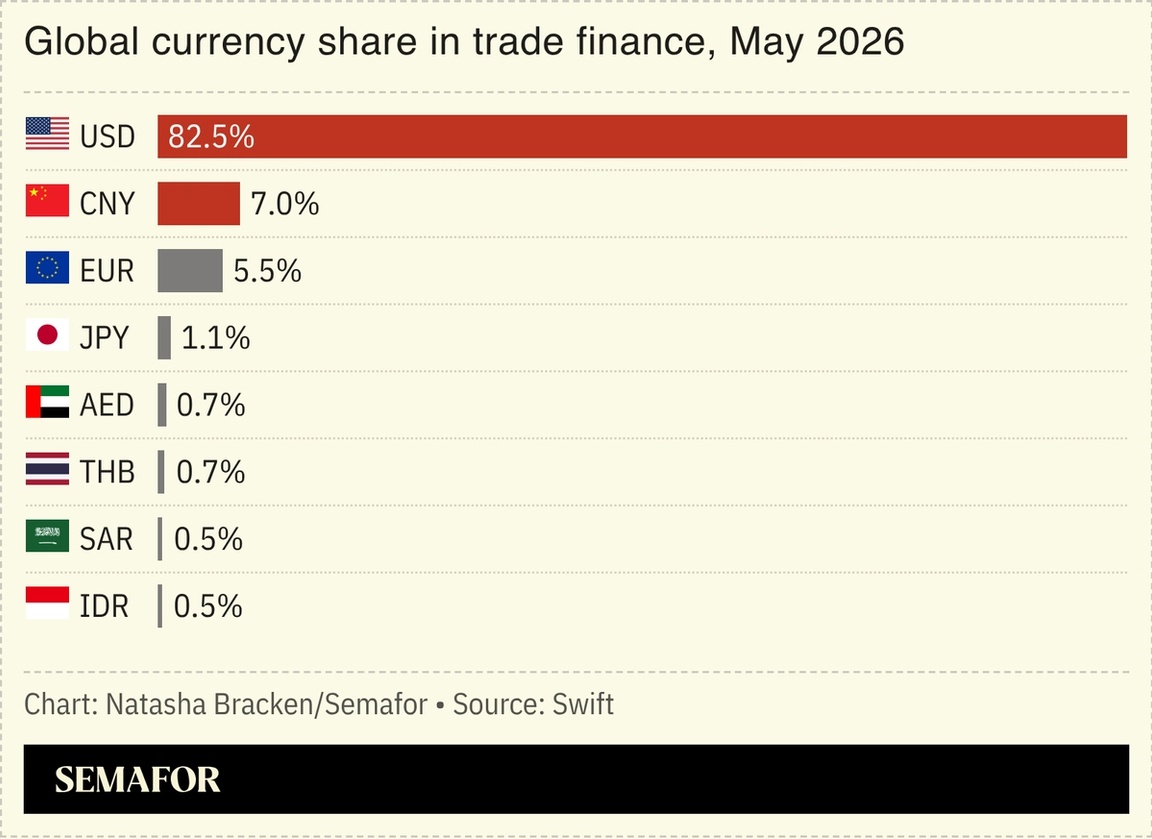 The yuan’s growing clout is undermining Washington’s ability to impose sanctions on geopolitical rivals. Dollar transactions, which are settled by US banks that Washington can control, are used in about 80% of international trade finance. The White House’s Iran negotiations rely on the dollar’s leverage, but Tehran has blunted that weapon by using alternative financial architecture, The Wall Street Journal reported, including payments in yuan or cryptocurrency, and adopting a Chinese alternative to the Swift banking network. Moscow has made similar moves since the imposition of Western sanctions in 2022, with 90% of trade with China reportedly settled in yuan or rubles. Yuan still only accounts for 6% of global trade finance, but that sum has tripled in five years. |
|
China supercomputer is world’s fastest |
 Karen Pulfer Focht/Reuters Karen Pulfer Focht/ReutersA Shenzhen supercomputer was declared the world’s fastest, giving China the crown for the first time since 2017 and further ratcheting up the transpacific tech rivalry. The LineShine computer is notable not just for raw speed — it is about 20% faster than the California-based El Capitan, which has topped rankings since 2024 — but for using standard microprocessors, rather than the specialist GPUs that most supercomputers rely on. US companies have long had a technological lead over Chinese rivals, but “in at least a few sectors, that equation has flipped,” The New York Times argued. Batteries and solar panels are the most obvious examples, and China’s manufacturing advantage means it is now leading in robotics as well. |
|
 Zohran Mamdani and Brad Lander, winner in New York’s 10th Congressional District. Eduardo Munoz/Reuters Zohran Mamdani and Brad Lander, winner in New York’s 10th Congressional District. Eduardo Munoz/ReutersBoth of the main US parties are fractured ahead of November’s midterm elections, with the establishment struggling to control growing rebellions. Left-wing challengers backed by Democratic New York Mayor Zohran Mamdani won three congressional primaries, making the socialist “the unquestioned political kingmaker” in the city, The New York Times reported. It also shifts the party’s foreign-policy center of gravity: All three candidates ran on ending support for Israel, once unthinkable in New York. Meanwhile, the Senate passed a resolution demanding President Donald Trump halt the Iran war, with four Republicans voting in favor. The measure is largely symbolic — Trump called it “poorly timed and meaningless” — but it shows his weakening hold with November’s votes on the horizon. |
|
US and Iran clash over peace talks |
 Majid Asgaripour/WANA/Reuters Majid Asgaripour/WANA/ReutersWashington and Tehran are battling to shape the narrative around peace talks, with both sides making contradictory claims about the proposed deal. US President Donald Trump said Iran agreed to full nuclear inspections; Iran said inspectors could not enter the most important sites. Vice President JD Vance said US and Qatari officials would oversee the unfreezing of Iranian assets; Iran denied that too. Trump likes to announce his preferred outcomes as agreed deals, The New York Times reported, and “the Iranians… have caught on,” employing their own strategy of “[denying] American statements immediately and publicly.” The contradictions show the two sides “fundamentally disagree with each other and they’re trying to paper over it,” one analyst said. |
|
UK swelters in record heat |
|
African e-bikes demand surges |
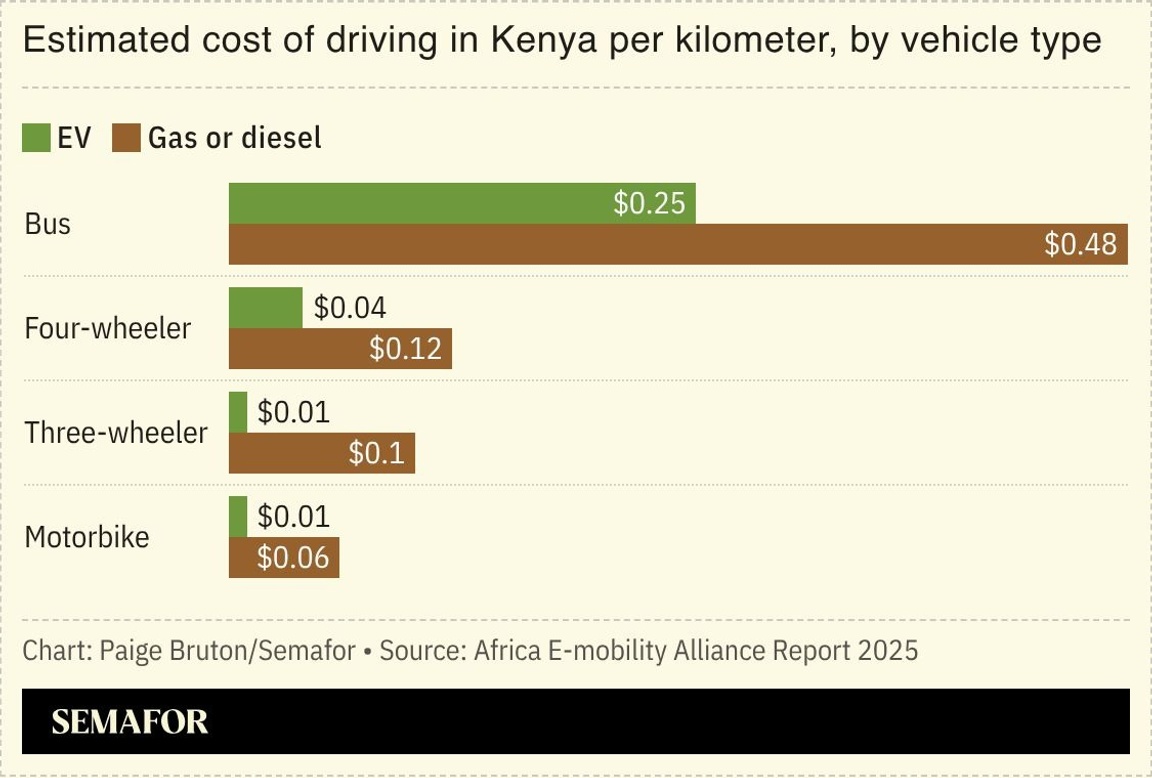 The spike in fuel prices due to the Iran war has driven increasing demand for e-motorbikes in Africa. The waiting list for e-motorbike financing is so long that one lender has stopped taking deposits, while investors are piling in, with a record $300 million going to EV infrastructure startups since last month. EV use was already rising in Africa — Ethiopia and Rwanda had even restricted new internal-combustion engine vehicles — but the economics “have become more compelling” since the war, the Financial Times reported. E-motorbikes are leading adoption rates, but uptake of electric buses, cars, and trucks is also growing. Chinese manufacturers, notably BYD and Yadea, are particularly benefiting from the change. |
|
 The world around us is changing, and technology is at the heart of the story. As artificial intelligence transforms how businesses operate and compete, Semafor Technology unpacks the ideas, innovations, and power shifts driving the AI revolution. Penned by Tech Editor Reed Albergotti, each edition delivers clarity on the forces reshaping industries, markets, and society. Subscribe for free. |
|
Space is the next battle zone |
 Steve Nesius/Reuters Steve Nesius/ReutersThe US Space Force carried out a military exercise in orbit, a sign that space is now a fourth theater of war alongside land, air, and sea. An unannounced launch was intended to test the force’s ability to get a satellite into orbit at short notice and maneuver it into position to inspect — or, potentially, attack — any potential hostile orbital objects. Space superiority is crucial in modern warfare: Ukraine’s recent blunting of Russian progress is at least partly based on Moscow being cut off from Starlink satellite communications. And increasingly it is not simply about comms or reconnaissance, but actual weapons: The Golden Dome program plans to put missile interceptors into orbit to prevent attacks on the US. |
|
|


