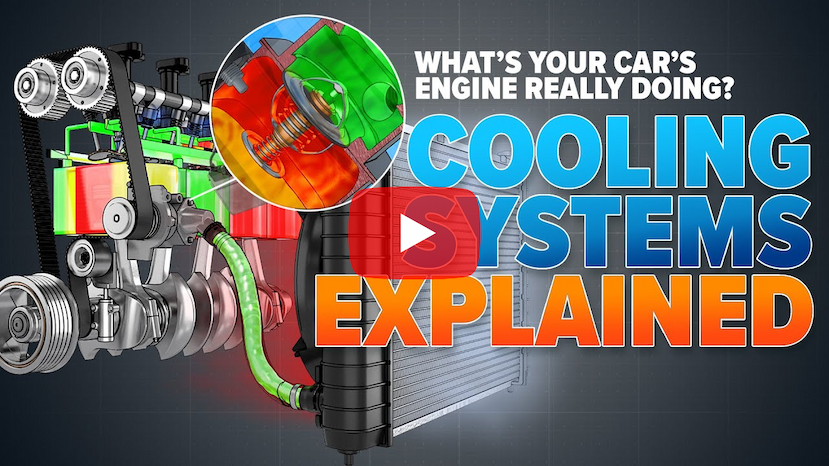
Your engine is constantly generating heat. Your cooling system's job is to keep it under control.
Every time your engine fires, thousands of tiny explosions generate power and heat. Without a properly functioning cooling system, temperatures can quickly rise to levels that can damage gaskets, warp cylinder heads, and shorten the life of your engine.
That's why understanding the basics of your cooling system is one of the best ways to stay ahead of expensive repairs.
What Does A Cooling System Do?
Your cooling system continuously circulates coolant through the engine to absorb heat and transfer it away before temperatures become excessive.
While cooling system designs vary between manufacturers, most systems rely on the same core components working together.
Key Cooling System Components
Radiator Keeps coolant circulating throughout the engine and cooling system Without proper flow, coolant cannot effectively remove heat
A mixture of water and antifreeze Helps prevent freezing, boiling, corrosion, and overheating
Carry coolant between the engine, radiator, and other cooling system components Can deteriorate over time from heat and age
Cooling System Maintenance Matters Many cooling system failures don't happen overnight. Aging coolant, deteriorated hoses, failing thermostats, and worn water pumps can all contribute to cooling system problems over time.
Regular inspections and preventative maintenance can help catch these issues before they leave you stranded or lead to costly engine damage.
Learn How It All Works
Watch this week's Tech Tip as Ben breaks down the fundamentals of automotive cooling systems, explains how each component works, and shares what you should be looking for when maintaining your vehicle. Watch Now. |