| | In this edition, a glimpse into how we made Semafor’s new product, Semafor Intelligence, and a devel͏ ͏ ͏ ͏ ͏ ͏ |
| |  | Technology |  |
| |
|
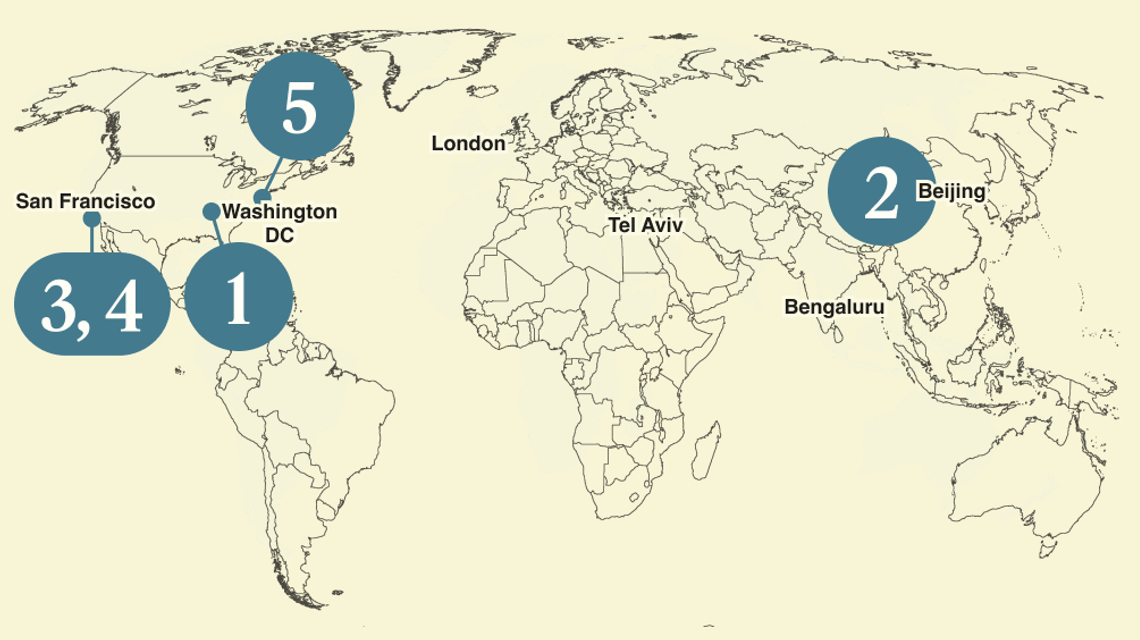 - Tokens are money now
- China-US AI treaty?
- Developers worry about their jobs
- Tomato farming with AI
- Everyone can be a roboticist
 The making of Semafor Intelligence, and Google uses more games to train its AI models. |
|
 A couple of weeks ago, my phone lit up from a group chat started by our editor-in-chief to survey the team on the consensus from the 500 CEOs, cabinet members, and other leaders we hosted at the Semafor World Economy in Washington, DC. Equally exhausted and energized from a supernova of high-level conversations, I had the sinking feeling our takeaways were skewed by adrenaline and vibes. There was a better way to do this. None of us had listened to all the interviews with more than 300 people who joined us on stage, let alone had the time to categorize every statement to get a true sense of the consensus. So, between shuttling my kids to hockey practices and birthday parties, I tapped Codex, OpenAI’s Mac app. Within an hour, I had a prototype of insights outlining who agreed with what — and who disagreed. “Government-funded worker training programs and even higher education don’t know the skills needed for today and tomorrow,” it quoted former Commerce Secretary Gina Raimondo saying, adding a thumbnail photo of her scraped from the web and telling me how the quote fit into a prevailing view that AI’s workforce transition would lag the technology shift. Just for fun, I tacked on a chat feature to the corpus of insights and sent it around to colleagues. “Wow Reed, this is gold,” texted Semafor CEO Justin B. Smith. Within minutes, we spun up a Slack channel where nearly a dozen people began turning the prototype I built into a real editorial product. Data lead Alastair Clements honed the underlying technology (you can read about his effort here) and product head Kellen Henry mocked up designs. The result: Semafor Intelligence, nine views distilled from the entire corpus of nearly 5,000 claims made across three stages over five days. This process was exhilarating, and not just because it highlighted how quickly Semafor’s team of tireless, talented people can spring into action when they spot an opportunity. The exercise was valuable because it gave me a chance to experience first-hand the AI wave I’ve been writing about almost since the day Semafor launched. It also validated some of my long-held contrarian views that AI will not make software engineers disappear. That the technology creates more demand for that skill, not less. By lowering the friction of building software, it becomes feasible to dream up more ideas and ship even more software. The better AI gets at building end-to-end programs, the more it encourages developers to build ever-complex and ambitious things. Launching Semafor Intelligence meant more work for humans across every department. Journalists had to distill the views offered up by the AI tool, gut-check the reporting and edit the words. Designers, marketers, and communications colleagues had to design, package and pitch the product. Now that we have a software backbone for something that can live and grow, the product will no doubt become more valuable over time and will probably result in us hiring more people — not fewer. For those of you who say, “in a year the technology will be so good that it won’t require any people to churn out Semafor Intelligence,” I hope you’re right. Because all of us here at Semafor have at least five other great ideas in the hopper we want to turn into reality. |
|
Tokens take over the economy |
 Project Colossus in Memphis in 2024. Karen Pulfer Focht/File Photo/Reuters. Project Colossus in Memphis in 2024. Karen Pulfer Focht/File Photo/Reuters.Elon Musk’s decision to sell compute power to Anthropic is an illustration of how the AI token is taking over the economy. When Elon Musk founded xAI (now owned by SpaceX) he rightly saw how AI compute power would become a scarce and valuable resource, and built his Colossus data center at a mind-boggling pace. But in uncharacteristic fashion for Musk, xAI moved too slowly into harness engineering, which allows AI models to reach out beyond chat windows and control more operations on a computer. Harnesses enabled an explosion in agentic AI use. Products like OpenClaw, Anthropic’s Claude Cowork, and OpenAI’s Codex app ushered in a whole new way of leveraging AI models, and meaningfully increased the amount of tokens they consumed. The technology more than surpassed Anthropic’s ability to keep up with compute and showed just how much Anthropic underestimated its own success. But this isn’t just a story of two companies making a deal to rectify strategic mistakes. It’s a monumental example of the new form of commercialism that has taken over the AI era: A currency that can be transferred anywhere in the world at nearly the speed of light. A utility so important it’s already drawing comparisons to oil. — Reed Albergotti |
|
Little hope for China-US AI treaty |
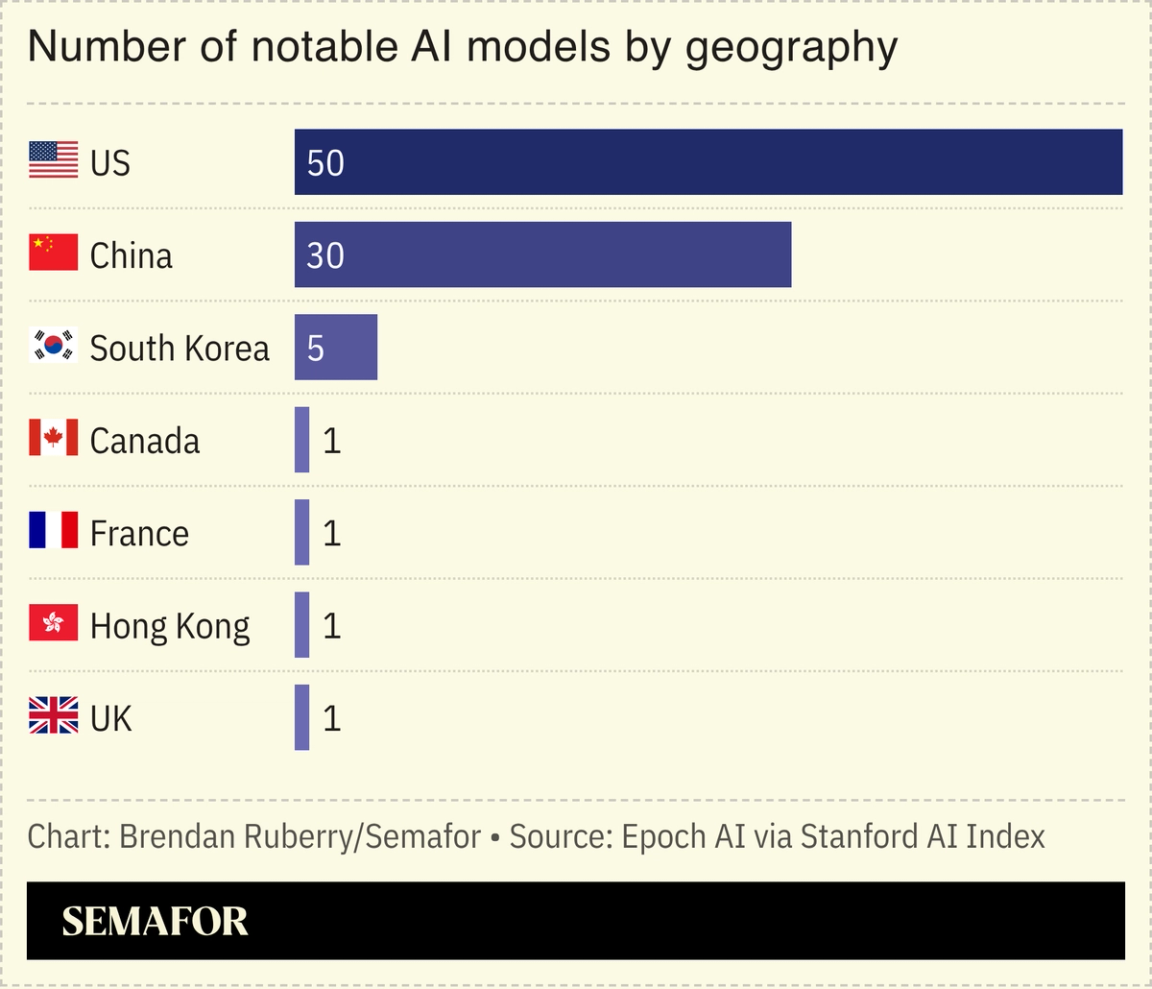 As President Donald Trump heads to Beijing next week, there’s some hope among AI safety advocates that the topic will be addressed. After all, the US and the Soviet Union managed to forge nuclear treaties during the Cold War, one of these people said to me recently. It’s true that relations are more pragmatic between the US and China than they were during the Soviet era, but it’s unlikely China is going to cave on any real guardrails around the technology that would slow Beijing down. The country is throwing gobs of money and talent at beating the US in AI, and it has little incentive to slow down. With nuclear weapons, the outcomes of proliferation were stark — nobody wanted to see humans go extinct because of all-out nuclear war. It’s a much murkier picture with AI, where we’re not yet sure what the future brings. Will AI make war more or less lethal? I’m betting on less, in which case, some kind of AI treaty could actually be worse for humanity. — Reed Albergotti |
|
Developers worry about job loss |
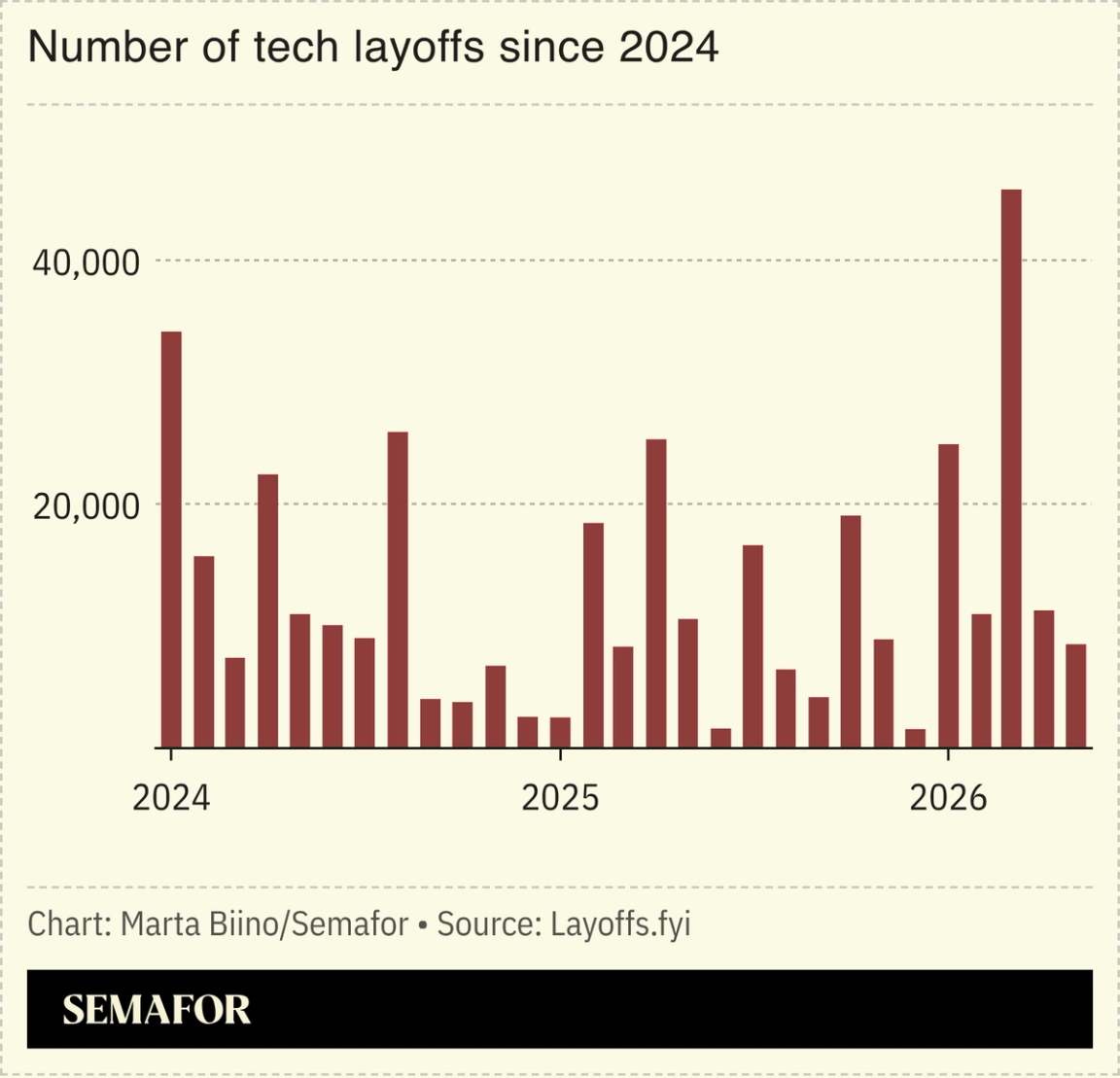 Hundreds of software engineers traveled to San Francisco this week for Anthropic’s annual developer conference to hear what the frontier AI lab is up to. Many of the most cutting-edge coders were also there to figure out how close their jobs were to disappearing. At the conference, Anthropic announced adding ways for agents to manage each other and the ability to “dream,” or review and learn from their previous work. The tools were pitched to developers as a way to build increasingly complex systems — similar to how the creation of Excel spreadsheets led to a boom in the accounting profession. But the recent spate of tech layoffs tied to AI improvements instilled more fear than enthusiasm in many of the developers I spoke with. One developer said he is even encouraging his son, who recently started college with a major in computer science, to minor in philosophy as a backup if the whole CS thing doesn’t work out. There was one burgeoning group of attendees brimming with optimism, though: social media influencers. It’s becoming increasingly common to see influencers at tech conferences, and Anthropic certainly met the moment. Besides the tequila and orange liqueur, the company also tapped Claude to write poems for each guest based on what they looked like. Optics appear to be increasingly important to Anthropic as it attempts to sell to a broader audience, but as it shapes that image, it risks alienating its most loyal user base if it leans too much toward trendsetting. — Rachyl Jones |
|
 Angel Studios is crowdsourcing a “values based” alternative to Hollywood. The brothers behind the faith-and-values-driven studio, known for its increasingly popular blockbusters, join Mixed Signals to explain how their Guild with 2 million members subverts the traditional greenlighting process. Max and Ben ask the Harmon brothers whether Angel Studios is a niche Christian media company or something with genuine mainstream scale.
|
|
These tomatoes thrive on crypto and Claude |
 DeVido’s watering system. @d33v33d0/X. DeVido’s watering system. @d33v33d0/X.Who needs venture capital? Martin DeVido, a developer who attended Anthropic’s recent developer day, says he funds his AI-fueled tomato-growing project with proceeds from a meme coin. The Idahoan spent several months building an autonomous system controlled by Claude that grows tomatoes in Boise. He plants the seedlings, but then the AI system decides how much to water the plants based on soil moisture readings, leaf temperature, and a camera that monitors the plants. “Claude is completely in charge of a living organism,” DeVido told me on the sidelines of the Anthropic event in San Francisco. While DeVido’s project is relatively small compared to the huge swaths of venture capital pouring into AI startups, the fact that he couldn’t farm without Claude or pay for it without crypto shows just how much non-traditional capital is fueling the vibe-coding token economy. After Sol the Trophy Tomato gained a following on social media, fans created a meme coin that now has a market value of $1 million and is funding DeVido’s effort to build out an autonomous farming system controlled by AI that could be used to grow food at scale. There’s plenty of money sloshing around in the ever-growing (tomato) pie. — Rachyl Jones |
|
New robot gives glimpse into the future |
 Courtesy of Hugging Face Courtesy of Hugging FaceEarlier this week, the AI model repository Hugging Face announced a new product that allows anyone to become a roboticist. Hugging Face is at the center of the open source AI explosion. You can download thousands of free AI models and run them anywhere. Now, the company is hoping it can take a similar role in the current robotics boom. The Reachy Mini robot has very basic functionality right now — and we’re still a long way from having humanoids doing our dishes and folding laundry. But we’re moving incredibly quickly in that direction. This is a glimpse into a future where we can directly program the robots we have in our homes. — Reed Albergotti |
|
 Join over 100,000 of your peers reading CIO Dive. Covering the latest IT news and insights — from big data to cloud computing — award-winning journalism is delivered to your inbox every day, for free, to help industry leaders stay ahead. Subscribe today. |
|
 A still from “EVE Online.” Courtesy of CCP. A still from “EVE Online.” Courtesy of CCP.Google DeepMind bought a minority stake in the developer of a massively multiplayer online game, continuing the AI giant’s trend of using games to train its models. DeepMind’s earliest successes came training AI systems to play Pong and Breakout; later it moved to Go and chess, and then strategy video game StarCraft, with its models becoming superhuman at each. Games provide predictable, enclosed, sandbox-like scenarios easier to master than the real world. EVE Online is an online space trading/combat simulator spread across thousands of star systems and with a functioning economy and politics. Mastering it would require complex problem-solving over long timelines, as well as diplomacy and trade with humans, a challenge closer to the real world than to Pac-Man. |
|
|


