Image

Daily News Brief

May 8, 2026


Dear readers,


The Daily News Brief is taking a hiatus after Friday, May 15, and will return in a refreshed form after Labor Day.


With global events unfolding in unprecedented ways, the Council on Foreign Relations is committed to helping our members and community make sense of a rapidly changing world. Our flagship newsletter will be reimagined to bring you the same global news you expect, alongside analysis from our experts and glimpses from inside the Council—a weekday afternoon dispatch you won't find anywhere else.


It has been our honor to land in your inbox each morning. Reply to this email to share feedback or sign up for updates as we test new formats this summer. (We read every email.)


Warm regards,


The Daily News Brief team


Welcome to CFR’s Daily News Brief. Today we’re covering fighting in the Persian Gulf as diplomacy also moves forward, as well as...

  • A court ruling against Trump’s global 10 percent tariffs
  • Election results from the United Kingdom (UK)
  • New U.S. sanctions for Cuba and Iraq


Top of the Agenda

The United States and Iran exchanged fire yesterday and the United Arab Emirates came under renewed Iranian attack today even as Washington and Tehran continue negotiations. Each side claimed the other had violated their month-old truce, though U.S. President Donald Trump told reporters yesterday that the ceasefire remained intact. Meanwhile, diplomacy extended to the Vatican yesterday, where U.S. Secretary of State Marco Rubio and Pope Leo discussed ending the conflict.


The latest attacks. Iran targeted three U.S. warships transiting the Strait of Hormuz yesterday, according to Trump, and the United States responded by striking the Iranian military facilities from which the attacks were launched, U.S. Central Command said. The Emirati defense ministry said it had intercepted missiles and drones fired at its territory by Iran; there were no immediate reports of damage.  


What the parties are saying. Trump yesterday reiterated that talks with Iran were progressing “very well,” calling U.S. strikes on Iran a “love tap” while suggesting heavy bombing would follow if no deal was reached. Iranian Foreign Minister Abbas Araghchi criticized Washington today for its push for a “military adventure” when diplomatic solutions were available, adding “Iranians never bow to pressure.” Pakistan, which is mediating, said yesterday that “we expect an agreement sooner rather than later,” but declined to give a timeline. Rubio and Leo discussed achieving a “durable peace” in the region during their meeting, which appeared to smooth relations between Washington and the Vatican following Trump’s repeated criticism of Leo.


The potential for long-term limbo. While Trump administration officials insist their economic pressure campaign is pushing Tehran toward a deal, a CIA assessment found Iran can survive the U.S. blockade for at least three to four months before experiencing more severe economic pain, four unnamed sources told the Washington Post. 


“Iran is going to use the Strait [of Hormuz] from now on as its only real guarantee, assurance, insurance policy, that under Trump or a future U.S. administration, whatever deal is made is not reneged on again, like [what happened] in the past. So this is going to become a new geopolitical chip for them that they didn’t have before.”

—the European Council on Foreign Relations’ Ellie Geranmayeh in a CFR YouTube Short


Three Lessons From the Iran War for Negotiators

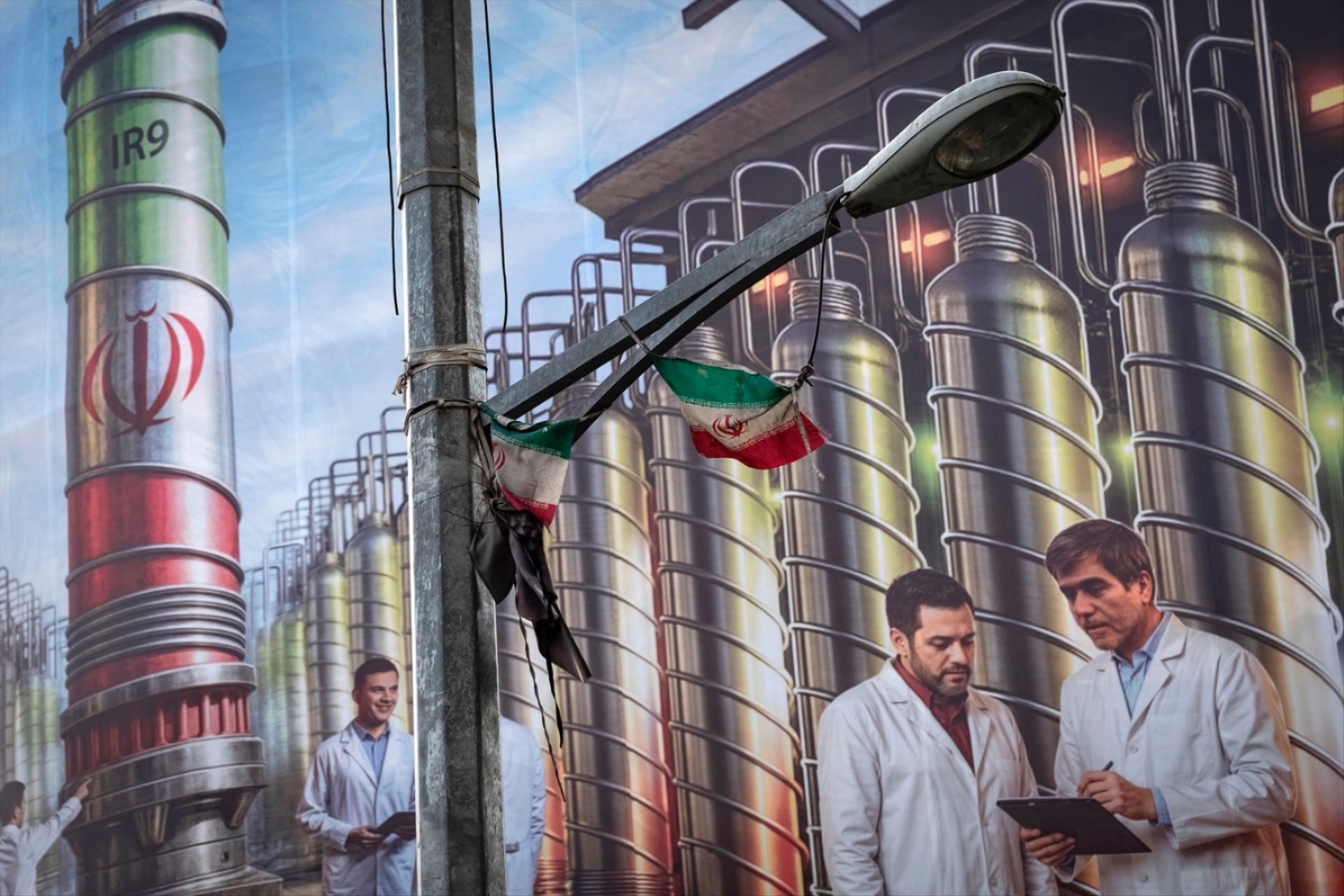
A giant banner featuring symbolic images of the Natanz nuclear enrichment facility, Iranian nuclear scientists killed in Israeli attacks during the 12-day war, and a Persian script that reads, ”Science is power,” hangs from a governmental building in downtown Tehran, Iran, on August 28, 2025.

Morteza Nikoubazl/Getty Images

The war has surfaced initial nuclear security lessons that should shape goals for both negotiations between Washington and Tehran and the future of the global nonproliferation regime, Senior Fellow Erin D. Dumbacher writes in this Expert Take.


Across the Globe

Ruling against Trump’s tariffs. A panel of three federal judges yesterday ruled that Trump had illegally used a 1974 law to impose 10 percent tariffs earlier this year after the U.S. Supreme Court struck down a previous set of tariffs. The plaintiffs in the case—Washington state and two importers—will see their tariffs immediately dropped, with the ruling paving the way for other importers to legally challenge theirs, too. Trump’s 10 percent tariffs were due to expire in late July. 


Labor slump in UK elections. Early results from elections across the UK yesterday suggest the ruling Labor Party lost seats to the right-wing Reform UK party, the Green Party, and nationalist parties in Scotland and Wales. Prime Minister Keir Starmer said the “tough” results strengthened his desire to deliver for voters and rejected calls for his resignation from members of his party.


Ukrainian envoys in Miami. Ukrainian negotiator Rustem Umerov met with U.S. officials in Miami yesterday to discuss the status of peace talks with Russia, both sides said. Ukrainian President Volodymyr Zelenskyy called the talks “substantive” in a social media post and said Kyiv aimed to “reinvigorate diplomacy.” Russia-Ukraine peace negotiations have stalled in the wake of the Iran war.


Brazil’s president in Washington. The Trump administration moved to de-escalate tensions with Brazil during a White House meeting yesterday, following major policy clashes last year. Trump wrote the talks with Brazilian President Luiz Inácio Lula da Silva covered trade and tariffs and went “very well,” without giving further details; Lula said the pair had discussed trade, crime, and critical minerals.


New sanctions for Cuba... The United States sanctioned a major Cuban military conglomerate, one of its officials, and a Cuban-Canadian nickel mining venture for providing financial support to the island nation’s military regime, Rubio announced yesterday. Washington has pushed Havana to open up politically and economically through a sweeping economic pressure campaign. Cuba’s foreign minister called U.S. actions against Cuba “collective punishment.”


…and for Iraq. The U.S. Treasury Department announced sanctions yesterday on three senior leaders of Iran-aligned Iraqi militias as well as Iraq’s deputy oil minister over alleged support for Iran. Iraq’s oil ministry denied the allegations and offered to cooperate with any probe. The deputy minister, whom Washington accused of diverting oil, did not immediately comment.


UK espionage case. A London court found two British-Chinese dual nationals guilty yesterday of spying for China against exiled Hong Kong dissidents and pro-democracy supporters. Both defendants denied the charges. The UK government summoned the Chinese ambassador following the verdict. It was one of the UK’s first prosecutions under an expanded national security law.


Taiwan’s defense budget. Taiwan’s legislature passed a bill yesterday allowing for $24.8 billion in additional defense spending between 2026 and 2033. Some of the funds are intended to be used to counter air threats from China. Taiwan’s ruling Democratic Progressive Party had sought a larger budget to fund the domestic production of weapons, but the opposition bloc had argued money for domestically made weapons should come from the regular budget.


Are Prediction Markets Forecasting Tools or Virtual Casinos?

The Spillover podcast.

Prediction markets have grown into a multibillion-dollar industry and triggered a debate over whether they are powerful forecasting tools or gambling platforms in disguise. CFR Senior Fellows Rebecca Patterson and Sebastian Mallaby weigh in on this episode of The Spillover.

Listen


What’s Next

  • Today, the Association of Southeast Asian Nations summit concludes in the Philippines.
  • Today, Laura Fernández is sworn in as president of Costa Rica.
  • Tomorrow, the Venice Biennale art show opens to the public.


The Importance of Impartiality in Human Rights Work