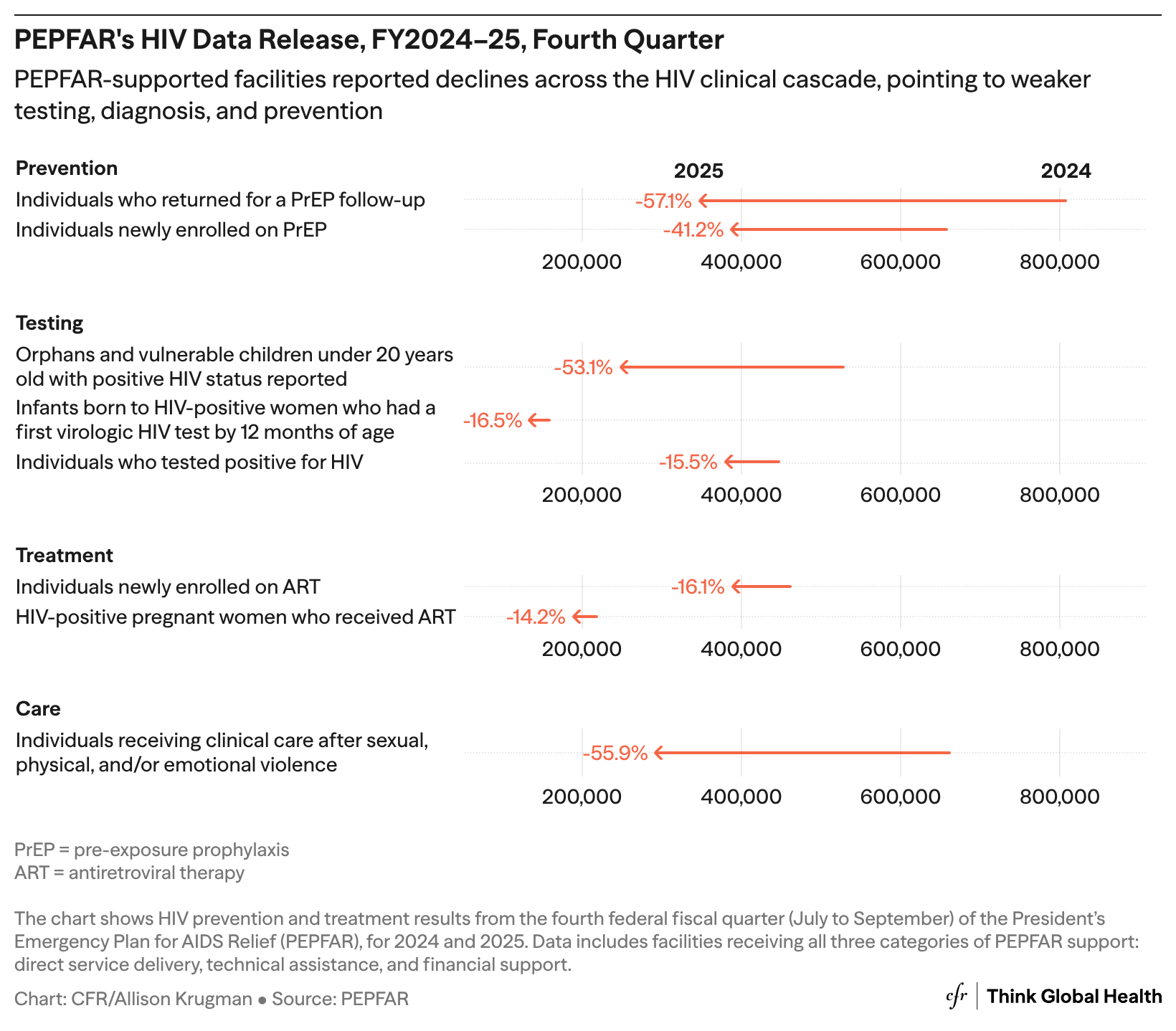
In mid-April, the U.S. State Department released the latest data for the U.S. President's Emergency Plan for AIDS Relief (PEPFAR). It offers the clearest snapshot yet of how U.S.-backed HIV programs performed after a series of funding disruptions at the start of 2025.
This week’s newsletter leads with a breakdown of those figures by PEPFAR’s former chief science officer mike Reid and its former chief of staff Jirair Ratevosian. They write that, on the surface, the figures convey resilience from the programs and their staff, as HIV treatment continuity has been relatively stable. Yet that data obscures declines in HIV testing, diagnoses, and prevention efforts. They explain how those trends represent an HIV system that has shifted into preservation mode—protecting treatment while scaling back epidemic control—and how the data overlooks people who acquired HIV during this period of disruption.
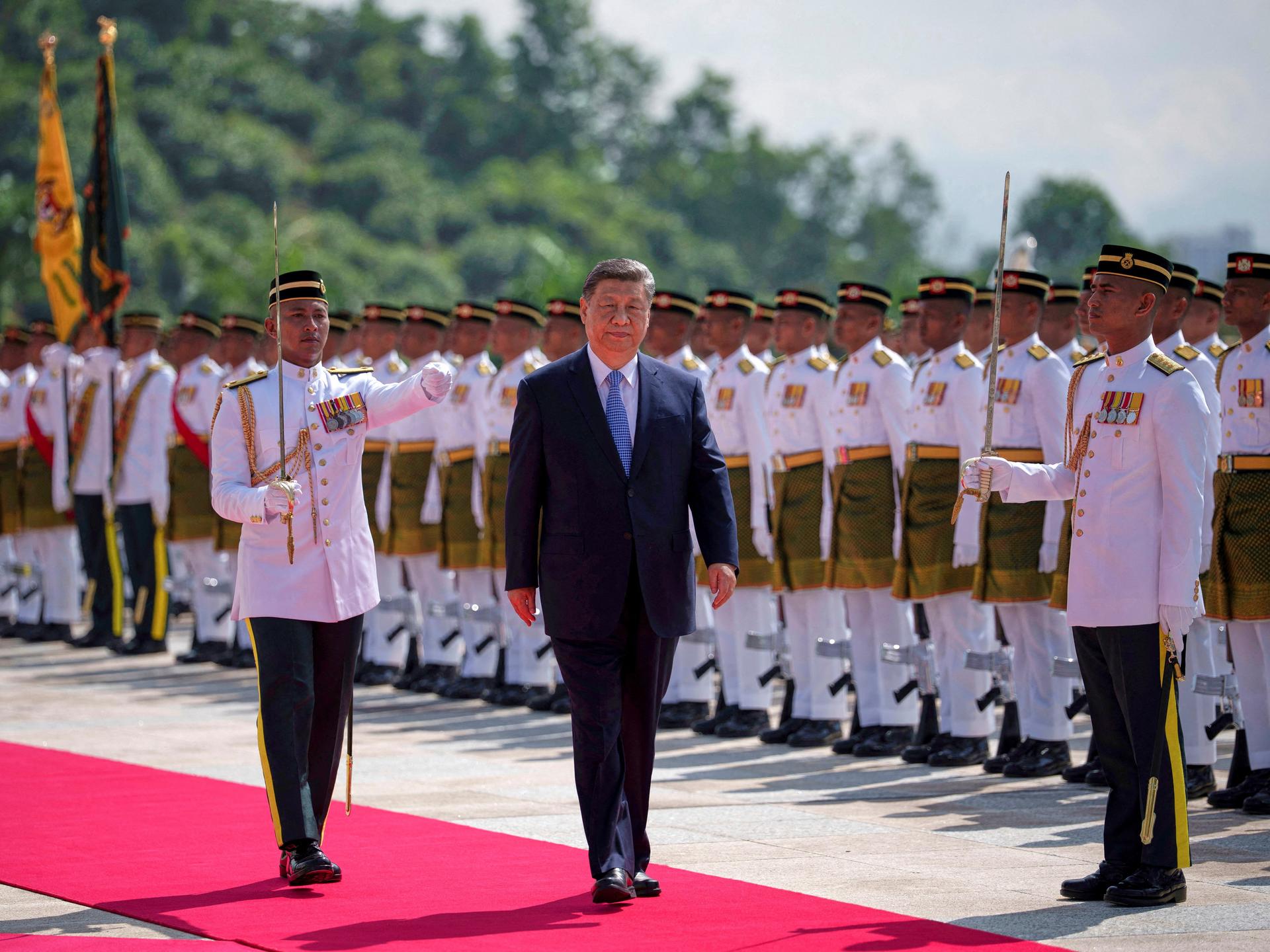
The collapse of U.S. aid has also shifted attention to China’s ability to lead global health initiatives. Schwarzman Scholar Faye Ng Yu Ci and CFR Senior Fellow Yanzhong Huang explore how China is shaping Southeast Asia’s long-term health order through a bilateral, infrastructure-heavy model that quietly embeds recipient countries in Chinese supply chains, training pipelines, and technical systems. To minimize that dependency, the pair call on the Association of Southeast Asian Nations to invest more in regional health cooperation and diversified financing.
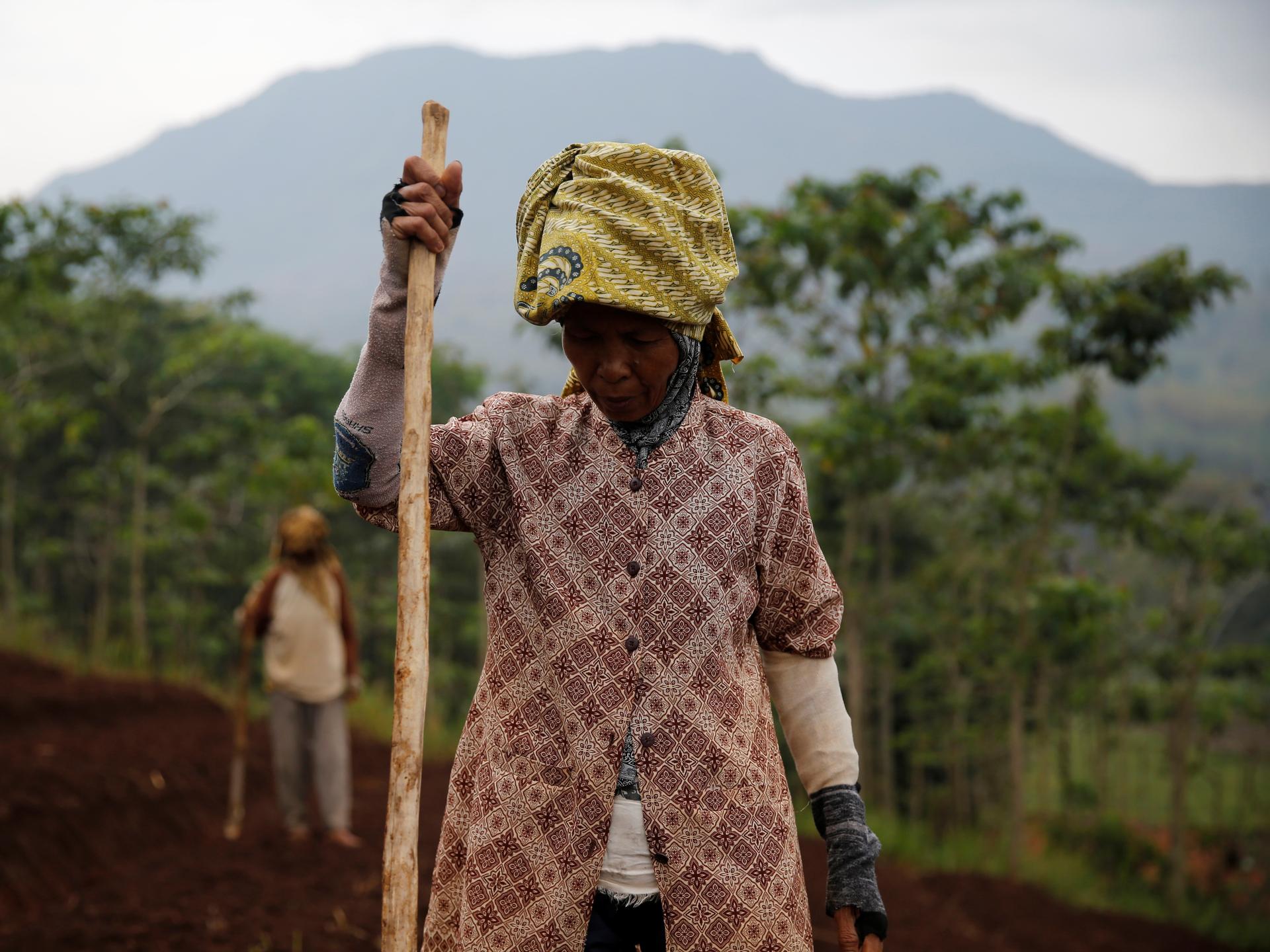
Sticking to the region, Dawn Celine Siaw Chern Poh leads a group of authors from the Women’s Health and Economic Empowerment Network, who outline Indonesia’s ambitious plans to eliminate cervical cancer by 2027. The disease kills more than 20,000 women each year in Indonesia, placing the country among those with the highest incidence of the cancer in the Indo-Pacific.
Next, journalist Gabriela Galvin takes readers to Europe to unpack how anti-vaccine misinformation and logistical hurdles are discouraging parents from vaccinating their children against measles and driving an uptick in outbreaks across the continent.
Until next week!—Nsikan Akpan, Managing Editor, and Caroline Kantis, Associate Editor