Lumina Foundation is working to increase the share of adults in the U.S. labor force with college degrees or other credentials of value leading to economic prosperity.
Ken Burns, who has created some of the country's most celebrated historical documentaries, attributes much of his success to the education he received at Hampshire College. Faced with the recent news that his financially struggling alma mater will close its doors for good in December, Burns is reflecting on the larger forces that helped to seal the college’s fate.
The small college in Amherst, Mass., now enrolls about 625 students but has gained an outsized reputation as a learning laboratory that prioritizes personal transformation over a single vocation. If that’s not a marketable idea, Burns says, something is truly amiss in higher education and the American psyche.
Free college programs have grown rapidly in the past decade, with more than 200 state and local programs estimated across the country. But new research from the Brookings Institution shows how their design can significantly affect student outcomes.
Based on studies about state and local promise programs and roundtables with financial aid experts, the report concludes that students do best in generous, flexible promise programs with less strict eligibility requirements and more robust advising.
Being away from family and familiar surroundings can leave college students with feelings of isolation and despair. From fewer close friendships and more device-mediated relationships, many of today's students say they are lonely, sad, and disconnected from life.
On this podcast, two students offer insight on what loneliness and social isolation look like for students today—and how connection is changing on campus. Carson Domey and Adaora Lee also discuss how experiences differ for commuter and online students, how campus design and housing influence opportunities for connection, and what’s actually working when it comes to addressing student isolation.
Malaya Lambert didn’t take a straight path into healthcare—or into advocacy. A mom, a former college athlete, and now a patient care technician, Lambert has navigated interrupted education, financial barriers, and career pivots.
Today, Lambert is using those experiences to speak up for other workers and learners who are trying to build better lives. In this interview, she reflects on her journey, what she’s learned along the way, and why she believes more people need access to “learn and earn” opportunities.
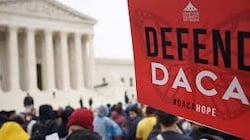
The Deferred Action for Childhood Arrivals program—the Obama-era policy that shields people brought to the United States as children from deportation and grants them renewable two-year work permits—was never perfect. Because it failed to be coded into law, there was never a clear path to citizenship for those granted sanctuary under the program. But it provided hope for young people whose parents brought them to the United States that they could achieve the American Dream.
And so, they submitted their fingerprints. They gave their home addresses. They paid their fees, renewed every two years, and built their lives around a government promise. Now, for hundreds of DACA recipients, that promise is being used against them.
About 40 percent of all U.S. undergraduates attend two-year colleges, according to the Community College Research Center at Columbia University. Most students come through the door with the intent to transfer but find their path blocked by credit loss, financial obstacles, or an aggravating lack of reliable information.
Despite surveys indicating that nearly 80 percent of community college learners aspire to earn a bachelor’s degree, only about one-third transfer to a four-year institution. And less than half of students who do transfer earn a bachelor’s within six years of initial enrollment. Administrators say this issue is more reflective of an unfair and underfunded system than of a student’s lack of ability.

.jpeg?width=500&upscale=true&name=images%20(33).jpeg)