| | Donald Trump plans to bring CEOs to Beijing, Marco Rubio meets the pope, and China builds its nuclea͏ ͏ ͏ ͏ ͏ ͏ |
| |  USHUAIA USHUAIA | VATICAN CITY |  BEIJING BEIJING |
 | Flagship |  |
| |
|
The World Today | 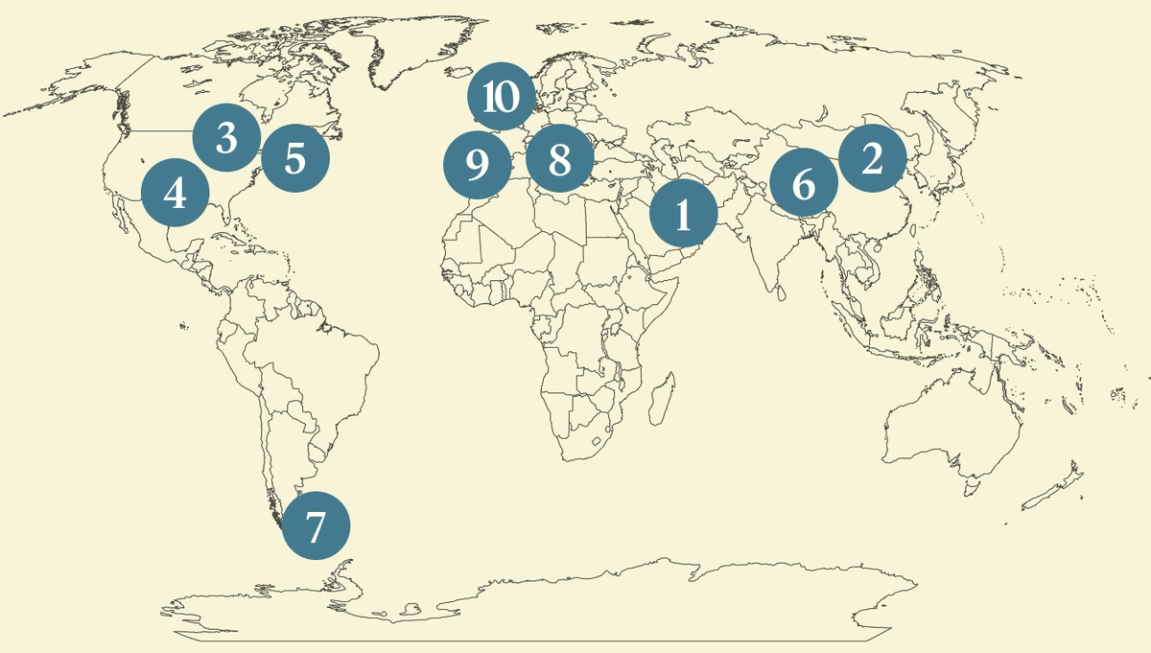 - Iran, US discuss peace deal
- China summit invites go out
- Consumer sentiment warnings
- Bracing for SpaceX IPO
- Insider trading is evolving
- China’s new nuke approach
- Hantavirus ‘not next COVID’
- Marco Rubio meets the pope
- Spain’s open-door policy
- Humanoid robots that recycle
 Predicting the singularity. |
|
US awaits Iran answer to truce plan |
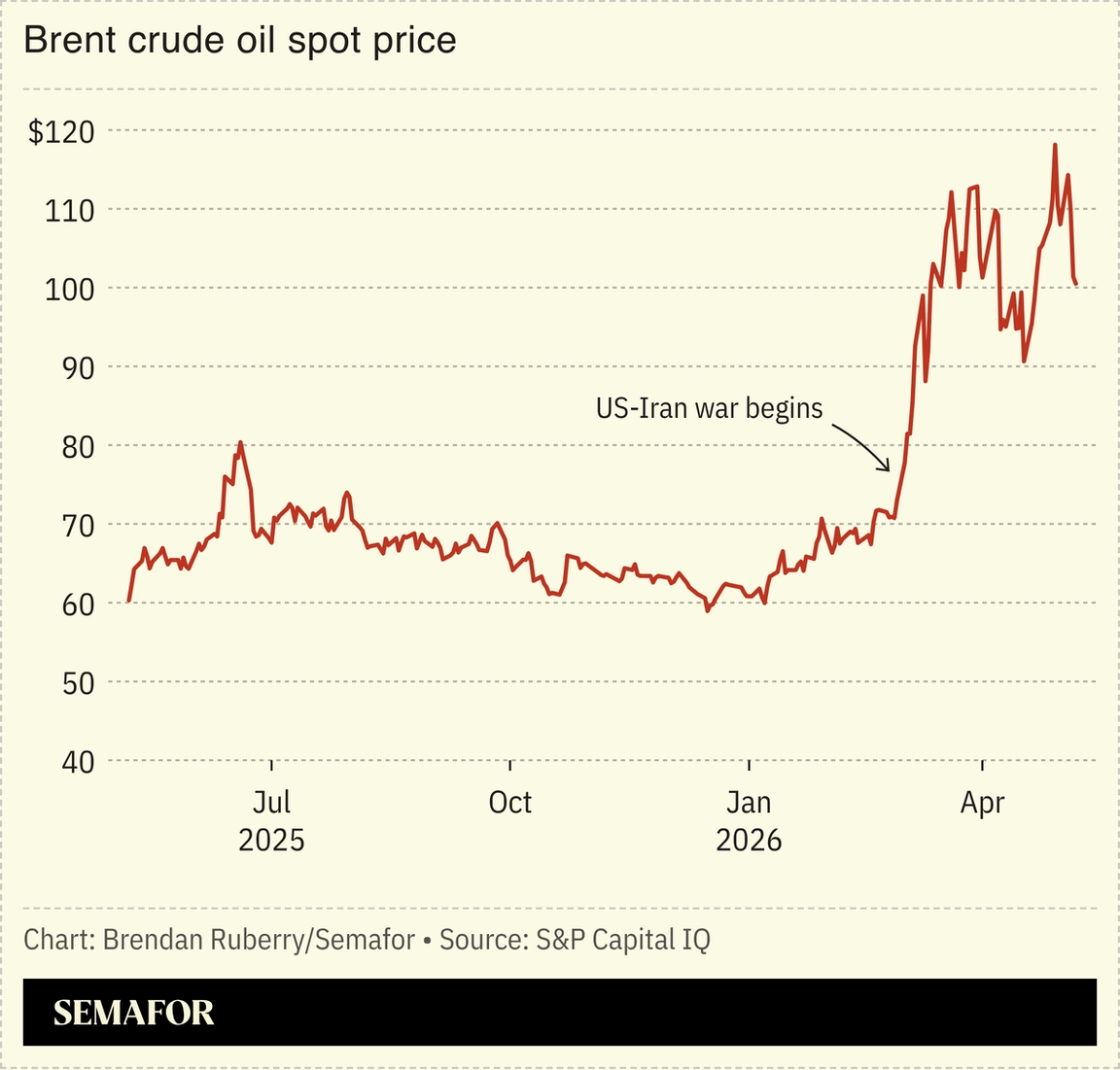 The US and Iran are getting closer to an agreement to temporarily end hostilities, according to Pakistani officials, even as tensions flared in the Strait of Hormuz. Tehran said negotiators were discussing a one-page plan to reopen Hormuz for a month, during which time they would try to reach a long-term deal. But oil prices narrowly ticked up and stocks dipped on Thursday as skepticism resurfaced on the prospects for an agreement; the US and Iran reportedly traded fire in the strait again. And even if a deal is reached, it could be a month before oil tanker traffic resumes in the waterway: “Global markets should not mistake a ceasefire headline for a supply headline,” Rystad Energy’s chief oil analyst said. |
|
Trump aims to bring CEOs to China |
 Evelyn Hockstein/Reuters Evelyn Hockstein/ReutersThe Trump administration plans to invite a host of CEOs — including those from Nvidia, Apple, and Exxon — to join the president on his trip to China next week, Semafor reported Thursday. In crafting a potential business delegation roster, Trump has reportedly been “stoking corporate FOMO” with offhand comments to executives about the summit. Still, expectations are low for specific deals beyond soybeans and Boeing jets — the planemaker’s CEO is set to join Trump on the trip, CNBC reported. The focus, US administration officials said, is more on building the relationship between Trump and Chinese leader Xi Jinping, and there’s likely to be less commercial fanfare than on past foreign trips, including to the Gulf last year. |
|
Businesses warn of consumer anxiety |
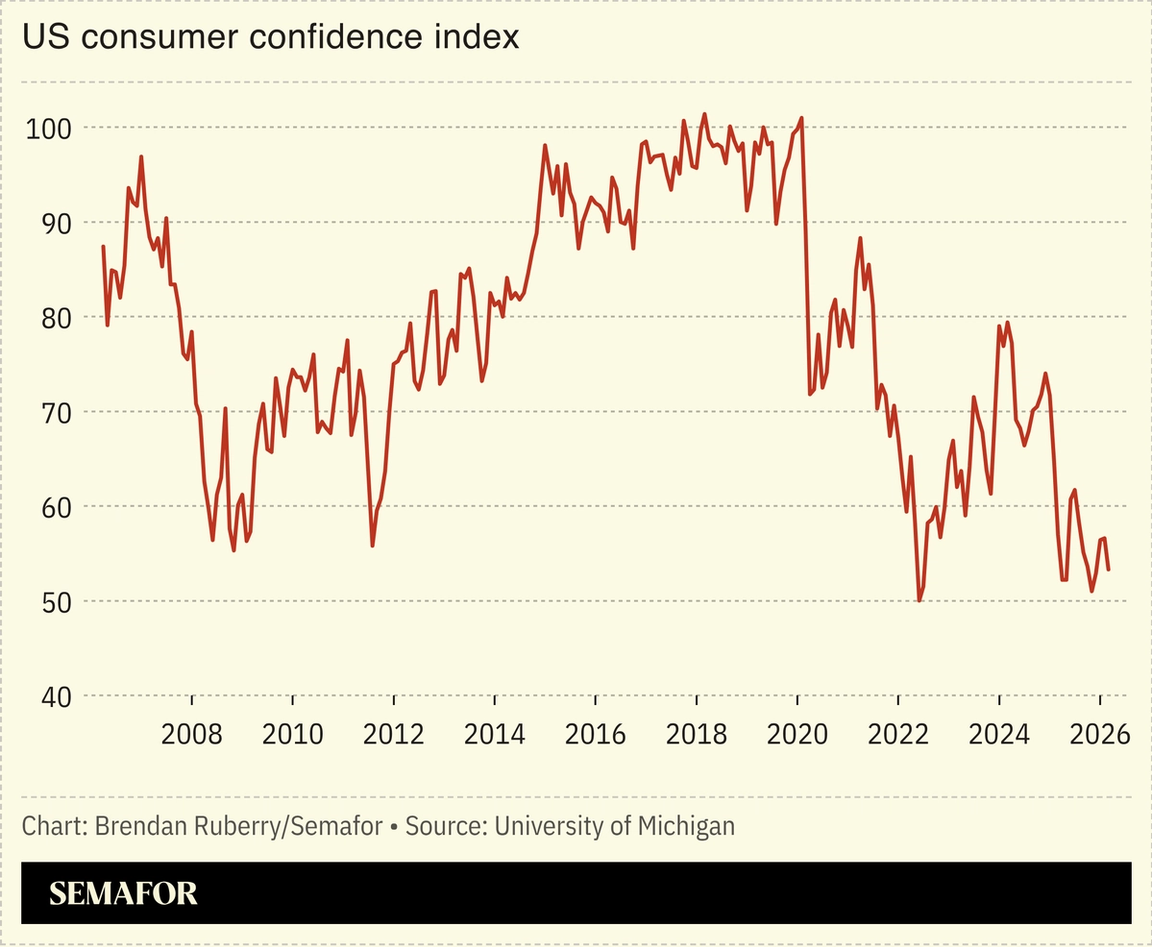 Major companies on Thursday warned that consumers globally will start pulling back on purchases, challenging the narrative of resilient spending despite the Iran war. Whirlpool pointed to a “recession-level industry decline,” caused in part by shoppers pulling back on big-ticket buys. Although fast food sales rose, McDonald’s warned of consumer “anxiety” as high gas prices dent sentiment. Kraft Heinz’s CEO said people “are literally running out of money.” Price pressures aren’t just hitting at the pump: Lufthansa plans to raise airfares to offset higher jet fuel costs. Still, there are conflicting signals on the war’s impact on consumer confidence. Disney and Uber this week said Americans are still spending on rides and resorts. |
|
SpaceX moves closer to IPO |
 Mike Blake/Reuters Mike Blake/ReutersElon Musk is poised to have “virtually unchecked executive authority” when SpaceX goes public this year, Reuters reported. Documents show SpaceX is looking to limit investors’ ability to challenge company management, as the rocket maker sets its sights on massive projects. SpaceX, set to be the largest IPO in history, has previewed huge expenditures, including launchpads and a new solar-cell factory, The Wall Street Journal reported. Activists are pushing for greater oversight of the IPO, with some calling for an investor boycott, in the same spirit of last year’s protests against Musk’s EV giant Tesla. Rivals are also watching closely: Jeff Bezos’ Blue Origin outlined a new stock plan aimed at making incentives more competitive with SpaceX. |
|
Nature of insider trading cases evolves |
 Benoit Tessier/Reuters Benoit Tessier/ReutersThe nature of insider trading cases is changing, making prosecution more difficult. US authorities this week indicted 30 lawyers and associates, alleging they illegally traded on corporate mergers. It’s a relatively analog scheme, and the next of its kind “will look nothing like this one,” Semafor’s Liz Hoffman wrote, as “disappearing encrypted messages and prediction-market bets tied to crypto wallets” replace options trading. Federal officials are investigating suspiciously timed oil trades just ahead of President Donald Trump’s announcements about the Iran war, ABC News reported, while a US soldier was charged after allegedly betting on the capture of Venezuela’s Nicolás Maduro. “The long tail of bets creates a long tail of self-dealing that will be harder for authorities to catch,” Hoffman wrote. |
|
How China’s nuclear thinking has shifted |
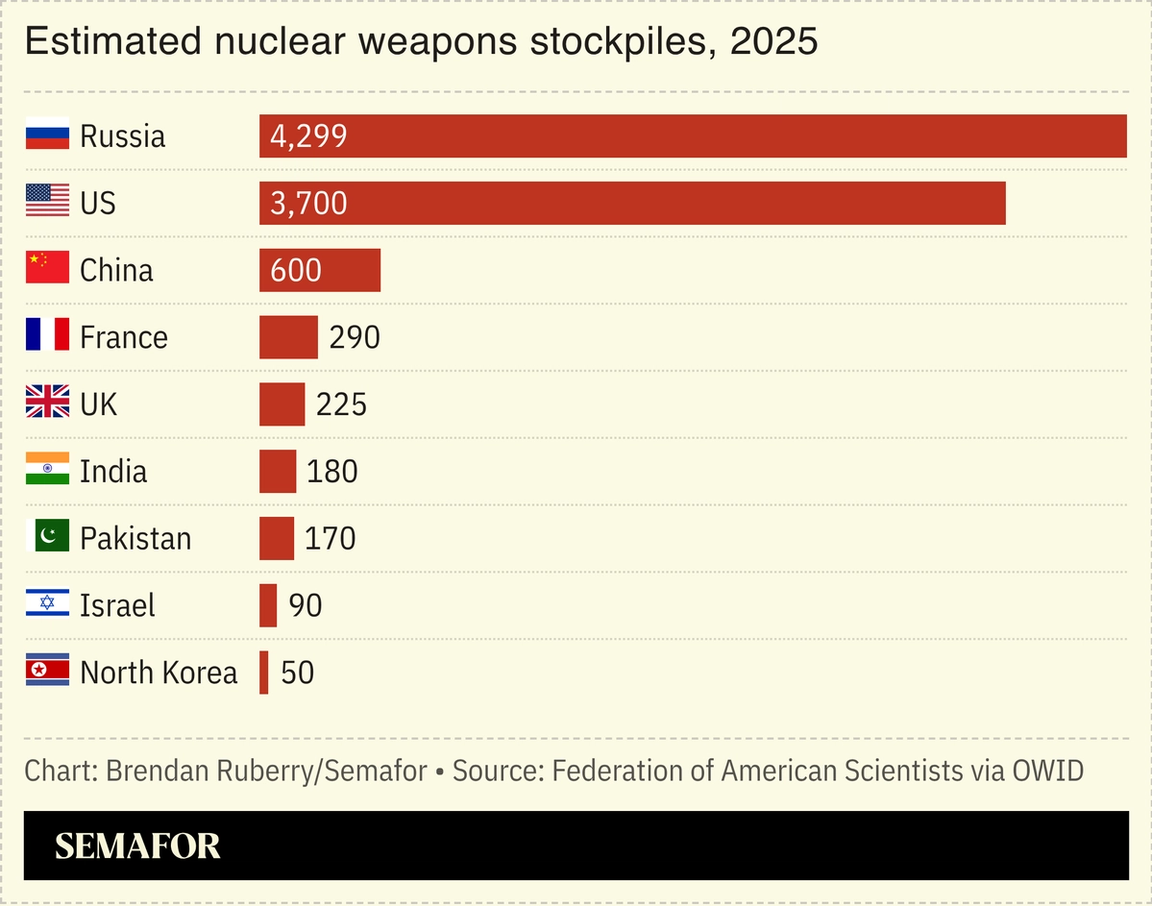 The swift buildup of China’s nuclear arsenal bucks conventional wisdom on the limits of Beijing’s ambitions. Mao Zedong called for building a small nuclear force, but Beijing’s approach to the weapons is not “as philosophically unique as once thought,” China nuclear expert Tong Zhao wrote in China Books Review, citing three recent works that illustrate the country’s nuclear evolution. Beijing’s warheads are projected to grow to more than 1,000 by 2030, but many top Chinese officials and experts are in the dark about the government’s nuclear strategy, Zhao noted. The buildup was largely driven by a belief that perceived Chinese weakness was inviting US assertiveness — with the broader aim of undermining “US confidence in its overall dominance.” |
|
Authorities race to contain hantavirus |
 Danilson Sequeira/Reuters Danilson Sequeira/ReutersAfter a lethal outbreak of hantavirus on a cruise ship, authorities around the world are racing to trace passengers who disembarked to prevent further infections. The MV Hondius sailed from Argentina a month ago; the outbreak killed three and the remaining passengers are in quarantine, but some left the ship in April before isolation measures were implemented. Although it sparked memories of the 2020 COVID outbreak on a cruise ship, the World Health Organization said hantavirus was “not the next COVID”; it rarely spreads between humans and it is easy to isolate when it does. Still, one expert argued that the “fragmented international response” to the outbreak shows that the world remains unprepared to “manage health threats coherently and collectively.” |
|
 Semafor today launched Semafor Intelligence, a new AI-enabled editorial insight product that transforms the full onstage record of Semafor’s global convenings into evidence-backed analysis — capturing the views of the world’s most consequential decision-makers, the debates shaping their thinking, and forward-looking signals. The first edition draws on Semafor World Economy 2026, where more than 500 CEOs, policymakers, and G20 leaders gathered in Washington, DC to discuss the forces shaping the new world economy. To produce it, Semafor developed a proprietary AI tool that analyzes the full onstage record of each convening, identifying key claims, topics, stances, and supporting evidence, then linking each finding back to the relevant speaker, session, transcript, and video moment. Semafor’s editorial team then distilled the strongest patterns into the sharpest insights. Each published theme combines transcript-backed analysis, speaker moments, citations, and a journalist’s view on why the signal matters. Semafor Intelligence findings from Semafor World Economy 2026 tell the story of The Chokepoint Economy — the consensus among leaders that the promise of globalization has given way to concentrated power and risk, and that resilience is now the organizing principle of the new world economy. Across nine themes, the report surfaces where consensus is forming, where it is fracturing, and where the prevailing views may be dangerously wrong. |
|
Rubio eases US-Vatican tensions |
 Vatican Media/Simone Risoluti/Handout via Reuters Vatican Media/Simone Risoluti/Handout via ReutersUS Secretary of State Marco Rubio looked to ease Washington’s rocky relationship with the Vatican on Thursday in an amicable meeting with Pope Leo XIV. The talks followed US President Donald Trump’s repeated attacks on the leader of the Catholic Church; just three days ago, Trump accused Leo of “endangering a lot of Catholics” through his opposition to the Iran war. Rubio’s visit was seen as a test of his political skills — he is emerging as a top 2028 presidential contender — and an effort from Washington to reinforce backing from Catholic voters. Trump’s popularity among the constituency is appearing to wane, National Catholic Reporter wrote, citing a new poll that shows a 10-point drop in support. |
|
Spain at odds with EU on migration |
|
|


