| | In this edition, CEOs at Semafor World Economy warn of a “chokepoint economy,” and the Trump adminis͏ ͏ ͏ ͏ ͏ ͏ |
| |  | Business |  |
| |
|
 - CEOs on Trump’s China trip
- The ‘chokepoint economy’
- Novo CFO on big-game M&A
- Ryan Cohen’s missing letter
|
|
 Federal prosecutors’ indictment of 30 white-shoe lawyers and their associates, alleging more than a decade of insider trading on corporate mergers, is both juicy and quaint. Savor it. The next big insider-trading case will look nothing like this one. The case unveiled yesterday in Boston federal court alleges a widespread ring of lawyers and middlemen used secret, if blundering, code (takeovers were “flights,” “surgery,” and “weddings”) to profit on confidential deal intel dating back to 2014. There are Russian brokerage accounts in the British Virgin Islands, cash kickbacks, early-morning info drops at a Florida Starbucks, and the timeless tell of out-of-the-money call options bought just before deal announcements. It’s a charmingly analog sequel to the scandal that brought the Roaring 1980s takeover boom to a screeching halt, took down Drexel Burnham and Kidder Peabody, and struck the M&A world to its core more than three decades ago. The next version will be tougher to catch and harder to prosecute. Disappearing encrypted messages and prediction-market bets tied to crypto wallets will replace options trading in Caribbean brokerage accounts. Well-timed trades by members of Congress or family members of administration officials will make it harder to get excited about a bumbling netherworld of law-school roommates. The legal arguments will get fuzzier, too: The alleged mastermind of this ring, a lawyer who worked at big law firms including Latham & Watkins and Sidley Austin, obviously had a duty to keep his clients’ M&A plans a secret. Jeff Bezos’ stepson does not. When you sign a confidentiality letter and then your brother’s hairstylist buys call options on the target company, the indictment writes itself. But when the arena expands from stocks to anything-you-can-wager-on, the definition of inside information gets slippery, enforcement becomes legal whack-a-mole, and the edge goes to whoever moves fastest into the regulatory gaps. Kalshi and Polymarket know this and, in my conversations with executives there, are moving quickly to get ahead of it — if for no loftier reason than that nobody will use a platform they don’t trust. Polymarket’s referral to the Justice Department of a US soldier who allegedly bet on the Maduro raid (and Kalshi’s preventing him from creating an account in the first place) is a good sign. But the long tail of bets creates a long tail of self-dealing that will be harder for authorities to catch. |
|
CEOs eye invite to Beijing |
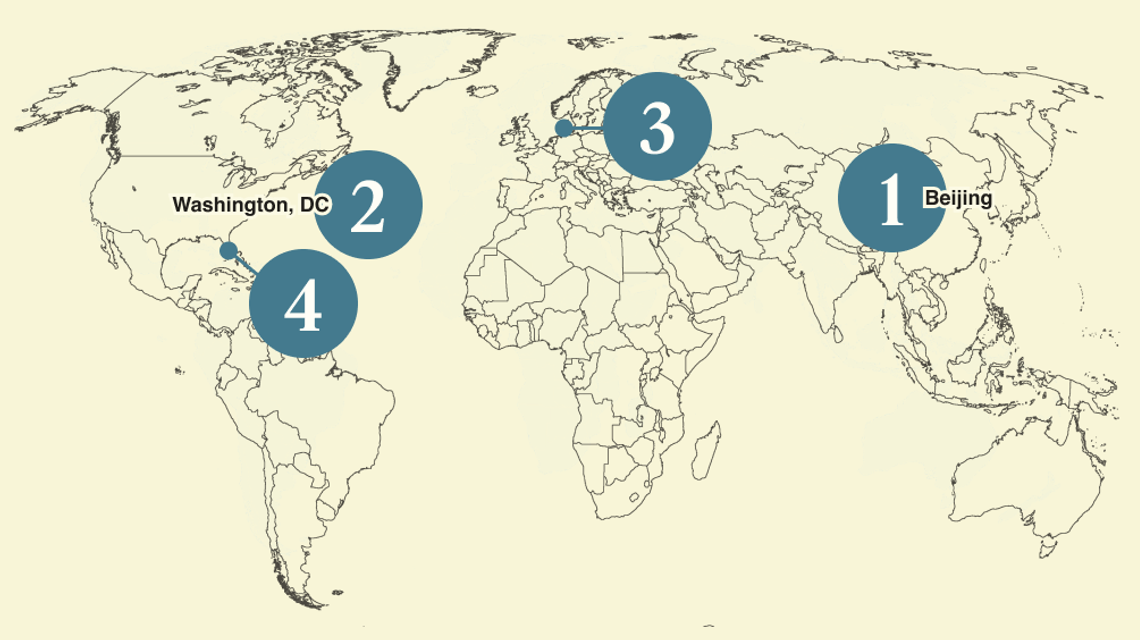
 Trump and Xi Jinping during a meeting in 2025. Evelyn Hockstein/File Photo/Reuters. Trump and Xi Jinping during a meeting in 2025. Evelyn Hockstein/File Photo/Reuters.The Trump administration plans to invite CEOs from Nvidia, Apple, Exxon, Boeing, and other big companies to accompany the president on his trip to China next week, according to a person familiar with the plans. The list also includes executives from Qualcomm, Blackstone, Citigroup, and Visa, and is likely to grow in the coming days as CEOs jockey for invites, this person said. Spokespeople for the White House and the companies didn’t immediately respond to requests for comment. Treasury Secretary Scott Bessent, US Trade Representative Jamieson Greer, and David Perdue, the US ambassador to China, have been suggesting attendees for the trip, other people familiar with the matter said. The president himself is stoking corporate FOMO with offhand comments to executives he’s met recently, suggesting he’ll see them in Beijing, those people said. Still, there’s likely to be less commercial fanfare than on past foreign trips, including to the Gulf last year. Expectations are low for specific deals beyond soybeans and Boeing jets, two longtime sticking points. The focus, administration officials said, is more on building the relationship between President Donald Trump and Xi Jinping. The US doesn’t have a lot of leverage: The Supreme Court’s ruling striking down tariffs has sent the administration back to the drawing board to repaper specific tariffs under new authorities, and the war in Iran has pulled focus and boosted China’s geopolitical power across Southeast Asia. “I really don’t expect a whole lot of dynamic big results,” Milken Institute chairman Curtis Chin said this week. “But just that they’re meeting is a very important accomplishment.” |
|
CEOs warn of ‘chokepoint economy’ |
 Call it the “chokepoint economy.” Energy, chips, diplomacy, and confidence are all in short supply, emerging as potential stumbling blocks for a global economy and financial system that has so far shrugged off nearly everything thrown its way. That was the consensus among leaders at Semafor World Economy, according to Semafor Intelligence, our new analysis of the more than 300 executives, policymakers and other decision-makers who came on our stage. We analyzed every transcript, pulled out nearly 5,000 distinct claims, and distilled them into nine themes that our journalists stress-tested. (Read our methodology here.) Among them: The US is uniquely insulated on energy, but vulnerable on frontier AI models. Global CEOs increasingly accept, and some even embrace, a form of industrial policy that would have horrified them in business school. Markets are underpricing the fallout. |
|
Novo Nordisk is big-game hunting |
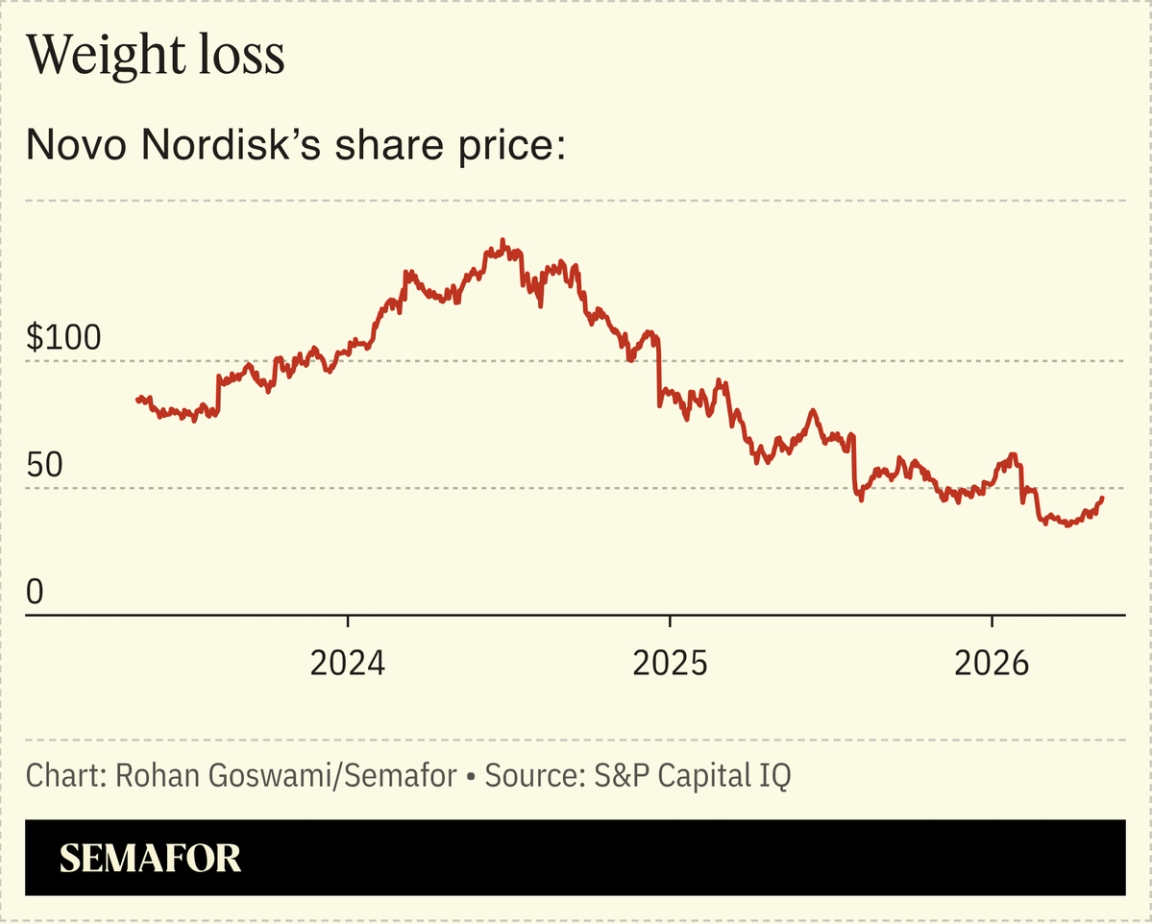 After losing out to Pfizer on the $10 billion bidding war for weight-loss drug startup Metsera, Novo Nordisk’s CFO says the company is hunting for even bigger deals. “There are a lot of frogs to be kissed before we find the prince or the princess,” Karsten Munk Knudsen told Semafor. “We have the balance sheet to go at bigger deals [than Metsera], should that be an option, but it’s really the availability of quality assets that fit our strategy and are for sale.” Pfizer outbid Novo Nordisk for Metsera in a messy M&A fight last year that involved dueling lawsuits and anticompetitive claims. Briefly Europe’s most valuable company, Novo Nordisk’s shares have slid sharply as Eli Lilly has put up a tough fight. Novo replaced its CEO last summer and has seen success lately with its GLP-1 pill, where it was first to market. Both companies are trying to win that race while using its windfall to hedge their bets: Eli Lilly has spent billions over the last two years acquiring companies in genetics medicines, sleep disorders, and cancer. — Rohan Goswami |
|
Cohen’s confidence play falls short |
 Brendan McDermid/Reuters Brendan McDermid/ReutersRyan Cohen’s $55 billion bid for eBay hinges on a letter, signed by a bank and meant to convince the market and eBay’s board that he can pull off an unprecedented takeover of a company four times its size. So where is it? GameStop says it has a “highly confident” letter from TD Bank to raise $20 billion of debt needed for the deal. But the letter hasn’t been made public — unusual in a situation where maximum we-can-pull-this-off pressure is needed — and even some of Cohen’s own advisers don’t have access to it, according to people familiar with the matter. (eBay has seen the letter and believes it doesn’t represent a workable financing package, according to people close to the company.) The letter, according to people who have viewed it, assumes that a combined eBay-GameStop would be able to get an investment-grade credit rating. Today, eBay is BBB+, at the bottom end of the blue-chip ratings scale, but the debt GameStop needs to swallow would likely tip the combined company into junk territory. Moody’s said Tuesday that a deal would be “credit negative to eBay because of the substantial increase in financial leverage.” — Rohan Goswami |
|
 There’s a reason more than 200,000 investors trust Opening Bell Daily. It’s the newsletter Wall Street actually reads. Get the best market analysis, insider picks, and actionable ideas in one daily briefing. Subscribe for free. |
|
➚ BUY: Royal flush. Shares in Japanese toilet maker Toto have soared more than 50% this year, a bet that its high-tech ceramics will feature in semiconductor components crucial to the AI buildout. ➘ SELL: Full house. The fallout from NYC Mayor Zohran Mamdani’s pied-à-terre video continues, with Citadel’s Ken Griffin saying his new Park Ave. office is now “a real topic of debate.” |
|
 Companies & DealsWatchdogs- Strange bedfellows: The Trump administration is rethinking how it addresses the evolving challenges from AI, and is thinking of working with China on guardrails, WSJ reported, reviving a channel that was first introduced during the Biden era. It could be a talking point for Trump and Xi next week.
Markets- Crude indicator: Brent oil dipped below $100 a barrel on reports that talks between the US and Iran could advance.
|
|
| |  | | | You’re receiving this email because you signed up for briefings from Semafor. |
|


