|
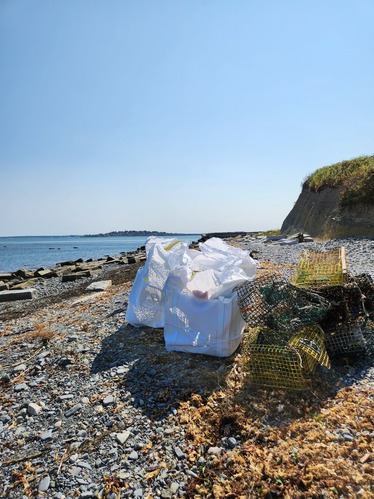
Derelict fishing gear removed during the Boston Harbor Islands Cleanup (Photo Credit: NOAA).
Ocean Conservancy, with support provided by a 2024 award from the NOAA Marine Debris Program, requests applications for their Large Marine Debris Removal Project for the removal of large marine debris, including derelict fishing gear, from remote and hard-to-reach marine environments, including the Great Lakes. Successful projects will remove, prevent, and monitor large marine debris and derelict fishing gear that is too difficult to remove by hand due to its size, volume, or location.
Applications are due on May 31, 2026 by 5:00 PM Eastern Daylight Time (EDT)
Learn more on Ocean Conservancy’s Large Marine Debris Removal Project’s website.
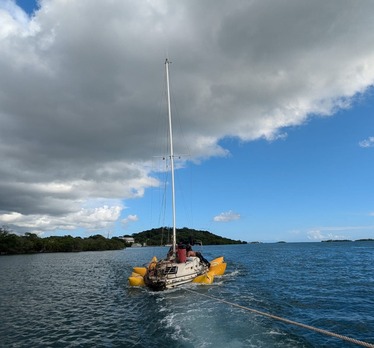
A sailboat is removed from waters off the coast of Lajas, Puerto Rico using float bags and a towboat (Photo Credit: Luis Ramirez/Reel-E-Good Sea Service Corp).
With support through a 2023 award from the NOAA Marine Debris Program, Isla Mar Research Expeditions, LLC., and partners from the Puerto Rico Department of Natural and Environmental Resources and HJR Reefscaping are removing abandoned and derelict vessels from the waters surrounding Puerto Rico. The 18 vessels removed so far weigh a total of over 130,000 pounds. The project is also supporting 11 jobs, and four new jobs were created. This cleanup effort makes Puerto Rico’s waters and beaches safer for boaters, fishers, and recreational users.
Learn more about the methods for removing these sunken vessels.
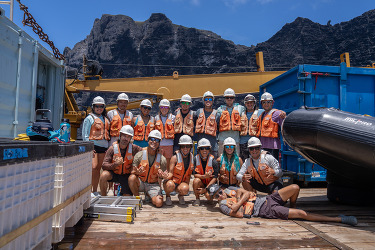
The 2025 PMDP team gathers for a group shot before leaving to carry out their plan of the day on small boats. (Photo Credit: Andrew Sullivan-Hawkins/ Papahānaumokuākea Marine Debris Project).
With support from the National Fish and Wildlife Foundation, NOAA Marine Debris Program, private donors, and small grant foundations, the Papahānaumokuākea Marine Debris Project (PMDP) continues the legacy large-scale marine debris removal efforts to protect the wildlife and habitats of Papahānaumokuākea. We interviewed PMDP Field Logistics Specialist Lauren Fraser and Lead Marine Debris Technician Max Lee to learn more about their unique and important work. They shared insights on the challenges of removing nets underwater, the protocols and considerations that guide their work in such a culturally significant space, and all of the late-night work that goes into making these missions a success.
From sunrise to sunset, this is a typical day in the life of a PMDP marine debris technician. |