| | In today’s edition: Tehran reviews a US peace proposal, Saudi consumer spending is soaring, and Abu ͏ ͏ ͏ ͏ ͏ ͏ |
| |  Tehran Tehran |  Washington DC Washington DC | Riyadh |
 | Gulf |  |
| |
|
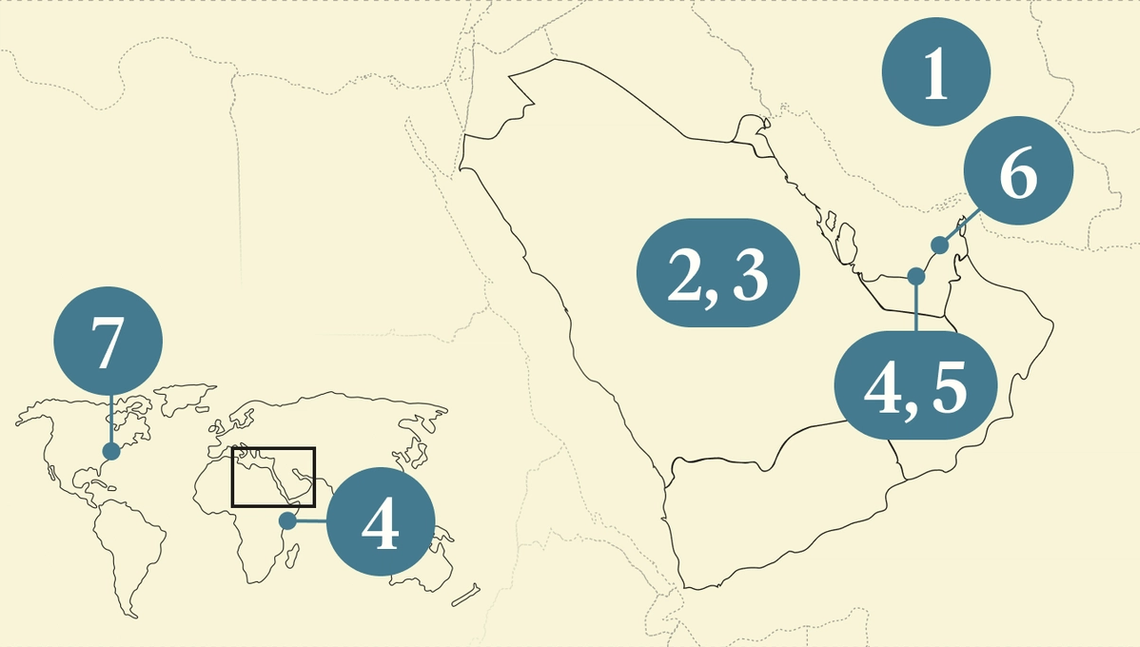 - Why Iran attacks the UAE
- Saudi spending surge
- Aramco’s new supercomputer
- ADNOC seeks safer drilling
- Abu Dhabi chemical growth
- Emirates profits climb higher
- Irrational markets
 Amb. Yousef Al Otaiba on why the UAE left OPEC, and other weekend reads. |
|
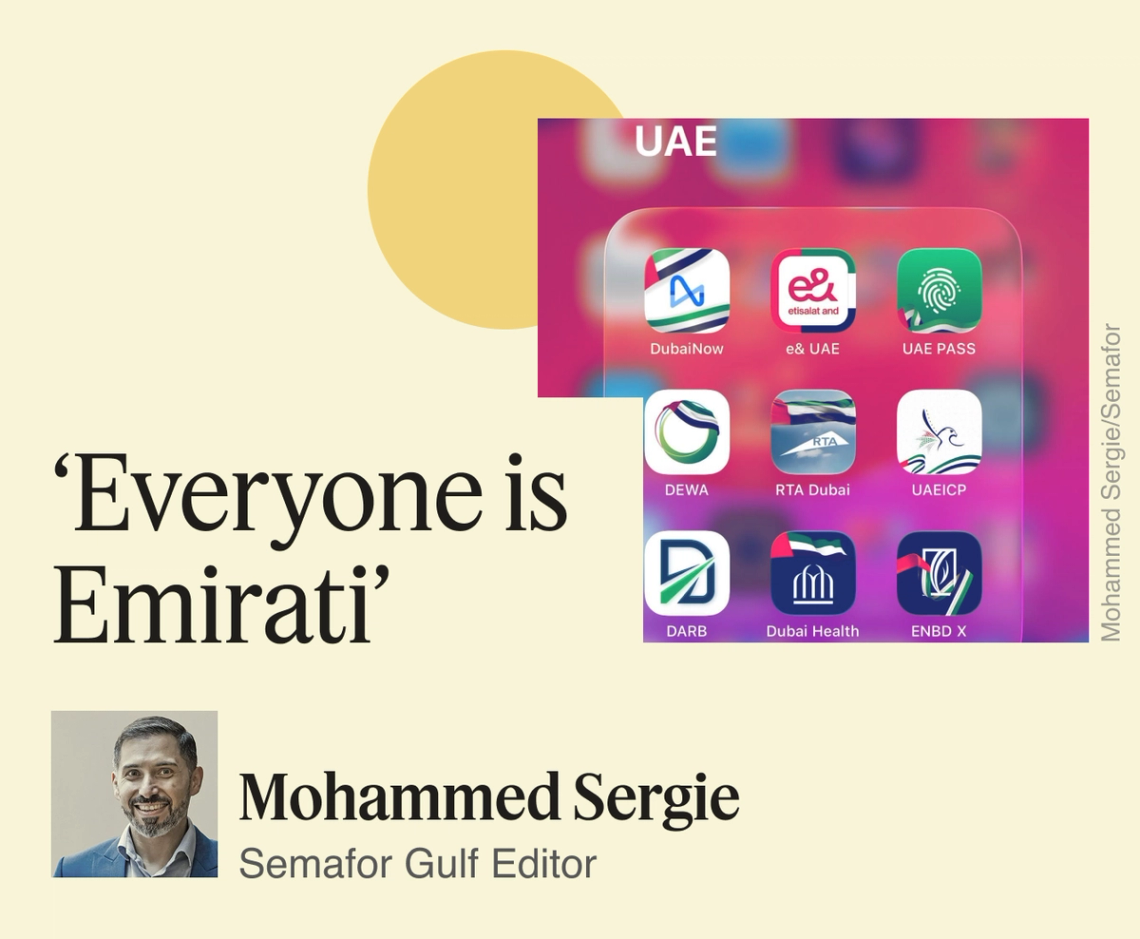 When a country comes under attack, rallying around the flag is instinctive. In this way, the UAE is no different: Even the apps here have been redesigned to reflect the mood, with fluttering standards overlaid on top of the usual logos. Across the country — and much of the Gulf — there is a palpable sense of pride in how the armed forces blunted the damage from thousands of Iranian missile and drone strikes. That appreciation extends beyond citizens to the more than 20 million expatriates who call the region home. (I’m grateful too for my family and property being kept safe.) Several Emiratis told me they were surprised by the solidarity coming from expats. Dubai Economic Development Corp. CEO Hadi Badri recently said the crisis was drawing communities together in new ways. This contrasts with the long-standing social divides between citizens and foreigners, and between wealthy professionals and the low-wage workers who keep Gulf economies running. An Abu Dhabi official told me this week that he is now regularly approached at gyms, restaurants, and mosques by expats expressing affection for the country — interactions he said were rare before the war. The reality, though, is more complicated than the billboards declaring: “In the UAE, everyone is Emirati.” Years ago, a Saudi royal court official reprimanded me for describing the kingdom as a land of conditional opportunity. But the concept still stands across the Gulf. People are welcomed to work, invest, and build lives here, as long as they remain economically useful and politically aligned. Lose your job and, unless you own property or qualify for long-term residency, it’s a quick exit from the Gulf. There are reports that some Iranians who spent decades in the UAE had their residencies revoked while abroad, despite holding golden visas that only need to be renewed once a decade. Even those granted citizenship are not immune: Ahmed Shihab-Eldin, a Kuwaiti-American journalist detained in Kuwait over his reporting, was recently stripped of his citizenship along with his two sisters. The Gulf isn’t unique in this. Anti-immigration politics are taking hold across the US and Europe too. While the communal feeling here is real, it has limits. But as long as opportunity exists, people will come — and generally accept the conditions attached to staying. |
|
Why the UAE is in Iran’s firing line |
 UAE President Sheikh Mohamed Bin Zayed meets with Iran’s parliamentary speaker Mohamed Bagher Ghalibaf in 2023. Mohamed Al Hammadi/UAE Presidential Court/Handout via Reuters. UAE President Sheikh Mohamed Bin Zayed meets with Iran’s parliamentary speaker Mohamed Bagher Ghalibaf in 2023. Mohamed Al Hammadi/UAE Presidential Court/Handout via Reuters.Iran is reviewing the latest US peace proposal, though its initial response was more measured than President Donald Trump’s optimistic assertion that a deal was “very possible.” If a concord can be struck and the war brought to an end, UAE residents will be among those breathing the biggest sighs of relief after their country was singled out for Iranian attacks again this week while other Gulf states were spared. Iranian officials denied responsibility for the attack on Fujairah Port on May 4, but also said the UAE “should not serve as a nest for Americans and Israelis and their military forces.” In response, the UAE said its international relations were a sovereign matter, and “no party has the right to use them as a pretext for threats.” UAE President Sheikh Mohamed bin Zayed had a rare phone call with Israeli prime minister Benjamin Netanyahu this week, following the latest Iranian attack. Still, Iran has always used the UAE as a route to international markets, and Dubai in particular was full of Iranian businesses and bank deposits before the war. That economic lifeline has now been cut. Tehran may also be seeking to exploit the schism between Abu Dhabi and Riyadh by creating “tension between the Emirati desire for retaliation and the Saudi wish for calm,” as The Economist put it. — Dominic Dudley |
|
Saudis go on ceasefire spending spree |
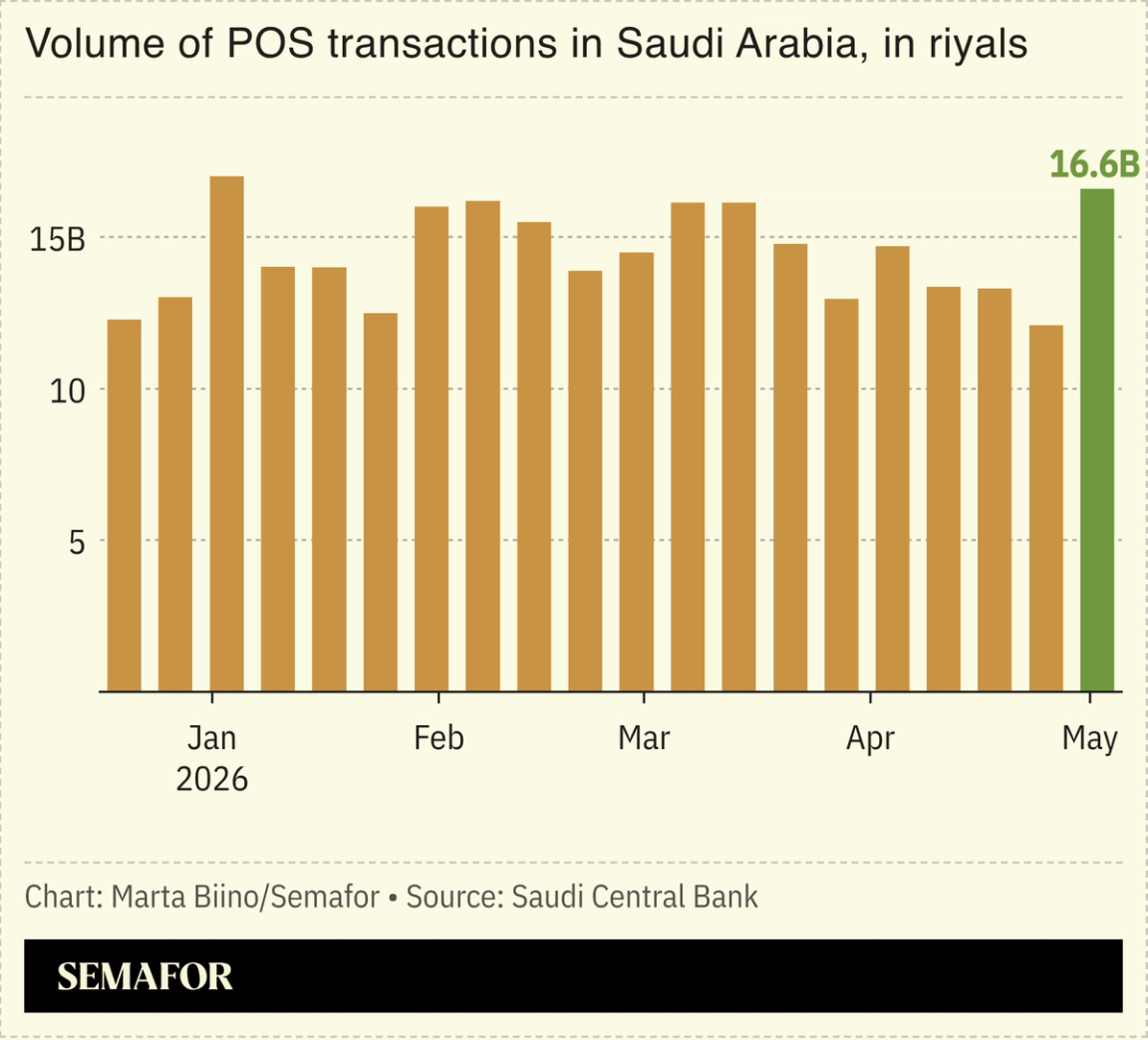 Consumer spending in Saudi Arabia rose by 38% in the week to May 2, one of the biggest swings on record, as a ceasefire in the Iran war and month-end salary payments sparked a wave of discretionary purchases. Saudis splashing out on restaurant meals and new clothes helped drive the spending data, the figures from the central bank show. The huge jump in spending compared to the previous week suggests the Gulf’s largest economy may be bouncing back from a slow start to the year, when it was limited by several large government projects being cancelled, and the Iran war shaking confidence and forcing many to stay at home. The kingdom’s purchasing managers’ index also rose to 51.5 in April, indicating a modest return to growth in its non-oil economy. — Matthew Martin |
|
Aramco’s AI push to boost oil output |
 The amount that Saudi Aramco is spending on a new supercomputer to accelerate the search for new oil and gas deposits and enhance output from existing fields. Once operational in early 2027, the system will offer seven times more compute capacity than Aramco currently has, enabling it to handle larger volumes of data for seismic imaging and reservoir simulations. The supercomputer, which is being developed with local firm Solutions by stc, is a clear sign of how Gulf oil producers are using technology to transform their oil and gas industries. Saudi Arabia’s AI national champion HUMAIN was in part born out of Aramco’s past investments in technology, while Abu Dhabi National Oil Co. has developed its own AI assistant and is working with US-based Gecko Robotics to create autonomous systems that can detect corrosion, predict failures, and optimize production — technology that can be sold on to other energy producers. |
|
ADNOC Drilling taps AI to cut rig workers |
 An oil rig in Iraq. Essam Al-Sudani/Reuters. An oil rig in Iraq. Essam Al-Sudani/Reuters.ADNOC Drilling is investing more in automating its drilling processes so it can pull people out of hazardous zones and reduce the number of workers on its rigs. The UAE national oil company subsidiary expects to invest approximately $1 billion in AI and technology in the coming year, its chief financial officer told Semafor, building on the roughly $1 billion spent to date. Despite Iranian attacks on energy infrastructure across the Gulf, Youssef Salem said drilling operations have not been materially affected and the company expects to surpass $5 billion in revenue this year, exceeding last year’s record. It is also expanding into new markets through partnerships, prioritizing plays in Bahrain, Kuwait, and Oman where governments are planning to boost output capacity. He remained silent, however, on the question of whether ADNOC Drilling would be open to doing business in Iran at some point. — Kelsey Warner |
|
Abu Dhabi plans $10B chemicals push |
 Christopher Pike/Reuters Christopher Pike/ReutersAbu Dhabi’s state-backed chemicals platform is considering a $10 billion investment to significantly expand output at Ruwais Industrial City — one of the first big moves made since the government launched a campaign to expand domestic production of critical goods in late April. The expansion also aligns with a strategy to capture more value from its oil and gas resources. TA’ZIZ, which is owned by national oil company ADNOC and sovereign wealth fund L’IMAD Holding Co, is exploring a potential project with IHC’s Alpha Dhabi Holding that could produce 2.2 million tons a year of chemicals used in automotive manufacturing, construction, consumer goods, and packaging. The new plants are intended to replace some imports and boost the UAE’s domestic industrial base, and would build on TA’ZIZ’s existing portfolio of ammonia, methanol, and PVC projects that are expected to reach 4.7 million tons a year of output by 2029. Separately, TA’ZIZ secured $2 billion in financing for a methanol plant from 11 regional, Asian, and European banks. — Mohammed Sergie |
|
Emirates hits record profits |
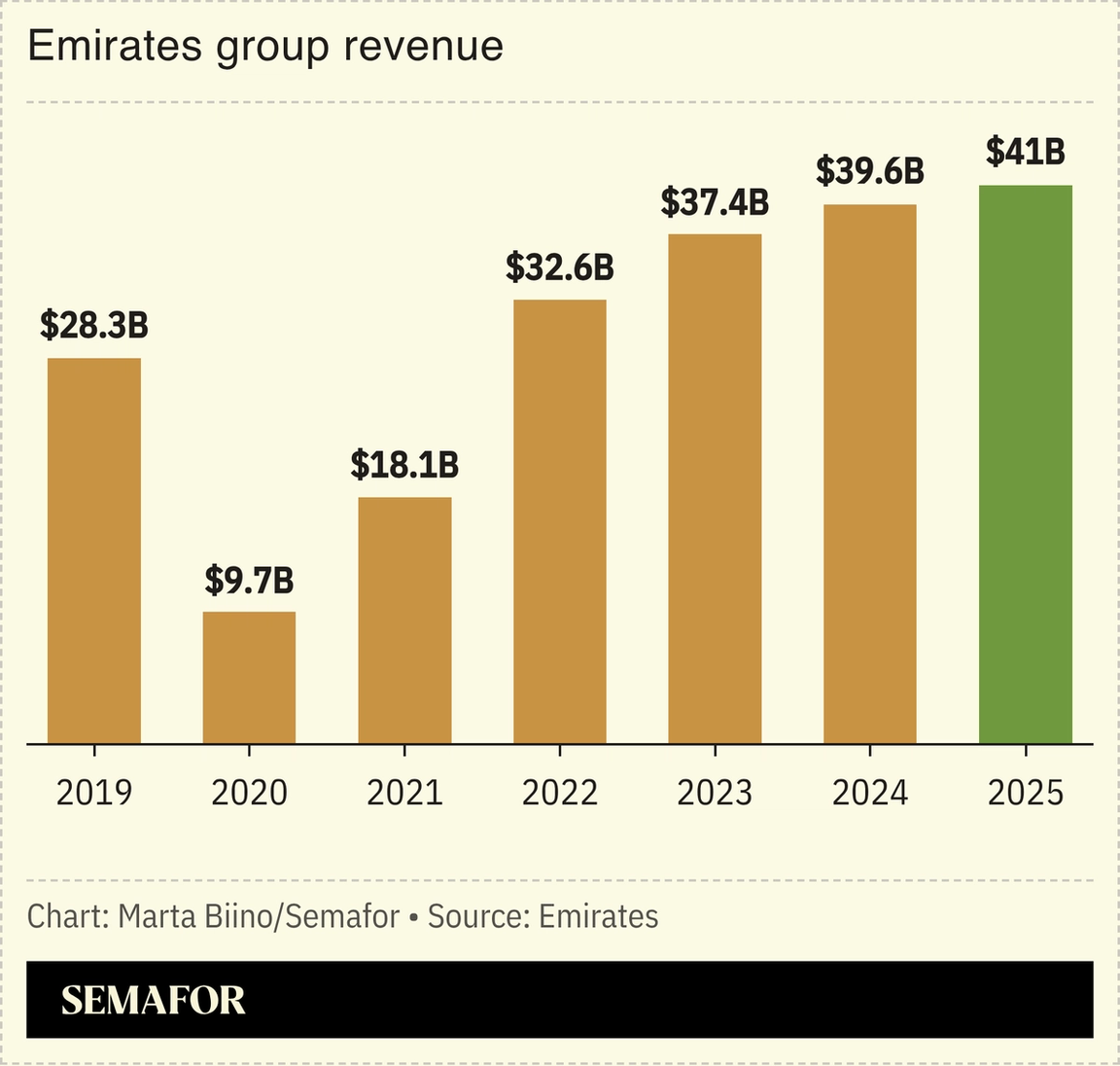 Dubai-based airline Emirates posted record annual profits for the third consecutive year, allowing it to hold on to its claim of being the world’s most profitable carrier despite the Iran war effectively shutting down its home airport at the end of the reporting period. The airline had a pre-tax profit of 24.4 billion dirhams ($6.6 billion) for the financial year ending March 31, up 7% year-on-year. However, passenger numbers were slightly down, slipping 1% to 53.2 million over the year, in a sign of the disruption caused by the regional conflict. The war came at a time when Gulf aviation was entering a newly competitive era, with Riyadh Air preparing to launch to take on Emirates, Etihad, and Qatar Airways. The conflict that began on Feb. 28 changed the industry’s outlook, at least temporarily. On March 1, Emirates flew just 24 flights. It has since partially restored much of its operations, with cargo ramping up to cover some of the lost passenger revenue. |
|
Semafor World Economy consensus: ‘Mispriced’ |
 War has destabilized a region the world relied on for oil and capital, and closed a critical trade route — yet stock markets are at record highs and oil prices remain relatively muted. How does that make sense? It doesn’t, was the consensus among leaders at Semafor World Economy, according to an analysis of interviews with more than 300 people at last month’s convening in Washington, DC, using Semafor’s proprietary AI tool. Semafor Intelligence parsed the full onstage record across five days, distilling nearly 5,000 distinct claims, and found that executives and policymakers mostly agreed that investors were making a dangerous bet that the conflict would end quickly and cleanly. “The market is discounting where we really are at its own peril,” said Amos Hochstein, former energy and national security adviser to President Joe Biden. Harvey Schwartz, CEO of the Carlyle Group, said geopolitical risk was “mispriced.” Sadek Wahba of I Squared Capital warned that the damage to Gulf energy infrastructure “will take years to rebuild.” Business leaders with ties to this region, meanwhile, were cautiously optimistic about a postwar comeback and took time to reaffirm commitments, including Hilton on hotel deals, and Harbourvest with its Abu Dhabi office. On the big question of whether the deep-pocketed Gulf sovereign wealth funds will keep investing, Meta President Dina Powell McCormick said she didn’t see state-backed investors waiting on deals. |
|
 Defense |
|
|


