| | France’s aircraft carrier heads to the Gulf, airlines warn of fuel price spikes, Africa boosts its e͏ ͏ ͏ ͏ ͏ ͏ |
| |  | Flagship |  |
| |
|
The World Today |  - French force heads to Gulf
- The ‘chokepoint economy’
- Fuel spike hits air fares
- Emirates restores flights
- Africa’s oil sovereignty
- US ups LatAm influence…
- …and Japan eyes Asia
- Weary UK goes to polls
- SpaceX looks past Falcon
- NASA’s life on Mars
 An ‘eye-opening’ book about the new world economic order. |
|
French carrier heads to Gulf |
 Stefanos Rapanis/Reuters Stefanos Rapanis/ReutersFrance’s only aircraft carrier headed toward the Arabian Gulf, oil fell below $100 a barrel, and stocks rose on optimism that US-Iran talks could lead to a durable peace. Tehran is reportedly expected to respond today to an American proposal to end the conflict, which has largely been in stasis for weeks beyond sporadic attacks, but has left the Strait of Hormuz shut: Roughly 2,000 ships are stranded in the Gulf and insurance premiums are four to five times normal rates. Britain and France have gathered a coalition of 50 nations to provide visible escorts once the strait is reopened, aiming to also demonstrate that Europe believes it has some independent diplomatic and defensive clout. |
|
The new ‘chokepoint economy’ |
 Kris Tripplaar/Getty Images for Semafor Kris Tripplaar/Getty Images for SemaforCorporate leaders are increasingly prioritizing resilience as the world’s vulnerability to key chokepoints comes into view, an analysis of hundreds of interviews carried out by Semafor found. The report parsed onstage conversations across five days at Semafor World Economy in Washington, DC, last month, examining nearly 5,000 distinct claims using Semafor’s proprietary AI tool. Among the consensus arguments at SWE: Markets are underpricing the fallout of the Iran war, China is outpacing the US on key fronts in the AI race, and worries over risks in private credit are proliferating. Overall, executives brimmed with optimism, but acknowledged that channels of trade had narrowed while power and risk had concentrated. |
|
Airlines warn of further fare spikes |
|
Gulf flights slowly resume |
 Stringer/Reuters Stringer/ReutersFlights via the Gulf are being restored as the Iran conflict remains quiescent, but tourists are staying away from the region itself. Emirates airlines reported record profits in the year to March, and said it had recommenced 75% of routes. UAE airspace fully reopened on May 2, while Etihad — Emirates’ local rival — and Qatar Airways are both running most of their prewar schedule. But European carriers have still suspended most routes, and Dubai’s recently buoyant tourist sector has been devastated: Hotel occupancy was at 80% in February, but has fallen to 10% now, according to Moody’s. In total, global airlines have cut about 2 million seats from their capacity for May, the Financial Times reported. |
|
Africa seeks self-reliance |
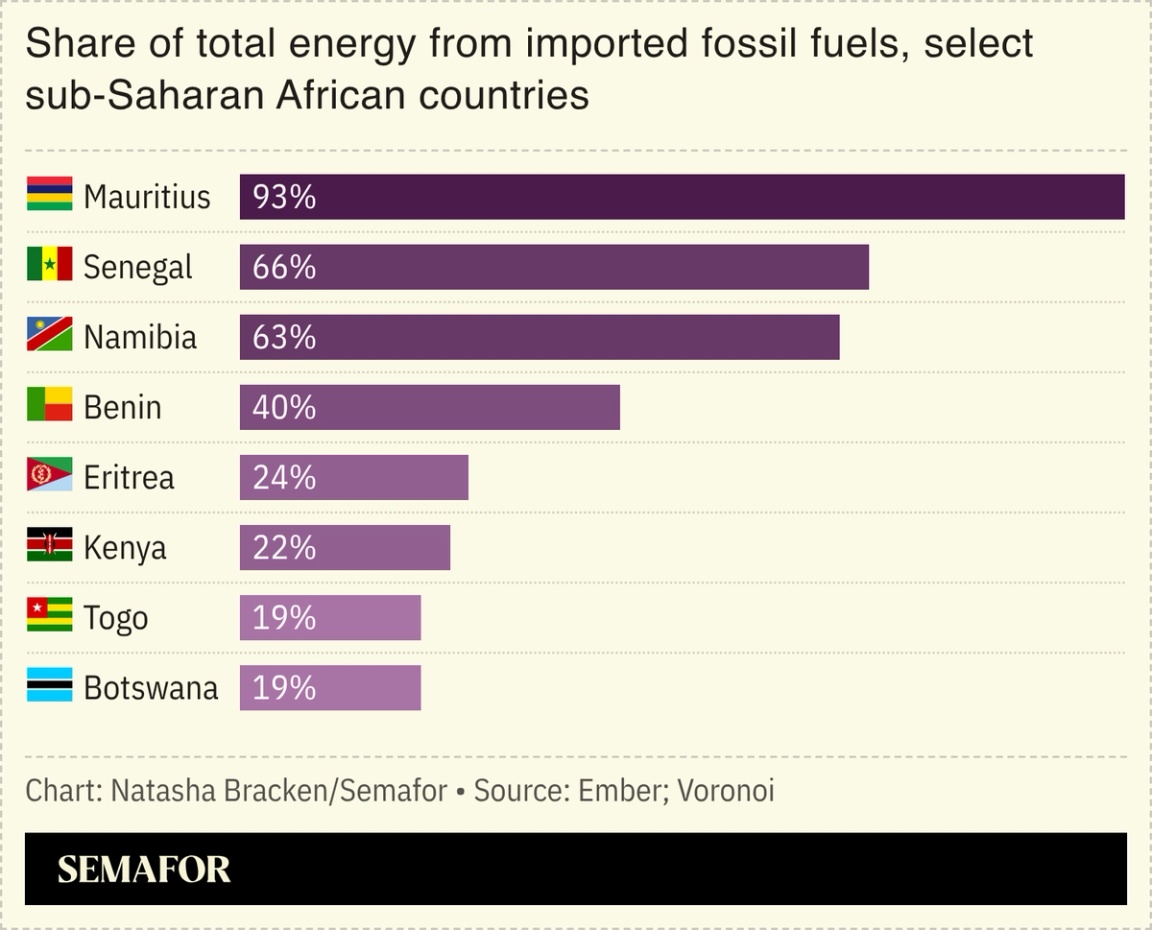 African nations boosted efforts to become more self-reliant after the Iran war exposed a dependency on key imports. Kenya — which gets almost a quarter of its energy from imported fossil fuels — produced oil for the first time, though the output remains a fraction of its needs. Angola’s Cabinda oil refinery, meanwhile, began shipping fuels, helping one of Africa’s biggest crude producers reduce its reliance on gasoline imports. And Aliko Dangote, Africa’s richest man, unveiled plans to create the world’s largest fertilizer company, days after saying he would open another massive oil refinery: His existing one, in Nigeria, could soon become the world’s biggest, while the new one will be in East Africa. |
|
US expands LatAm influence |
|
Japan expands Asia influence |
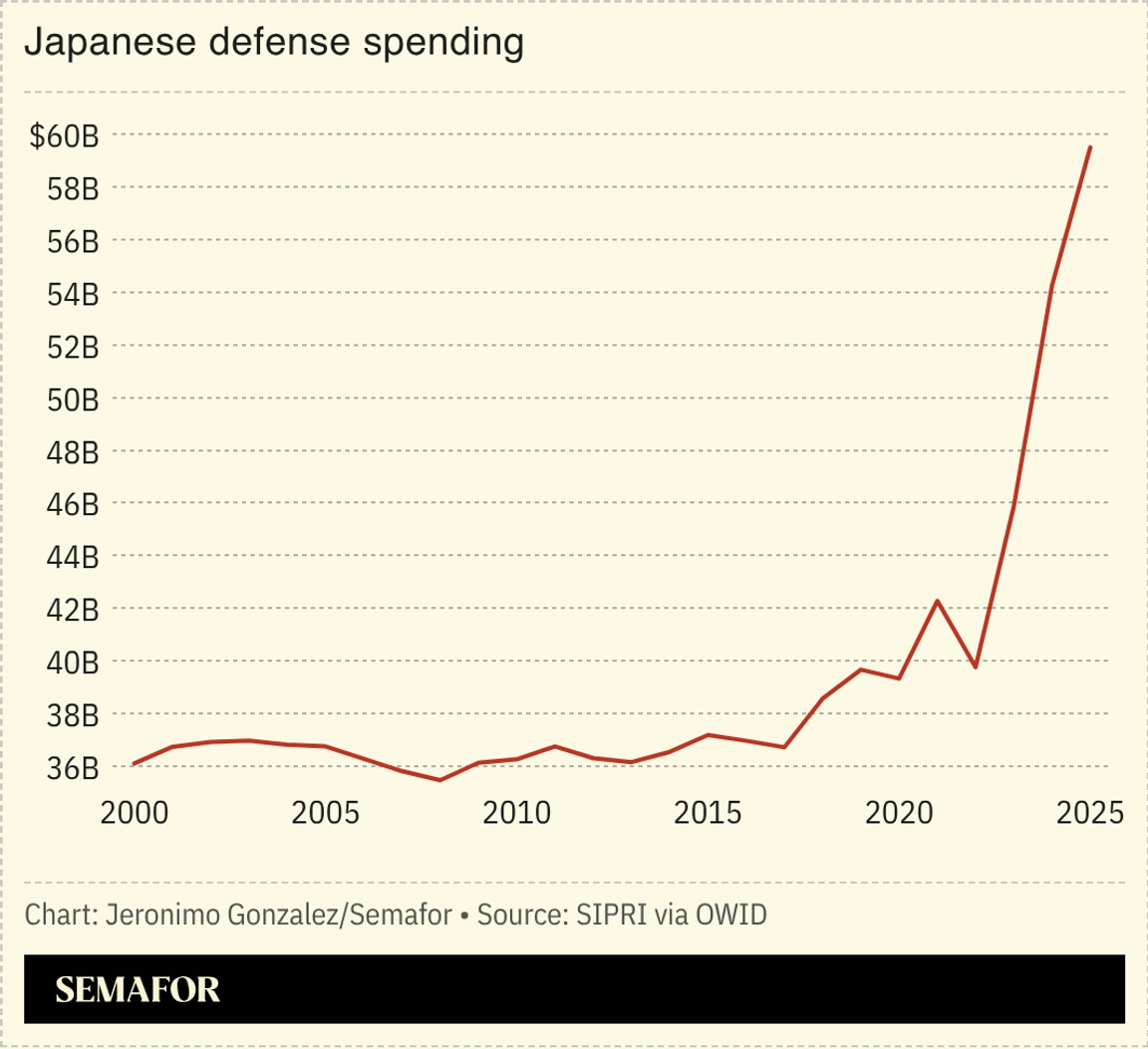 Japan is reasserting its military presence across Asia amid rising worries of Chinese aggression and doubts over US commitment to the region’s security. Japanese Prime Minister Sanae Takaichi — who last year drew Beijing’s ire after saying her country could become involved militarily if Taiwan was attacked by China — visited Australia and Vietnam recently as she looked to bolster security ties. Her defense minister, meanwhile, met with his Indonesian counterpart, and is set to visit South Korea next month. However, Tokyo’s security push, which has included lifting restrictions on arms shipments for the first time since World War II, could be undermined by China’s commercial might: While Japan has expanded militarily, economically it is “losing ground,” an expert said. |
|
 There’s a reason more than 200,000 investors trust Opening Bell Daily. It’s the newsletter Wall Street actually reads. Get the best market analysis, insider picks, and actionable ideas in one daily briefing. Subscribe for free. |
|
UK elections a test for Starmer |
|
SpaceX wants more powerful rocket |
 NASA/Bill Ingalls/Handout via Reuters NASA/Bill Ingalls/Handout via ReutersSpaceX may be looking beyond the world’s most successful rocket to build a much more powerful launch vehicle. The Falcon 9 rocket is the workhorse of the modern space industry, launching 165 times last year alone, 12 times more than Saturn V did in its entire career. But this year its launch numbers will dip for the first time in years, to around 145. The rocket itself is fine, Ars Technica reported, but SpaceX is eager to shift focus to the much larger Starship, capable of carrying many times the payload, making orbital data centers and Mars missions plausible. Rival Blue Origin has only just cracked the reusable-rocket tech that Falcon mastered; SpaceX may already be moving a generation beyond it. |
|
|


