| | Optimism rises over the prospect of a US-Iran peace deal, a new GLP-1 pill sees blockbuster demand, ͏ ͏ ͏ ͏ ͏ ͏ |
| |  SUNDERLAND SUNDERLAND | BERLIN |  BEIJING BEIJING |
 | Flagship |  |
| |
|
The World Today | 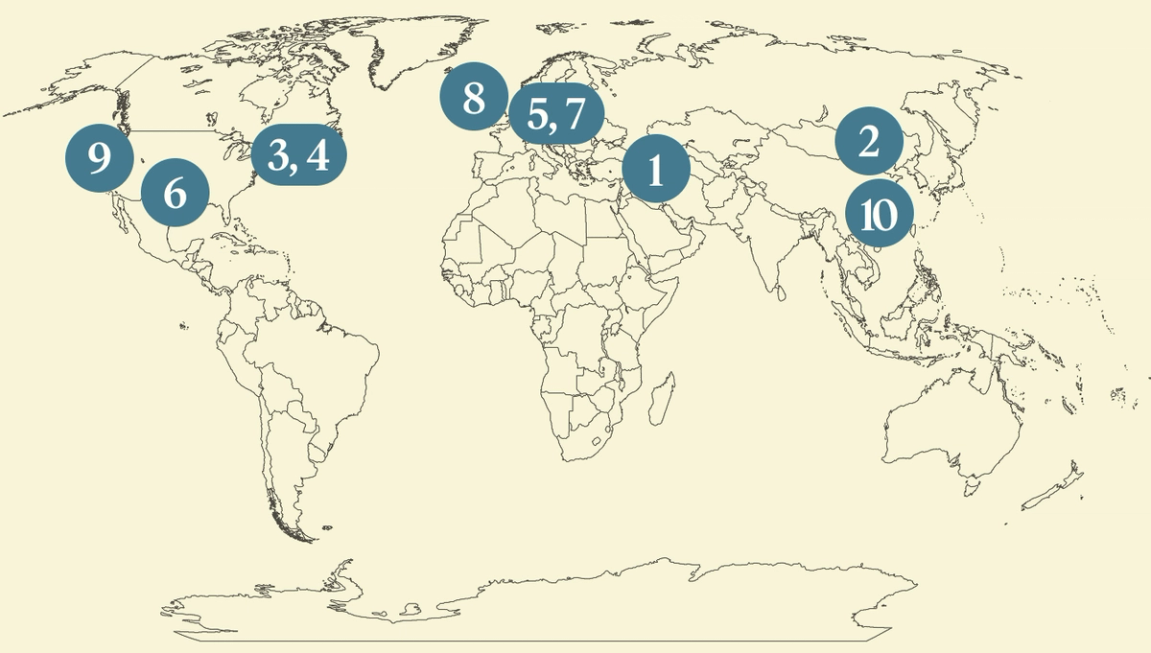 - US-Iran peace deal optimism
- China’s Iran diplomacy
- US consumer spending strong
- Billionaires push back
- High demand for GLP-1 pill
- Anthropic wants to go orbital
- One year of Chancellor Merz
- Kids bypass age checks
- Flood of AI-generated sites
- New wheat hybrid drops
 How Ted Turner changed the news. |
|
Stocks climb on US-Iran optimism |
 Brendan McDermid/Reuters Brendan McDermid/ReutersStocks climbed globally and oil prices fell Wednesday on optimism that the US and Iran were nearing an end to their stalemate in the Strait of Hormuz. Tehran said it was reviewing a proposal from Washington to end the war; the US reportedly presented a memo that would gradually open the strait and lift the dual blockade. US President Donald Trump has voiced optimism on the prospect for a deal, boosting markets. “We remain on the path towards de-escalation,” an analyst said, though “that path is clearly a rough one.” With gas prices rising and a high-stakes trip to China around the corner, “Trump’s looking for an exit,” Semafor’s DC team wrote. |
|
China renews call for Hormuz reopening |
 China’s Ministry of Foreign Affairs/Handout via Reuters China’s Ministry of Foreign Affairs/Handout via ReutersChina pushed for the reopening of the Strait of Hormuz after hosting Iran’s foreign minister, an exchange that reflected Beijing’s fraught position in the conflict. China’s renewed call for a ceasefire comes as the Trump administration has urged Beijing to wield its influence with Tehran to unblock the waterway. The move could also elevate energy issues on the agenda when US President Donald Trump meets with Chinese leader Xi Jinping next week. A failure to end the war by then could give Beijing additional leverage, Bloomberg wrote. China is caught between preserving ties with Iran, wanting global energy flows to resume, and striving to maintain US relations before the summit. Hormuz is “increasingly a pressure point” in US-China negotiations, an analyst said. |
|
Americans still spend on rides and resorts |
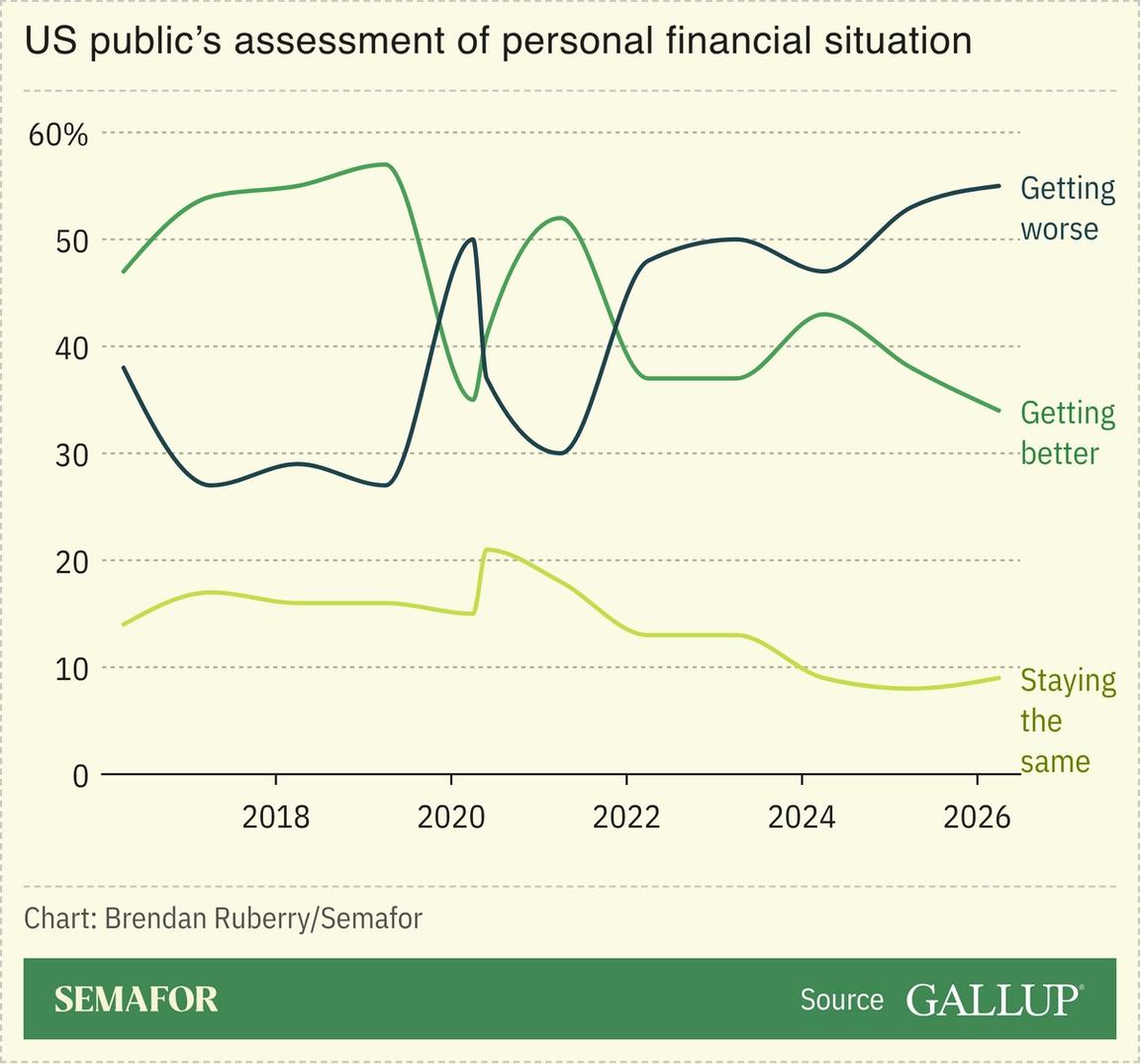 Spending among Americans is holding up despite the volatility of the Iran war — at least according to two giant US consumer brands. Disney said demand at its parks and resorts is healthy, while Uber’s CEO said spending on rides and delivery orders remains “really strong… we don’t see any signs of that weakening at this point.” The results suggest rising gasoline prices in the US haven’t yet dampened demand among households. However, the US Commerce Department’s advance estimate of first-quarter GDP projected that consumer spending was slowing, and a new Federal Reserve Bank of New York report noted that lower-income Americans are cutting back on gas purchases. Travelers are increasingly looking for alternative destinations as airfares soar, Bloomberg reported. |
|
At Met and Milken, ultra-rich push back |
 Daniel Cole/Reuters Daniel Cole/ReutersGlitzy events on opposite ends of the US this week served as platforms for the nation’s ultra-wealthy to push back on populist resentment. At New York’s Met Gala, Google co-founder Sergey Brin said he’s “very happy” after leaving California, which is debating a wealth tax he opposes. At the Milken Institute Global Conference in California, Citadel’s Ken Griffin said his company is shifting investment to Miami after New York City’s mayor singled him out in a video on tax day. The growing divide between the wealthy and lower-income Americans getting squeezed by higher gas prices is “stirring billionaire backlash,” Bloomberg wrote. |
|
Novo sees strong demand for GLP-1 pill |
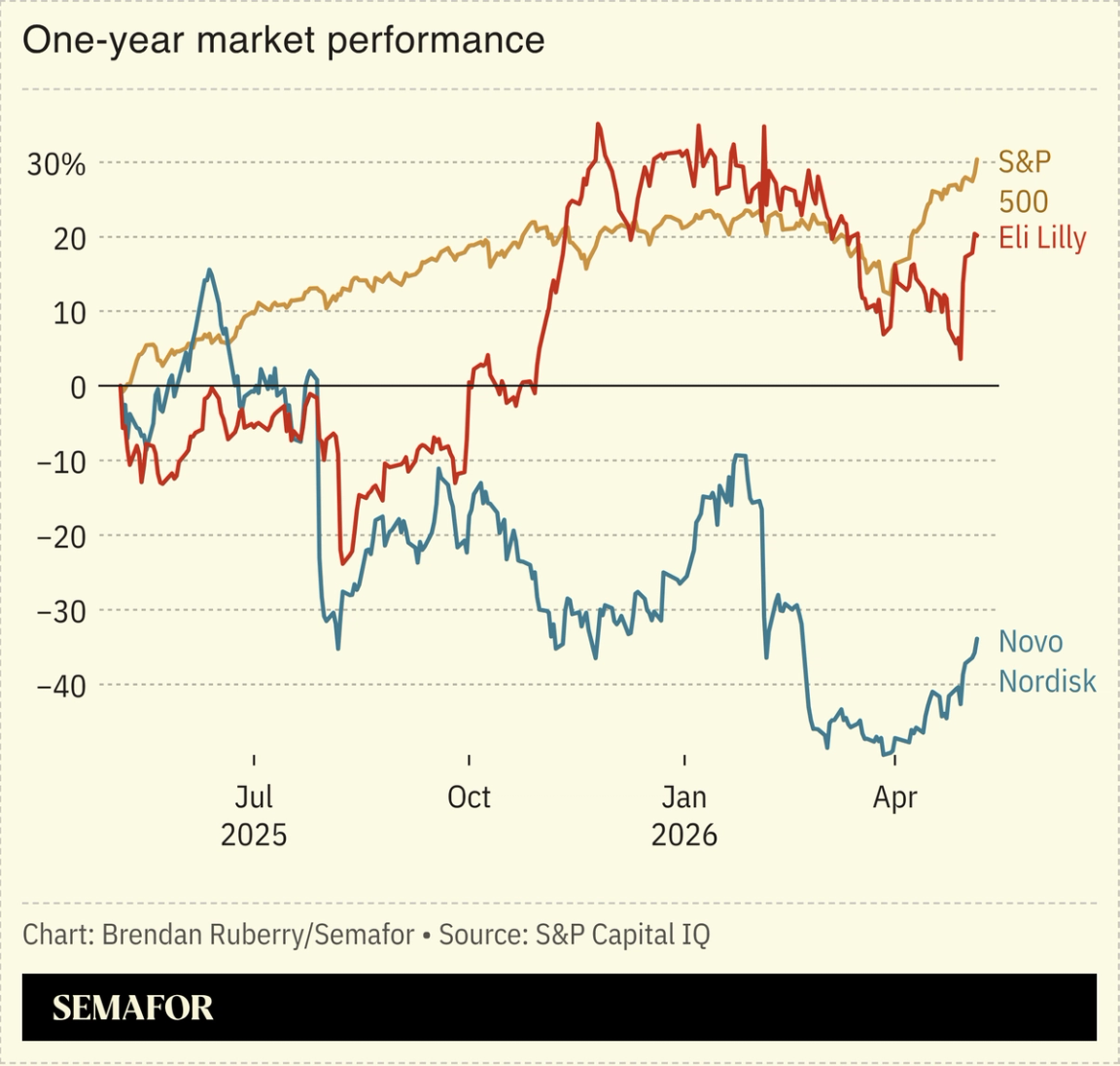 Novo Nordisk’s new weight loss pill is proving more popular than expected, boosting the company’s shares as it looks to rebound from a prolonged slump. The Danish pharmaceutical giant was briefly Europe’s most valuable firm thanks to Ozempic, but has since struggled to keep up with American rival Eli Lilly. Novo said Wednesday that its Wegovy medication saw some 1.3 million prescriptions in the first quarter of 2026. Its CEO said Novo has benefited from the “peptide craziness” in the US, referring to the wellness boom around injectable peptide therapies — short chains of amino acids increasingly marketed as health hacks. Competition is set to intensify in the second quarter: Lilly last month rolled out its weight-loss pill Foundayo, which isn’t a peptide. |
|
More momentum for space data centers |
 Mike Blake/Reuters Mike Blake/ReutersSpaceX on Wednesday announced a partnership with Anthropic, giving the AI lab access to massive amounts of the compute it needs in order to grow. Anthropic will use one of SpaceX’s data centers, increasing usage limits for customers writing code with AI tool Claude. But the companies pointed to an even bigger opportunity: Anthropic wants to work with SpaceX on one of its long-term goals of building enormous data centers in space. Orbital tech provides many of the conditions ideal for data centers — away from humans, cold, solar-powered — though it would be a massive technical feat. The partnership hands a big win to OpenAI’s biggest competitor at the peak of SpaceX CEO Elon Musk’s public and legal feud with OpenAI. |
|
Merz marks one year in office |
 Christian Mang/Reuters Christian Mang/ReutersGermany’s chancellor is falling behind on his core goals one year into his tenure, analysts argued. Friedrich Merz took office with the aim of restoring Berlin’s leadership in Europe and bridging a frayed transatlantic relationship. But the center-right leader’s recent comments on the US’ Iran war strategy have antagonized President Donald Trump, while a German far-right opposition party is surging in polls. Some are now questioning how long Merz’s struggling coalition can hang on, Bloomberg reported. He is beset by “a tendency to speak forcefully before calculating the consequences,” Politico wrote. But a British commentator argued Merz has shown leadership on defense and security, backing Ukraine while ramping up defense spending at home. |
|
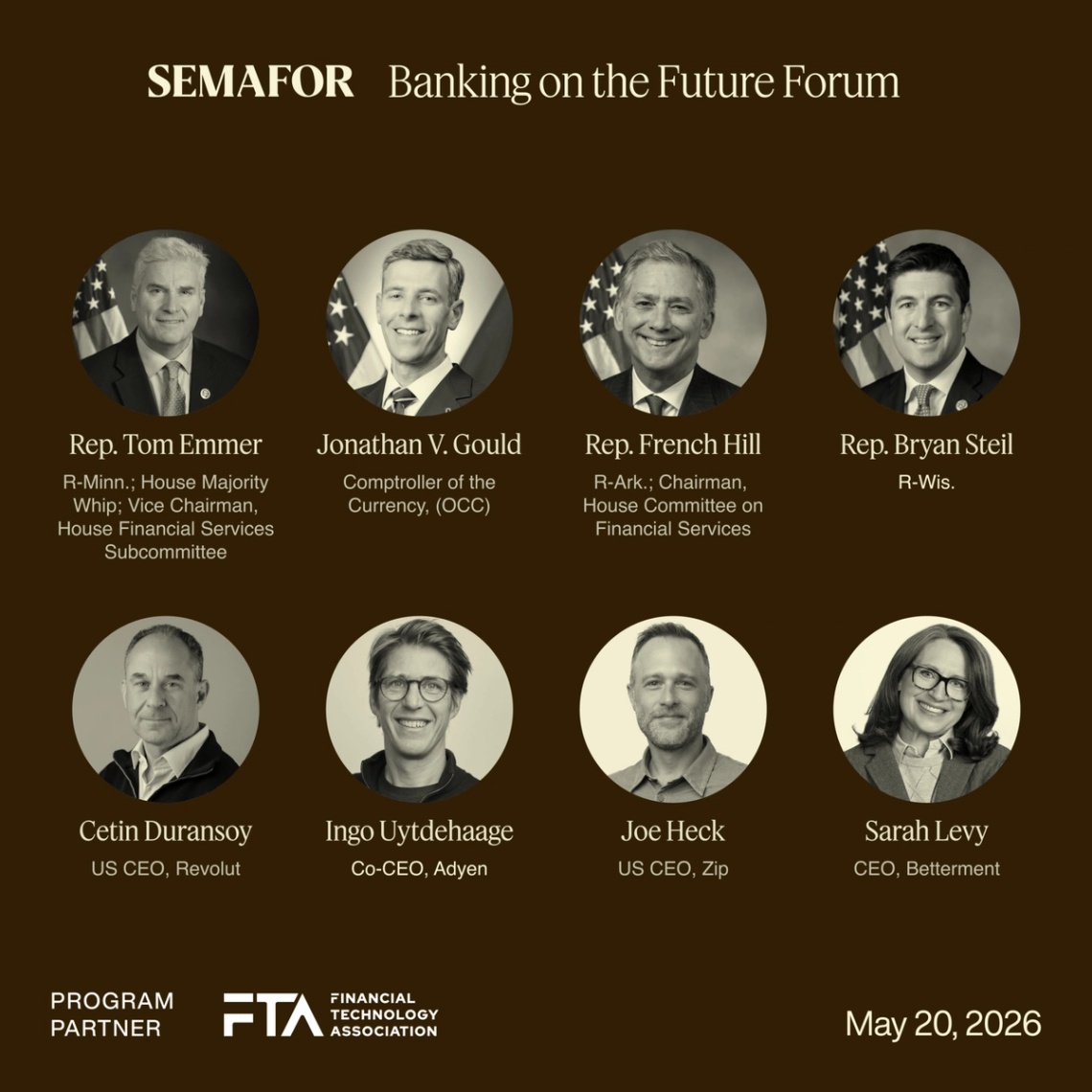 The global financial landscape is evolving at a pace unseen in previous years, propelled by the adoption of new technologies and rapid innovation. As Washington’s regulatory approach evolves, new opportunities are emerging, but questions remain around how these policy shifts will impact the industry and how consumers access services. On Wednesday, May 20, Semafor will convene the Banking on the Future Forum in Washington, DC, with on-the-record conversations featuring Rep. Tom Emmer, R-Minn., House Majority Whip and Vice Chairman of the House Financial Services Subcommittee; Jonathan V. Gould, Comptroller of the Currency; Rep. French Hill, R-Ark., Chairman of the House Financial Services Committee; Rep. Bryan Steil, R-Wis.; Sarah Levy, CEO of Betterment; and other industry leaders, on how policy and technology are steering the industry’s trajectory. Join us as we examine how evolving regulations are shaping innovation and what they signal for the future of financial technology.
|
|
Kids use mustaches to bypass age checks |
 Hollie Adams/Reuters Hollie Adams/ReutersChildren claim to be bypassing facial recognition age checks by wearing false mustaches. The UK, among other countries and many US states, rolled out age-check laws on sites hosting adult content last year. Smartphone manufacturers have rolled out software updates to help users verify their age, and websites rely on either government ID, image-recognition software, or algorithmically assessing age via usage patterns. But enterprising children have already found workarounds, TechCrunch reported: Pointing their webcam at grown-up video game characters, or simply pulling funny faces, appears to fool the system in many cases. UK visits to adult sites have plummeted, although VPN use is up. |
|
One-in-three new websites may be AI |
A third of new websites appear to be AI-generated. The advent of AI chatbots has given rise to the “dead internet theory”— that the web is increasingly bots talking to bots, and that content is ever more stylistically homogenous and factually unreliable. Researchers used an AI detection tool on thousands of websites on the Internet Archive; they found the tool flagged roughly 0% as containing AI content in 2022, but 35% by mid-2025. However, it did not find that the sites had become detectably less accurate or more similar in style, although it did find that the range of ideas expressed had reduced somewhat and that AI-generated content is making the web a more cheerful place. |
|
|


