| | In this edition: Midwestern election postmortem, Biden is back, and the Iron Dome fight.͏ ͏ ͏ ͏ ͏ ͏ |
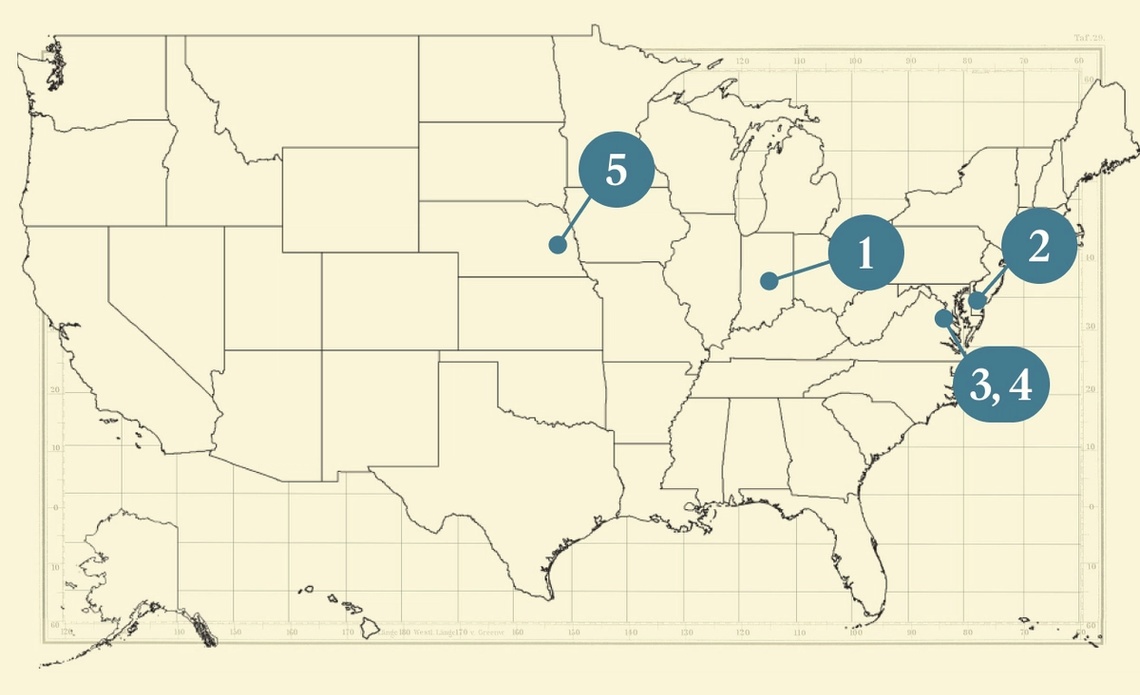
| |  OMAHA, NE OMAHA, NE |  INDIANAPOLIS, IN INDIANAPOLIS, IN |  WILMINGTON, DE WILMINGTON, DE |
 | Americana |  |
| |
|
 - Midwest election postmortem
- Joementum regained?
- Shots to the Dome
- War views, polled
- Cornhusker message battle
|
|
 The growing conventional wisdom is that the “gerrymandering wars” of 2025-2026 will end in a draw. That’s better than Democrats expected at the start, but they shouldn’t celebrate yet. In two elections — last night’s Indiana primaries, and last month’s Virginia referendum — both parties learned that their voters will, if given the chance, eliminate the other party’s seats. That brings up an important reminder: There will be more chances to draw maps again for 2028, thanks in part to the tit-for-tat President Donald Trump started in Texas last year. And Republican-led states which aren’t re-districting right now, because they ran out of time, are expected to jump in come 2027. It may start with Indiana; it will definitely take advantage of the Supreme Court’s Callais decision, which ended the 40-year old requirement for map-makers to create majority-minority districts and put a ceiling on the number of seats southern Republicans could draw for themselves. “To paraphrase Nathan Hale, I only regret that we have but one seat to take from the Democrats,” said Tennessee state Rep. Gino Bulso this week. He was gleeful about the forthcoming special session that will eliminate the Memphis-based 9th Congressional District and split the 63% Black city into multiple Republican seats. His quote captures the near-religious confidence Republicans have about their electoral project. Their goal isn’t just winning seats in the next few elections; it’s to make a House majority impossible for the current version of the Democratic Party by undoing what they see as the errors of 1965 — the Immigration and Nationality Act and the Voting Rights Act. So, while House Minority Leader Hakeem Jeffries has quieted some rebellious voices by campaigning for aggressively redrawn congressional maps, Democrats should be aware of how dogged their opponents are willing to get. We may be getting a picture of it in Virginia, where Louise Lucas, the state-level Democratic leader who spearheaded a favorable new map, had her office raided by the FBI on Wednesday. |
|
An election night with upsides for both parties |
 Nathan Howard/Reuters Nathan Howard/ReutersThe ouster of at least five Indiana GOP state senators who opposed mid-decade gerrymandering marked a victory for President Donald Trump and allies who swooped in to purge the rebels — but Democrats also got something to cheer on Tuesday. In mid-Michigan, they dramatically increased their margin in an open state Senate seat, locking in their control of the chamber despite a Republican push to flip it. In Michigan, veteran Chedrick Greene easily won a Saginaw-based seat that now-Rep. Kristen McDonald Rivet flipped in 2022, then left to run for Congress. (Gov. Gretchen Whitmer took months to schedule the election, sparking GOP protests.) Greene ran well ahead of the last Democratic margins in each part of the district, overperforming in towns carried by Trump. Back in Indiana, Trump’s operation started targeting Indiana’s “RINO” senators as soon as they rejected a plan to eliminate the state’s two Democratic House seats, which would have meant slicing Indianapolis into multiple districts. State Sen. Greg Goode survived; state Sen. Spencer Deery was headed to a recount; and the others were defeated. “There are consequences for not representing your voters,” said Sen. Jim Banks, whose PAC spent to beat the Republicans who’d voted no. |
|
Why Biden went back to campaign season sooner than others |
 Jim Vondruska/Reuters Jim Vondruska/ReutersJoe Biden made the first primary endorsements of his post-presidency this week — and he did so earlier, relative to when he left office, than his recent Democratic predecessors. He didn’t follow the path of both former Presidents Bush, who withdrew from partisan politics when their terms ended, apart from some fundraisers and endorsements of family members. And Biden did so, in both cases, because he was asked to. He recorded endorsements for Massachusetts congressional candidate Dan Koh and Georgia gubernatorial candidate Keisha Lance Bottoms. According to Koh, Biden’s favorable rating with Democrats in his safe blue district was above 80%: “I think, with Trump’s aggression, people even more so realize that his leadership, both as a person and from his policies, are sorely missed.” |
|
The new Democratic litmus test on Israel: Iron Dome |
 Liesa Johannssen/Reuters Liesa Johannssen/ReutersIt started with Rep. Alexandria Ocasio-Cortez, D-N.Y., saying she’d no longer support US funding for Israel’s Iron Dome missile defense system. Now more Democrats in deep-blue seats are agreeing with her. Both Pennsylvania state Rep. Chris Rabb and New Jersey physician Adam Hamawy told Semafor they’d oppose funding for Iron Dome if elected — marking a new, specific benchmark for progressives seeking to distance themselves from an Israeli government that’s deeply unpopular with the Democratic base. “Their job is to defend themselves. That’s not our job, sending money over to do that,” said Rabb. “Why is that our responsibility?” Hamawy said that it was time for Americans to stop “pretending that our laws don’t apply” on aid to Israel. “We have a law in place which says that we shouldn’t be supporting any government that is committing atrocities or genocide or violating international law with any military assistance. So, that includes the Iron Dome. We can’t keep saying that the exception is Israel.” The US has provided $1.3 billion for Iron Dome since fiscal year 2011, according to the State Department, as part of a broader $3.4 billion infusion for Israeli missile defense. Trump has also used the project as an inspiration for his proposed “Golden Dome” domestic missile defense system, which carries an estimated price tag of at least $175 billion. |
|
Iran diverges from past public support for US presidents’ wars |
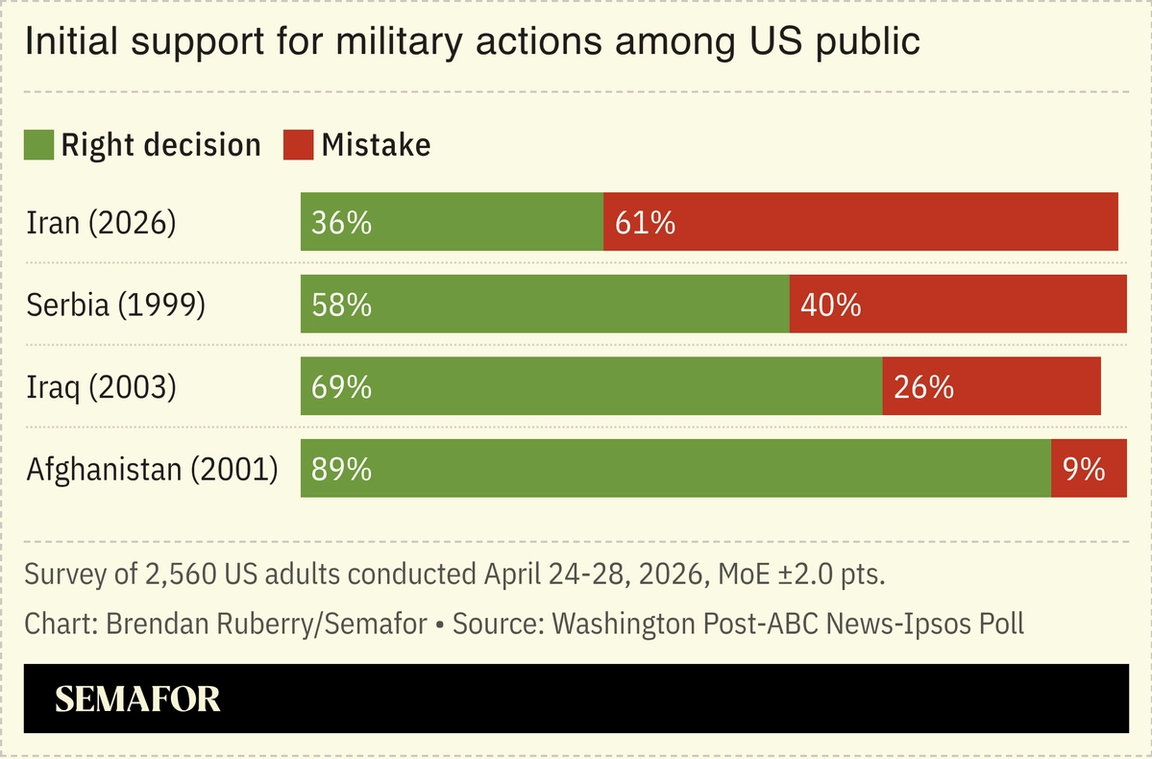 Trump’s decision to help Israel strike Iran continues to depress his overall favorable ratings, no matter what’s announced and no matter how the markets react. This is the latest set of polls to capture the public’s anti-war mood, which Trump himself once capitalized on by vowing to avoid “endless wars.” While the administration wants to focus on the low casualties and absence of ground troops, the reality hasn’t changed. Fifty-six percent of all adults oppose Trump “using the U.S. military to force changes” in other countries, and they’re now split down the middle on which party is inherently better at handling “Iran” and handling “the economy.” Trump still benefits from the unpopularity of Democrats, whom most voters see as too liberal and don’t trust on crime or immigration. Most voters say they trust neither party on AI, which makes sense: Republicans have taken an AI-booster stance that clashes with some of their voters’ lifestyle worries, and Democrats have a muddled position. But prior presidents got a boost, at least initially, from declaring war. This war has proven an enduring problem for Trump and his party. |
|
Democrats jostle in Nebraska’s ‘blue dot’ |
 John Cavanaugh For Congress/YouTube John Cavanaugh For Congress/YouTubeNebraska’s 2nd Congressional District is one of just two that elected a Republican to Congress in 2024 while supporting Kamala Harris for president. Then Rep. Don Bacon’s retirement kicked off the most competitive Democratic primary for the seat in years — a primary that’s partly about the next presidential election. In “Blue Dot,” Democratic strategist Denise Powell warns that state Sen. John Cavanaugh, if he wins the race, would have his replacement picked by Republican Gov. Jim Pillen — who wants to stop Nebraska from splitting its electoral votes by district and finish the Trump “redistricting power grab. In his competing ad, “Wonder,” Cavanaugh hits back by publicizing Powell’s “dark money” fundraising work, some on behalf of organizations that are being investigated by the state’s Republican attorney general. |
|
 The global financial landscape is evolving at a pace unseen in previous years, propelled by the adoption of new technologies and rapid innovation. As Washington’s regulatory approach evolves, new opportunities are emerging, but questions remain around how these policy shifts will impact the industry and how consumers access services. On Wednesday, May 20, Semafor will convene the Banking on the Future Forum in Washington, DC, with on-the-record conversations featuring Rep. Tom Emmer, R-Minn., House Majority Whip and Vice Chairman of the House Financial Services Subcommittee; Jonathan V. Gould, Comptroller of the Currency; Rep. French Hill, R-Ark., Chairman of the House Financial Services Committee; Rep. Bryan Steil, R-Wis.; Sarah Levy, CEO of Betterment; and other industry leaders, on how policy and technology are steering the industry’s trajectory. Join us as we examine how evolving regulations are shaping innovation and what they signal for the future of financial technology. |
|
 Brian Snyder/Reuters Brian Snyder/ReutersOne of the wildest stories in recent electoral politics is the evolution of Calla Walsh and the fate of the “Markeyverse.” Six years ago, pent-up energy from the Bernie Sanders campaign flowed into Massachusetts, where optimistic young progressive activists like Walsh threw themselves into reelecting Sen. Ed Markey, the sponsor of the Green New Deal. Soon after beating Democratic Rep. Joe Kennedy III in that race, Markey watched many of his youthful organizers walk away, frustrated that he did not agree with them about ensuring a Palestinian state. I spent part of last week on the Markey trail, but Boston Globe reporter Sam Brodey excelled in tackling Walsh’s departure from American politics and her new life — as an advocate for Iran. |
|
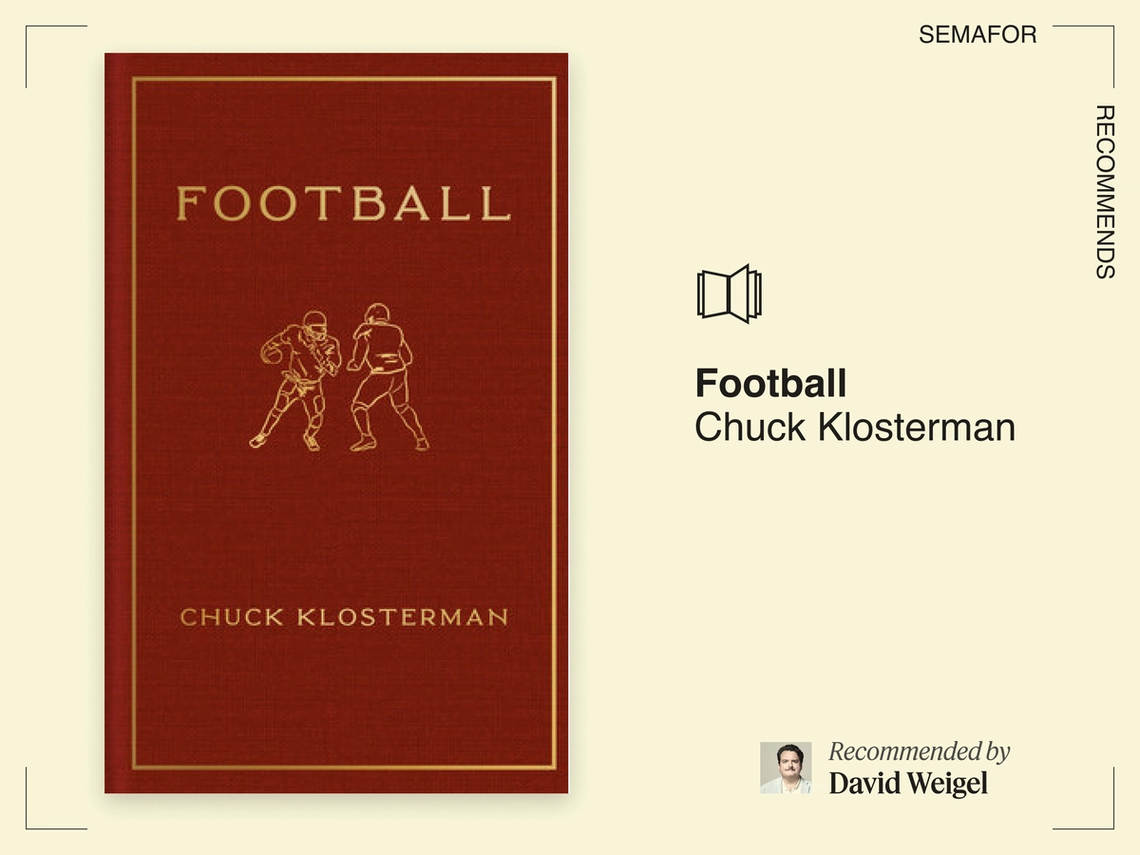 The overlap between political reporters and football fans is nearly a circle. I said “nearly,” because I’m just outside it — not anti-football, just not obsessed with the sport unless the Eagles are playing. It’s with that mindset that I recommend Chuck Klosterman’s “Football,” which has plenty to offer even if you’re an NFL+ subscriber. The reason: Klosterman’s signature over-thinking, like a long digression into time travel and how it should or should not be incorporated into Greatest of All Time debates. (No one beats Jim Thorpe, in Klosterman’s convincing analysis.) He also predicts that parental worry about brain damage will eventually reduce the sport to vestigial status, like horse racing, making you as sad as he is about the theory. |
|
|


