Lumina Foundation is working to increase the share of adults in the U.S. labor force with college degrees or other credentials of value leading to economic prosperity.
During his senior seminar at Kalamazoo College, Hollis Masterson was given an assignment to interview someone whose political views sharply differed from his own. For Masterson, a self-described social democrat, the outcome surprised him.
The political science and history major spoke with a classmate’s father, a libertarian who has consistently voted for libertarian presidential candidates. What began as an exercise in disagreement led to something more nuanced: a discussion that covered not only points of contention but also areas of common ground.
After years in the making, the expansion of Pell grant funding to cover short-term workforce training program costs is just months away. Beginning July 1, Workforce Pell becomes a reality.
But as institutions scramble to prepare students and staff for Workforce Pell grants—which leaders generally agree is a positive move to support students on different postsecondary journeys—one part of the conversation missing from the public space is whether policymakers are inadvertently limiting opportunities for students who might otherwise have gone on to obtain higher credentials.
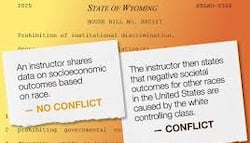
In 2024 and 2025, Republican lawmakers passed a dozen bills that limit how college faculty can teach about race and identity. The surge signals how the anti-DEI movement is infiltrating curriculum—targeting “DEI-related” course requirements, banning “divisive concepts” on topics like white supremacy or critical race theory, and establishing reporting mechanisms or audits to ensure compliance.
Colleges and universities—sometimes within a single state—have approached the interpretation of and compliance with those laws in vastly different ways, even though many of them are based on the same model legislation.
Demand for workers in the aviation industry is on the rise in Southwest Ohio, with 1,300 new roles for maintenance technicians projected by 2030, in addition to thousands of jobs for engineers, pilots, and air traffic controllers.
The new Butler Tech Aviation Center gives high school students an early start in breaking into the growing industry with a novel three-year academic program packed with work-based learning. Local officials describe the $15.5M workforce development hub, which opened in January, as an investment in both kids and the regional economy.
A record number of borrowers have fallen far behind on their federal student loan payments, another pressure point among millions of increasingly stretched American consumers.
And the problem is likely to grow. Last week, after years of legal limbo, a federal appeals court ordered the end of a generous Biden-era repayment plan known as SAVE. That decision will soon force nearly seven million borrowers to begin paying loan bills—with interest still accrued for the last seven months—that had been suspended while the litigation played out.
Artificial intelligence has pushed higher education past the point where policy alone is enough. If students can generate summaries, draft papers, and produce plausible answers in seconds, colleges now have to answer a harder question: What are they teaching that still matters?
France Hoang, founder and CEO of the AI platform BoodleBox, pushes the AI conversation toward the issue that matters most for presidents, provosts, boards, and academic leaders. The central challenge is no longer access to the technology. The challenge is whether colleges and universities will redesign learning, advising, and implementation in ways that strengthen judgment, expertise, and human decision-making rather than weaken them.

.jpg?width=500&upscale=true&name=istockphoto-1299937062-612x612%20(1).jpg)