Explora’s latest luxury liner, black-velvet lunch at Sweetings and stories you might have missed.
|
Tuesday 10/3/26
|

|
|
London
Paris
Zürich
Milan
Bangkok
Tokyo
Toronto
|
|
|
|

Good morning. Tune in to Monocle Radio for the latest news from the Middle East and beyond. Here’s what’s coming up in today’s Monocle Minute:
THE OPINION: Riyadh emerges as a Gulf evacuation hub
TRAVEL: Explora cruise liners get shipshape in Genoa
DAILY TREAT: Enjoy a black-velvet lunch at Sweetings
THE LIST: Three stories you might have missed
|
|
With Bahrain and Dubai under fire, Riyadh has emerged as the Gulf’s unlikely refuge
By Scott Campbell
|
Everyone looked up when the first crack split the sky last week, the concussive snap ricocheted off the façades of King Abdullah Financial District before rolling across Riyadh’s vast, sand-hued residential quarters. But the next time thunder struck – or missiles and drones breached Saudi airspace – people glanced at their phones and carried on. If tremors from the ongoing regional war are being felt in Riyadh, they are not coming from the city itself. The kingdom’s habitual escape routes over the King Fahd Causeway to Bahrain and elsewhere across the Gulf as far as Dubai are front of mind.
Over the past decade, Saudi Arabia’s capital has been transformed from an austere administrative seat – once patrolled by the mutawa, religious police who swept through malls at prayer time – into a hyper-kinetic metropolis home to festivals, heavyweight-boxing bouts, Formula 1 showpieces and Cristiano Ronaldo.

| |
|
Getaway cars: More people are heading toward Riyadh as war continues
|
|
But for decades, Bahrain and Dubai have served as getaways for Saudi locals and expats alike. Dubai’s Palm Jumeirah – the city’s famous island packed with beachfront towers, extravagant brunch spots and unapologetically louche party hotels – has long drawn a younger, more affluent Khaleeji crowd. When news broke of a missile-debris fire near Five Palm Jumeirah, a hotel on the island famed for its pool parties and nightlife, many were particularly concerned.
In Bahrain, the Juffair district – a strip of neon-lit bars, sports lounges and late-night shawarma joints – usually swells each Thursday with Saudi number plates as the weekend begins. Yet it is also home to the US Navy’s Fifth Fleet headquarters, an unusual arrangement in a region where military bases are usually pushed far from city centres. On weekend nights, a curfew announcement cuts through the music in local bars, reminding young American sailors that they have 15 minutes to return to base or face disciplinary sanctions.
For Saudis, the tiny island – connected to the kingdom by a 25km bridge and about a four-hour drive from Riyadh – occupies a more nostalgic place in recent memory. During the decades when there were no cinemas in the country, men heading across King Fahd Causeway would often tell their wives that they were “going to watch a film” – a phrase elastic enough to cover a multitude of weekend diversions. When theatres reopened in Saudi Arabia in 2018 after a more than 35-year hiatus, the excuse evaporated. Going to Bahrain was never really about going to watch a film, of course. It was about being elsewhere – and now elsewhere feels brittle.
Back in Riyadh, there has been a noticeable uptick in SUVs driving into the city from the UAE and beyond, full of travellers choosing to depart from Dubai via Saudi Arabia as regional airspace reroutes. The city once caricatured as insular has, momentarily, become a place of reassurance. There is a sense of irony in that inversion. Dubai built its global brand on the promise of insulation. Yet as air-defence systems are deployed and missile arcs dominate screens there, Riyadh feels, for now, among the region’s most grounded capital cities.
Grounded, however, does not mean untouched. The defence ministry announced that two drones struck the US embassy in Riyadh on 3 March, causing a fire and minor damage but no injuries, while debris from intercepted drones sparked a small blaze at Aramco’s Ras Tanura refinery in the Eastern Province. The next day, Saudi air defences downed 10 drones and two cruise missiles in three separate incidents. On Thursday, three more cruise missiles and drones were destroyed near Al-Kharj, the city southeast of Riyadh nearest to the Prince Sultan Air Base.
Geography, according to security experts, helps to explain why Riyadh has been largely spared. Saudi Arabia stretches roughly 2,100km from the Red Sea to the Gulf and its capital sits deep in its interior, about 600km from Iran’s coastline. In contrast, Dubai and Doha lie a fraction of that distance away, perched much closer to the Gulf’s narrow shipping lanes and, by extension, Iran’s launch points. That extra depth gives Saudi air-defence systems precious minutes to detect and intercept incoming drones or missiles before they reach the capital. It also explains why attacks have instead concentrated on the Eastern Province – home to energy infrastructure such as Ras Tanura – where disruption carries far greater economic risk. In Riyadh, for now, daily life continues largely uninterrupted.
Saudi Arabia has spent recent years building its own leisure ecosystem. Cinemas now anchor every major mall, music festivals illuminate desert plateaus and beach clubs edge along the Red Sea coast. The pleasures that were once outsourced to Bahrain and Dubai are increasingly available at home. Yet the Gulf remains a tightly braided geography of work and escape, of sober weekdays and rowdy weekends. When one strand frays, the tension reverberates across the others.
Scott Campbell is a Riyadh-based travel writer. For more opinion, analysis and insight, subscribe to Monocle today.
Further reading?
– A look inside Riyadh’s Diplomatic Quarter: A community of political transients
– Saudi Arabia’s latest alcohol policy shift lowers the bar for raising a glass
– Gulf states project an image of unity but a proxy media war tells a different story
|
|
travel: italy
Luxury-cruise brand makes a triple splash in Genoa with float-out of new liners
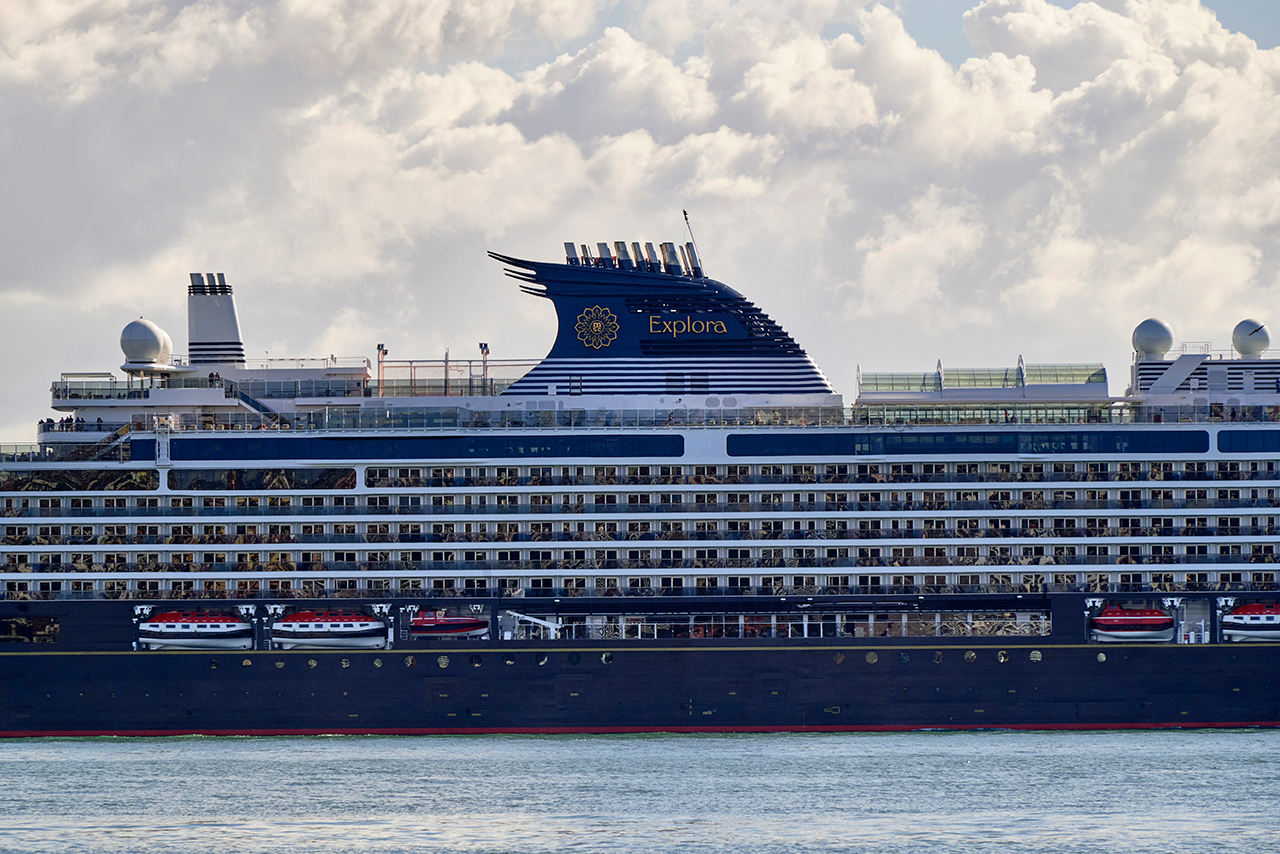
Ship ceremonies are full of tradition and superstition (writes Ed Stocker). Yesterday, Fincantieri’s Sestri Ponente shipyard in Genoa, Italy, was no different. Dignitaries, including the region’s president and Genoa’s mayor, were there to see three new cruise liners belonging to Swiss-Italian shipping giant MSC’s newest brand, Explora Journeys, which was founded in 2021. The event marked the float-out – the first time that a newly built ship touches water from its dry dock – for the Explora IV ship. A priest was on hand to bless it with holy water and wish it fair seas. Different ceremonies also took place for the next ships to come, V and VI, both in early stages of construction.
| |
|
Pushing the boat out: ‘Explora IV’ makes its debut
|
|
The Genoa event is part of Explora’s ambitious bid to corner the luxury-cruise market. With two ships currently in operation and a third undergoing sea trials, it aims to have six liners operational by 2028. In late February, Explora Journeys rolled out a new brand campaign in New York, positioning itself as a floating hotel on the move – a clear bid to get beyond preconceptions about cruising. “We see ourselves as a challenger brand,” Explora’s Geneva-based president, Anna Nash, tells The Monocle Minute. “Luxury has always had a fixed address – maybe it shouldn’t.”
|
|
• • • • • DAILY TREAT • • • • •
enjoy a black-velvet lunch at sweetings
It might be hard to fathom how Sweetings, an unassuming 65-cover seafood restaurant founded in 1889 in the City of London, has endured for so long while steadfastly resisting change. You can’t book a table in advance and it doesn’t serve tea or coffee. It’s open only on weekdays and only for lunch (11.30 to 15.00) – the same hours that it kept in the 19th century. Nevertheless, regulars can’t get enough of this long-unrenovated restaurant, with its wooden wainscotting and nicotine-cream walls offset by linen place settings.

Waistcoat-and-tie-clad staff members clip across the terrazzo floor between tables, serving specialities such as smoked eel, oysters and Dover sole. Champagne corks pop and pewter tankards carrying black velvets (champagne and Guinness) clink, bound for a table of punters in pinstripes. There are private tables for intimate conversations, communal ones for larger gatherings and barstools from which to see and be seen by colleagues – or perhaps adversaries at rival banks. Drink up.
sweetingsrestaurant.co.uk
|
|
|
Sponsored by Hitachi Energy
|
|
|
|
|
|
the LIST: MONOCLE.com
Three stories you might have missed
Have you read these? You really should. Our website has plenty to keep you informed until your next Monocle Minute lands tomorrow morning.
|
|
| | |
 MONOCLE