Lumina Foundation is working to increase the share of adults in the U.S. labor force with college degrees or other credentials of value leading to economic prosperity.
Today's credential landscape is vast—over 1.85 million unique credentials from more than 134,000 providers. There are traditional degrees, certificates, badges, licenses, apprenticeships, and industry certifications. But this abundance also presents challenges as learners and employers alike struggle to understand what different credentials actually represent in terms of skills and competencies.
In this interview, Scott Cheney of Credential Engine provides a deep dive into the world of credentials, the complexities of a skills-based economy, and the critical need for common standards and transparency in education and employment data.
Black boys and men have to scale high walls to get into college and complete their degree. They are more likely than their peers to juggle caring for elders or younger siblings with classes. They’re often the first in their family to pursue higher education and frequently come up against the perception that they are not “college material.” And, across the country, they are the least likely student group to finish a degree within six years.
Mentors, especially those who are Black and male-identifying, can help students with challenges like juggling work and class and finding community on campus.
For English professor Dan Cryer, using generative artificial intelligence to write a college essay is like bringing a forklift to the gym. Many students, too, have mixed feelings about the technology, saying it helps them sometimes but also makes them think less deeply.
That sentiment is apparently gaining momentum. Three years after ChatGPT's launch, AI is now part of daily life—and students and teachers are still figuring out how to use it.
A federal judge has dismissed a lawsuit challenging the Biden-era Saving on a Valuable Education (SAVE) student loan repayment plan, declining to rule on whether the program itself is lawful.
But the ruling isn't a definitive victory for borrowers who had previously enrolled in the program. Rather than issuing a decision on the merits, the court dismissed the case as moot. This implies that the legal status of SAVE remains unresolved, leaving borrowers to navigate a complex and uncertain landscape.
The major challenges confronting college leaders show no signs of relenting over the next few years. They must tackle tightening student visa policies, the growing adoption of artificial intelligence, and potential declines in traditional-aged college students.
College leaders shared how they’re addressing those issues and more during the American Council on Education’s annual conference in Washington, D.C. While their tactics vary, they’re all bracing for major change.
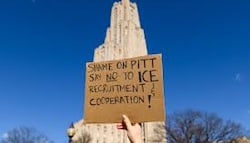
In late February, protestors rallied against Immigration and Customs Enforcement around Pittsburgh and demanded a stronger response from the University of Pittsburgh after a U.S. Customs and Border Protection recruitment event appeared on Pitt’s Career Central event calendar.
Federal immigration agencies are recruiting at colleges nationwide, raising concerns about school policies related to their presence. Here’s what Pitt and other local institutions are saying and doing.


.jpeg?width=500&upscale=true&name=images%20(17).jpeg)