Barring yet another unforeseen twist, by sometime next year (or maybe sooner) Paramount CEO David Ellison will be a media mogul arguably even more powerful than his pops, Larry. Just when it seemed Netflix had the momentum needed to close its acquisition of Warner Bros., Ellison figured out a way to spend even more money to land the prize he’s coveted for more than a year now. Unfortunately for the rest of us, Paramount’s winning bid for the full Warner Bros. Discovery is nothing to celebrate. This week’s newsletter, delayed a day to cover the latest developments, takes a look at what it all means (and almost none of it is good.) We’ve also got a look at how Hollywood is trying to figure out the right lessons to learn from the monster success of Heated Rivalry and some new ratings data that shows how one network is doing better than you’d think at getting streaming eyeballs. Thanks for reading.
|
— Joe Adalian, West Coast editor
|
|
|
Subscribe now to get unlimited access to everything New York, including subscriber-only newsletters, exclusive perks, the New York app, and more. |
|
|
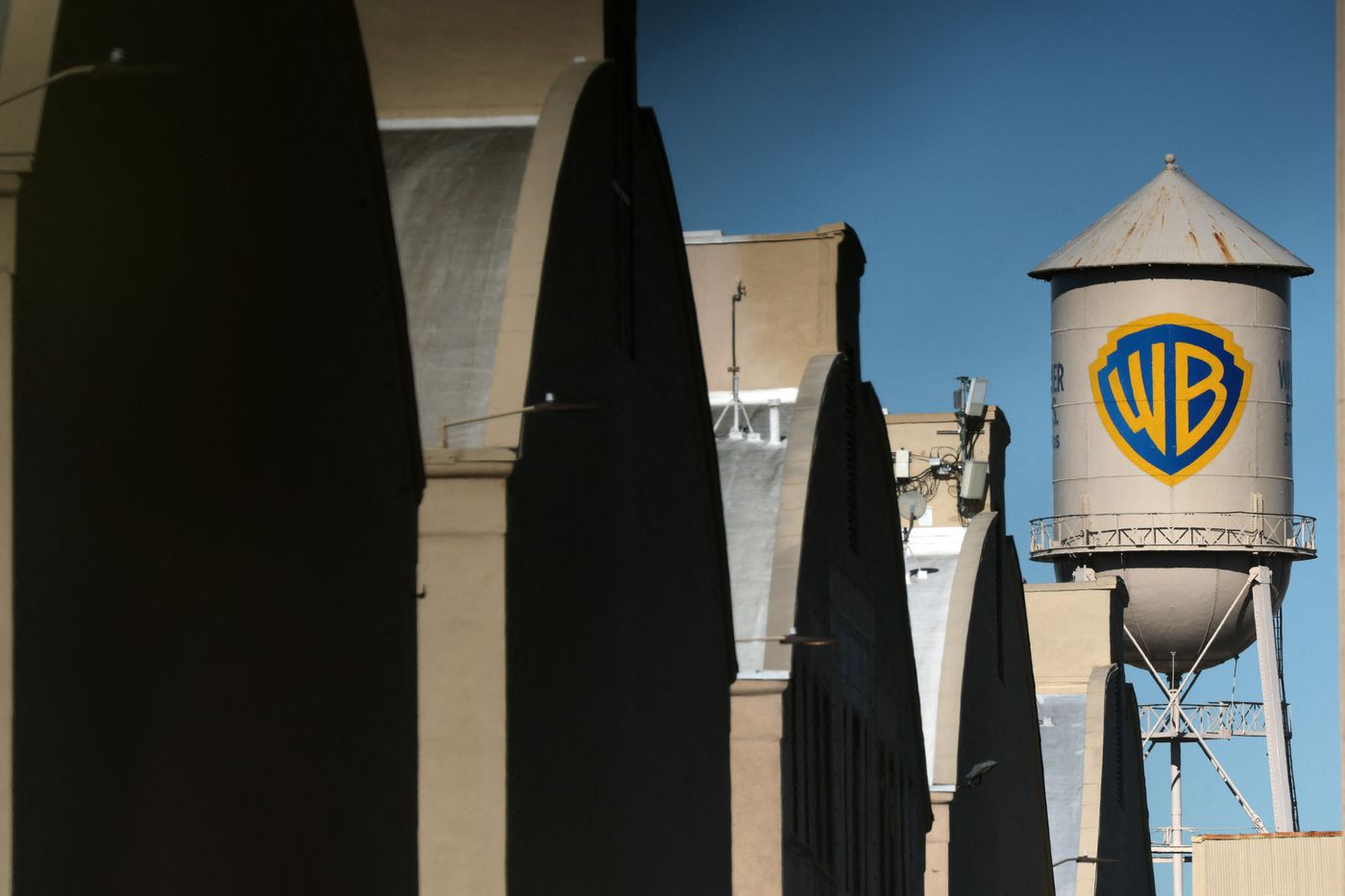
Paramount winning control of Warner Bros. is the worst-case scenario for Hollywood — and America. Photo: Patrick T. Fallon/AFP via Getty Images |
Backed by his billionaire dad’s bankroll and the full support of many in Donald Trump’s MAGA movement, Paramount CEO David Ellison Thursday won the battle for Warner Bros., successfully quashing a surprise bid by Netflix to take over the storied movie and TV company. Ellison is no doubt celebrating his victory over the streaming powerhouse; ditto Warner Bros. Discovery shareholders who stand to gain from Paramount’s sweetened offer. But for everyone else, this deal feels like a colossal dud, one which will result in a new company burdened with billions more in debt — almost surely leading to thousands of layoffs, fewer movies and TV shows getting made, and the creation of a combined CBS News–CNN operation likely to lean well to the right of where either is now.
In fairness, Netflix closing a deal for Warner Bros. would have had numerous downsides, too. Many in the film business, including notable figures such as director James Cameron, were vehemently opposed to the streamer getting its mitts on WB, given its business model-to-date has had no real use for theatrical distribution of movies. And as the Writers Guild told Vulture in December, “The problem is the acquisition and pending consolidation of two media giants, not who the buyer is.” Industry consolidation this century, including Disney’s purchase of Rupert Murdoch’s Fox entertainment assets or Amazon’s gobbling up of MGM, has rarely been good for everyday people. A Netflix “win” wouldn’t have been great news for the average viewer or moviegoer, either.
But as one Warner Bros. veteran told me late last year, Netflix’s bid felt very much like the “least worst option,” and I think that’s exactly right. For all the downsides the tech giant’s now-dead deal would have had, Paramount winning is the worst case scenario for Hollywood — and America.
For one thing, workers in the industry — whether employees of Warner Bros. and Paramount, or just creatives trying to set up new projects — will lose because Ellison won. Netflix would’ve surely ended up making some staff cuts, and while it had promised to let Warners keep making movies for theaters, I’m convinced Netflix’s current film unit would’ve cut back on making big-budget titles such as The Rip had the deal gone through, if only because Warners would’ve offered them a consistent diet of such spectacles.
But while a Netflix-WB union would’ve resulted in a bit less money overall getting spent on films, Par-WB figures to be a bloodletting. Just as Disney didn’t need 20th Century Fox to keep churning out as many movies once it took control of that studio, Ellison will quickly decide he doesn’t need to double his theatrical slate overnight. Or, as former New York contributor Nolan Hicks mused Thursday, “If anyone actually thinks the Paramount-WB combo is going to field a slate of [about] 40 movies a year, can I also interest you in buying the Brooklyn Bridge, which is also definitely for sale?”
Ellison’s supersized company is going to carry with it a supersized debt load — roughly $60 billion by some estimates. So in addition to scaling back on movie spending, Paramount-WB is going to need to slash costs like crazy. And unlike Netflix-WB, there are overlapping departments everywhere: two sets of cable TV businesses, competing news divisions (CNN and CBS News), rival sports units, multiple marketing teams, competing sales staff, and on and on. Had the Netflix deal gone through, Warners was going to spin-off most of its cable holdings, allowing those units to fend for themselves, like NBCUniversal’s castoffs at Versant are now doing. It wouldn’t have been easy, but folks at Warner-owned cable channels would’ve had a shot at keeping their jobs. The Paramount-WB cable combination will result in thousands of workers losing their jobs as back office operations get smooshed together.
Drilling down further, a Netflix acquisition would also have given Warner Bros. the chance to have its deep library of intellectual property and its most valuable programming brand (HBO) supercharged by the planet’s biggest, most effective distribution platform. This is a service that is able to take KPop Demon Hunters, a movie Sony sold off, and turn it into a global brand within weeks — and which does something similar with titles like Squid Game, Wednesday, and Bridgerton every few months. On day one, Netflix offered the chance to make The Pitt even bigger than it already is, or to ensure the new Harry Potter reboot in the works at HBO Max was a global event when it launched.
By contrast, Paramount offers only a vague promise of using tech from Papa Larry Ellison’s Oracle to reshape the creaky Paramount+ into something bigger and better. But ask Disney, which is not exactly a tiny little company, how complex and time-consuming it can be to build a better streaming mousetrap: They’ve been trying to improve their algorithm and user interface for years now, and while they’ve made a ton of progress, they’re still trying to figure it out. Paramount’s tech team now no longer has to just worry about bringing Paramount+ up to speed; they’re also likely going to have to figure out how to integrate HBO and HBO Max content into their service, or vice versa. (On the plus side, Oracle is now a major investor in TikTok, and it’s not hard to see that platform being turned into a marketing weapon for all things Paramount-Warners.)
And then there’s the Trump of it all. Netflix co-CEO Ted Sarandos was in Washington Thursday meeting with Justice Department officials, no doubt trying to check the temperature of the White House toward a Netflix-WB deal. Earlier in the month, Ellison visited Trump (again) and this week was Sen. Lindsay Graham’s guest at the State of the Union, while POTUS made noise about Netflix firing former Obama U.N. ambassador Susan Rice from its board of directors. I have no idea whether Netflix’s decision to pull out had anything to do with the company suddenly being worried Trump officials would kill a merger, despite the president’s past promise to stay out of the regulatory process. Most likely money — namely, not wanting to overpay for Warners — is what ultimately prompted Netflix to walk away.
But what’s undeniable to anyone with two eyes is that Ellison, like so many corporate leaders, has been kissing up to Trump for more than a year — first to get control of Paramount and then in an attempt to make his company’s acquisition of Warners look inevitable … |
|
|
"Fear and anxiety are permeating these companies, and there’s paralysis everywhere.” Photo: Sabrina Lantos/HBO Max |
How hot is Heated Rivalry? In the three months since the steamy Canadian hockey romance debuted on HBO Max, a TV-studio development exec who focuses on literary acquisitions has been fielding pitches from publishers on possible clones. “Book agents have been dusting off their sports romances and kind of tiptoeing into the marketplace with them,” he says. “I just got sent a male-male tennis romance that’s Heated Rivalry meets Challengers.” He’s obviously wary of anything that could come off as an opportunistic knockoff, but he’ll give it a look. “If the wrong lesson is that the queer tennis show gets made, then I don’t want to be right,” he laughs.
HBO and HBO Max content chief Casey Bloys hasn’t heard about the aforementioned book, but he has one word of advice for fellow execs thinking about trying to clone the show: Don’t. “The wrong lesson to take from this show’s success would be to have Heated Rivalry in baseball or Heated Rivalry in football,” he says. Bloys snapped up U.S. rights to the Crave drama late last year because it “was something fresh that people hadn’t seen before.” But now that 11.5 million U.S. viewers (and counting) have experienced it, he argues that rushing to put on a slew of other sports romances would be a mistake. “It can’t be replicated,” he says, pointing to the dozens of (mostly) failed sitcoms about sexy young singles that emerged after Friends exploded onto the scene in 1994. “That would be the exact wrong message to take.”
Programming executives across Hollywood spent this winter buzzing about creator Jacob Tierney’s unlikely hit, trying to understand what else made it connect with audiences so quickly. While Netflix execs famously made their big bet on House of Cards 15 years ago because trends from its DVD rental business suggested audiences would love it, Heated Rivalry stands out because nothing in The Data suggested it would turn into a phenomenon. “We all believed in it in a very non-logical way,” says Justin Stockman, vice-president of content at the Canadian streamer Crave. Stockman and other insiders we spoke to are under no illusion that data won’t be a factor in future programming, but as one longtime agent puts it, Hollywood has been following the same formulas for too long, the result of a “highly tech-y, corporate, clinical” culture among streamers. “Fear and anxiety are permeating these companies, and there’s paralysis everywhere,” he says.
“If we can bring back really boundary-pushing but still commercial stuff the way we did in the early to mid-2000s? Hallelujah,” he adds, referring to shows such as ABC’s 2004 breakouts Lost and Desperate Housewives. “This is the time to do it.”
According to the insider mulling the gay-tennis book, his development team is already approaching existing and forthcoming books differently as a result of Crave’s success. “Instead of trying to find our own sports romance,” he says, “it’s a great opportunity for us to identify some of those more niche or fervent, loyal fan bases in the book community.” Here’s how he and other sources predict the hunt for the next Heated Rivalry will play out…. |
|
|
Paramount Also Beat Netflix in One Other Way
|
It’s not exactly a shock that the final season of Stranger Things was the most popular scripted show on streaming or broadcast TV last fall, though this week we did get clarity on exactly how many Americans tuned in. Per Nielsen, an average of 32.86 million Stateside viewers checked out the X episodes of season five within the first five weeks of its release — roughly double the weekly viewership of the fall’s two top broadcast shows, Tracker (16.65 million) and High Potential (16.07 million.) But what’s a bit more surprising is that, while Netflix had the biggest single hit, it wasn’t actually the entertainment platform with the largest number of must-see titles. That would actually be… Paramount+.
The Paramount-owned streamer claimed fully half of the top 20 titles on Nielsen’s combined broadcast-streaming ranker for the fall (specifically, Sept. 14, 2025-Jan. 4), compared to six for the mighty Netflix. If you’re wondering, “Wait, did I miss some new Taylor Sheridan show that came out last fall?” No, the prolific showrunner had just one title in the top 20: Landman, which notched a massive 19.64 million viewers for the measurement period. But P+ is also the streaming home of all CBS originals, and the Eye network continues to crank out the hits, supplying nine top 20 shows (six dramas, two comedies, and 60 Minutes) to its digital sibling. The gap between CBS/P+ and Netflix is even wider when you look only at regular series designed to run more than a single season: Only three top 20 Netflix titles (Stranger Things, Nobody Wants This and the latest season of Ryan Murphy’s Monster franchise) meet that designation, while the rest are either docuseries (Sean Combs: The Reckoning) or were billed as self-contained limited series (The Beast in Me and Wayward).
Netflix cranks out so many original series, and gets so many viewers for its movies and specials, it would be wrong to look at this data and think that the streamer is somehow underperforming. As demonstrated by another Nielsen dataset — its weekly report on total minutes consumed — Netflix shows overall command a very healthy share of viewers’ attention in any given week. Thing is, Netflix’s competitors — specifically those whose platforms are part of companies with a broadcast network — continue to do much better at building long-lasting hits with high episode counts and weekly release cadences. And it’s not just CBS/P+: On Hulu, ABC’s The Rookie and aforementioned High Potential both overperform with streaming audiences, while Fox newbie Best Medicine is showing early signs of multi-platform might. These broadcast-native shows aren’t as splashy spectacles like Stranger Things and they don’t break into the zeitgeist as easily as something does on Netflix, where series and movies can turn into a pop culture phenom virtually overnight thanks to the streamer’s international scale and algorithm (see Squid Game and KPop Demon Hunters). But they still get eyeballs, and lots of them.
|
|
|
|