| |  | | | | |  | By Megan R. Wilson | Did someone forward this newsletter to you? Sign up here to get it in your inbox. In today’s issue: Government funding bill heads to the White House for Trump’s signature. … What’s next now that PBM reform has become law? … Government watchdog: The Food and Drug Administration’s struggles to recruit and retain staff has impacted its ability to conduct inspections. … And more. Good afternoon and welcome to Health Brief. Do you have any story tips, health policy intel or agency intrigue? Are you Alicia Jackson, the director of ARPA-H? Shoot me a note at megan.wilson@washpost.com. If you prefer to message me securely, I’m also on Signal at megan.434. This newsletter is published by WP Intelligence, The Washington Post’s subscription service for professionals that provides business, policy and thought leaders with actionable insights. WP Intelligence operates independently from the Washington Post newsroom. Learn more about WP Intelligence. | 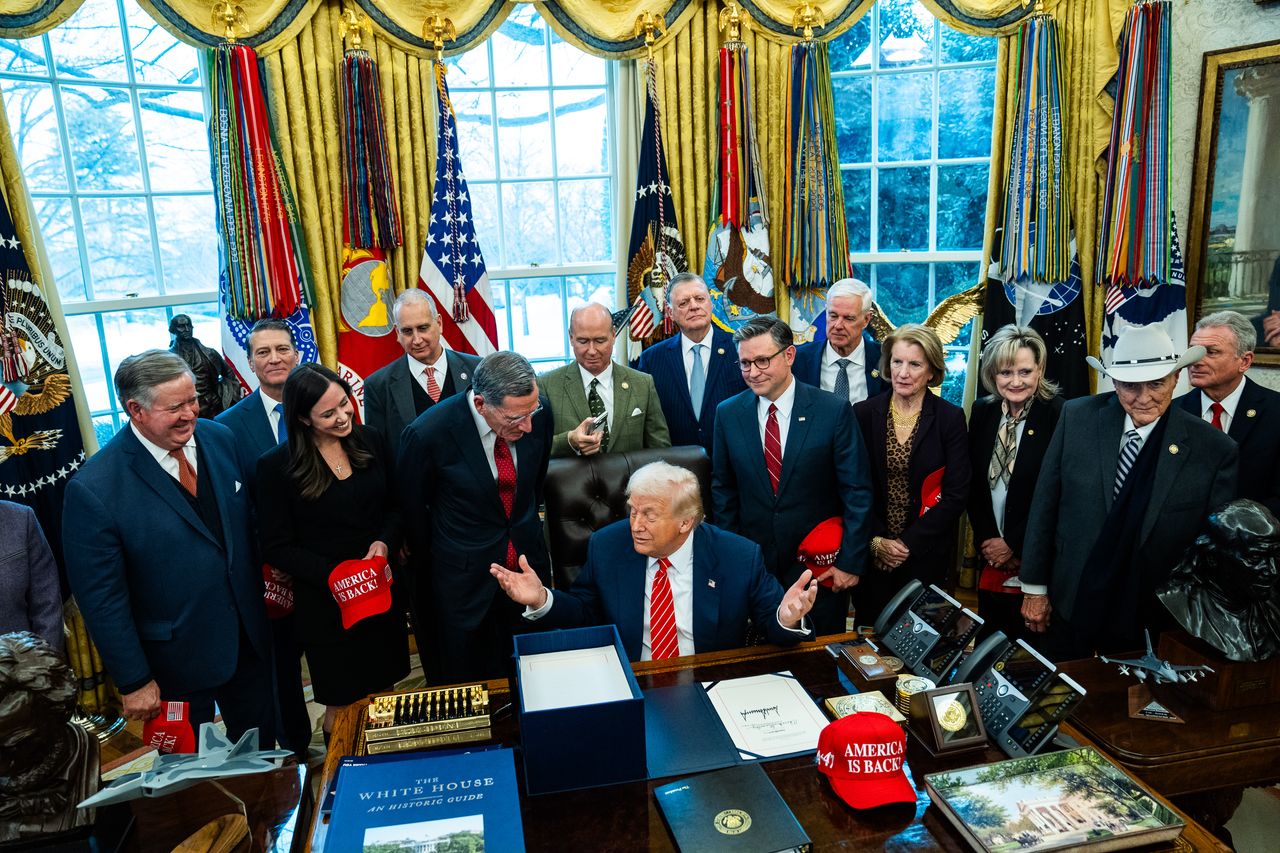 | | President Donald Trump signs funding legislation to reopen the government on Tuesday. (Demetrius Freeman/The Washington Post) | | | |  | The Lead Brief | President Donald Trump has signed a government funding bill that includes money for several agencies, including the Department of Health and Human Services, and policies such as reforms to pharmacy benefit managers, known as PBMs. It ends the brief partial government shutdown and marks the culmination of a years-long effort by lawmakers and pharmaceutical industry groups to take aim at PBMs’ business practices. But now what? That’s what the industry group representing PBMs — the Pharmaceutical Care Management Association, or PCMA — is asking itself today. “PBM reform is done. This bogeyman has been exorcised,” wrote PCMA spokesperson Brendan Buck in a memo following the vote. “While drugmakers are quietly celebrating this achievement,” Buck wrote — noting the big money the pharmaceutical industry has spent to lobby policymakers, shape the conversation and point the finger at PBMs for high medicine costs — “they should also know that new oversight of their own actions is now coming.” Why it matters: It signals that the industry group’s new leadership — including new CEO David Marin — is ready to up their own advocacy efforts against drugmakers, pushing policymakers to pursue drug patent reforms and crack down on the advertising that pharma companies use to promote products directly to consumers. PBMs argue that they help to lower drug costs for patients and their employer clients. “It is long past time for lawmakers to look into the ways the pharmaceutical industry games the system to block competition and artificially keep drug prices high,” said Buck. The legislation imposes new transparency requirements on PBMs, in addition to banning a practice known as “spread pricing” in commercial health plans, in which a PBM charges a plan more for a drug than it reimburses the pharmacy upon dispensing it. PBMs will also no longer be able to tie their compensation to the price of medications they select for Medicare to cover. “PBMs have adapted on their own to respond to the market and policymakers. They have also now been regulated,” Buck continued. “The bad news for [pharma] is it can no longer credibly run this game of distraction.” It should be noted that the Pharmaceutical Research and Manufacturers of America (PhRMA), which spent many millions to advocate for PBM reform, didn’t celebrate quietly. In a statement applauding the new laws, Stephen Ubl, PhRMA’s president and CEO, pushed lawmakers to go further. → ICYMI: Health Brief has covered many of the major health-related aspects of the bill, including the most significant PBM proposals that pushed by drugmakers and the nearly $1 billion in health-related projects lawmakers have earmarked for their states. | | | | | | Industry Rx | But PhRMA wasn’t the only one. Employers, pharmacies and providers that have been pushing for reforms hailed what they’re calling “landmark” changes to PBM oversight — all while signaling that their own advocacy push isn’t over. “The abuses of the dominant PBM middlemen are widely recognized, and this landmark federal action reflects the broad, bipartisan commitment to confront and remedy them,” said Steven C. Anderson, who leads the National Association of Chain Drug Stores. “This is the most important federal achievement yet for PBM reform, and it will sustain and build momentum for further reforms where needed.” John Murphy III, the CEO of the Association for Accessible Medicines, which represents generic drug companies, lauded the initial reforms. The group has largely stayed out of the PBM debate in the past, but Murphy is now saying that Congress needs to do more “to remove the roadblocks to access generic medicines and patient savings instead of higher and more creative PBM fees.” There are still many PBM policies that weren’t included, including measures that would rein in companies affiliated with PBMs called group purchasing organizations (GPOs) — a heavier lift than the proposals tucked into the funding bill. Critics argue that GPOs, often located overseas, are opaque organizations that evade oversight and obscure a PBM’s profits. The industry counters that GPOs help facilitate lower prices for drugs. “This is just the start, because PBMs are very adept at finding ways to profit,” said Ted Okon, the executive director of Community Oncology Alliance, which has been lobbying for PBM reforms. → That said, drugmakers aren’t out of the woods either. The Trump administration is asking Congress to turn its drug pricing policies requiring manufacturers to align the cost of their medicines with lower costs abroad — known as most-favored nation pricing — into law. However, those policies face an uphill battle. | | | | | | Document Drop | The Government Accountability Office has a report focused on how the Food and Drug Administration has “struggled to recruit, retain, and train its staff, which has reduced its capacity to conduct inspections” over time. Much of the period examined by the GAO largely fell within the Biden administration. While the government watchdog said FDA agreed with many of its recommendations, the Trump administration had not adopted them as of December, according to GAO. HHS response: I asked HHS for comment, and they reiterated that the FDA is still in the process of hiring more than 1,000 reviewers, inspectors, and investigators across the agency to review drugs, tobacco products and food. → The FDA has hired more than 100 people to work in these positions, has more than 400 workers in the onboarding process, and is sifting through more than 11,500 applications, HHS said, mirroring a December statement about its hiring efforts. “We remain focused on strengthening FDA’s workforce and operations while maintaining oversight and enforcement activities. Any assertion that the FDA’s ability to perform these functions is limited is baseless,” said HHS spokesperson Andrew Nixon. | | | | | | WP Intel File | WATCH the latest WP Intelligence briefing about changes at the Food and Drug Administration, featuring lead health care analyst Rebecca Adams and former FDA commissioner Robert Califf. Moderated by Luiza Savage, WP Intelligence’s editorial director, the discussion focuses on a new accelerated pathway for approving new drugs, a proposed framework to make vaccine approvals more difficult and how the biotech sector should be responding. | | | | | | Jobs Report | Joe Franklin has been named Biotechnology Innovation Organization’s chief legal and policy officer. He comes from law and lobbying firm Covington & Burling, where he worked with clients in the firm’s life sciences and artificial intelligence practices. Franklin has also worked at Verily, Alphabet’s precision health company, and held high-level roles at the Food and Drug Administration. | | | | | | | | | | | | |


_tstmp_1756933376-1920-1080.png)