Gen Z and younger generations are getting a bad rap.
The rise of ChatGPT and other AI tools has brought on complaints that students and young employees rely too much on AI to do everything from completing homework to writing emails.
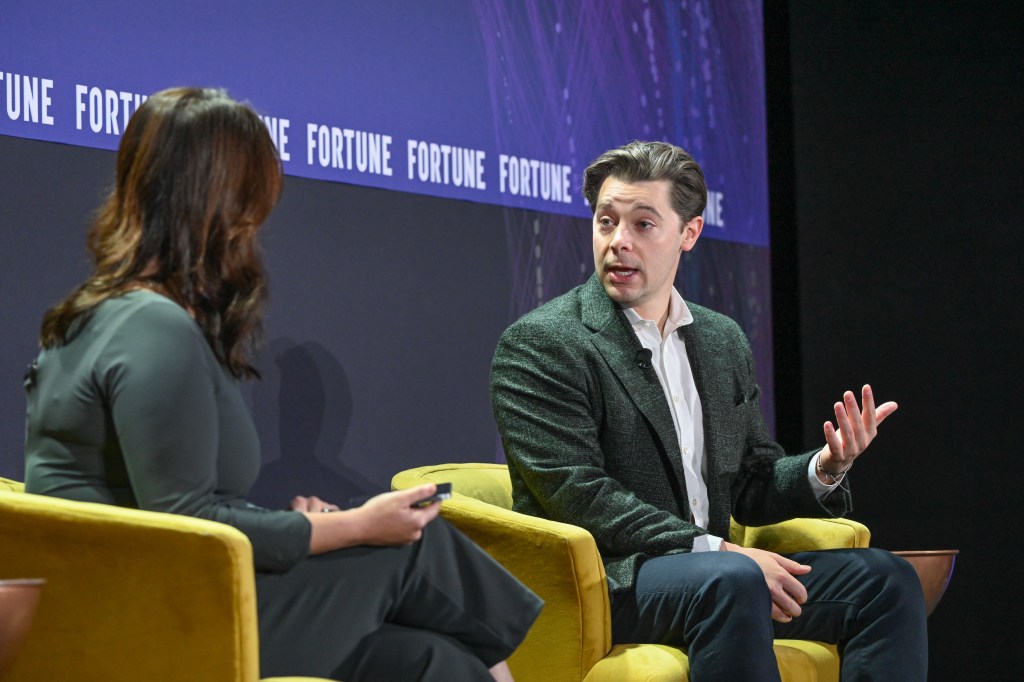
Yet Kiara Nirghin, a Stanford technologist and Gen Z entrepreneur, sees Gen Z’s comfort with AI as an asset. “The younger generation isn’t adopting AI, we’re growing up fluent in AI,”
she said at Fortune Brainstorm AI in San Francisco on Tuesday.
Nirghin, who co-founded Chima, a U.S.-based applied AI research lab, explained that young entrepreneurs see coding as something to be done alongside AI agents, rather than done alone and from scratch.
AI “fundamentally changes how you write, how you take tests, [and] how you apply to jobs or different applications—because it’s not from the ground up. It’s actually being able to do that with different models or agents, side by side,” Nirghin said.
AI fluency sets Gen Z individuals apart from their older peers, allowing them to pioneer use cases and applications of AI that have yet to be unlocked, she explained.
Some experts have argued that AI has eroded our critical thinking abilities. A
2025 study by researchers from MIT’s Media Lab found that users of ChatGPT “consistently underperformed at neural, linguistic, and behavioral levels.”
But Nirghin argued that this isn’t always true. “The biggest misconception is that young people are using AI to not think things through,” she said, “[but] I think that really intelligent Gen Z individuals are using it to think even deeper.”
—Angelica Ang