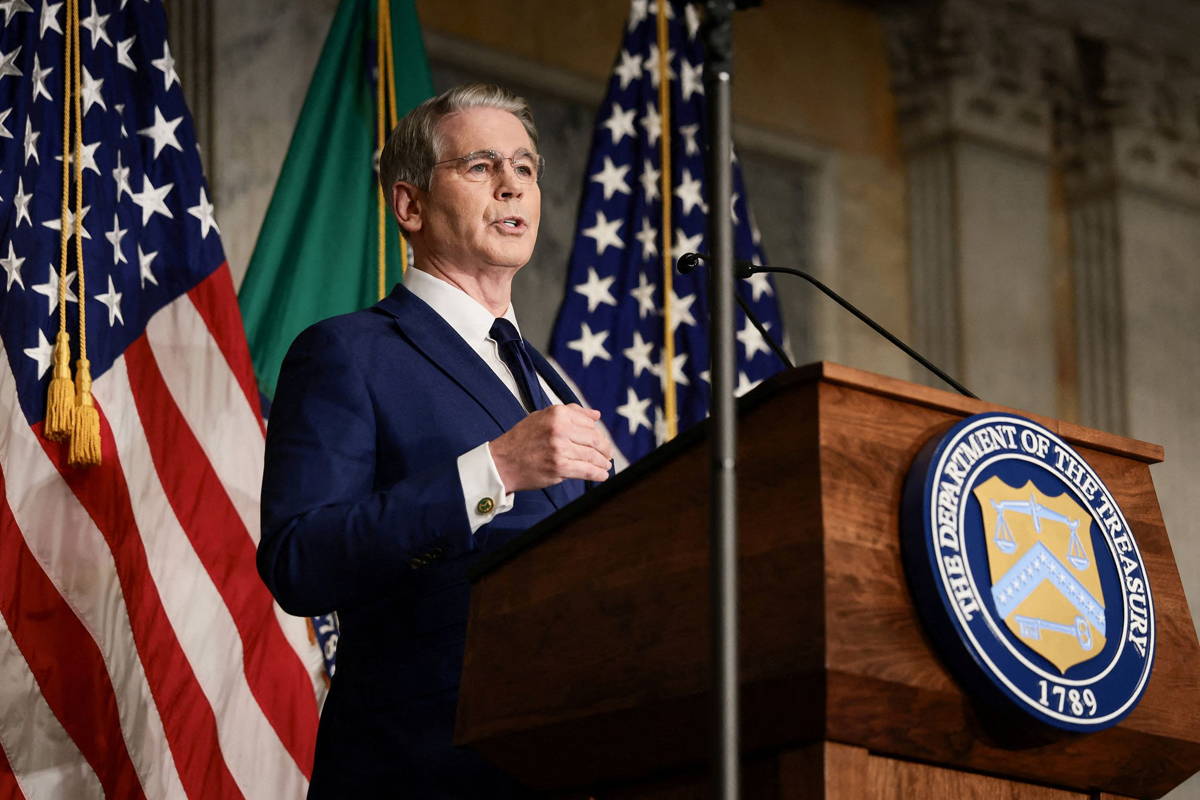
Operation Epic Fury is out; Operation Economic Outcast begins. Today, the Treasury Secretary, Scott Bessent, announced a new round of sanctions against Iran, to threaten a “complete global isolation” that would “tighten the noose” around the country.
This week marks six months since the United States and Israel launched a joint military offensive against Iran. “It’s hard to view the outcome of the conflict as anything other than a profound strategic defeat for the United States,” Ishaan Tharoor wrote last week, in his Global Notes column. At the start of the year, the Iranian regime was weakened, fending off protesters internally. It has since regrouped and leveraged its control of the Strait of Hormuz. “Tehran seems to believe it can both outfox and outlast Trump,” Tharoor writes.
Given the failure of airstrikes to quickly resolve an unpopular war started by an unpopular President, the Administration is now pursuing an “economic D-Day,” as Trump and Bessent have called it. “Bessent taking the visible lead on Iran among Cabinet officials is, in itself, an admission of failure from an Administration that was so convinced of its ability to cow the Islamic Republic with military force,” Tharoor told me over e-mail this morning. The war, he pointed out, has laid bare the vulnerabilities of American military bases in the Persian Gulf, many of which were damaged and became unsafe for personnel. The Iranian regime, Tharoor added, has, for years, made “an art of navigating around sanctions,” so the Trump Administration has now been forced to target other countries that do business with Iran.
The Treasury Secretary’s role in this foreign-policy operation is notable. “Scott Bessent has now shown himself to be the most activist Treasury Secretary in recent history,” the staff writer John Cassidy, who covers economics, told me today over the phone. Meanwhile, Bessent has plenty going on at home to be worried about. In a new column, Cassidy warns of trouble in the bond markets—and outlines how rising interest rates on mortgages, car loans, and other forms of consumer credit are putting pressure on the White House ahead of the midterms.
Amid economic uncertainty and high gas prices, the President, for his part, seems undeterred. “I view the Strait of Hormuz as an American territory right now,” he told a crowd during a rally in South Carolina on Friday, chuckling as he said it.
For more: The Iranian government has been hiring criminals, including “Russian mobsters, Hells Angels bikers, and even Swedish teen-agers,” to assassinate its critics abroad, Cora Engelbrecht reports. Read her investigation.