Clock’s ticking on oil stocks
 

Power Up

Power Up

A Reuters Open Interest newsletter

By Ron Bousso, ROI Energy Columnist


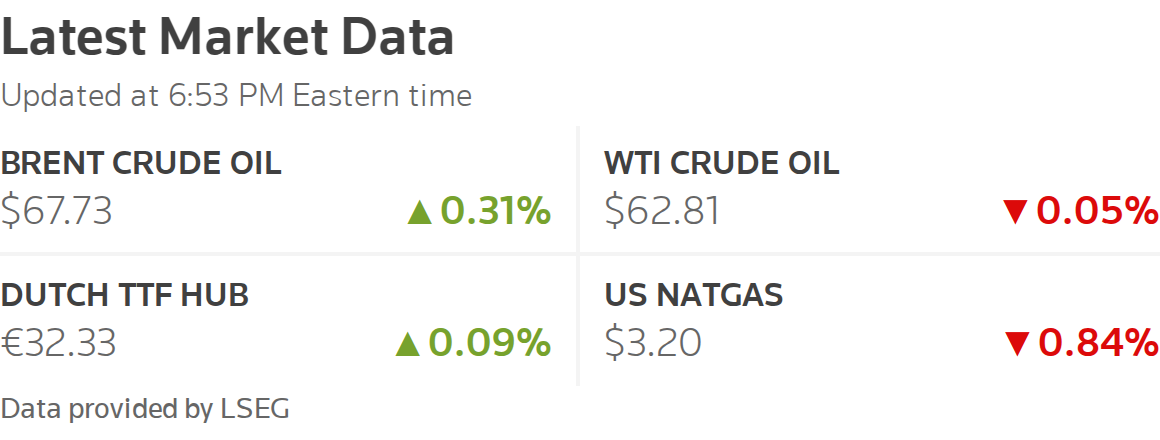
Data refreshes every time you open this email. For more energy news, click here. Please send any feedback to powerup@thomsonreuters.com.

Hello Power Up readers,

When it comes to the Iran conflict, words are proving louder than actions. Oil prices retreated sharply on Wednesday to $105 a barrel after President Donald Trump suggested once again that talks with Iran to end the conflict were making progress, saying he was prepared to wait for a few days to get a deal done. Tehran submitted its latest offer to the U.S. this week and on Thursday said it was reviewing Washington's latest position on ending the war. 

Yet six weeks since a fragile ceasefire came into force, the talks have shown little progress. Vital oil and gas transit through the Strait of Hormuz remains severely constrained while soaring oil prices have raised concern over rising inflation and the impact on the global economy.

On Wednesday, Iran released a map showing a "controlled maritime zone" in the strait, stating that transit would require authorisation from an authority set up to control the area. Tehran says it aims to reopen the strait to friendly countries that abide by its terms. That could potentially include fees for access, which Washington says would be unacceptable.

So for now, a precarious new reality is emerging in the Gulf. Sultan Al Jaber, the CEO of Abu Dhabi’s National Oil Company (Adnoc) said on Wednesday that no nation should accept “that a single country can hold the world's most important waterway hostage.” But Iran is unlikely to loosen its grip on Hormuz any time soon. This increases the chances that a new round of conflict could break out.

While the Iran conflict continues to simmer, the clock is ticking on the oil market, which is likely weeks away from the point when tightening supplies begin to bite in earnest. More on this below.

Here are a few more headlines:

  • I highly recommend reading this article that offers amazing detail on how Iran is consolidating its hold in the Strait of Hormuz using a multi-tiered system for clearing vessels.
  • China continued to build its massive stockpile of crude oil in April, even though imports dropped to the lowest levels in nearly four years, ROI Asia Commodities Columnist Clyde Russell wrote.
  • And ROI Energy Transition Columnist Gavin Maguire notes that the share of natural gas within Texas’s power generation mix has fallen to a multi-year low so far this year as clean energy sources continue to crowd out fossil fuels within the top U.S. oil and gas production hub.

As always, don’t hesitate to contact me at ron.bousso@thomsonreuters.com or follow me on LinkedIn with any questions or thoughts.


Top energy headlines

  • Oil prices jump after Reuters report signals complication to US-Iran peace talks
  • Oil market could hit 'red zone' in July-August, IEA chief says
  • Vitol moves to open Mexico fuel terminal years after bribery scandal, document shows
  • OPEC+ leaders expected to up July oil output target despite Hormuz disruption, sources say
  • US energy storage additions hit a first-quarter record, report shows


Running out

The oil industry has shown remarkable resilience in the face of the largest energy supply shock in modern history, pulling multiple levers to cushion the blow of the Iran war. But barring a breakthrough in peace talks, the global market may be only months away from a breaking point.

The world’s biggest and most liquid commodity market has entered a phase of unprecedented uncertainty since the outbreak of the Iran war and the near-hermetic closure of the Strait of Hormuz – previously the ‌conduit for a fifth of global oil and gas supplies.

Before the conflict began on February 28, few experts anticipated that Iran would actually shut down the Strait. Almost no one thought the obstruction would stretch into months.

Now, with peace efforts faltering and the risk of renewed military escalation still high, markets can no longer dismiss the possibility that transit through Hormuz will remain constrained for many more weeks.

But the clock is ticking.

Read the full column
 

Sponsors are not involved in the creation of newsletters or other Reuters news content. Advertise in this newsletter or on Reuters' website

LiveIntent Logo
AdChoices Logo