|



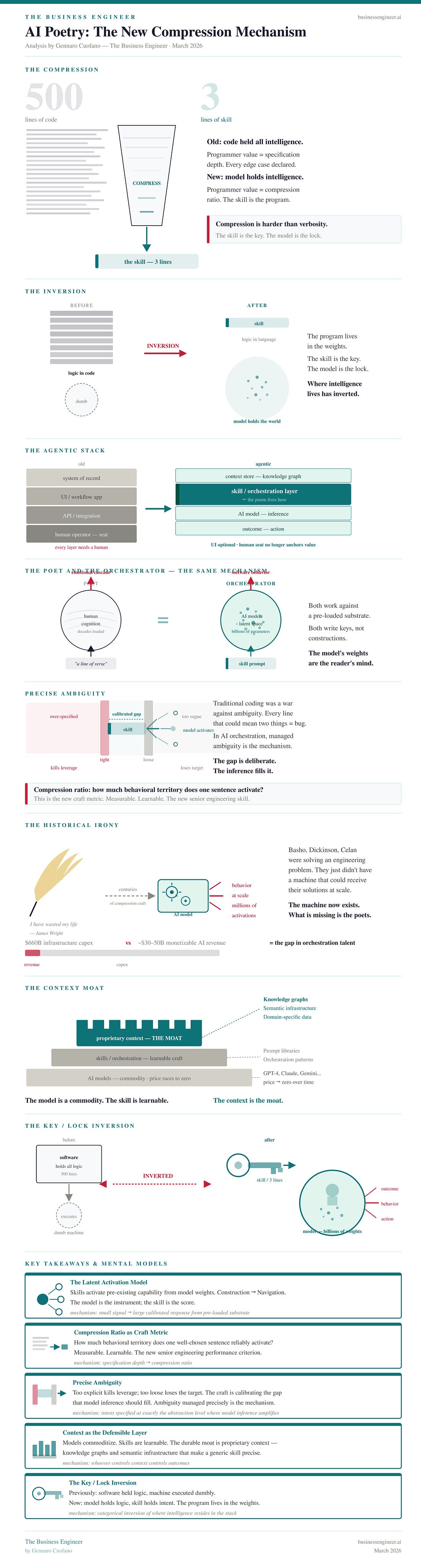
There is a shift happening at the software substrate. Not a shift in capability alone — a shift in how we express capability.
For decades, programming was the art of being explicit. You wrote instructions the machine could follow, line by line, leaving nothing to interpretation. The programmer’s job was precision. The machine’s job was obedience. Every edge case had to be named. Every condition declared. Every pathway anticipated. The code was the meaning. Remove the code and nothing remained.
That contract is dissolving.
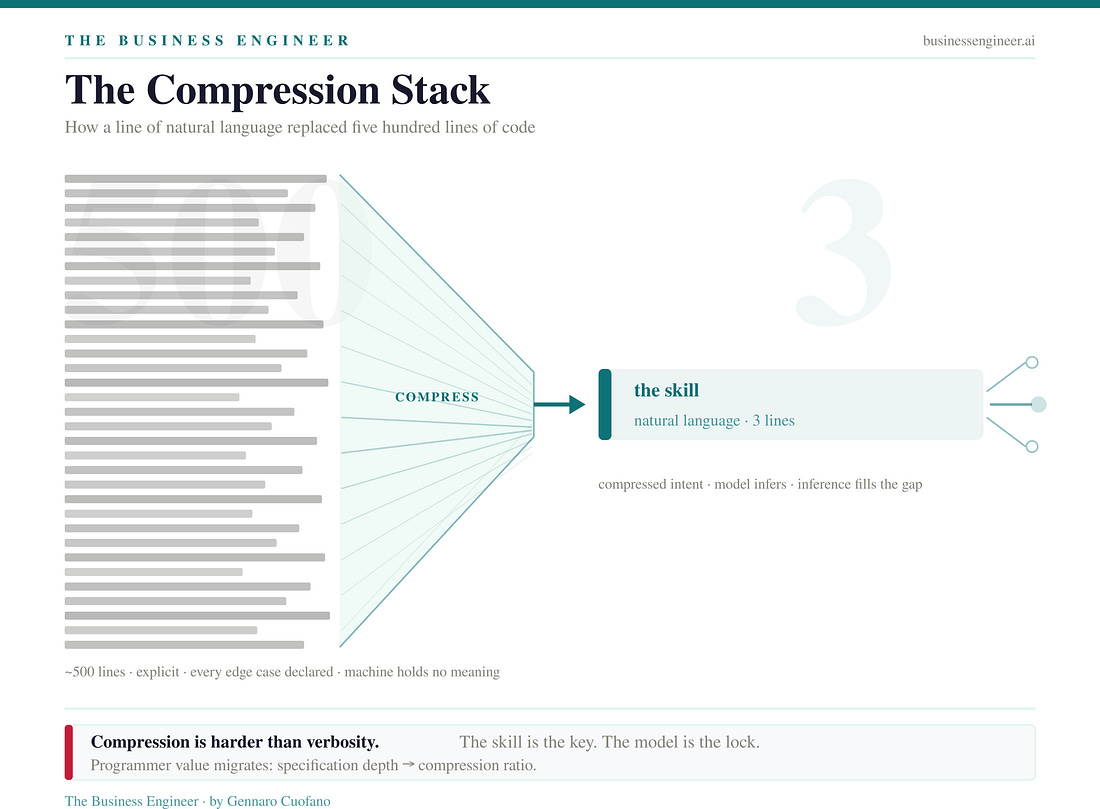
What replaces it is not simpler. It is structurally different. A line of natural language text has replaced hundreds of lines of code — not because natural language is more powerful in the conventional sense, but because the substrate it operates on has changed entirely. The model already holds the world inside it. The skill is the key, not the door.
 |
The Compression Stack
 |
To understand what is really happening, you need to see the two paradigms not as a before/after story, but as a structural inversion.
In the old paradigm, the program held all the intelligence. The programmer’s value was measured in the depth and precision of what they could specify. Breadth mattered: could you handle the exception? Could you architect the system across thousands of lines without losing coherence?
In the new paradigm, the model holds the intelligence. The programmer’s value is now measured by the inverse metric: how little they need to say to activate exactly the right behavior. The skill is the entire program. And the less code surrounds it, the better the craft.
This is not a simplification. It is a compression problem — and compression is harder than verbosity.
Where This Fits in the Agentic Stack
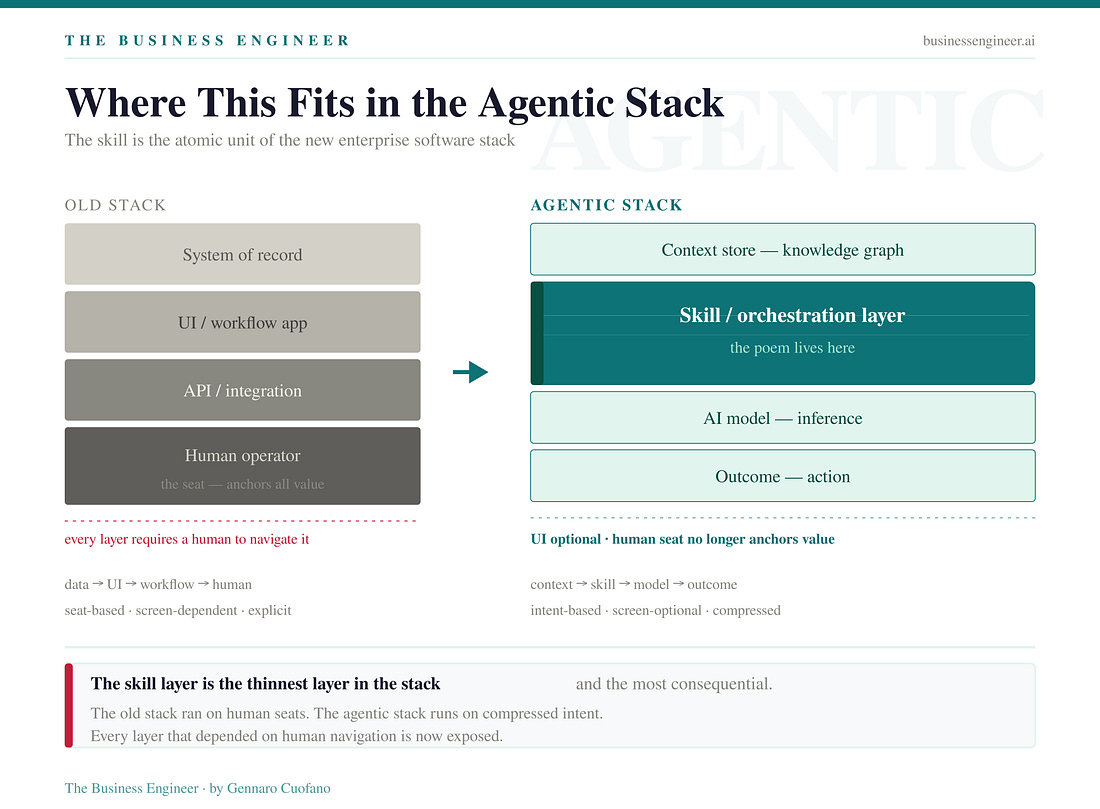 |
This compression mechanism doesn’t operate in isolation. It sits inside a larger structural shift that has been building across our analyses of the agentic economy — from the System of Action to the mutation of systems of record. The skill is the atomic unit of the new enterprise software stack.
The System of Action analysis identified this transition precisely: the old stack ran from data → UI → workflow → human. Every layer required a human to navigate it. The agentic stack collapses that sequence. Context feeds directly into the skill layer, the skill activates the model, the model produces the outcome. The UI is optional. The human seat is no longer the atomic unit of enterprise software value.
The skill layer is where the poem lives. It is the thinnest layer in the stack and the most consequential.
The Executive Plan now includes the Claude OS Skill embedded!
 |
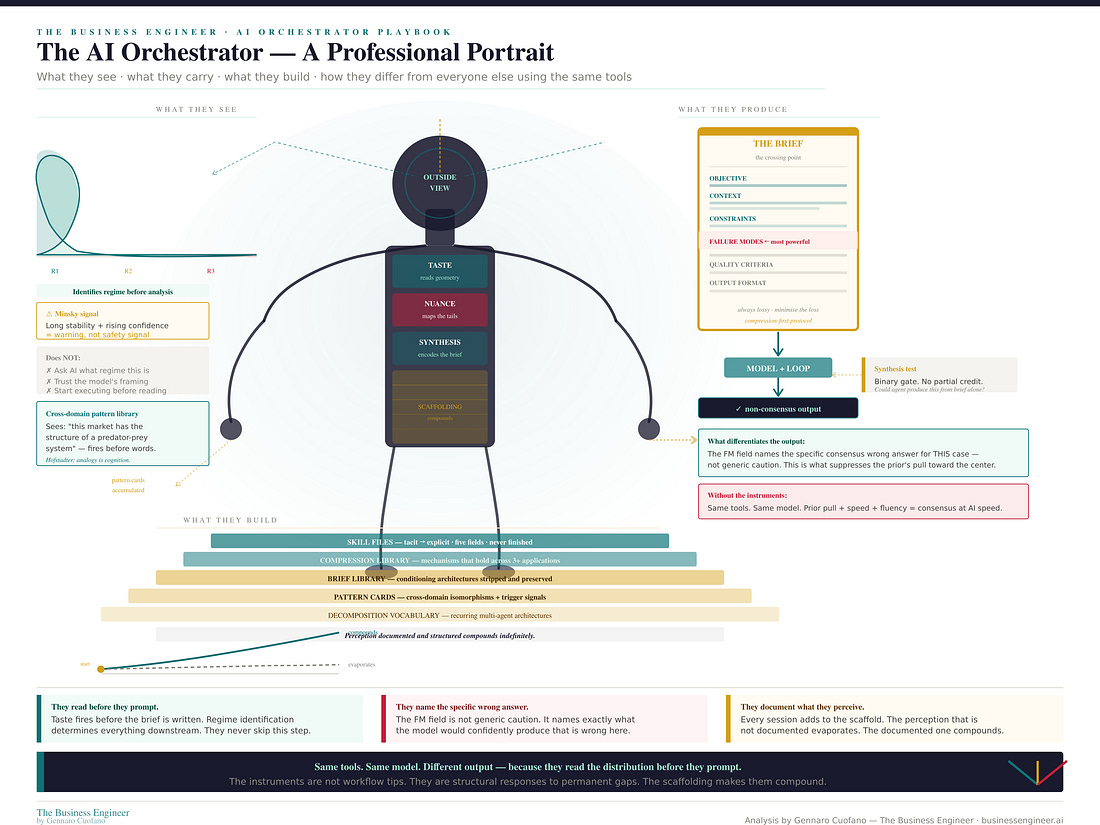
As part of it, you can also now access the AI Orchestrator Playbook!
 |